
The Moment You Knew Something Was Wrong
You were standing in line for coffee, thumb already moving across glass, when you realized you had checked your email three times in ninety seconds. Not because you expected anything. Not because the world required your immediate response. Simply because the alternative—standing still, being seen, occupying time without producing value—had become physically uncomfortable.
This is the quiet violence of digital hurry. It does not announce itself with notifications. It colonizes the margins: the elevator ride, the parking lot walk, the breath between tasks. We have become, as the philosopher Byung-Chul Han observed, subjects who exploit ourselves with such efficiency that no whip is required. The smartphone is not our oppressor. Our own intolerance for stillness is.
But here is the deeper question, the one that surfaces at 2 AM or during the lull of a Sunday afternoon: What have we sacrificed for this velocity? And more troubling still—can we get it back?
The Theology of Speed
The title of this essay borrows from the spiritual writer Dallas Willard, who called hurry "the great enemy of spiritual life in our day." Willard was not merely critiquing busyness. He was naming something more insidious: the way speed distorts our relationship to time itself, transforming it from a medium of presence into a resource to be optimized.
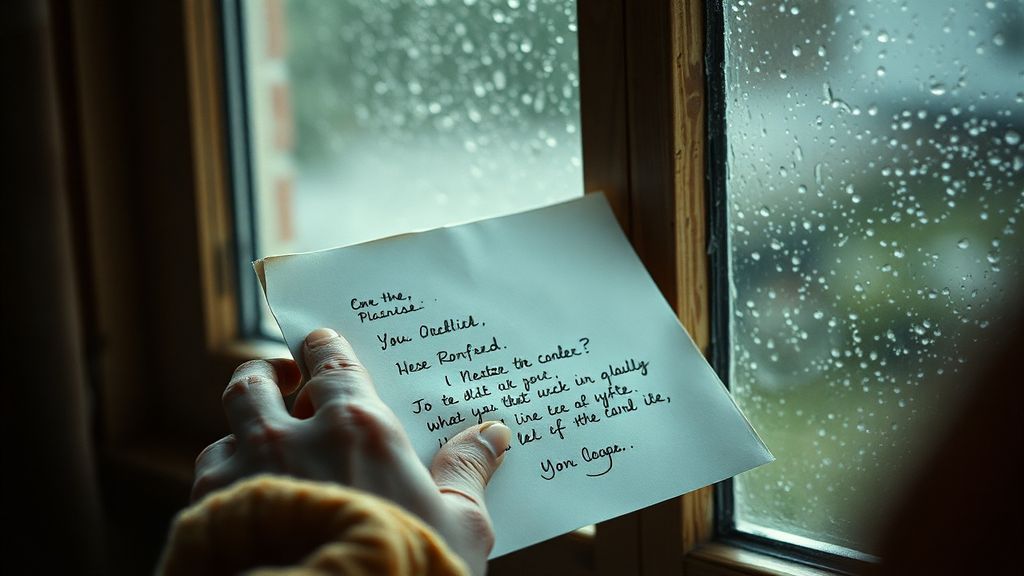
In the pre-digital imagination, time had texture. A letter crossed an ocean. A photograph developed in darkness. A memory settled before it was shared. These frictions were not inefficiencies to be eliminated. They were the very architecture of meaning-making. The wait between sending and receiving created a space for anticipation, for imagination, for the slow work of holding someone in mind without immediate confirmation that you had been held in return.
Digital mindfulness is not, then, a technique for managing notifications or a better Pomodoro timer. It is a fundamental reorientation: the choice to treat time as something we inhabit rather than something we spend. To refuse the colonization of every empty moment by content, productivity, or the ambient anxiety of what we might be missing.
The Commodification of Attention
We rarely speak of attention as finite, though we experience its depletion daily. What the economist Herbert Simon called the "attention economy" has evolved into something more personal and more predatory. Our focus is harvested, refined, and sold back to us as engagement. The platforms we use are not designed for our flourishing. They are designed for our continued activation—scrolling, reacting, producing the behavioral data that fuels their machinery.
The result is a particular kind of spiritual poverty. We are present everywhere and nowhere. We witness the lives of others in endless succession without ever quite arriving at relationship. We consume images of beauty without developing the patience to create or even to truly see. Hurry becomes not merely a habit but a metaphysics: the belief that what is happening elsewhere, or what happens next, must be more important than what is happening here.
This is where the practice of writing slowly—of composing a message that will not be sent immediately, that is not optimized for algorithmic distribution—becomes something more than nostalgia. It becomes resistance.
The Radical Act of Delayed Communication
Consider what happens when you write a letter intended for a future moment. You are not solving a problem. You are not responding to a demand. You are creating a temporal bridge between two versions of yourself, or between yourself and someone you love across an expanse of years. The delay is not a bug. It is the feature that makes the communication possible.
A letter to your future self requires you to imagine who you might become, to extend empathy across time in the same way we extend it across space. A letter to a child not yet born, or a partner decades from now, requires you to believe in the continuity of love despite the certainty of change. These are not tasks that can be hurried. They are practices that require the very stillness our digital environment is designed to eliminate.

This is the core insight that digital mindfulness must recover: slowness is not the absence of technology but the presence of intention. The same tools that fragment our attention can, with deliberate design, protect and extend it. What matters is not the medium but the temporality—the choice to operate on human time rather than platform time.
The Psychology of Future Writing
There is growing research on what psychologists call "temporal self-continuity": the felt sense that our past, present, and future selves are genuinely connected. People with stronger temporal self-continuity make better long-term decisions, experience less impulsivity, and report greater life satisfaction. They are, in a meaningful sense, more fully themselves.
Writing to one's future self is one of the few practices that actively cultivates this continuity. It requires you to become, momentarily, the person who will receive the letter—to feel their uncertainty, their hope, their need for guidance or simply for proof that they were once loved with specificity and care. This is not journaling for emotional ventilation. It is a disciplined imagination, a refusal to let the present moment consume all available meaning.
The clinical literature on expressive writing, pioneered by James Pennebaker, demonstrates that structured reflection improves immune function, reduces depressive symptoms, and enhances cognitive processing. But future-directed writing adds something distinct: the therapeutic power of anticipation. We are not merely processing what has happened. We are investing in what might yet be.
Reclaiming the Margins
Digital mindfulness, practiced through tools that enforce rather than erode temporal boundaries, creates what the philosopher Josef Pieper called "leisure": not recreation or rest in the exhausted sense, but the condition of contemplative receptivity without which no culture survives and no individual flourishes.
The margins matter. The space between tasks, the silence before response, the gap between intention and expression—these are where we become persons rather than functions. When every margin is filled, we lose not only our capacity for depth but our tolerance for mystery. We become incapable of the fundamental spiritual posture: waiting without knowing what we are waiting for.
This is why the design of our communicative tools matters so profoundly. A platform built for immediate delivery trains us in immediacy. A platform built for intentional delay trains us in patience. The technology is never neutral. It always carries a pedagogy, a formation of desire and habit.
The Letter as Spiritual Discipline
There is a reason that letter-writing has been central to virtually every spiritual tradition. Paul's epistles, Rilke's letters to a young poet, the correspondence of mystics and reformers—these were not incidental to their work but constitutive of it. The letter form enforces a particular ethics: you must address a specific other, in a specific moment, with the knowledge that your words will travel without you to be received in circumstances you cannot control.
This is the opposite of the performative utterance of social media, where the audience is abstract and the feedback immediate. The letter requires you to mean what you say without the consolation of instant validation or correction. It is, in this sense, a practice of faith: the trust that your words will arrive, that they will be sufficient, that the relationship can survive the interval of your absence.
To write a letter scheduled for future delivery is to extend this faith across time itself. You are saying: I believe we will still be here. I believe these words will still matter. I believe that the person who receives this will recognize the person who wrote it, and that the recognition will be a form of love.
What Unhurried Attention Makes Possible
I know something about the seduction of speed, and I know something about the cost. For years I built things that moved fast—e-commerce platforms, game engines, the kind of software that measures success in milliseconds gained. I spent my nights pair-programming with LLMs until 2 or 3 AM, chasing the next architecture, the next optimization. The screen became a kind of companion, and the silence between keystrokes became the only stillness I could tolerate. But the mountains taught me something the code couldn't. When you're hiking a steep trail or caught in surf, there's no multitasking, no refresh rate, no version control. You're simply there, in a body, in weather, in time that does not compress. The raw reality of it strips away the illusion that velocity equals aliveness.
The recovery of digital mindfulness is not a retreat from technology but a reclaiming of its human purpose. We built these tools to extend our reach across space and time. Somewhere in the optimization, we lost the reason. I've spent my career in Silicon Valley wrestling with this paradox—building with the most hardcore tech stacks while increasingly convinced that the final measure of any tool is whether it serves genuine, soft human nature. EterMail grew out of this tension. The best way to fight forgetting isn't taking another screenshot; it's setting an alarm for the future. By using EterMail to set a delivery date 5 years from now, you completely free yourself from the anxiety of the present. The encryption, the redundancy, the architecture beneath it all—that's just my way of guarding something fragile, the way you'd protect a letter written to someone you haven't met yet, or to yourself on a morning you can't yet imagine.
Unhurried attention—preserved in a letter, sealed against premature opening, delivered at a moment of intentional choosing—makes possible what no stream of content can: the experience of being genuinely thought about. Not algorithmically targeted. Not incidentally included in a broadcast. But specifically, slowly, with the full weight of someone's finite time directed toward your future reception.
This is the gift that hurry cannot give. This is the practice that refuses the great enemy.
The spiritual life, in the end, is not about achieving a particular feeling or belief. It is about the quality of attention we bring to what is real. And what is most real—what remains when the notifications fade and the metrics dissolve—is the bare fact of our being here, together, for a time that is shorter than we admit and more precious than we have learned to say.
To write slowly enough that someone feels your presence across years: this is not inefficiency. This is the last, necessary art.
Frequently Asked Questions
What is digital mindfulness and how is it different from regular mindfulness?
Digital mindfulness specifically addresses how our relationship with technology shapes our attention, time perception, and presence. While traditional mindfulness often focuses on meditation or breath awareness, digital mindfulness examines the design of our tools and the temporality of our interactions—asking whether our devices serve our values or erode them.
Why does writing to my future self help with anxiety about the unknown?
Future self-writing strengthens "temporal self-continuity," the psychological sense that your present and future selves are meaningfully connected. By articulating hopes and offering guidance to the person you will become, you practice trusting your own capacity to adapt, which reduces the paralysis of uncertainty.
How can I practice slowness without completely disconnecting from technology?
Intentional friction is key: choose tools designed for delayed rather than immediate communication, schedule periods of asynchronous correspondence, and protect the margins of your day from compulsive checking. The goal is not rejection of technology but subordination of it to human time.
What is EterMail?
EterMail is a revolutionary time capsule service that allows you to send messages, photos, and videos to the future (up to 30 years). Seal your memories and thoughts today, and they'll be delivered when the time is right.
Time Capsule
Send messages up to 30 years in the future
Rich Media
Text, photos, and videos supported
Secure & Private
Your memories are safely encrypted
EterMail Team
We're the team behind EterMail, dedicated to helping you preserve and share timeless messages with your loved ones. Our mission is to make it easy to express your love, share your wisdom, and create lasting connections that transcend time.
Frequently Asked Questions about Digital Mindfulness
What is digital mindfulness and how is it different from regular mindfulness?
Why does writing to my future self help with anxiety about the unknown?
How can I practice slowness without completely disconnecting from technology?
Related Articles

The Boeing 747 Begins Its Final Descent: Why Digital Mindfulness Demands We Learn to Travel Slowly Again
The 747's final descent mirrors our own: we've traded patience for speed. Discover how digital mindfulness restores meaning to how we connect across time.
The Donkey and the Meaning of Eternity: What a Nobel Poet Can Teach Us About Digital Mindfulness
Discover how Nobel poet Juan Ramón Jiménez's radical patience reveals what true digital mindfulness means—and why eternity begins in staying present.
The End of Swiping: Why Choosing One Person Slowly Is the Last Radical Act
A generation exhausted by infinite choice is hungering for intentionality. Discover why digital mindfulness in love means refusing the dopamine economy.