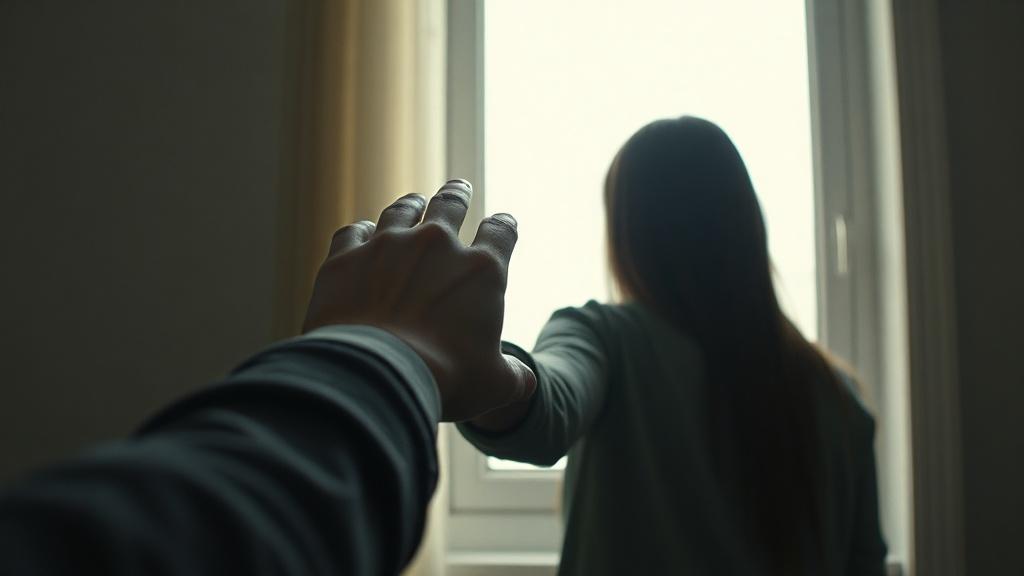
There is a moment, unmarked on any calendar, when your hand stops midair. You were reaching for your twelve-year-old's shoulder, the way you have ten thousand times before, and something arrested you—a flicker of self-consciousness, a sudden awareness that this body is no longer entirely yours to claim. The hand retreats. Finds the dishwasher, the counter, the pocket of your own sweater. You tell yourself it was nothing. But it was everything. It was the first coordinate in a map you will spend years completing, a cartography of deferred touch, charting the shrinking territory of physical intimacy between parent and child.
We do not talk about this. We talk about milestones and boundaries, about respecting autonomy and fostering independence. We do not talk about the grief of watching your own hand become a stranger to the skin you once tended without thought. The toddler who slept with one palm pressed to your collarbone. The six-year-old who climbed into your lap like it was the only country that issued her passport. Where do they go? More precisely: where do we send them, with our retreating hands and our redirected kisses, our hugs held one fraction of a second shorter each year until we are performing politeness with the bodies we once bathed without shame?
The Geography We Inherit, The Borders We Draw
Every family arrives at parenthood with a native topography of touch. Some grew up in households where affection flowed like weather—unremarkable, constant, expected. Others crossed childhood like travelers through a guarded border, learning early that bodies were private territories, that need was a currency best not spent too openly. We bring these maps with us. We overlay them, often unconsciously, onto the fresh country of our children's lives.
But something else happens, too. Something less examined. As our children grow, we become amateur cartographers of shrinking territory, redrawing borders that the child never asked to exist. The goodnight kiss lands on the forehead because the cheek feels suddenly too intimate. The hand that once rubbed circles on a back during storytime now grips the doorframe, hovering in the threshold. We tell ourselves we are honoring their privacy, their emerging selves. And sometimes we are. But sometimes we are protecting ourselves—from rejection, from the vertigo of watching time accelerate, from the unbearable knowledge that this body we have known so completely is becoming a foreign land we will need visas to enter.
The retreat is rarely dramatic. It is a thousand micro-withdrawals, each one reasonable, each one defensible. The teenager who shrugs off your hand in public becomes the justification for not reaching at home. The child who once reached for you now reaches for a phone, and you let the silence between you stand, because initiating feels like crossing a line you cannot see until you have already stumbled over it.
The Moment of Recognition
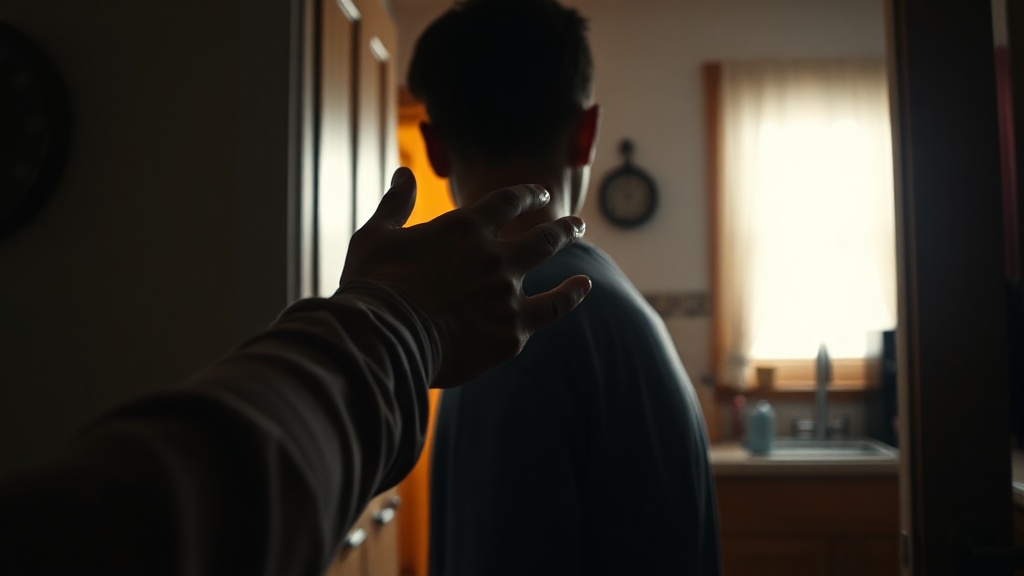
For some parents, the map completes itself in a single devastating instant. You reach to brush hair from your fifteen-year-old's eyes—a gesture older than language—and they flinch. Not dramatically. A micro-movement, a tightening of the jaw, a slight turn of the head that says, That territory is closed now. And you feel it: the border has solidified. The country you once moved through freely now requires papers you do not possess.
Or perhaps the recognition arrives sideways, through absence. You realize you cannot remember the last time you held your child for longer than a functional moment—the passing of a dish, the brief squeeze before a departure. You search your memory like someone patting pockets for lost keys. When? When did the casual, constant contact become ceremonial, then rare, then—possibly—gone?
This is the cartography of deferred touch: the slow, often unconscious mapping of distance where none needed to exist. And the question it forces is not merely nostalgic. It is urgent, practical, alive. What happens when we finally see the map we have drawn? When we recognize the exact moment—if we can find it—when we stopped being casual with their skin? Do we attempt to cross back over the lines we drew? Or do we let the space between us calcify into the only geography they will remember, the only map of love they will carry into their own parenting?
The Child Who Never Asked for Distance
Here is what we rarely admit: the retreat is almost always initiated by the parent. Children do not, as a rule, issue formal declarations of independence from physical affection. They absorb. They mirror. They notice the hand that no longer reaches, the kiss that no longer lands, and they adjust their own maps accordingly. The teenager who seems to reject touch has often spent years watching that touch become tentative, conditional, freighted with unspoken negotiation.
This is not to blame. The retreat is understandable, even natural. The body of a growing child becomes complicated territory—hormones, autonomy, the social gaze of peers, our own unresolved relationship with physicality. We withdraw partly from respect, partly from fear, partly from the simple exhaustion of navigating a landscape that shifts daily. But understanding the retreat does not erase its cost.
The cost is this: a child who learns that love's physical expression has an expiration date. Who internalizes that bodies, even beloved ones, must eventually be approached with caution, with permission slips, with the formality of diplomats rather than the ease of citizens. Who may, decades later, stand in their own kitchen with their own child, hand arrested midair, repeating a geography they never chose to inherit.
Reclaiming the Territory
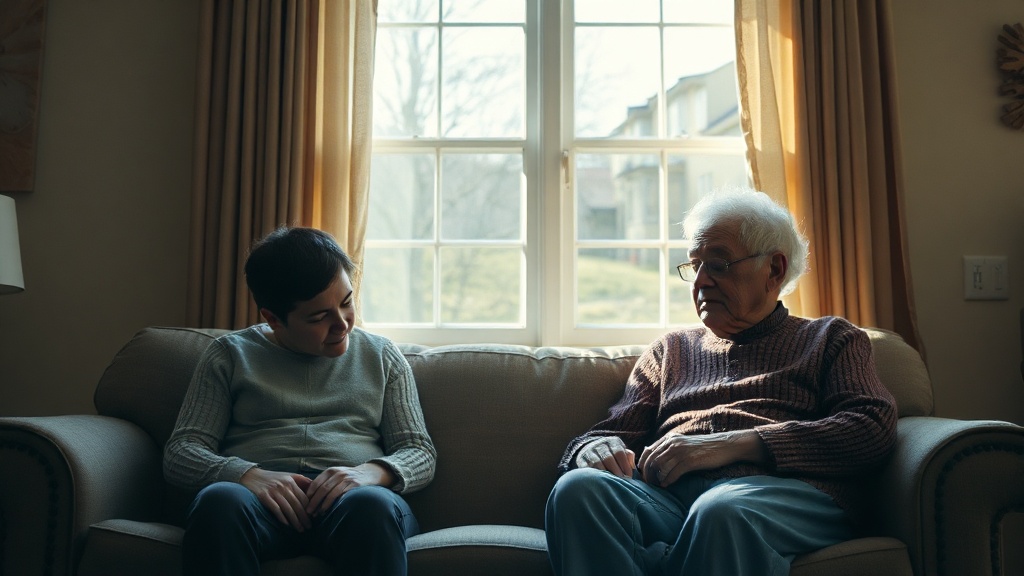
The map is not fixed. This is the crucial, hopeful truth that the cartography of deferred touch obscures. Borders can be redrawn. Territory can be reclaimed—not by force, not by nostalgia, but by the quiet courage of crossing back over lines we ourselves created.
It begins with noticing. With catching your own hand in retreat and asking it: What are you afraid of? The answer is rarely about the child. More often, it is about our own vulnerability, our own aging, our own unmapped grief at time's passage. Naming this does not dissolve it. But it makes the territory navigable.
Then comes the small, repeated act of return. The hand on the shoulder that stays, even when it feels strange. The hug held one second longer than comfort dictates. The explicit, spoken acknowledgment: I miss touching you the way I used to. I don't want to lose that. These crossings are not violations of autonomy when they are invitations, offered without demand, left open for acceptance or gentle refusal.
Some parents find their way back through ritual—the consistent goodnight hug that outlasts childhood, the walking-side-by-side with shoulders brushing, the Saturday morning pancake-making that allows for the incidental contact of shared labor. Others write. They compose letters that trace the map of their own retreat, admitting what they never meant to lose, asking what their child experienced, opening a dialogue where silence had calcified.
This is where the practice of intentional future communication becomes something more than sentimental exercise. When we write to our children across time—letters sealed for future opening, messages composed for moments we may not witness—we are doing something physical even in the digital. We are extending touch across distance, refusing to let the borders harden completely. We are saying: This love has a geography that outlasts my own hesitation, my own fear, my own retreat.
The Map We Leave Behind
I spend most nights alone with a screen, pair programming with LLMs until 2 or 3 AM, chasing architectures that feel like building bridges between worlds. That extreme solitude—hours of digital silence where the only voice is synthetic—has made me strange about time. I understand what it means to want to reach across a gap you cannot physically cross. To leave something for a future self, a future someone, that carries the weight of presence without the guarantee of being there when it's opened.
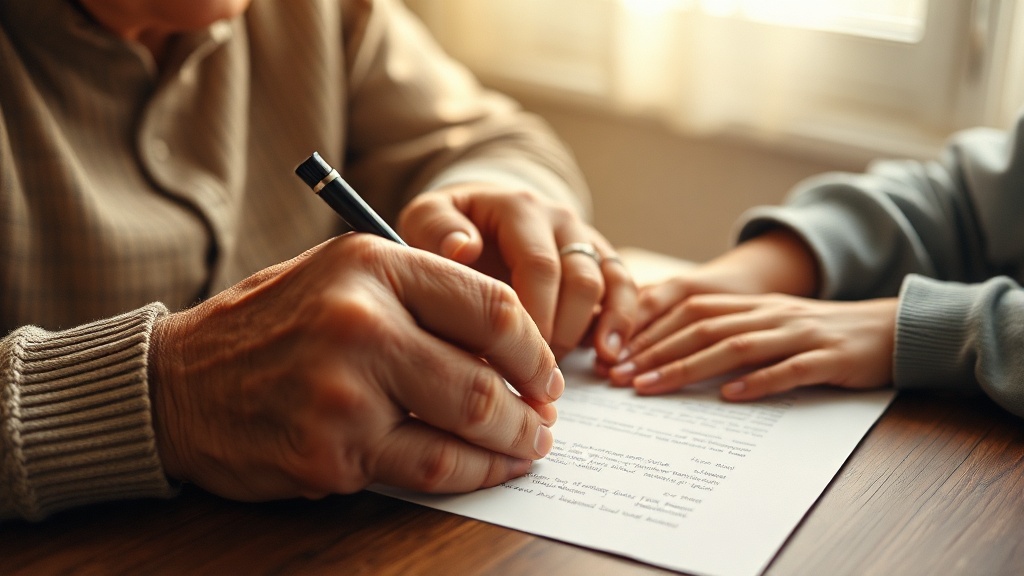
The best way to fight forgetting isn't taking another screenshot; it's setting an alarm for the future. By using EterMail to set a delivery date 5 years from now, you completely free yourself from the anxiety of the present. You write the letter your hand is too hesitant to deliver today. You map the territory of love you are still learning to reclaim, and you trust it to arrive when the borders have shifted again—when your child is twenty-three, or thirty, or standing in their own kitchen with their own hand arrested midair, ready to read what you could not yet say.
Eventually, every parent's hand stills. The question is what geography remains. Will our children remember a landscape of gradual estrangement, of love that became increasingly abstract, increasingly verbal, increasingly distant from the body? Or will they carry a map that includes the crossings-back, the reclaimed territories, the brave moments when we admitted our own retreat and chose to return?
The cartography of deferred touch is not a tragedy. It is a human pattern, visible and understandable. But it is also a choice, repeated across years, and choices can be revised. The hand that hovers can descend. The kiss that redirects can find its original target. The hug held one second shorter can be held one second longer, and then another, until a new pattern forms.
Our children never asked for the borders we drew. They accepted them, adapted to them, learned to navigate by them. But they also notice, deeply and permanently, when we begin to erase them. When we say, without sentimentality, without demand: I am still here. This territory is still shared. The map is not finished.
The space between parent and child is not empty. It is full of everything we have placed there, everything we have failed to place there, everything we might yet choose to offer. The cartography is ours to continue. The hand is ours to move.
What is EterMail?
EterMail is a revolutionary time capsule service that allows you to send messages, photos, and videos to the future (up to 30 years). Seal your memories and thoughts today, and they'll be delivered when the time is right.
Time Capsule
Send messages up to 30 years in the future
Rich Media
Text, photos, and videos supported
Secure & Private
Your memories are safely encrypted
EterMail Team
We're the team behind EterMail, dedicated to helping you preserve and share timeless messages with your loved ones. Our mission is to make it easy to express your love, share your wisdom, and create lasting connections that transcend time.
Frequently Asked Questions about For Our Children
Why do parents naturally pull away from physical affection as children grow older?
How can parents rebuild physical closeness with older children after a period of distance?
What lasting impact does reduced parental touch have on children's future relationships?
Related Articles
For Our Children: The Cartography of Inherited Light and the Lighthouses We Become in Darkness
What do we leave our children when they finally see our chipped paint? Explore the quiet sacrifices and unspoken love that shape generational legacy.
The Cartography of Learned Forgetfulness: How Parents Unlearn Themselves to Teach Their Children to Leave
Why do parents deliberately forget what they know? The quiet art of unlearning—so our children learn to tie their own shoes, navigate alone, and eventually leave us behind.

The Cartography of Inherited Friction: On the Small Resistances We Engineer for Our Children
We calibrate difficulty like a dosage for our children—tangled shoelaces, heavy bags, wrong turns. But what happens when hardship arrives unscripted?