
There is a particular silence that falls between a parent and child at the top of a hiking trail, when the child turns back with a look that says carry me, and the parent—legs burning, pack heavy—shakes their head no. Not unkindly. Not cruelly. But with the deliberate calculation of someone who has been planning this refusal for miles.
We become, without quite meaning to, engineers of manageable struggle. We calibrate difficulty like a dosage, believing that the right amount of friction will spark something permanent in them: resilience, grit, the quiet confidence of having solved something alone. We leave shoelaces deliberately tangled. We hand over grocery bags that slow our pace to a crawl. We take wrong turns and pretend not to notice, waiting to see if they will speak up, if they will unfold the map, if they will learn to trust their own reading of the world.
But here is the question that keeps us awake in the years after they have stopped asking us to carry them: What happens when they encounter a hardship we did not script? When the burn arrives from a direction we never anticipated, and we must watch from a distance we built ourselves—wondering if the friction we provided was enough to spark resilience, or merely taught them to expect that someone was always controlling the heat.
The Deliberate Tangle: How We Map Difficulty
I remember watching my father tie his own shoes with exaggerated slowness, then mine with the same care, then—sometime around my sixth birthday—stop. "You have fingers," he said, not ungently. "Use them." The task took me twenty minutes. He sat nearby, reading the newspaper, not looking up. I wept with frustration. He turned a page.
This is the cartography of inherited friction: the small resistances we perform for our children in the name of preparing them. We do not abandon them. We remain present, but unavailable for rescue. The grocery bag is not too heavy to cause injury, only heavy enough to cause complaint. The wrong turn does not lead anywhere dangerous, only somewhere inconvenient. We are cartographers drawing boundaries around safe wilderness, then pushing them inside and locking the gate.
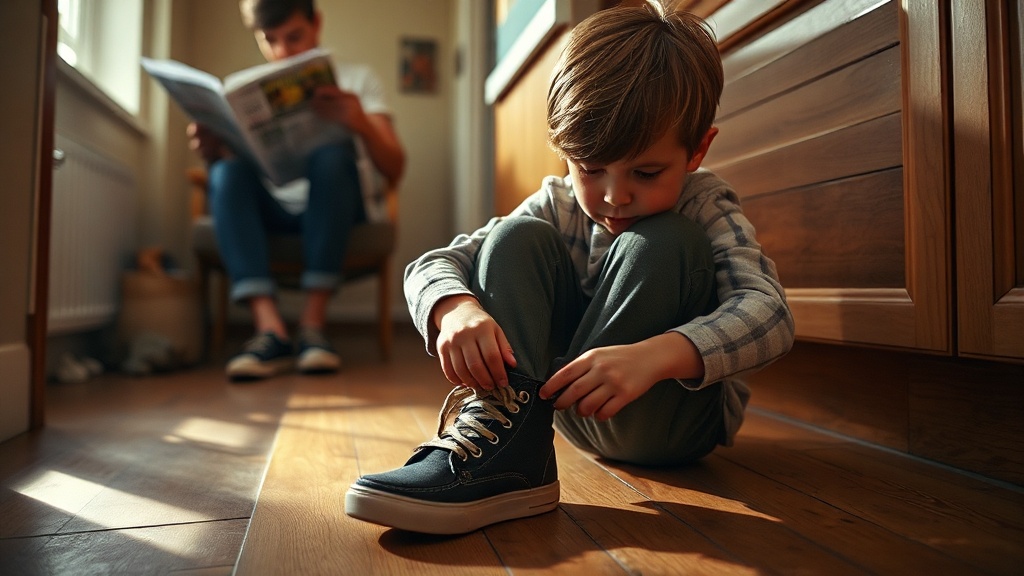
The psychologist Wendy Mogel calls this "the blessing of a skinned knee"—the necessary encounter with manageable adversity that builds what she terms "ordinary sorrows." But the management is everything. We are not throwing our children into deep water to see if they swim. We are standing in the shallow end, gradually backing away, measuring the distance with a precision that would astonish us if we ever admitted how much thought it requires.
The Burn We Control Versus the Burn We Cannot
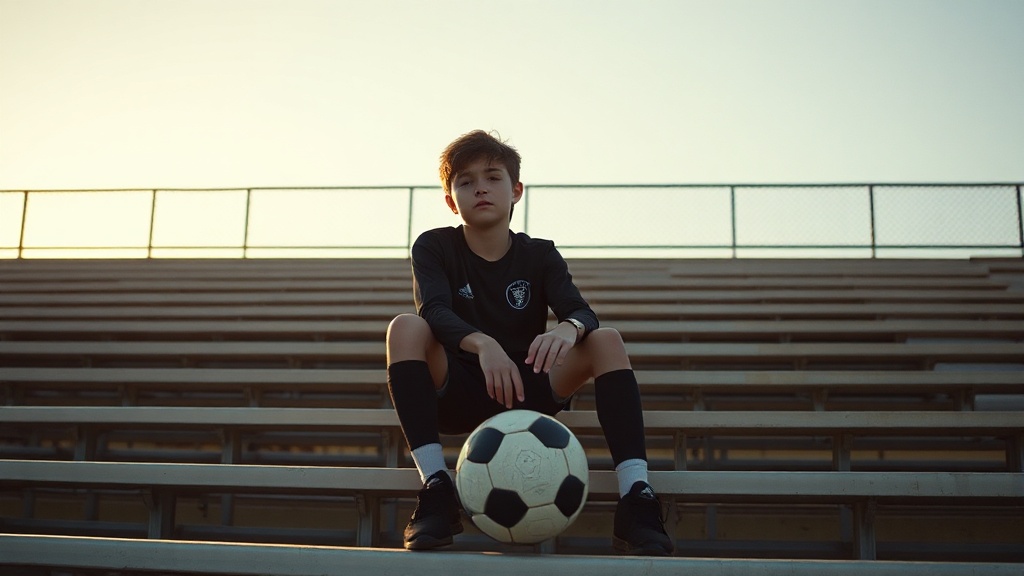
My son was eleven when he failed to make a soccer team I could have—had I made a phone call, had I leveraged a connection, had I violated something essential in myself—helped him join. I watched him read the email in the kitchen, his face performing a series of adjustments I recognized from my own childhood: the quick mask of indifference, the slower collapse, the final settling into something that looked, from the outside, like acceptance.
I had not scripted this. I had not prepared the dosage. The rejection was too large, too arbitrary, too unlike the manageable struggles I had designed for him. I had taught him that difficulty was always proportionate, always solvable, always observed by someone who could intervene if things went truly wrong. Now he was learning that some burns arrive without warning, without calibration, without a parent standing by with burn cream and a measured explanation.
This is the central terror of modern parenting, I think: the growing suspicion that our careful engineering has created a false ecology. We have built a world of training-wheels hardship, and then we release them into terrain where the wheels fall off without ceremony. The college rejection. The ended friendship. The diagnosis. The grief that arrives not as a lesson but as a fact.
The Distance We Build, Then Must Inhabit
The hardest part comes later, when they are older and the distance between you is no longer something you perform but something that has become real. You spent years creating space for them to struggle independently. Now that space has become a landscape you cannot cross.
My daughter called me at midnight from a city three time zones away. Something had ended—an internship, a relationship, I could not immediately tell which through her crying. I held the phone and felt the old impulse: to get in the car, to drive through the night, to fix. Instead I asked questions I hoped were the right ones. I listened to answers I could not decode. I stayed on the line until her breathing evened, then said goodnight with a lightness I did not feel.
We build the distance to teach them self-reliance. Then we must live inside it, wondering if we built too much.
This is where the metaphor of engineering breaks down, I think. We are not actually controlling outcomes. We are performing a kind of faith—faith that the small resistances accumulate into something like character, faith that our presence-at-a-distance will be internalized as strength rather than absence, faith that when the unscripted hardship arrives (and it always arrives), they will find something in themselves we helped plant but cannot name.
What We Might Leave Behind: Letters for the Unscripted Future
I have started writing letters I do not send immediately. Not the choreographed lessons of childhood—be kind, work hard, call your mother—but messier documents. Accounts of failures I never told them about in real time. Admissions that I, too, encountered burns I did not control and survived imperfectly. Questions I still cannot answer.
There is something in this act that feels like an extension of the friction I once engineered, but redirected. If I cannot be present for their future struggles, I can at least leave evidence that struggle is survivable, that the unscripted burn does not mean the world has malfunctioned.
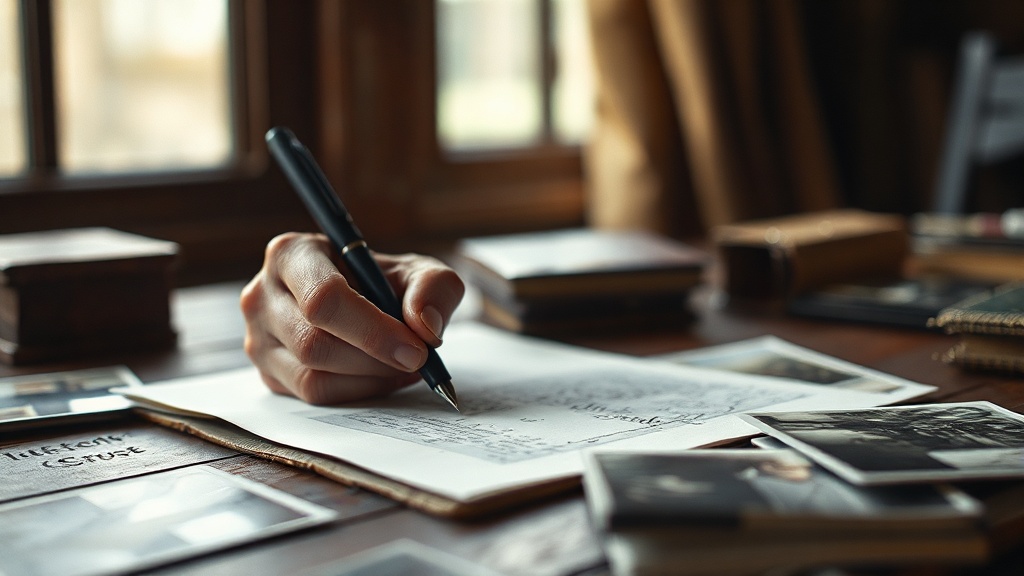
I know this impulse intimately—the desire to reach forward through time and leave something solid for someone you love. For years I spent my nights alone with glowing screens, "pair programming" with LLMs until 2 or 3 AM, mapping architectures in the dead silence when the rest of the world had gone to sleep. That extreme digital solitude taught me something about loneliness, about how we try to build bridges across impossible distances. When I step away from the keyboard, I throw myself into steep mountain trails, into surf that reminds me how little control we actually have. The raw reality of harsh wind and ocean waves strips away the illusions of the digital age. It teaches you to cherish unrepeatable, present moments—and to recognize how desperately we want to preserve them for someone else.
This is exactly why I obsessed over end-to-end encryption and extreme server redundancy when building EterMail. Because I know that a letter written to the future needs to be guarded even more fiercely than a bank password. A scheduled message, encrypted, stored across redundant systems, set to arrive years from now when you might not even be there to send it—that carries a different weight than advice given in the moment. It says: I was thinking of your future self when I wrote this. I did not know what you would need, but I knew you would need something. Here is what I had.
The technology matters less than the intention, though technology can preserve intention across time in ways paper in a drawer cannot. Scheduled delivery, the quiet certainty that the message will survive even if the sender does not—these are the modern equivalents of the shoe-tying lesson, but oriented toward adult complexity rather than childhood skill.
The Unanswerable Question
I still do not know if the friction I provided was enough, or the right kind, or too controlled to be useful. My son, now grown, told me recently that he sometimes expected rescue and was surprised when it did not come—that he had, in some deep place, believed the world was arranged by parental design even when he intellectually knew better. My daughter said she was grateful for the distance, that it taught her to trust her own readings of maps.
Both things can be true. The cartography of inherited friction is imprecise, its measurements taken in the dark.
What I am learning, slowly, is that the question itself—was it enough?—may be the wrong one. Perhaps the work of parenting is not to engineer resilience so much as to model the ongoing practice of surviving uncertainty without certainty. To show that we, too, are still learning which burns to control and which to simply endure. To leave traces of that imperfect process for them to discover when they need evidence that the unscripted life, while harder than we promised, is still livable.
The shoelace eventually gets tied. The grocery bag gets carried. The wrong turn becomes the story they tell at dinner, years later, laughing. And the letter they find—unexpected, dated, written in a voice they half-recognize—becomes proof that someone once believed they would need something, and tried, however imperfectly, to provide it.
What is EterMail?
EterMail is a revolutionary time capsule service that allows you to send messages, photos, and videos to the future (up to 30 years). Seal your memories and thoughts today, and they'll be delivered when the time is right.
Time Capsule
Send messages up to 30 years in the future
Rich Media
Text, photos, and videos supported
Secure & Private
Your memories are safely encrypted
EterMail Team
We're the team behind EterMail, dedicated to helping you preserve and share timeless messages with your loved ones. Our mission is to make it easy to express your love, share your wisdom, and create lasting connections that transcend time.
Frequently Asked Questions about For Our Children
How do I write a meaningful letter to my child for their future self?
What should parents include in an emotional legacy for their children?
How can parents balance protecting children with letting them experience struggle?
Related Articles
For Our Children: The Cartography of Inherited Light and the Lighthouses We Become in Darkness
What do we leave our children when they finally see our chipped paint? Explore the quiet sacrifices and unspoken love that shape generational legacy.
The Cartography of Learned Forgetfulness: How Parents Unlearn Themselves to Teach Their Children to Leave
Why do parents deliberately forget what they know? The quiet art of unlearning—so our children learn to tie their own shoes, navigate alone, and eventually leave us behind.
The Cartography of Deferred Touch: Mapping the Borders We Draw Around Our Children
Why do parents retreat from their children's bodies as they age? Explore the quiet geography of physical distance—and how to reclaim the intimacy we never meant to lose.