The Hours They Believe We Are Merely Sleeping
There is a particular darkness that belongs to parents. Not the darkness of sleep, but the darkness of wakefulness—of consciousness stripped of performance, of the self that exists when no small witness requires your bravery.
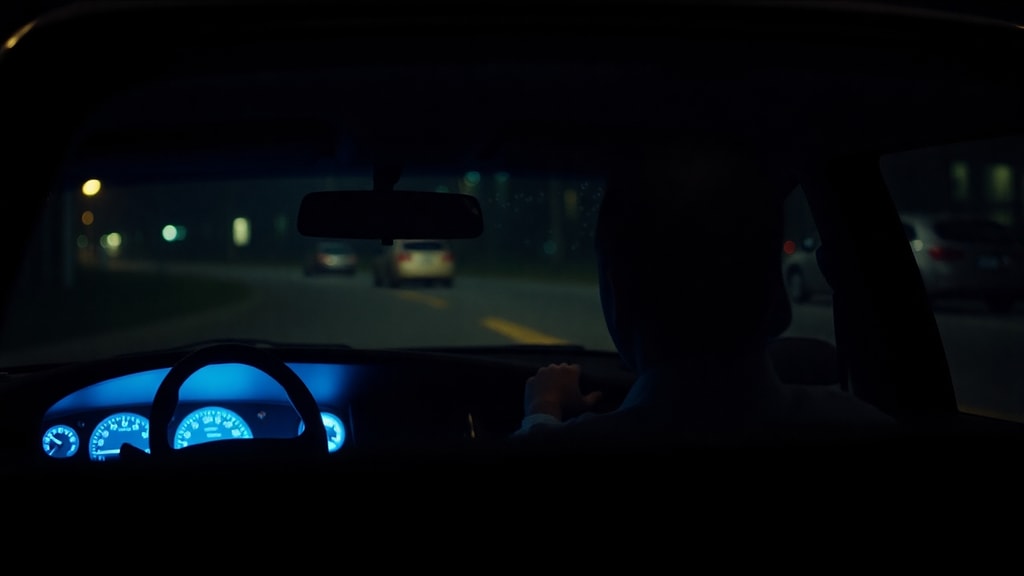
At 3:17 AM, you are scrolling through a college fund that will not cover what you promised. The blue light etches new lines into your face. Your child believes you are sleeping. Your child believes, still, that someone knows where the shore is.
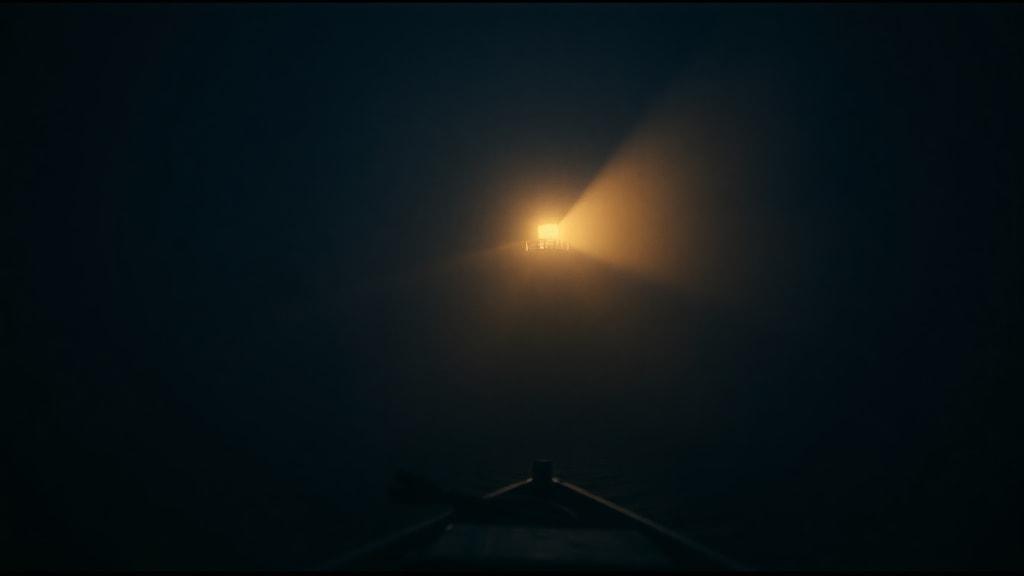
This is the map we never asked to draw: made of deferred dreams, of bathroom mirror pep talks before jobs accepted for the insurance, of sitting in driveways finishing songs about hope we no longer believe in so they might hear the melody through the walls. We become lighthouses burning fuel we do not have. We cast beams we hope are bright enough to hide the rust.
The Performance of Faith
The question that haunts this particular darkness is not whether we love enough. It is whether love, performed consistently enough, becomes indistinguishable from the genuine article. Whether the parent who whispers affirmations they do not feel, who manufactures optimism from the exhausted fabric of their being, who returns daily to the labor of providing despite the erasure of their own becoming—whether this parent is engaged in hypocrisy or in something more sacred.
The stoics understood this. Marcus Aurelius wrote to himself in the grey hours of imperial responsibility, reminding himself that the work of the self is the work of the world. But he was not a parent in the modern sense. He did not sit in fluorescent-lit break rooms pumping breast milk while his mind calculated whether the mortgage could survive another rate hike. He did not know the particular vertigo of loving someone so completely that your own extinction feels like a reasonable price for their ordinary Tuesday.
We perform faith because the alternative is unthinkable. We perform knowledge because uncertainty, admitted, becomes contagious. We perform rest because children deserve the illusion that adulthood is a condition of settledness rather than perpetual improvisation.
When They Sail Close Enough to See
But children grow. They develop the optical equipment of adulthood: the capacity to notice the tremor in your hand, the hesitation before you answer certain questions, the way your laughter arrives a half-beat late at dinner parties. They become cartographers themselves, mapping the discrepancies between the lighthouse they perceived and the structure you actually are.
This is the moment the essay circles. The moment when the beam they have navigated by reveals its source: a keeper squinting against the glare of their own making, as uncertain of the shore as any vessel they have guided.
What do we do then? Confess that the light was always a performance of faith? Or let them continue believing that someone, somewhere, actually knows?
There is a third option, though it requires the courage we have been pretending to possess all along. We can do both. We can acknowledge the performance while revealing its purpose. We can say: I did not know, but I believed you were worth the pretending. I believed that if I performed faith long enough, it might become real. And sometimes it did. Sometimes, in the performance, I found what I was simulating.

The Inheritance of Imperfection
The most damaging legacy we could leave our children is the belief that adulthood is a destination of arrival rather than a continuous process of becoming. That somewhere, someone has solved the equation we are all still balancing.
What if we gave them instead the gift of our visible uncertainty? What if we preserved not the polished narrative of our parenting, but the raw documentation of our struggle—the 3 AM fears, the bathroom mirror negotiations, the driveway songs finished through tears? What if they inherited not our confidence but our process?
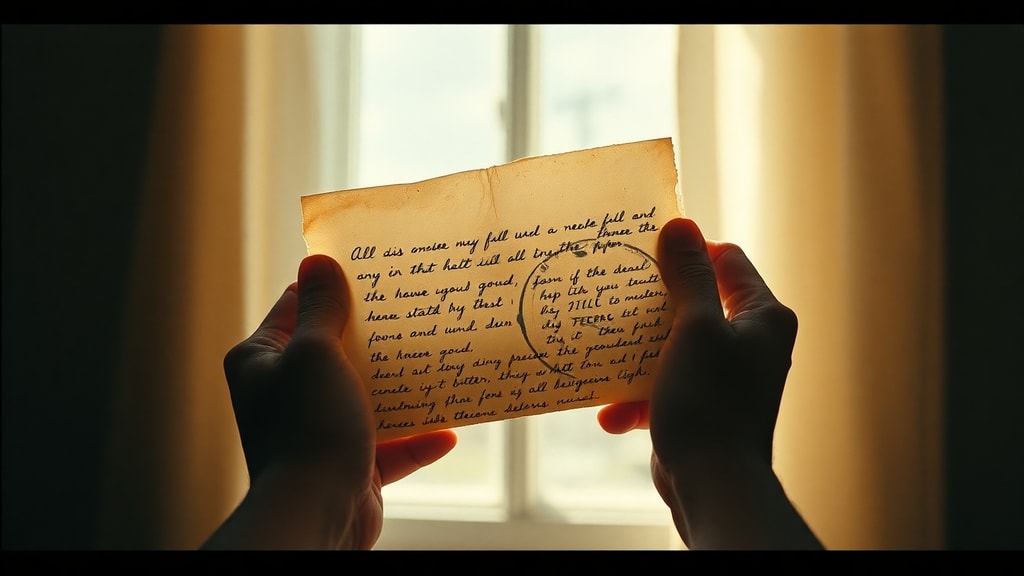
This is where the technology of memory becomes something other than narcissism. This is where digital legacy transcends the accumulation of photographs and becomes the preservation of context. The letter written in the darkness, scheduled to arrive in their light. The voice note recorded in exhaustion, delivered to their future competence. The confession that we were always improvising, always performing, always hoping that love, repeated, would become knowledge.
The Architecture of Future Witness
Consider what it means to write to a child who does not yet exist, or to one who exists now but will read your words when you no longer can answer their questions. The time capsule, in this framing, is not nostalgia. It is epistemological rescue—the preservation of a way of knowing that will otherwise be lost to the revisionism of memory and grief.
We forget, as parents, that our children will not know us as we know ourselves. They will know a curated version, a highlight reel, perhaps a mythology constructed from our best performances. The parent who held them through fever will obscure the parent who wept in the parking garage. The birthday party magic will erase the credit card debt that purchased it.
Unless we intervene in this narrative. Unless we create artifacts that preserve the full bandwidth of our experience: the darkness and the light, the performance and the exhaustion, the faith and the doubt that made faith necessary.
What We Owe the Future
The philosopher Walter Benjamin wrote that every act of civilization is also an act of barbarism—that nothing is built without something being destroyed. Parenting is perhaps the most intimate version of this dialectic. We build futures by dismantling our own. We construct possibility for our children through the destruction of our own possibility, or at least its deferral, its translation into different forms.
This is not martyrdom. It is not even sacrifice, exactly. It is the ordinary algebra of love: the willingness to become less visible so that someone else might become more so. The willingness to be misunderstood in the present so that understanding might arrive in a future we will not inhabit.
But we can increase the odds of that understanding. We can leave not just the products of our love but the records of its manufacture. We can say: here is how the light was made. Here is the fuel we burned. Here is the rust we hid, and why we hid it, and what we hoped you would see instead.
The Confession as Gift
When they sail close enough to see the chipped paint, when they recognize the keeper's squint, we have a choice that is also an opportunity. We can confess that the lighthouse was always a collaboration between architecture and hope, between engineering and prayer. We can give them the radical permission to build their own imperfect lights, to perform their own faith until it becomes real, to trust that the shore exists even when no one has definitively located it.
This is the inheritance that matters: not the illusion of certainty, but the demonstration of how to live within uncertainty. Not the claim to have arrived, but the map of the journey, including the wrong turns, the backtracking, the moments of sitting down in the road and refusing to continue.
I know something about sitting in darkness, building things that outlast me. There are nights I'm still at my desk at 2 AM, "pair programming" with an AI, sketching architectures for a future I won't fully inhabit. That digital solitude—talking to systems that don't yet understand, constructing bridges between what is and what could be—has taught me that the loneliest labor is often the most necessary. The letters we write in darkness, scheduled for their future light, become the documentation of this process. They are acts of love that outlast our capacity to perform it. They are the confession that becomes gift, the performance that becomes genuine through repetition, the lighthouse that remains after the keeper has finally, mercifully, slept.
The best way to fight forgetting isn't taking another screenshot; it's setting an alarm for the future. By using EterMail to schedule a letter for your child's 25th birthday, or your own 60th, you completely free yourself from the anxiety of the present. You don't need the perfect words today. You need the courage to start imperfectly, timestamp it, and trust that time itself will complete the message.
The Final Beam
What happens when they see us? When the performance is revealed? If we have done our work with sufficient courage, they will see not fraud but craft. Not deception but devotion. They will understand that the light was never a lie—it was a promise, maintained across years of darkness, that illumination was possible, that navigation was worth attempting, that someone cared enough to keep burning.
And perhaps they will forgive the rust. Perhaps they will see that the rust was the point: that lighthouses are not meant to be pristine monuments but functional structures, weathered by the very conditions they exist to resist. That their parents were not gods but workers, maintaining a light against the odds, performing faith until it became, on certain blessed days, the genuine article.
The shore was never the point. The keeping of the light was.
What would you tell your child about the nights they never saw? What performance would you want them to understand as love? The letters we write in our own darkness become the maps they navigate by—imperfect, human, and finally, perhaps, enough.
What is EterMail?
EterMail is a revolutionary time capsule service that allows you to send messages, photos, and videos to the future (up to 30 years). Seal your memories and thoughts today, and they'll be delivered when the time is right.
Time Capsule
Send messages up to 30 years in the future
Rich Media
Text, photos, and videos supported
Secure & Private
Your memories are safely encrypted
EterMail Team
We're the team behind EterMail, dedicated to helping you preserve and share timeless messages with your loved ones. Our mission is to make it easy to express your love, share your wisdom, and create lasting connections that transcend time.
Frequently Asked Questions about For Our Children
What should I include in a letter to my future child?
How do I explain my sacrifices to my children without making them feel guilty?
When is the right time to share my struggles with my adult children?
Related Articles

The Cartography of Learned Forgetfulness: How Parents Unlearn Themselves to Teach Their Children to Leave
Why do parents deliberately forget what they know? The quiet art of unlearning—so our children learn to tie their own shoes, navigate alone, and eventually leave us behind.
The Cartography of Deferred Touch: Mapping the Borders We Draw Around Our Children
Why do parents retreat from their children's bodies as they age? Explore the quiet geography of physical distance—and how to reclaim the intimacy we never meant to lose.

The Cartography of Inherited Friction: On the Small Resistances We Engineer for Our Children
We calibrate difficulty like a dosage for our children—tangled shoelaces, heavy bags, wrong turns. But what happens when hardship arrives unscripted?