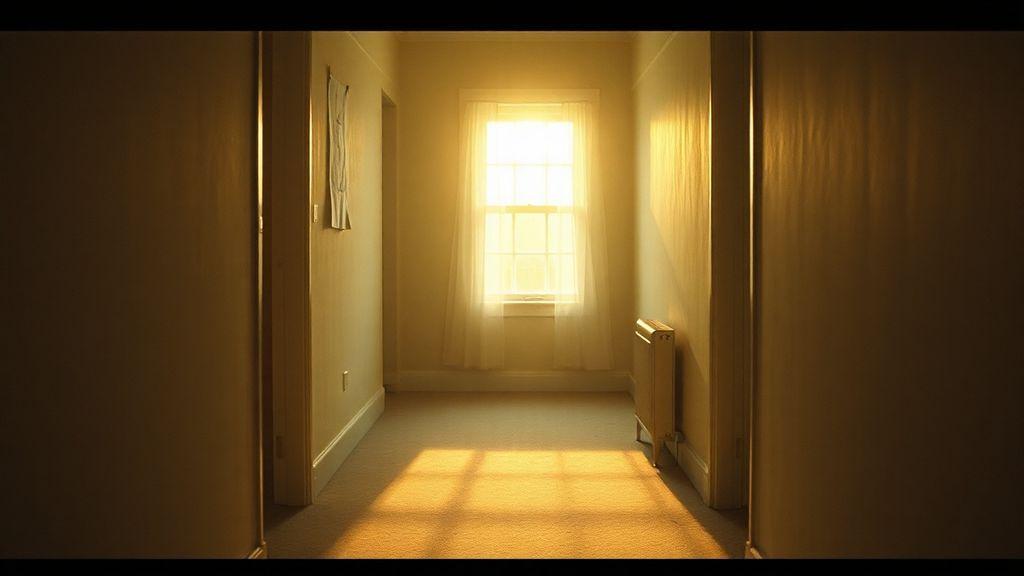
You are standing in a doorway at 2 a.m., holding a feverish child who will not remember this, and you feel the novel you were writing go silent somewhere in the next room. Not dramatically. Not with a door slam. Just a quiet exodus, a character who stops speaking, a plot thread that frays and stills. You tell yourself: later. When they are older. When there is time.
But time, you will learn, is not a savings account. It does not accrue interest. The hours you deposit elsewhere do not wait for you to return.
The Geography of Postponement
Parenthood begins as expansion—a body made room for, a heart reorganized around new gravity. Then, somewhere between the first steps and the thousandth school lunch, it becomes contraction. Not of love. Never that. But of the circumference of self. The boundaries shrink. The territory you once roamed freely, the ambitions that shaped your mornings, the friendships that sustained your evenings—all become subject to eminent domain.
We call this sacrifice, and the word carries religious weight, as if the burning itself were holy. But sacrifice, examined closely, is simply the transfer of value from one account to another. The novel to the soccer schedule. The marathon training to the dawn feeding. The friendship to the voicemail you keep meaning to return. We tell ourselves these are investments. That we are building something. That the children are the dividend.
What we do not account for is depreciation. The self, untended, loses value faster than we expect.
The Arithmetic of Invisible Loss
There is no ledger for this. No app tracks the friendships that wither from neglect, the creative projects that suffocate in the attic of someday, the body that forgets its own strength because mornings belong to packed lunches and evenings to bedtime negotiations. We do not notice the loss in real time. It accumulates in margins, in the spaces between obligations, in the exhausted collapse into sleep before we could think our own thoughts.
Consider the friendship left to voicemail. Not ended in conflict, not betrayed, simply allowed to expire through inattention. The calls that went unreturned because the child was sick, then because the child had a recital, then because too much time had passed and what would you even say now? The friend becomes a memory of a person, then a memory of a memory, then a name that surfaces occasionally with a small, dull ache.
Or the body. Not the body as aesthetic project—that vanity, at least, we might have abandoned with relief—but the body as instrument of joy. The running that cleared the mind. The dancing that required no purpose. The strength that let you carry your own weight up a mountain. You trade it for the strength to carry a sleeping child from car to bed, and tell yourself this is enough, this is the same, this is what bodies are for now.
But it is not the same. And the body knows.
The Audit
Then comes the departure. Not the first day of kindergarten, which is practice. Not the college drop-off, which is prelude. The real departure is slower, more ordinary. The bedroom that stays clean. The fridge that empties differently. The silence at hours that were once chaos.
You stand in this new quiet and realize: the children have cashed out. They have taken what you gave—what you were, what you redirected, what you poured into them—and they have become themselves, as they were always meant to. They do not owe you the life you paused. They did not ask for that specific coinage. You chose the investment vehicle. You set the terms.
Now you must audit the vault.

And here is what the audit reveals: the accounts you neglected have closed. The novel will not resume at chapter three. The characters have died of old age, or you have forgotten their voices, or the world has changed such that their story no longer matters. The friend has built a life in your absence, has new emergencies and celebrations, has learned to live without your witness. The body has adapted to sedentary survival, has new pains, new limitations, new negotiations required for every movement.
The currency expired. The selves you postponed are not waiting in suspended animation. They decayed. They became something else, or nothing at all.
The Reckoning No One Prepares You For
This is the part no parenting book addresses. The literature is abundant on the entrance—on sleep training and attachment theory and educational philosophies—but sparse on the exit, on the identity foreclosure that follows successful launch. We are not supposed to admit this. To suggest that parenthood costs something irretrievable is read as resentment, as failure to appreciate the gift. But gratitude for what you received does not negate grief for what you surrendered. Both can be true. Both are true.
The reckoning is not merely practical—what do I do with my days now?—but existential. Who am I when the role that consumed me no longer requires my performance? The answer is not immediately available. You have been, for years, a supporting character in your own life. The protagonist was always elsewhere, growing, needing, becoming. Now the stage is empty and you do not remember your lines.
Some fill the vacuum with repetition. They continue the rituals of active parenting—over-involvement in adult children's lives, compulsive grandparenting, volunteer work that mimics the urgency of early mornings and packed schedules. Others collapse, discover the depression that was waiting, the marriage that was held together only by the project of children, the self that has no vocabulary for desire untethered from duty.
A few begin the harder work: reclamation without resurrection. You cannot revive what died. But you can survey the terrain, see what remains, what new growth has occurred in the cleared spaces, what unexpected selves have been waiting for light.
The Cartography of What Remains
This is where the metaphor shifts. Not from investment to loss, but from loss to rediscovery of a different order. The vault is not entirely empty. Some assets transferred. The patience you developed in endless explanations, the resilience forged in sleepless nights, the capacity to love without condition or immediate return—these are not nothing. They are not the novel, the friendship, the unburdened body. But they are real. They are yours.
And there are new territories, if you have the courage to map them. The creativity that finds different forms, suited to hands that have changed, to a mind that has been altered by years of attention to others. The relationships that are possible now, with people who do not require your constant availability, who can meet you in the irregular hours of a life no longer structured by school calendars. The body, if you approach it with patience, with the same patience you once gave a child learning to walk—the body can be renegotiated with, can learn new languages of movement, can surprise you with what remains possible.

This is not the same as recovery. Not the same as getting back what you gave away. It is something stranger and, perhaps, more honest: building from the architecture of sacrifice rather than despite it. The self that emerges is not the self that was postponed. It cannot be. But it is not merely the hollow that remains. It is new construction on old ground.
The Letter to the Self That Was, and the Self That Will Be
There is a practice that helps, though it sounds sentimental until you try it: write to the selves. The one who stood in the doorway at 2 a.m., who chose the child over the novel, who believed in the arithmetic of postponed fulfillment. Do not judge her. She was working with the information she had, the love she felt, the culture that told her this was the only virtuous choice. Thank her, if you can. Grieve with her, if you cannot.
Then write to the self that is emerging, the one who does not yet know her own contours. Be patient. Be curious. Treat her as you once treated your children—with attention to small developments, with celebration of incremental growth, with the assumption that she is becoming someone worth knowing.
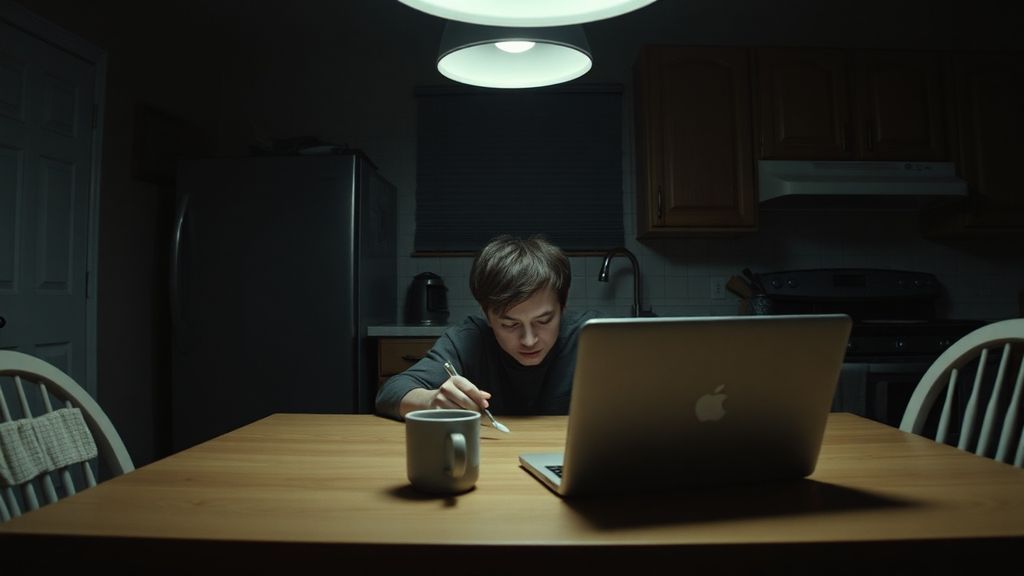
I know something about writing to futures you cannot yet see. There are nights when I'm still at my desk at 2 or 3 a.m., not with a feverish child anymore, but with a screen full of code, "pair programming" with an AI that feels almost like company in the silence. The same hour, the same solitude, but now chosen rather than endured. That extreme digital solitude—talking to systems that don't truly hear, building architectures that outlast the night—taught me that the loneliest dialogues are often the ones we most need to preserve. We are all, in our way, sending messages into darkness, hoping someone intact enough to receive them still exists on the other end.
This is where EterMail became something I needed to build—not as a product, but as a vessel. The best way to fight forgetting isn't taking another screenshot; it's setting an alarm for the future. By using EterMail to schedule a letter to yourself five years from now, written in the raw honesty of present confusion, you create a breadcrumb trail forward. Not back to who you were, but toward who you might still become. The time capsule is not nostalgia. It is an act of faith that the self reading will be someone you still recognize, still care for, still want to address.
The children will not read these letters. They have their own vaults to audit, their own sacrifices to reckon with, their own postponed selves waiting in futures they cannot yet imagine. This correspondence is yours alone. The slow, strange work of becoming someone again, after having been so thoroughly, so necessarily, someone else.
The Final Geometry
Parenthood is not, finally, a zero-sum equation. The selves we sacrifice do not simply vanish, nor are they perfectly preserved. They transform, become compost, become substrate, become the ground from which something unexpected grows. The grief is real. The expired currency is real. The closed accounts are real.
But so is the persistence of a self that refuses to be fully collateralized. So is the strange, stubborn fact of consciousness, which continues to want, to wonder, to reach toward meaning even when the structures that once organized desire have dissolved.
You stand in the doorway at 2 a.m. again, but the child is grown, is elsewhere, is sleeping in their own home with their own burdens and postponements. The silence is not absence. It is space. It is the first difficult, necessary room in a house you are only now learning to inhabit.
The novel will not resume at chapter three. But something else might begin. The body will not run as it once did. But it might walk somewhere you have not yet been. The friend is gone, but friendship is not—only that specific configuration, that particular shared language, which was always temporary, which you mistook for permanent because you needed something to be.
The vault is not empty. It was never what you thought it was. The audit reveals not loss alone, but transformation—the slow, unglamorous, absolutely necessary work of becoming someone who can live with what remains, and find it, against all expectation, enough.
What is EterMail?
EterMail is a revolutionary time capsule service that allows you to send messages, photos, and videos to the future (up to 30 years). Seal your memories and thoughts today, and they'll be delivered when the time is right.
Time Capsule
Send messages up to 30 years in the future
Rich Media
Text, photos, and videos supported
Secure & Private
Your memories are safely encrypted
EterMail Team
We're the team behind EterMail, dedicated to helping you preserve and share timeless messages with your loved ones. Our mission is to make it easy to express your love, share your wisdom, and create lasting connections that transcend time.
Frequently Asked Questions about For Our Children
How do I rebuild my identity after my children leave home?
Is it normal to feel grief when my children become independent?
How can I preserve wisdom for my children without losing myself in the process?
Related Articles
For Our Children: The Cartography of Inherited Light and the Lighthouses We Become in Darkness
What do we leave our children when they finally see our chipped paint? Explore the quiet sacrifices and unspoken love that shape generational legacy.

The Cartography of Learned Forgetfulness: How Parents Unlearn Themselves to Teach Their Children to Leave
Why do parents deliberately forget what they know? The quiet art of unlearning—so our children learn to tie their own shoes, navigate alone, and eventually leave us behind.
The Cartography of Deferred Touch: Mapping the Borders We Draw Around Our Children
Why do parents retreat from their children's bodies as they age? Explore the quiet geography of physical distance—and how to reclaim the intimacy we never meant to lose.