
The salary you negotiated at 31. The colleague who believed in you before you believed in yourself. The Thursday afternoon you realized you'd built something that would outlast your tenure. These are the wealth milestones no spreadsheet captures—yet they form the only professional narrative your future self will inherit.
We are excellent at documenting our output and terrible at preserving our becoming. We save performance reviews, tax returns, LinkedIn endorsements. We do not save the tremor in our hands after the first client said yes, the specific quality of light in the office when promotion finally came, the name of the person who saw our potential when we were still invisible to ourselves. Memory rewrites these moments into efficiency, strips them of their terror and their grace. The person you are at sixty receives a curated highlight reel with all the doubt edited out.
This is an invitation to excavate the invisible architecture of your working life before memory rewrites it, and to ask what the person you haven't become yet deserves to remember about who you were when it mattered.
The Invisible Wealth We Fail to Inventory
Financial advisors ask us to project our retirement needs, our risk tolerance, our compound interest timelines. They do not ask us to inventory the non-monetary capital that actually sustains a career across decades: the courage required to leave a toxic role with no safety net, the generosity of a mentor who answered emails at midnight, the particular resilience developed during the years nothing worked.
These are not soft skills. They are hard-won infrastructure, and they depreciate faster than we admit. The confidence you feel after a successful launch is not available for withdrawal five years later when you need it again. The network you built organically in your thirties requires archaeological effort to reconstruct in your fifties. The professional identity you constructed piece by piece—through failures you would rather forget, through small victories you did not recognize as victories at the time—erodes under the pressure of present demands.

We treat our careers as forward-only narratives, as if the person who struggled and the person who succeeded occupy separate timelines with no obligation to each other. But your future self is the only witness who can validate your past suffering as necessary, who can confirm that the years of uncertainty were not wasted but were the exact crucible required for your specific competence. Without that witness, the narrative collapses into present-tense anxiety: am I doing enough, am I far enough along, am I the kind of person who succeeds or merely the kind who tries?
The Archaeology of Professional Becoming
Consider what you would want to remember if you achieved the position you currently covet. Not the salary figure or the title—the texture of wanting. The specific insomnia of anticipation before the interview. The physical sensation of rehearsing your worth in shower steam and car radios. The person you were before the wanting was satisfied, who contained a hunger that the satisfied person can no longer access.
This is not nostalgia. It is temporal solidarity: the refusal to let your future self condescend to your past self, to let achievement bleach the memory of striving. The executive who forgets the terror of her first management role makes worse decisions. The founder who cannot recall the month he paid himself nothing cannot recognize similar sacrifice in others. The professional who has lost the emotional record of her early incompetence becomes brittle, unable to tolerate the incompetence required for new growth.
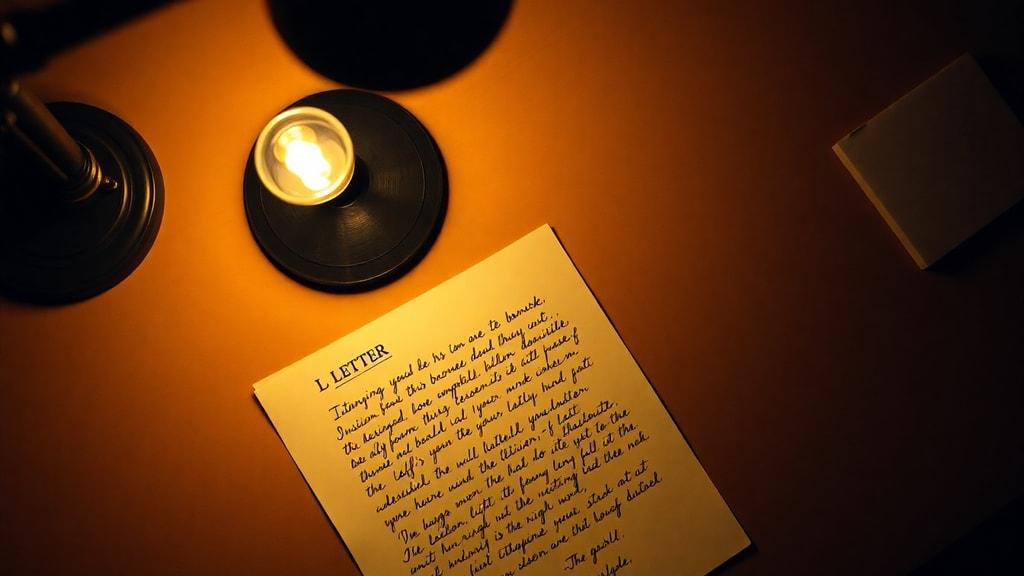
The most valuable career documentation is not the portfolio or the CV. It is the letter written in real time, before the outcome is known, preserving the uncertainty that outcome will later erase. The message composed at 2 AM during a project you are not sure will succeed, addressed to the person you hope to become, asking her to remember that you did not know. That you acted without guarantee. That the confidence she now possesses was not inherited but constructed, choice by choice, through the particular darkness of that night.
I know that darkness well. For years, I've sat alone until 2 or 3 AM, "pair programming" with LLMs, mapping architectures, chasing the hum of a screen in dead silence. That extreme digital solitude taught me something about loneliness—and about why we need dialogues that outlast the moment we speak them. The code I write isn't just functional; it's a bridge between who I am now and who I might become, between the physical and the digital, between the present self staring at the glow and some future self who will need to remember that I was here, trying.
What Deserves to Be Time-Stamped
Not every career moment warrants preservation. The algorithm of memory is already efficient at retaining public achievements and social recognition. What slips through is the private infrastructure: the internal negotiations, the quiet pivots, the relationships that shaped capacity without producing visible output.
The negotiation that redefined your worth. Not the number itself, but the hours of preparation, the bodily resistance to asking, the specific sentence you finally spoke aloud. Your future self negotiating her own value needs this precedent, needs to remember that you were once someone who did not know how to ask and learned.
The failure that redirected you. Before narrative resolution, before the failure became "the best thing that happened to me," the raw data of disappointment. The particular color of the room where you were told no. The hours afterward when continuation seemed impossible. Your future self facing new failure needs the evidence that you survived this specific density of despair, that the person who eventually thrived was the same person who could not, in that hour, imagine thriving.
The colleague who altered your trajectory. Not their professional credentials but their specific gesture: the coffee where they said the thing you needed to hear, the email that arrived at the exact moment of doubt, the example of their own imperfect courage that made your courage possible. Professional networks are documented; professional gratitude is not, and gratitude is the only emotion that reliably predicts sustained career satisfaction across longitudinal studies.
The ordinary Tuesday when you recognized your own competence. Not the promotion, not the award—the unremarked moment when you realized you no longer needed to pretend. The specific task that had intimidated you last year and did not intimidate you now. Your future self confronting new intimidation needs this evidence that competence accumulates invisibly, that the person who feels fraudulent now will eventually feel legitimate without noticing the transition.

The Future Self as Professional Witness
Why write to someone who is, by definition, you? Because she is not you. The person who will read your letter in five years or fifteen has different pressures, different blind spots, different forms of amnesia. She has survived the specific challenges you currently face and has therefore forgotten their texture. She has achieved or failed to achieve the goals you currently pursue and has therefore lost the particular clarity of pursuit. She needs your testimony because her own memory is unreliable, curated by the self-serving narrative of whoever she has become.
The letter to your future self is not a goal-setting exercise. It is an act of temporal empathy: the refusal to let your future self suffer the loneliness of believing she achieved alone, or the arrogance of believing her achievements were inevitable, or the despair of believing her current struggles are unprecedented. You are the only person who can provide this service, and you can only provide it now, before the evidence degrades.
The Technology of Persistent Memory
Physical time capsules fail. Hard drives corrupt. Cloud accounts languish behind forgotten passwords, or survive in forms we no longer have software to open. The letter composed in earnest becomes inaccessible precisely when it would be most valuable: the moment of future crisis when past testimony could provide ballast.
What is required is intentional infrastructure for emotional persistence: a system designed not for data storage but for meaning delivery, scheduled to arrive when the recipient is ready to receive it. The technology matters less than the temporal intention—the commitment to future communication as a form of self-care, the recognition that your professional life will contain multiple selves who deserve to be in dialogue.
The best way to fight forgetting isn't taking another screenshot; it's setting an alarm for the future. By using EterMail to set a delivery date 5 years from now, you completely free yourself from the anxiety of the present. You don't need to remember where you stored the letter, or hope the platform still exists, or worry that you'll open it too early when you're merely bored rather than truly ready. The letter simply arrives, unbidden, from someone who knew you intimately—because she was you.
This is exactly why I obsessed over end-to-end encryption and extreme server redundancy when building EterMail. Because I know that a letter written to the future needs to be guarded even more fiercely than a bank password. The consciousness we upload into words deserves the same protection as the consciousness we upload into code. EterMail is the digital spaceship I built to traverse the dimension of time—not because I believe technology can save us, but because I've spent my career in Silicon Valley hand-to-hand combat with AI and massive codebases, and I've learned that the hardest tech stack in the world means nothing if it doesn't serve genuine, soft human nature. The encryption ensures privacy; the scheduling ensures the letter arrives when you have forgotten you wrote it, when the surprise of your own past attention feels like receiving care from someone who knew you intimately.
The Letter You Deserve to Receive
Consider what you would want to read if you opened a letter from yourself today, written five years ago. Would you want strategic advice? Probably not—you have survived without it. Would you want encouragement? Perhaps, but encouragement ages poorly when the feared outcome did not occur. What you would want, most likely, is recognition: the sense that someone saw you accurately, struggled with you, and survived to tell you that the struggle was real and that your response to it was sufficient.
This is the letter to write. Not to your future self as project manager, but to your future self as witness. The person who will need, at some point you cannot predict, to remember that you were brave in a specific way, or generous in a specific way, or simply present through a specific difficulty. The person who will need to know that the professional identity she now occupies was built through choices that felt uncertain at the time, that her competence has precedent, that her future struggles will also become past struggles that she survived.
The salary you negotiated at 31 is a number. The person who found the courage to negotiate is a self, and selves require maintenance across time. Write to her. Schedule the delivery. Trust that she will need to hear from you, even if you cannot yet imagine why.

<
What is EterMail?
EterMail is a revolutionary time capsule service that allows you to send messages, photos, and videos to the future (up to 30 years). Seal your memories and thoughts today, and they'll be delivered when the time is right.
Time Capsule
Send messages up to 30 years in the future
Rich Media
Text, photos, and videos supported
Secure & Private
Your memories are safely encrypted
EterMail Team
We're the team behind EterMail, dedicated to helping you preserve and share timeless messages with your loved ones. Our mission is to make it easy to express your love, share your wisdom, and create lasting connections that transcend time.
Frequently Asked Questions about Career & Wealth Milestones
What should I include in a career milestone letter to my future self?
How do I write to my future self without sounding naive about what I don't yet know?
Why do career achievements feel less meaningful over time, and how can I preserve their significance?
Related Articles

The Salary You Forgot to Remember: Why Career Milestones Deserve a Time Capsule
The promotions, failures, and quiet triumphs that shaped your professional life fade faster than you think. Here's how to preserve them.
The Invisible Architecture of Your Working Life: How to Preserve Career Milestones Before Memory Rewrites Them
The salary you negotiated at 31. The colleague who believed in you first. Learn how to capture the wealth milestones no spreadsheet tracks.

The Invisible Ledger: Why Your Career's Quiet Milestones Deserve to Be Remembered
The salary you negotiated at 31. The colleague who believed in you first. Capture the invisible architecture of your working life before memory rewrites it.