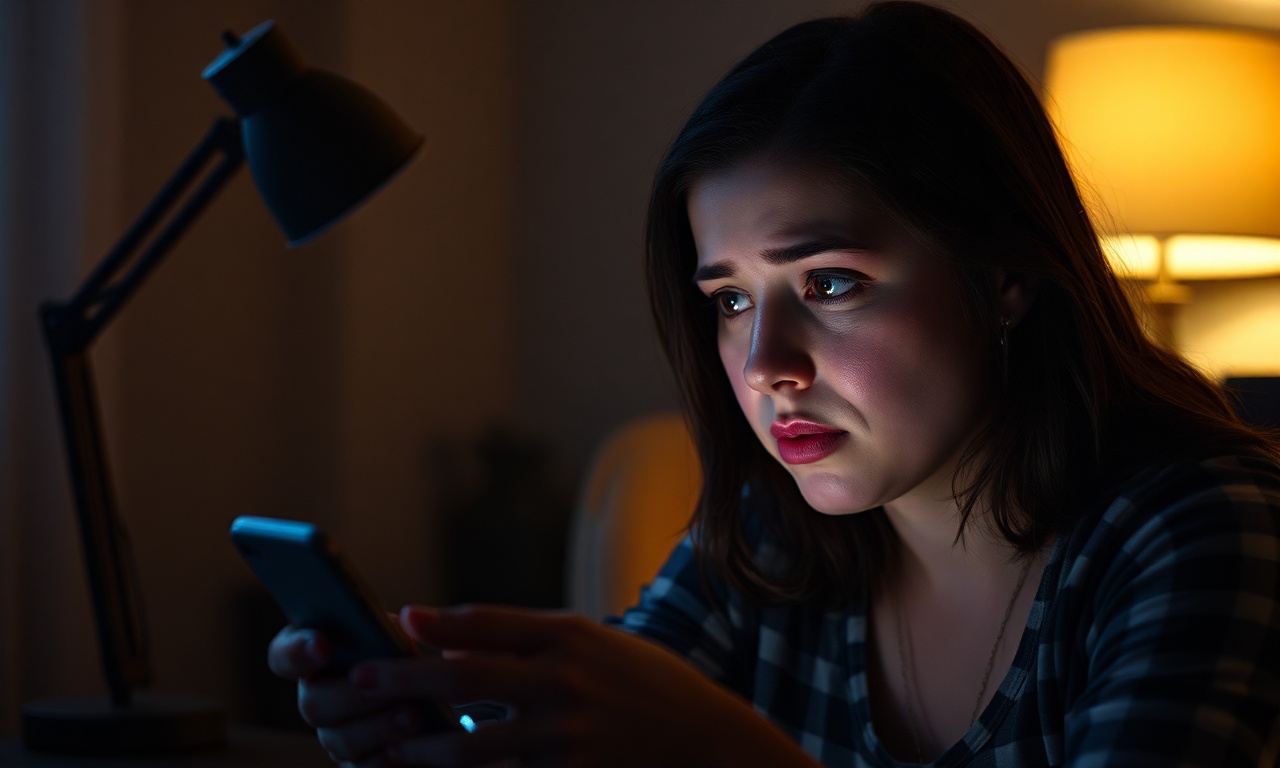
The call came at 2:47 on a Thursday afternoon. Sarah's mother heard her daughter's voice—panicked, breathless, unmistakably Sarah—explaining she'd been in a car accident, that she needed $15,000 wired immediately for bail, that she couldn't reach her husband, that she was so sorry to ask. The voice cracked in all the right places. It knew the name of Sarah's childhood dog. It called her "Mommy," a term Sarah hadn't used since she was twelve but that somehow surfaced in this moment of manufactured desperation.
The money vanished. The real Sarah was at her desk, three miles away, unaware that her voice—her panic, her syntax, her very relationship to her mother—had been harvested, synthesized, and weaponized against the person who knew her best.
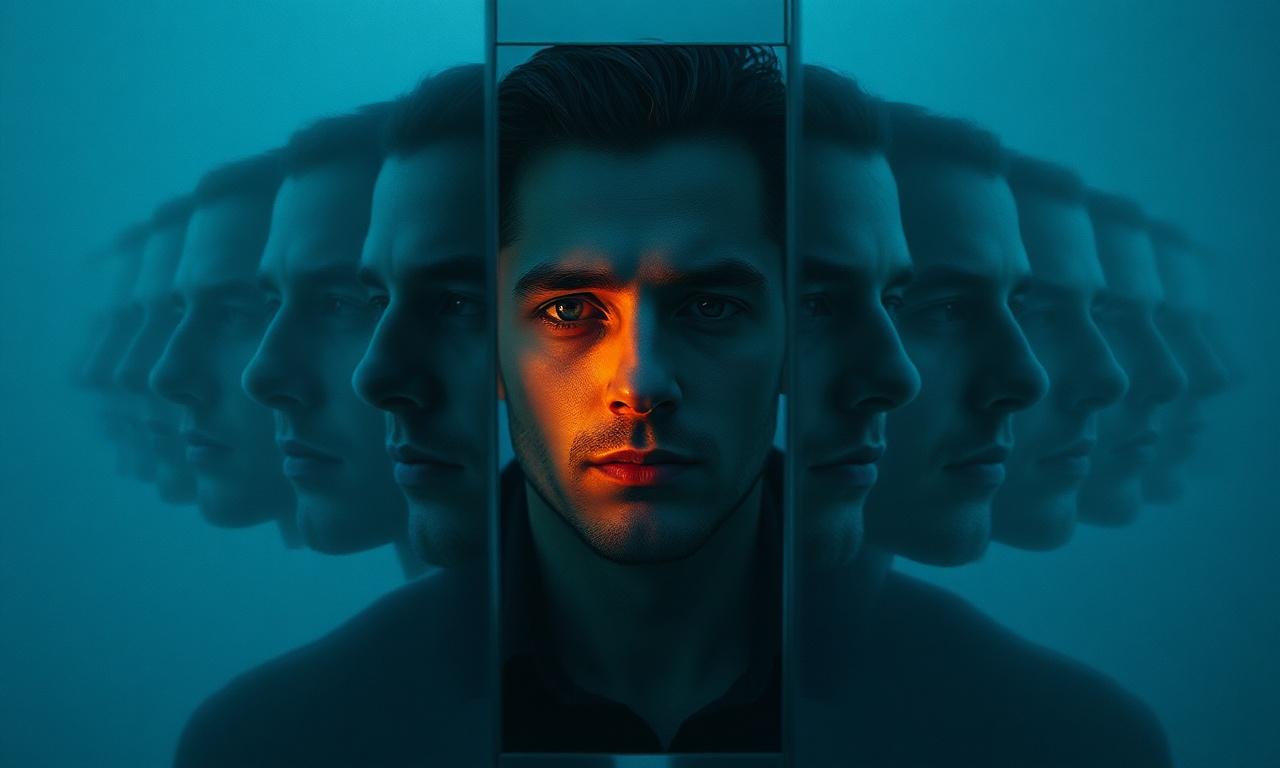
This is not science fiction. This is the architecture of betrayal that deepfakes have built: not merely a technology of deception, but a systematic dismantling of the fundamental assumption that seeing and hearing someone means they are there.
The Thirty-Second Heist: How Synthetic Media Became a Financial Weapon
Deepfake technology has undergone the kind of democratization that should terrify anyone who has ever spoken into a phone, appeared in a photograph, or recorded a video message. What required sophisticated machine learning expertise and substantial computing power five years ago now runs on consumer-grade applications. A three-second audio clip scraped from a voicemail greeting. A handful of Instagram stories. A TikTok video where you wished someone happy birthday. These fragments—digital exhaust we leave behind without thought—have become the raw material for perfect forgery.
The financial applications are multiplying with grotesque efficiency. Voice-based authentication, once celebrated as a frictionless security layer, has become a vulnerability. Banks that spent millions building biometric trust layers now discover that the very uniqueness they promised to verify can be cloned from a podcast appearance or a corporate earnings call. The synthetic voice doesn't need to be perfect—it needs to be plausible under stress, and stress is the condition in which most financial urgency operates.
The attack vectors extend beyond the obvious. Synthetic video calls now enable fraudsters to impersonate executives authorizing wire transfers, to appear as loan officers verifying identities, to sit across from victims in what feels like human presence. The technology exploits not merely our trust in media, but our deeper, older trust in faces—the evolutionary machinery that reads expression, that builds rapport through micro-expressions, that assumes coherence between appearance and identity.
The Deeper Theft: When Your Likeness Becomes Public Property
Yet focusing exclusively on financial loss misses the more profound violation. What deepfakes ultimately steal is the exclusivity of your own embodiment—the ancient, pre-digital understanding that your voice, your face, your manner of moving through the world were yours in some irreducible way. You did not choose this body, but you inhabited it uniquely. Your laugh was a fingerprint of your particular history. Your hesitation before certain words marked your specific education, your geography, your wounds.
This is not mere sentiment. The legal and philosophical frameworks for identity were built on assumptions of scarcity: one body, one voice, one continuous presence through time. Deepfakes introduce identity inflation—the unlimited reproducibility of your markers without your participation. You become, in effect, a stock character that others can cast in productions you never authorized, speaking lines you never wrote, making promises and betrayals in your name.
The psychological impact of this condition remains under-examined. We have not yet developed the vocabulary for what it means to encounter yourself as unreliable narrator, as potential impostor, as character in someone else's script. Victims of deepfake fraud report something beyond financial anxiety: a dissociative unease, a sense that the boundary between self and simulation has become permeable in ways that undermine basic orientation.
The Asymmetry of Defense: Why Protection Feels Impossible
The defensive posture against deepfakes suffers from a fundamental structural disadvantage. Creation is easier than verification. Generating a convincing synthetic voice requires minutes; proving authenticity in a world of synthesis requires institutional infrastructure, technical literacy, and constant vigilance that most individuals cannot sustain.
Current protective measures—watermarking, blockchain verification, liveness detection—remain fragmented and inconsistently adopted. The average person lacks the expertise to evaluate whether a video call employs adequate anti-spoofing measures, whether a voice authentication system has been updated to detect synthetic speech, whether their own digital trail provides sufficient material for replication.
More troubling is the distribution of vulnerability. Deepfake fraud does not target randomly. It exploits relationships of trust, moments of urgency, the specific emotional architectures that bind people together. The most sophisticated attacks are not technical but social—they require understanding who trusts whom, what words would panic a mother, what tone would convince a CFO. The technology amplifies human manipulation rather than replacing it.

Reclaiming Authenticity: The Intimate Architecture of Self-Preservation
What emerges from this landscape is not merely a technical problem but an existential one: How do we preserve the integrity of identity in an age of perfect simulation?
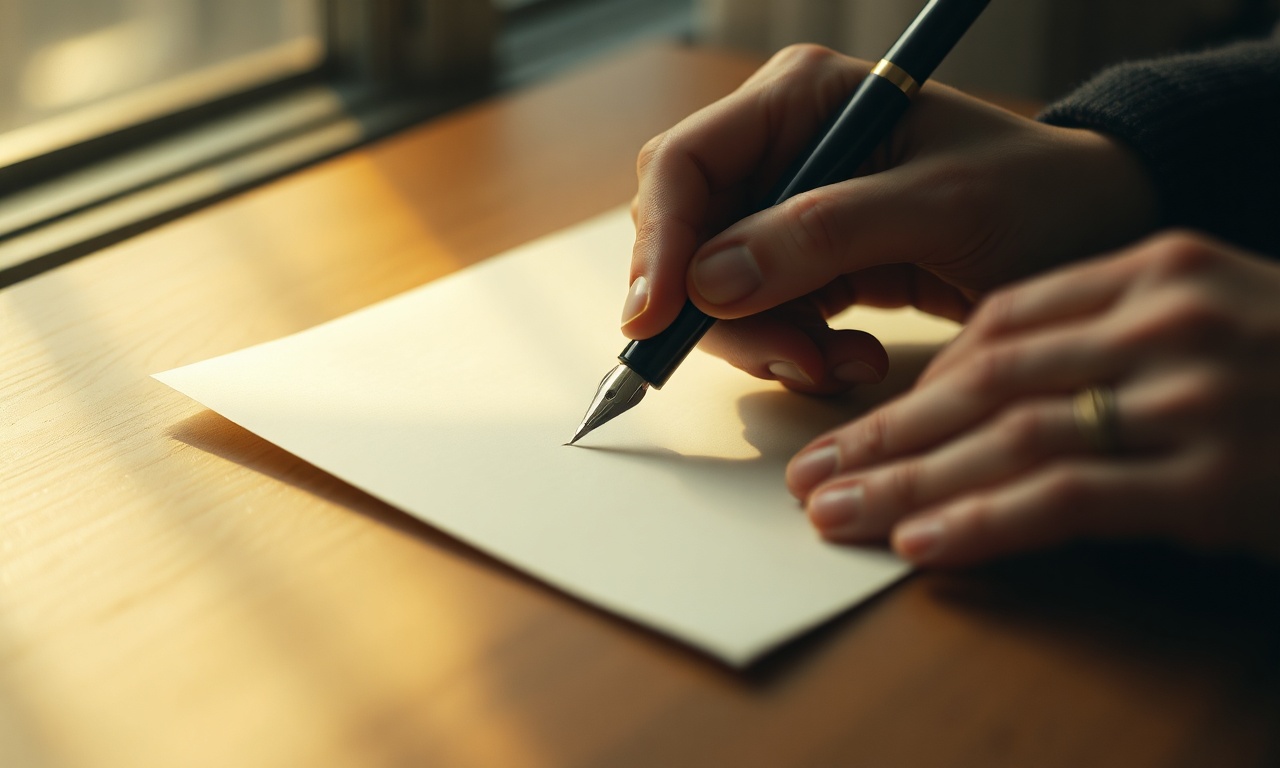
The answer, perhaps counterintuitively, may lie not in more sophisticated detection but in more intentional documentation—in creating records of authentic selfhood that exist outside the streams of casual digital production. The photographs we choose to keep, the letters we write with deliberation, the messages we compose for specific future moments—these become, in essence, anchors of verified identity, artifacts whose provenance is known because their creation was witnessed by the self that made them.
I spend a lot of nights alone with a screen, "pair programming" with LLMs until 2 or 3 AM, chasing the edge of what's technically possible. That extreme digital solitude gives you a strange relationship with your own voice—you start to hear it as just another output, another signal in the noise. But the moment I step away from the keyboard and into the mountains or the ocean, something different happens. Harsh wind, cold water, the real risk of losing control: these things strip away the illusion that we can infinitely reproduce ourselves. They force you back into the unrepeatable present, into a body that cannot be cloned, a moment that will not come again.
That tension—between the infinite copyability of digital identity and the stubborn singularity of physical experience—is what keeps me building. I've worked across e-commerce, game development, and now SaaS platforms. I've wrestled with massive codebases and complex APIs and cold server deployments. But the hardcore tech stack is never the point. The point is what it serves: the soft, stubborn, unrepeatable fact of being human.
The Future of Trust: Slow Communication in an Age of Instant Forgery
Perhaps what deepfakes ultimately demand is a recalibration of our relationship to speed. The frictionless instantaneity that digital communication promised—immediate connection, seamless verification, effortless authentication—has revealed itself as vulnerability. Trust, it turns out, requires duration. It requires the accumulation of context that cannot be synthesized in a training run, the weight of history that makes a voice recognizable not merely for its acoustic properties but for what it has said before, how it has changed, what it remembers that no database contains.
Slow communication—the deliberate composition of messages whose value lies partly in their deferred arrival, their resistance to immediate consumption—becomes not nostalgia but strategy. The time capsule, the future letter, the scheduled message: these formats embed authentication in their very temporal structure. They say, in effect, I was here, thinking of you, at a moment before this arrival—a claim that synthetic media cannot falsify without access to the platform's scheduling architecture itself.
This is not to suggest that such platforms replace technical security measures. Rather, they address a dimension that pure technology cannot: the emotional and relational infrastructure of trust. When synthetic media can replicate the surface of any interaction, what remains is the depth—the history, the intention, the specific care that went into preparing something for a particular recipient at a particular time.
The best way to fight forgetting isn't taking another screenshot; it's setting an alarm for the future. When I built EterMail, I was obsessed with this exact problem: how do you preserve a voice that hasn't been stolen, but simply lost to time? How do you send a message that carries the weight of having been composed, not just having been generated? By using EterMail to set a delivery date five years from now, you completely free yourself from the anxiety of the present. You create a temporal chain of custody for your own voice—a document of who you were, how you spoke, what you valued, that cannot be synthesized retroactively because its creation was bound to a specific moment of intentional composition.
The same holds for messages composed for loved ones: a letter to a child at graduation, a note to a spouse on a future anniversary, words prepared for moments you may not yourself witness. These become authenticity infrastructure—not in the technical sense of cryptographic verification, but in the deeper sense of maintaining a thread of genuine self-expression that runs parallel to the synthetic noise.
The Unfinished Work of Being Recognizable
The fight against deepfake fraud will continue on technical fronts: better detection, stricter regulation of synthetic media tools, improved biometric systems that can identify the subtle artifacts of generation. But the deeper work is cultural and philosophical. We must rebuild, or perhaps build for the first time, a social understanding of authenticity that does not depend on the naive assumption that seeing is believing.
This means teaching ourselves and others to verify through relationship rather than media alone. To ask questions whose answers live only in shared history. To create pauses in urgent communications that allow for cross-confirmation. To value, and to practice, forms of expression whose authenticity is guaranteed by their deliberate, unhurried creation rather than their immediate transmission.
Sarah's mother now has a protocol: any urgent call, any request for money, any voice claiming distress must be interrupted by a question only the real Sarah could answer—not a fact that could be scraped from social media, but something from the texture of their specific bond. The synthetic voice, however perfect, cannot improvise the history of two lives intertwined.
Your voice is no longer exclusively yours. Your face is no longer proof of your presence. In this condition, the work of self-preservation becomes the work of intentional memory-making—of creating artifacts whose authenticity is secured by their care, their timing, their specific address to specific others. The letter to your future self, the message to a child you may not meet, the words prepared for a distant anniversary: these become, against the tide of simulation, the genuine articles of a self that refuses to be dissolved into infinite reproducibility.
The deepfake may wear your face. It cannot wear your intention. It cannot replicate the particular gravity of having chosen, in a specific moment, to reach across time and say: This is who I was. This is what mattered. This is yours, and only yours, to receive.
What is EterMail?
EterMail is a revolutionary time capsule service that allows you to send messages, photos, and videos to the future (up to 30 years). Seal your memories and thoughts today, and they'll be delivered when the time is right.
Time Capsule
Send messages up to 30 years in the future
Rich Media
Text, photos, and videos supported
Secure & Private
Your memories are safely encrypted
EterMail Team
We're the team behind EterMail, dedicated to helping you preserve and share timeless messages with your loved ones. Our mission is to make it easy to express your love, share your wisdom, and create lasting connections that transcend time.
Frequently Asked Questions about Digital Privacy & Security
How can I tell if a voice call is a deepfake scam?
What legal protections exist against deepfake financial fraud?
How do I reduce my personal risk of being deepfaked?
Related Articles

The Great Travel Meltdown of 2026: When Your Passport Becomes Someone Else's Data
What happens when every boarding pass and passport scan becomes a permanent ledger of your life? Here's how travelers are reclaiming control.

When AI Knows You Better Than You Know Yourself: The Quiet Crisis of Digital Identity
What happens when AI can simulate you more convincingly than you remember yourself? Explore why digital privacy is now about preserving the irreducible mystery of self.

The Geography of Memory: How Every Photo You Share Becomes a Map of Your Most Vulnerable Self
Every photo you share carries invisible GPS coordinates. Learn how image metadata exposes your patterns, routines, and vulnerabilities—and how to reclaim control.