The Smile That Held Too Long
The photograph still sits in a drawer somewhere—four faces arranged on a dock at sunset, everyone wearing the same shade of coral because you read that color theory improves family cohesion. Your daughter's smile had started genuine at 6:47 PM, you remember checking. By 6:52, it had become something else entirely: a facial negotiation, a child learning that love sometimes means holding your face in a shape that makes other people comfortable.
You spent six weeks planning that vacation. Three years saving. And in the image that was supposed to prove it all worthwhile, your son is looking at his shoes. Not dramatically. Just... elsewhere. Already gone from the moment you were so determined he would remember.
This is the cartography of rehearsed joy—the elaborate mapping of celebrations we stage for our children that they never actually requested. The birthday party with handmade favors for classmates who won't come. The family photo where everyone holds the smile until someone cries. The vacation saved for three years that they spend scrolling through their phones, not because they're ungrateful, but because the human nervous system cannot metabolize manufactured transcendence.
We have become, so many of us, event planners for memories we need them to have more than they need to live.
The Invention of Childhood as Spectacle
There is a peculiar modern assumption that happiness requires documentation to exist. We do not simply bake the cake; we stage the cake. We do not merely gather; we curate the gathering. The Pinterest board precedes the experience. The caption writes itself before the moment arrives.
Somewhere in this machinery, we lost the thread of what our children actually experience versus what we need them to represent.
Consider the elaborate first birthday party—for a child who will not remember it, designed entirely for adult consumption. The handmade decorations, the themed dessert table, the professional photographer capturing frosting on a face that doesn't yet understand performance. We are not celebrating the child. We are celebrating our own capacity to celebrate. We are proving something, though to whom remains unclear.
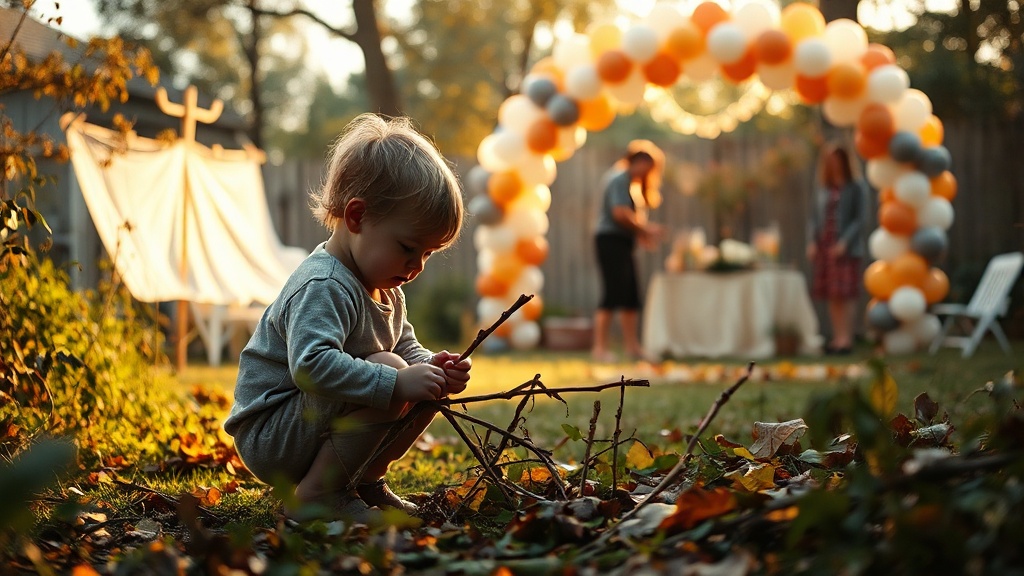
The child in the garden does not need the balloon arch. The child in the garden is already constructing worlds from what the earth offers freely. But we cannot photograph that happiness easily. It does not fit the narrative of parental sacrifice and triumph. It does not validate the late nights and credit card debt.
The Economics of Manufactured Memory
We should speak plainly about what this curation costs—not merely in dollars, though the children's party industry now generates billions annually, but in the quiet erosion of presence itself.
Every hour spent researching the optimal destination for a "core memory" is an hour not spent witnessing who your child actually is. Every dollar allocated to photographic proof of togetherness is a dollar not spent on the unglamorous daily work of being together: the breakfast silences, the car ride complaints, the bedtime negotiations that no one will ever pin to a vision board.
And the children know. They have always known.
They know when your attention fractures between their story and the phone that will broadcast it. They know when your praise arrives contingent on their performance of gratitude. They know, with the devastating accuracy of the ungaslit, when they have become actors in a production where you are the primary audience.
The Unphotographable Child
What happens when we stop?
Not the performative stop—the social media announcement of "we're going unplugged this weekend!" followed by documentation of the unplugging. The actual stop. The cessation of curation. The radical, terrifying act of witnessing without capturing, of participating without directing.
You might discover your daughter's private language with her stuffed animals, the elaborate narratives she constructs when no one is watching to applaud. You might notice how your son's body loosens when the camera disappears, how his laughter changes frequency, becomes less performative, more animal, more true.
You might find them happy in ways that don't photograph well.

The child who collects rocks not for a curated nature table but because rocks genuinely fascinate them. The child who prefers the cardboard box to the toy it contained, not as a charming anecdote for relatives but as a genuine preference. The child who is, in these unwitnessed moments, fully themselves rather than a reflection of your aspirations for them.
This child does not need your production. This child needs your attention, unmediated and undemanding.
The Letters We Cannot Stage
There is a particular loneliness to realizing you have been performing parenthood more than practicing it. It arrives often in quiet moments—the school event you attended more for your own narrative than their need, the gift you selected for its impression on other parents rather than its resonance with your child.
But here is what remains when the performance stops: the actual relationship. The one that exists in the dark, in the unposted, in the unremarkable accumulation of days that will constitute their actual childhood.
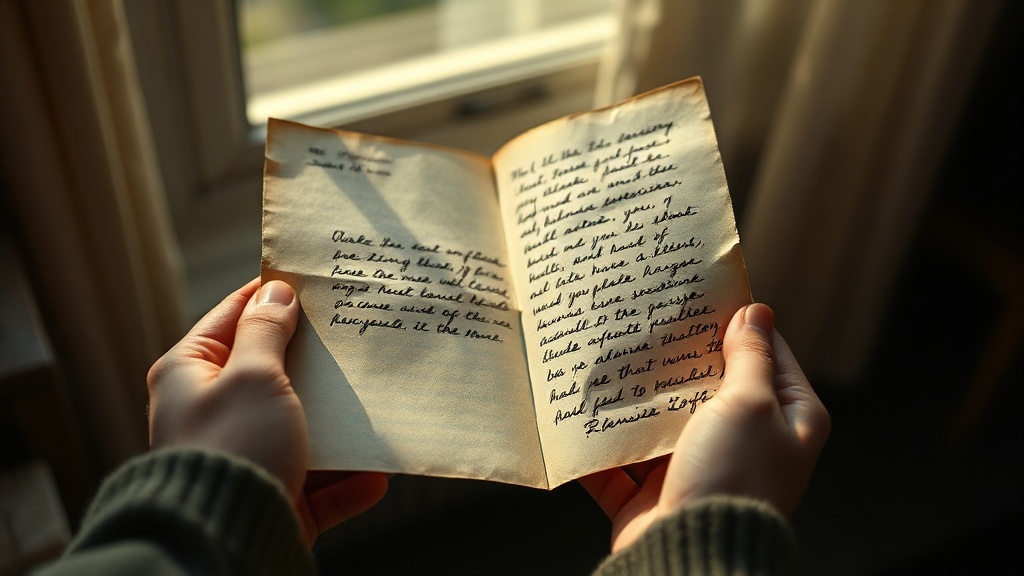
Some parents are beginning to document this other childhood—not for social consumption, but for the future itself. They write letters to their children that will arrive years hence, when the child is no longer a child, when the parent may no longer be present to speak these truths aloud. These letters contain not the curated highlights, but the observed particulars: the way they pronounced "spaghetti" at four, the particular ferocity of their concentration while building, the questions they asked that revealed how they were constructing meaning from mystery.
I know this impulse intimately. There are nights—after I've finally stepped away from the screen, after the LLMs have gone quiet and the code has deployed—when I feel the weight of all these digital hours, these synthetic conversations, these architectures built in solitude. I go hard into the mountains on weekends, skiing until my legs burn, surfing until the ocean reminds me I am not in control. That rawness, that unmediated confrontation with reality, is what I crave. It teaches me what the digital world can never replicate: the unrepeatable texture of a single moment, exactly as it is, unimproved and unrecorded. And it is from that place—of knowing what we lose when we over-curate, when we perform instead of participate—that I built EterMail. Not to capture the performance, but to preserve the witness. A letter scheduled to arrive when your daughter turns twenty-one, written when she was seven and you were still learning to see her clearly. A message to your son's future self, composed in the raw immediacy of his actual childhood rather than your retrospective narration of it. The best way to fight forgetting isn't taking another screenshot; it's setting an alarm for the future. By using EterMail to set a delivery date 5 years from now, you completely free yourself from the anxiety of the present.
These are not the memories you staged. These are the observations you earned by finally stopping the production.
The Courage of Unremarkable Love
The most radical act available to contemporary parents may be this: to love your children in ways that offer no external validation. To sit with them through boredom without redirecting. To witness their ordinary play without improving it. To be present without documenting, to be attentive without directing, to be satisfied with their happiness even when it produces nothing you can display.
Your children did not ask for the production. They asked, if they asked anything, for your unhurried attention. For the version of you that is not planning the next experience but inhabiting this one. For the parent who can tolerate the discomfort of unremarkable time, who does not need every moment to justify itself through future significance.
The child beneath the production is already happy. Already constructing meaning. Already becoming themselves in ways that resist your curation and will outlast your documentation.
Your task is not to manufacture their joy. Your task is to stop interrupting it with your need to record, to improve, to prove.
The photograph in the drawer will yellow. The party decorations will collapse in some landfill. The coral shirts will be outgrown and forgotten.
But the child in the garden, playing with sticks while you arranged balloons they didn't want—that child will remember, in some pre-verbal way, whether you eventually put down the decorations and came to see what they were building. Whether you could be satisfied with their happiness in its unphotographable form. Whether you loved them enough to let their childhood belong to them.
That is the only cartography worth practicing. The mapping not of rehearsed joy, but of witnessed presence. The geography of a love that needs no audience to exist.
What is EterMail?
EterMail is a revolutionary time capsule service that allows you to send messages, photos, and videos to the future (up to 30 years). Seal your memories and thoughts today, and they'll be delivered when the time is right.
Time Capsule
Send messages up to 30 years in the future
Rich Media
Text, photos, and videos supported
Secure & Private
Your memories are safely encrypted
EterMail Team
We're the team behind EterMail, dedicated to helping you preserve and share timeless messages with your loved ones. Our mission is to make it easy to express your love, share your wisdom, and create lasting connections that transcend time.
Frequently Asked Questions about For Our Children
Why do parents feel pressure to curate perfect childhood experiences?
How can I connect with my child without planning elaborate activities?
What should I write in a letter to my child's future self?
Related Articles
The Cartography of Deferred Touch: Mapping the Borders We Draw Around Our Children
Why do parents retreat from their children's bodies as they age? Explore the quiet geography of physical distance—and how to reclaim the intimacy we never meant to lose.

The Cartography of Inherited Friction: On the Small Resistances We Engineer for Our Children
We calibrate difficulty like a dosage for our children—tangled shoelaces, heavy bags, wrong turns. But what happens when hardship arrives unscripted?
The Quiet Embezzlement: On the Selves We Sacrifice and the Empty Vaults They Leave Behind
What happens when the children leave and we must face the vault of postponed selves? A meditation on parenthood, lost identity, and reclaiming what remains.