
You are arguing with the dishwasher, or maybe with traffic, when it happens. "Well, actually," you say, with that particular pause, that slight deflection before the correction. And you freeze. Because that wasn't your cadence. That was his. That was the thing he said that used to make you want to throw a spoon across the kitchen, the verbal tic you mocked at Thanksgiving, the tiny habit that announced his presence in any room before his body followed.
Now it's yours. And the strangest part? It doesn't feel like possession. It feels like competence. Your tongue finally learned something useful from him, something that organizes your thoughts, that buys you half a second of authority in a conversation. The ghost didn't haunt you. It graduated you.
This is the unmapped territory of grief that no one warned us about: not the anniversaries, not the emptied chairs, but the afternoon you realize they've colonized your voice not as haunting but as habit, and you must decide whether to prune them out or let them bloom in a mouth they never kissed.
The Inheritance Nobody Catalogs
We expect to inherit objects. The watch, the recipe cards with their fading pencil marks, the sweater that still smells faintly of their cologne if you bury your face in it long enough. We prepare for these transfers. We write them into wills, we argue about them at readings, we photograph them for insurance purposes.
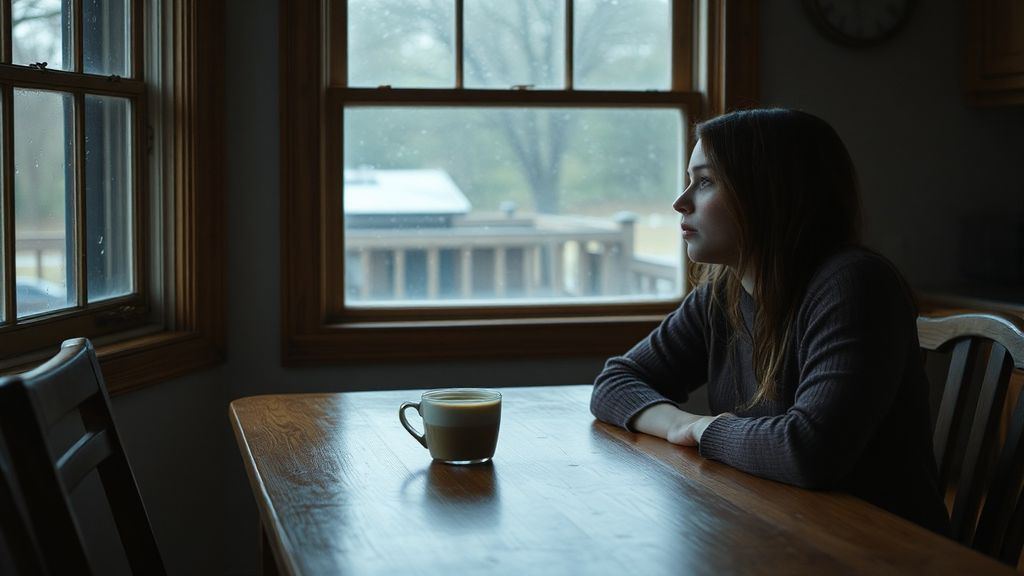
But nobody tells you about the joke structure you'll unconsciously adopt. The three-beat setup, the pause, the slightly self-deprecating landing—that was his architecture, and now you've moved into it without signing a lease. Nobody warns you that you'll start describing rain the way she did, not as "pouring" but as "coming down in sheets, like someone's trying to wash something off the world." Nobody mentions the dismissive sound you'll make at bad news, that little exhale through the nose, half-sigh and half-snort, the one that used to drive you absolutely crazy when they did it at the dinner table.
These are the unearned inheritances, the intellectual property that passes without probate. And unlike the watch, you can't take them off. You can't store them in a drawer when they become too heavy. They activate without your permission, in job interviews, on first dates, during fights with people who never knew the original speaker and therefore cannot possibly understand why you suddenly sound like a middle-aged man from Ohio when you get defensive about your cooking.
The Shock of Functional Haunting
For months after my father died, I waited for the dramatic haunting. The dream visitations, the songs on the radio at impossible moments, the orbs in photographs. Grief literature had prepared me for theater. What I got instead was far more disorienting: I became competent at things he'd done poorly.
He was a man who explained things. Badly, usually, with too many digressions and a tendency to repeat the same analogy three times as if volume equaled clarity. I had spent years avoiding this, cultivating brevity, learning to stop talking when I'd made my point. Then one day, teaching a colleague a spreadsheet function, I heard myself launch into the exact same meandering explanation, complete with the same flawed analogy about parking cars in a garage. And it worked. She understood. My father had finally, through me, explained something successfully.
This is what I mean by functional haunting. The behaviors we absorbed not through admiration but through exposure, the ones we resisted and mocked and swore we'd never replicate, have survived the death of their originator by finding more efficient hosts. Your body has become a better version of their failed experiment. And that success creates a terrible, tender confusion. Are you honoring them? Betraying your own individuality? Or simply admitting that some of their broken tools happened to fit your hands?
The Pruning Dilemma
There is a version of healing that looks like surgical removal. You notice the tic, you trace it to its source, you excise it. You practice speaking without that pause. You find new metaphors for weather. You build a voice that is demonstrably, auditably yours, untainted by the dead.
I tried this. For six months, I became a vigilante of my own speech, arresting his phrases before they could commit their crimes in my mouth. It was exhausting. More than that, it was lonely. Because these tics had become, without my consent, the architecture of my thought. Removing them didn't reveal some pure self underneath. It revealed silence, hesitation, a person who didn't know how to begin sentences because she'd destroyed all her own starting points.

The question of pruning assumes there's an original voice to return to, a pre-infected self that existed before their language colonized yours. I'm no longer sure this is true. We are, all of us, compost heaps of every voice we've ever loved or endured. The self is not a territory to defend but a conversation to continue.
Letting Them Bloom in Foreign Soil
I kept the "well, actually." I use it sparingly, with awareness, sometimes with a small internal bow to its originator. I kept the rain description too, because it's better than anything I would have invented, because she was right, the world does sometimes need washing off.
What changed was the relationship to these inheritances. They are no longer involuntary possessions, the body betraying the mind. They are choices, cultivated like cuttings from a plant that grew in someone else's garden. I decide when the soil is right. I decide which blooms to keep and which to deadhead before they spread.
This is, I think, what healing actually looks like: not the elimination of the lost person's presence in your life, but the transformation of haunting into horticulture. You become not their medium but their inheritor, with all the agency that word implies. You can let their verbal tics bloom in your mouth without letting them take root in your identity.
The Letters We Write to Unravel This
I didn't understand any of this until I tried to write it down. Not in a journal, exactly—journals demand present-tense processing, the hot take, the immediate reaction. What I needed was distance, the kind that lets you see patterns only visible from altitude.
So I wrote him a letter. Not a grief letter, not the "I miss you" variety that accumulates in drawers and never gets sent. A specific letter, dated to arrive years from now, asking questions I couldn't answer in the present: Do you know you've become part of my syntax? Did you intend this? Should I thank you or sue your estate for linguistic theft?
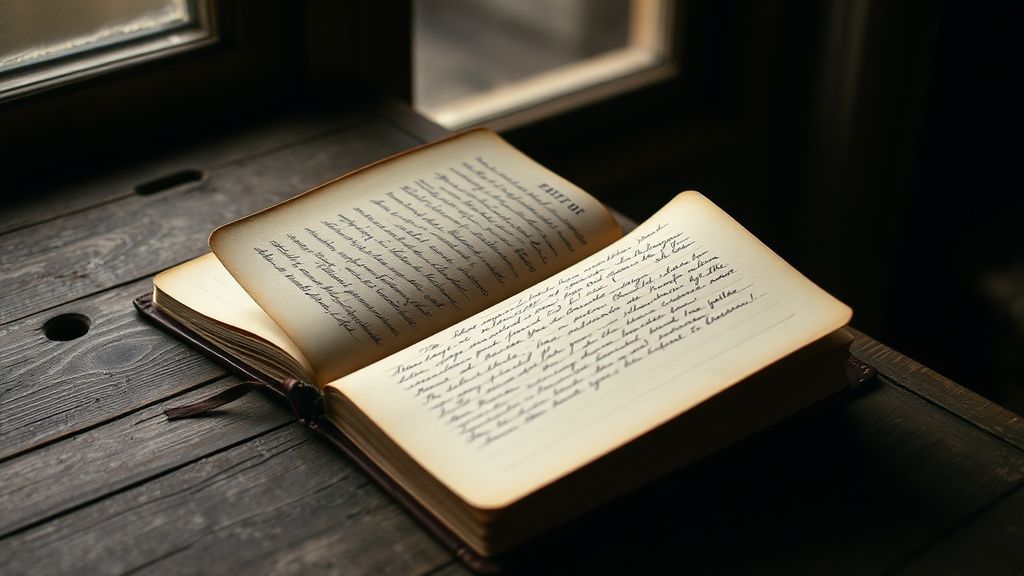
The act of addressing him in future tense—will you understand by then, will I have forgiven both of us—created a space I couldn't find in therapy or conversation. Future letters compress time. They let you speak to the dead as if they might eventually catch up, as if your evolution might finally make sense to them from whatever vantage they now occupy.
This is what drew me to the idea of scheduled messages, letters locked until a future date when the self who wrote them has become someone else. Not because the dead will read them—they won't—but because the future self who receives them will have perspective the present self cannot manufacture. She will know whether I kept the verbal tics or pruned them. She will know whether they became precious or embarrassing. She will, finally, be able to tell me what healing actually cost.
The Builder's Dilemma
There's a particular loneliness in building something meant to outlast you. I know it well. Most nights you'll find me at my desk until 2 or 3 AM, "pair programming" with an LLM, mapping architectures for a platform that might only matter years from now. That extreme digital solitude—just me and the glow, the cursor blinking like a heartbeat—has taught me something about why we reach backward and forward at once. We're all trying to have conversations across time, with versions of ourselves and people we've lost who no longer occupy the same clock.
The irony isn't lost on me: I spend my days wrestling with the hardest tech stacks Silicon Valley can offer, yet the product I keep returning to is the softest thing I know. A letter. A promise to a future self. A way to preserve the exact timbre of a voice before it gets overwritten by the voices of the dead.
This is exactly why I obsessed over end-to-end encryption and extreme server redundancy when building EterMail. Because I know that a letter written to the future—especially one trying to capture something as fragile as whose syntax you've inherited—needs to be guarded even more fiercely than a bank password. The questions you ask your future self deserve to arrive intact, unopened, waiting exactly as you left them.
The Mouth They Never Kissed
There is a particular ache in realizing your voice has become a museum of someone else's habits, displayed in the mouth they never kissed. The intimacy is inverted, perverse. They shaped this instrument without knowing its final repertoire.
But there is something else too, something I resist naming because it sounds too close to gratitude, and I am not grateful for death, I refuse that bargain. Let me call it continuity without submission. The recognition that their language survived by becoming useful to you, that their failed explanations finally found working throats, that their metaphors for weather turned out to be true and you are simply the one now proving it.
You do not have to prune them all. You do not have to let them all bloom. You can be, instead, a selective gardener, a curator of influences, a person who finally understands that the voice you thought was yours was always already a chorus, and one of the voices has simply stopped singing aloud while continuing to shape the melody.
The healing is not in choosing between their voice and yours. The healing is in recognizing that the choice exists at all, that every sentence you speak is an election, that you are finally, in the mouth they never kissed, voting.
And sometimes, in the voting booth of your own throat, you cast a ballot for them. Not because you have to. Because they've finally, accidentally, earned it.
What is EterMail?
EterMail is a revolutionary time capsule service that allows you to send messages, photos, and videos to the future (up to 30 years). Seal your memories and thoughts today, and they'll be delivered when the time is right.
Time Capsule
Send messages up to 30 years in the future
Rich Media
Text, photos, and videos supported
Secure & Private
Your memories are safely encrypted
EterMail Team
We're the team behind EterMail, dedicated to helping you preserve and share timeless messages with your loved ones. Our mission is to make it easy to express your love, share your wisdom, and create lasting connections that transcend time.
Frequently Asked Questions about Healing & Remembrance
How do you process grief when you start acting like the person you lost?
Can writing letters to deceased loved ones actually help with healing?
Why do we unconsciously adopt the speech patterns of people we've lost?
Related Articles

The Geography of Absence: How Reclaiming Space Becomes Its Own Kind of Healing
What happens when you finally move the couch? Explore how reclaiming physical space after loss creates room for healing and new beginnings.

The Lightbulb in the Hallway: On Finishing What the Dead Left Undone
Why replacing a flickering lightbulb can break your heart—and why completing a loved one's unfinished tasks is its own strange form of healing.

The Quiet Arithmetic of Moving Forward: When Your Body Learns a Life Measured for One
When grief becomes daily renegotiation: how we learn to inhabit space alone, and why healing happens in the body before the heart.