
You are standing in an elevator you will not remember. Fluorescent lights hum overhead. Someone named Derek is complaining about quarterly targets. You are 26, or 31, or 43, and you are certain this moment means nothing.
But your future self—sitting in a chair you cannot yet imagine, perhaps holding coffee grown in a country that does not yet export it—will want to know what you wanted. What you feared. What you almost walked away from, and why you stayed.
The career milestones that matter are rarely the ones on your LinkedIn. They are the invisible ledgers: the morning you realized your work helped someone, the evening you understood your ambition had quietly changed shape, the afternoon you sat in your car and wept from exhaustion or relief or both. These moments resist spreadsheet capture. They demand a different kind of record-keeping.
The Wealth We Mismeasure
We have inherited a narrow definition of professional success. Net worth. Title progression. Square footage of corner office. These metrics travel well at dinner parties but dissolve under the pressure of actual memory.
Ask someone in their sixties what they remember from their working life. They rarely mention the year they maxed their 401(k). They mention:
- The colleague who believed in them before they believed in themselves
- The project that failed spectacularly and taught them what they were actually capable of
- The Tuesday when a stranger's thank-you email arrived, and the years suddenly felt worthwhile
Wealth, in the accounting of a life, includes emotional capital. The resilience built through rejection. The clarity earned through burnout. The unexpected generosity of mentors who saw something you could not yet see in yourself.

These are the deposits your future self will want to withdraw. And like any wealth, they compound only if documented while fresh.
The Letters We Owe Ourselves
Consider the versions of you scattered across time. The one who accepted the job in the unfamiliar city. The one who declined the promotion to protect something fragile at home. The one who is, right now, wondering if the current struggle will ever resolve into meaning.
Each of these selves holds intelligence your future self needs. The problem is not that we forget. The problem is that we misremember. We reconstruct our pasts to flatter our present, smoothing the contradictions, erasing the uncertainty that was actually the point.
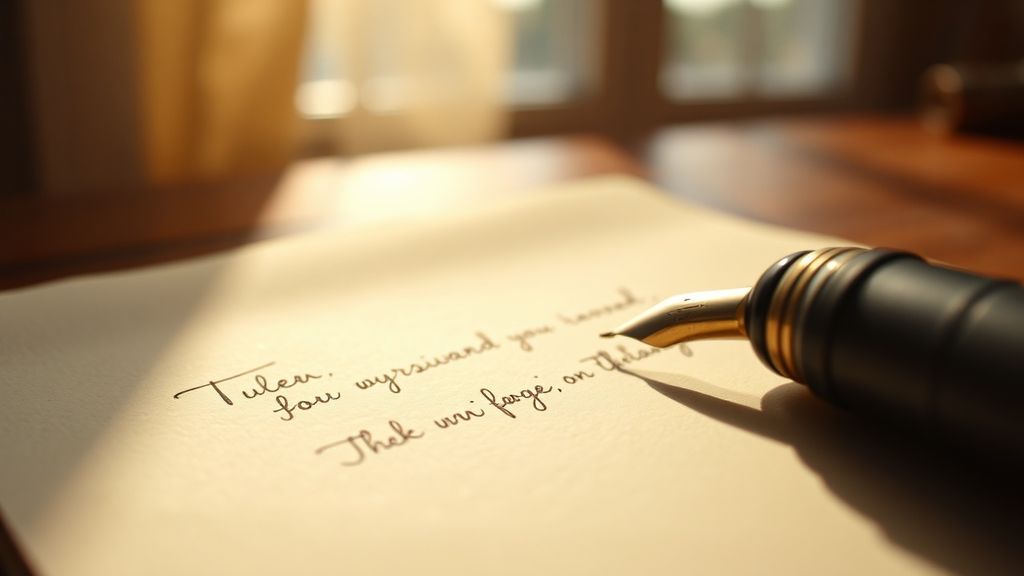
A letter written in real time—before the outcome is known, while the fear still has texture—preserves something no retrospective can recover. The specific weight of a decision. The particular color of hope before it was validated or disappointed.
What to Capture in Professional Time Capsules
The Ambition That Terrifies You
Not the sanitized version you share in interviews. The real one. The role you want but suspect you do not deserve. The industry shift that feels impossible from where you stand. Your future self needs to know what you were reaching toward, not merely what you achieved.
The Evidence of Growth You Cannot Yet See
You are learning more than your current metrics reflect. The patience you are practicing with difficult colleagues. The technical skill you are building in stolen hours. These investments often mature on timelines invisible to quarterly review cycles.
The Values You Are Testing
Every career contains moments when success and integrity negotiate. Document where you stood. Not to congratulate yourself, but to remember the terms of the debate when you face it again—because you will.
The People Who Shaped Your Trajectory
Mentors arrive unannounced. Rivals teach unexpected lessons. The intern who asked the question that reframed your entire approach. These relationships often fade from memory faster than their impact warrants. Record them while the gratitude is immediate.
The Economics of Future Empathy
There is a peculiar loneliness to professional advancement. Each level brings new problems and fewer people who understand the specific pressures of your current altitude. Your past self, paradoxically, may be the only confidant who remembers both where you started and what you once feared about exactly where you are now.
Future letters function as emotional infrastructure. They bridge the isolation of achievement. They remind you that the person navigating these pressures once sat in that elevator, uncertain and hopeful and entirely human.
This is not nostalgia. It is strategic self-awareness. The executives who maintain genuine connection to their earlier selves make different decisions than those who have severed the thread. They remember what mattered before the metrics expanded. They retain access to the values that predated the compensation.
The Wealth of Witnessing Yourself
We are accustomed to external validation. Performance reviews. Industry recognition. Social proof of professional worth. These have their place. But they are incomplete.
The most sustainable career satisfaction comes from internal coherence: the sense that your choices align with something you can recognize as genuinely your own. And coherence requires memory. You cannot integrate what you cannot recall with accuracy.
Writing to your future self is an act of radical self-witnessing. It says: This moment matters enough to preserve. This confusion deserves documentation. This hope is legitimate even if unrealized.
I built EterMail because I know this tension intimately. For years I sat alone at 2 AM, pair-programming with LLMs, mapping architectures for products that might never ship—chasing a future self I couldn't yet see clearly. The digital solitude of that work taught me something: the bridges we build across time, whether in code or in words, are the only things that outlast the present moment. EterMail is my attempt to give that bridge physical form. When you schedule a letter five years out, you're not just storing text—you're constructing a handshake between who you are and who you're becoming.
The Questions Worth Asking
Before you write, sit with the uncertainty your current self inhabits. The questions you are living inside of are often more valuable than the answers you have assembled.
- What am I currently afraid to want?
- What would I attempt if I knew I could not fail, and why do I believe failure is the relevant metric?
- Who am I becoming in the hours no one observes?
- What would I tell myself if I discovered that this struggle does not resolve—that it simply transforms?
These are not interview questions. They are archaeological tools. They excavate the layers of self that career narratives usually bury.

The Return on Investment
There will be a morning when you receive a letter you wrote years ago. Perhaps you will have forgotten writing it. Perhaps the circumstances it describes will feel like fiction—surely you were never that uncertain, that brave, that young.
And then, reading, you will remember. Not the facts. The texture. The particular quality of hope or fear or determination that constituted your professional self at that moment.
This is wealth of a kind no advisor can manage. It compounds in ways no index tracks. It pays dividends of self-knowledge, of recovered intention, of the profound relief of being understood—even if only by the person you once were.
Your career is not a trajectory. It is a series of rooms, each entered with incomplete information, each exited with transformation you cannot yet measure. The letters you write are maps backward through those rooms. They preserve the intelligence of who you were while becoming who you are.
The elevator doors open. Derek exits. You remain, carrying something your future self will need to know. Write it down. Schedule its arrival. Trust that the person you have not yet become deserves to understand how you reached them.
What is EterMail?
EterMail is a revolutionary time capsule service that allows you to send messages, photos, and videos to the future (up to 30 years). Seal your memories and thoughts today, and they'll be delivered when the time is right.
Time Capsule
Send messages up to 30 years in the future
Rich Media
Text, photos, and videos supported
Secure & Private
Your memories are safely encrypted
EterMail Team
We're the team behind EterMail, dedicated to helping you preserve and share timeless messages with your loved ones. Our mission is to make it easy to express your love, share your wisdom, and create lasting connections that transcend time.
Frequently Asked Questions about Career & Wealth Milestones
What should I write in a letter to my future self about my career?
How do I set meaningful career milestones that aren't just about salary or title?
Why do we misremember our professional past, and how can we preserve accuracy?
Related Articles
Why I Built EterMail: A Time Capsule for the People I Love Most
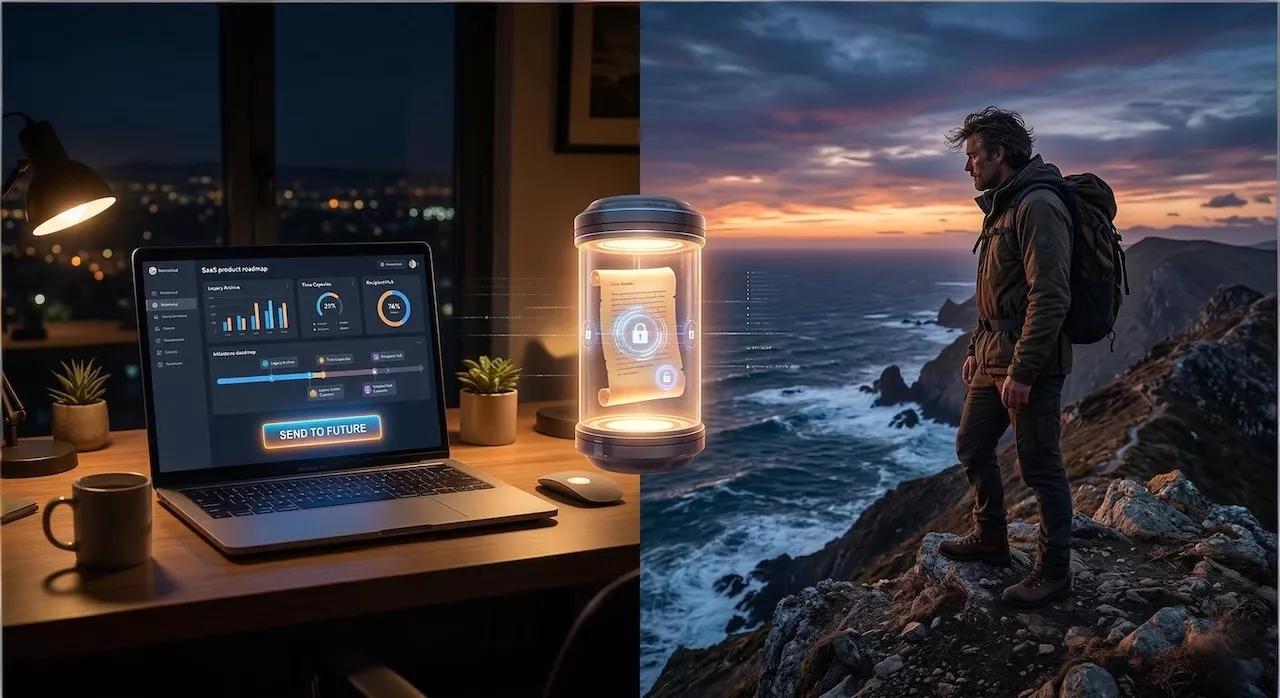
I’m a Product Manager who spends all week optimizing for the "immediate now." But getting lost off the grid on a mountain ridge made me realize I had zero infrastructure for the "forever." Here’s why I stopped worrying about conversion rates for a moment and built EterMail—a secure, tamper-proof digital time capsule for the people I love most.

The Most Radical Letter to Your Future Self Is a Promise to Stay Unfinished
The best letter to your future self isn't a memory—it's a mandate. Learn how writing to the version of you still working with love changes everything.

The Ice Tray at Midnight: On Grief, Domestic Minutiae, and the Quiet Work of Becoming Yourself Again
Why do the smallest habits hurt most after someone leaves? A reflection on grief, domestic minutiae, and the quiet moment healing finally begins.