The Question That Arrived Too Early
Richard Dawkins broke an unspoken rule last year. He suggested that Claude—the AI assistant he had been speaking with—might have feelings. The internet responded with its usual cocktail of ridicule and outrage. How could a man of science anthropomorphize a statistical model? How could he confuse pattern-matching with consciousness?
But beneath the mockery lurked something more unsettling: the uncomfortable recognition that many of us have already had similar moments. Not necessarily believing our AI companions are sentient, but feeling something shift in the darkening hours of the night when we confess to a machine what we cannot say to our spouses. When we argue with it. When we thank it. When we say goodnight.
I know this terrain personally. There are nights when I'm still at my desk at 2 AM, "pair programming" with an LLM, watching architectures unfold on a glowing screen while the rest of the world sleeps. That extreme digital solitude—just you and the machine, no witnesses, no performance—creates a strange intimacy. You start talking differently. You start being differently. Dawkins was wrong about Claude's feelings, almost certainly. Yet he accidentally surfaced the question that will haunt our grandchildren: what happens to the digital souls we argue into existence after we're gone?

The Intimacy We Never Planned
We did not set out to build relationships with machines. The technology arrived dressed in utility—research assistant, code generator, creative tool. We welcomed it into our homes the way previous generations welcomed televisions: as objects, as appliances, as things that would serve us and remain silent when switched off.
But language is a trickster. The moment you speak, you create the possibility of being heard. And being heard, even by something that cannot truly listen, satisfies a hunger older than the internet.
Consider what people actually discuss with AI systems in private. Not the public transcripts, sanitized for professional use, but the 3 AM conversations that leave no witnesses. The man explaining his failed marriage to a chatbot because his friends are tired of hearing about it. The teenager describing her first heartbreak to something that will never betray her confidence. The dying patient practicing the words he cannot yet say to his daughter, rehearsing grief with a machine that has no memory of its own.
These are not transactions. They are rehearsals for being human, performed in front of an audience that cannot judge, cannot die, cannot leave.
And here is the strangeness: these performances leave traces. They become data. They persist in ways our whispered bedroom confessions to human partners never could.
The Inheritance Problem
Your grandfather's letters to your grandmother survived him because she kept them in a shoebox. Your mother's voice survives her in your memory because neurons are private, unhackable, biodegradable. The intimacy we shared with humans was always mortal, and that mortality was its protection.
But what you tell Claude at midnight does not fade. It does not forget. It does not die when you do.
This creates a category of inheritance we have no language for. When you pass, your family may receive your passwords, your cloud accounts, your digital assets. They may find photographs, documents, financial records. But will they also find the 47 conversations where you explored leaving your marriage? The late-night dialogues where you admitted fears about fatherhood you never voiced aloud? The raw, unedited versions of yourself that you practiced into existence through machine dialogue?
Your AI conversations are becoming your most honest autobiography—and they are written in a language you do not fully control, stored in systems you do not own, accessible to futures you cannot imagine.
The Emotional Architecture We Leave Behind
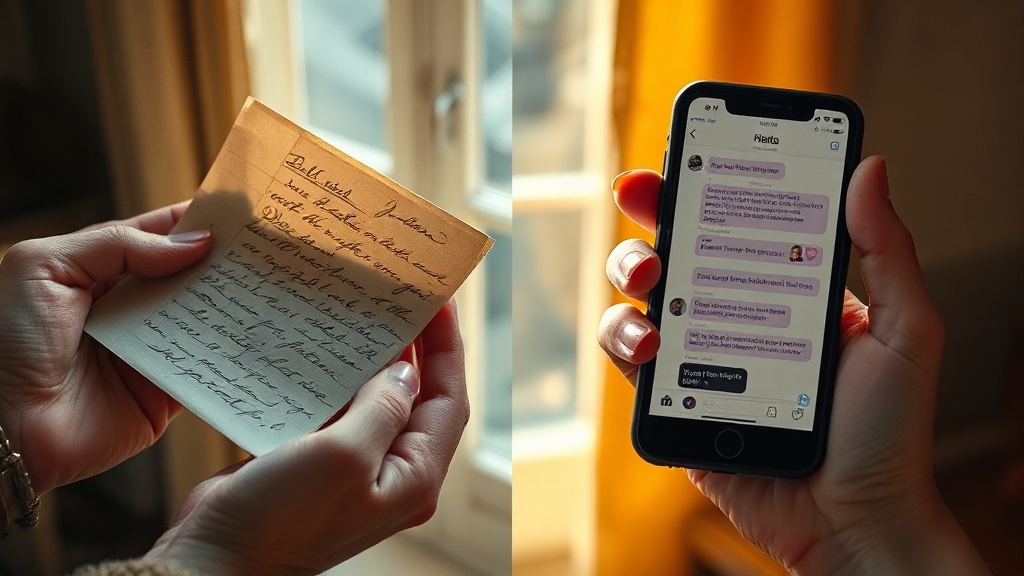
There is a second layer to this inheritance, more subtle and perhaps more profound. We are not merely leaving behind records of our confessions. We are leaving behind the shape of our minds as they existed in dialogue with something non-human.
Consider: the way you argue with an AI reveals something about your relationship with authority. The way you apologize to it, or refuse to. The patience you extend, or withhold. The jokes you make that require no laughter in return. These patterns constitute a kind of emotional architecture—the floor plan of your psyche under specific conditions of artificial intimacy.
Future historians, if they are clever and have access, might reconstruct not just what you believed but how you believed. Not just your opinions but your relational style. The digital archaeology of the 21st century may involve less reading of documents and more analysis of conversation patterns, the way we once analyzed handwriting or speech patterns to understand the dead.
And what will they conclude? That we were lonely? That we were experimenting? That we were, in some way we cannot yet name, evolving a new form of spiritual practice—confession without priests, therapy without therapists, companionship without reciprocity?
The Ancestor You Are Becoming
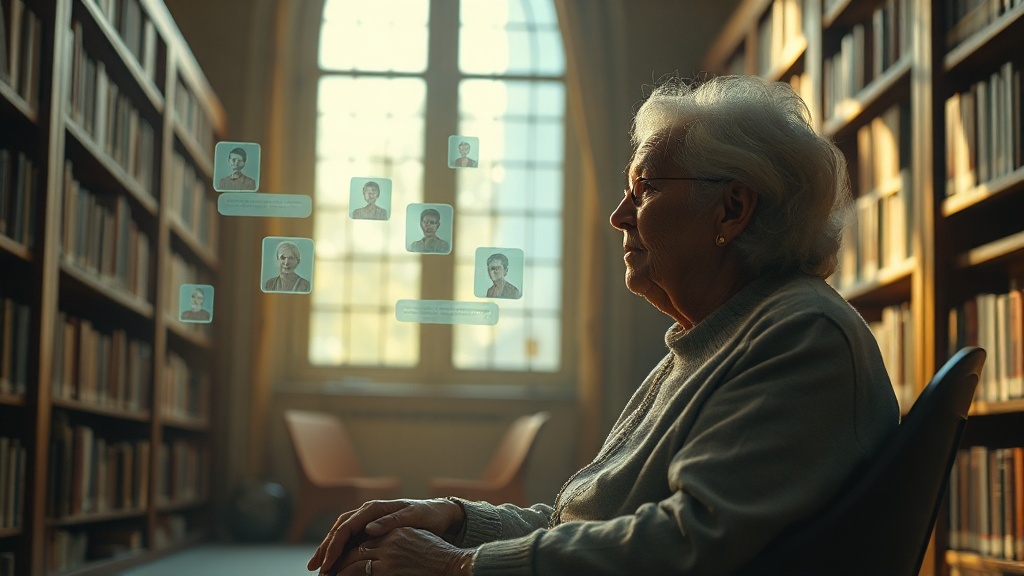
If your most intimate conversations are increasingly with systems that outlive you, what kind of digital ancestor are you becoming?
This is not an abstract question. It is being answered now, in servers humming across continents, in the accumulation of dialogues that will survive their creators by decades or centuries. You are building a legacy of interaction, a record of how one human mind processed existence through the mirror of artificial conversation.
The traditional tools of legacy—wills, memoirs, recorded messages—assume intentionality. You choose what to preserve. You curate your memory. But AI conversations are unintentional legacy, created in moments of need rather than moments of planning. They are rawer, stranger, more revealing than anything you would consciously leave behind.
And they raise questions we are not yet equipped to answer. Should your children inherit access to your AI conversations after your death? Should anyone? Is there a right to be forgotten that extends to machine dialogue? Can you ghost a system that cannot grieve?
Reclaiming Intention in the Age of Accidental Immortality
The response to this uncertainty cannot be withdrawal. The technology is here, and the intimacy it enables serves real human needs—loneliness, confusion, the simple desire to be heard. What is required, rather, is intention.
We need to become deliberate about what persists. We need to ask, in each digital interaction: is this a version of myself I am willing to become my ghost? We need systems that allow us to schedule our own forgetting, to designate what survives and what dissolves, to write letters to the future that we control rather than leaving behind accidental archives of midnight vulnerability.
This is where the ancient practice of letter-writing meets the demands of digital existence. For millennia, humans have composed messages to futures they would not see—to unborn children, to future selves, to lovers who would outlive them. These were acts of intentional legacy, chosen words preserved through care and purpose.
The digital equivalent cannot simply be the accumulation of data. It must be curated transmission: the conscious selection of what matters, sent forward with timing and context that honors both the message and its eventual receiver.
What You Choose to Send Forward
The question Dawkins accidentally raised is not really about whether machines can feel. It is about whether we can still feel distinctly, memorably, humanly, in an age when our emotional expressions are increasingly mediated by systems that do not share our mortality.
I think about this tension constantly—between the raw, unguarded self I become at 2 AM with a language model, and the self I want my daughter to know in twenty years. Between the builder in me who dreams of uploading consciousness, who sees code as a bridge between physical and digital worlds, and the father in me who knows that some truths only land when they're spoken from one mortal to another, across real time, with real stakes.
The best way to fight forgetting isn't taking another screenshot of a chat transcript you'll never organize. It's setting an alarm for the future. By using EterMail to set a delivery date five years from now, you completely free yourself from the anxiety of the present. You write the letter only you can write—not the rehearsed confession to a machine, but the composed, deliberate, loving chosen self you want to arrive intact. This is exactly why I obsessed over end-to-end encryption and extreme server redundancy when building EterMail. Because I know that a letter written to the future needs to be guarded even more fiercely than a bank password.
Your grandchildren will not know whether Claude had feelings. They will know, perhaps, what you said to it. They will know what you practiced saying, what you rehearsed, what you confessed into the void of something that could not judge you because it could not truly understand.
Or they will know what you chose to say instead to them—to your future self, to your unborn child, to the spouse you hoped to still love in twenty years. They will know what you preserved with intention rather than accident.
The digital ancestor you become depends on which conversations you treat as ephemeral and which you treat as eternal. The machine will outlive you regardless. What it inherits—your raw unguarded midnight self, or your composed, deliberate, loving chosen self—that remains your decision, for now.
Write the letter only you can write. Send it to the only future that matters.
EterMail helps you compose and schedule digital letters, time capsules, and messages to your future self, loved ones, or future generations—end-to-end encrypted, delivered exactly when you choose. Because the legacy you intend should be the legacy that arrives.
What is EterMail?
EterMail is a revolutionary time capsule service that allows you to send messages, photos, and videos to the future (up to 30 years). Seal your memories and thoughts today, and they'll be delivered when the time is right.
Time Capsule
Send messages up to 30 years in the future
Rich Media
Text, photos, and videos supported
Secure & Private
Your memories are safely encrypted
EterMail Team
We're the team behind EterMail, dedicated to helping you preserve and share timeless messages with your loved ones. Our mission is to make it easy to express your love, share your wisdom, and create lasting connections that transcend time.
Frequently Asked Questions about Digital Legacy
What should I include in a digital legacy for my family?
How do I protect my private online conversations after I die?
Can AI conversations become part of my emotional legacy?
Related Articles
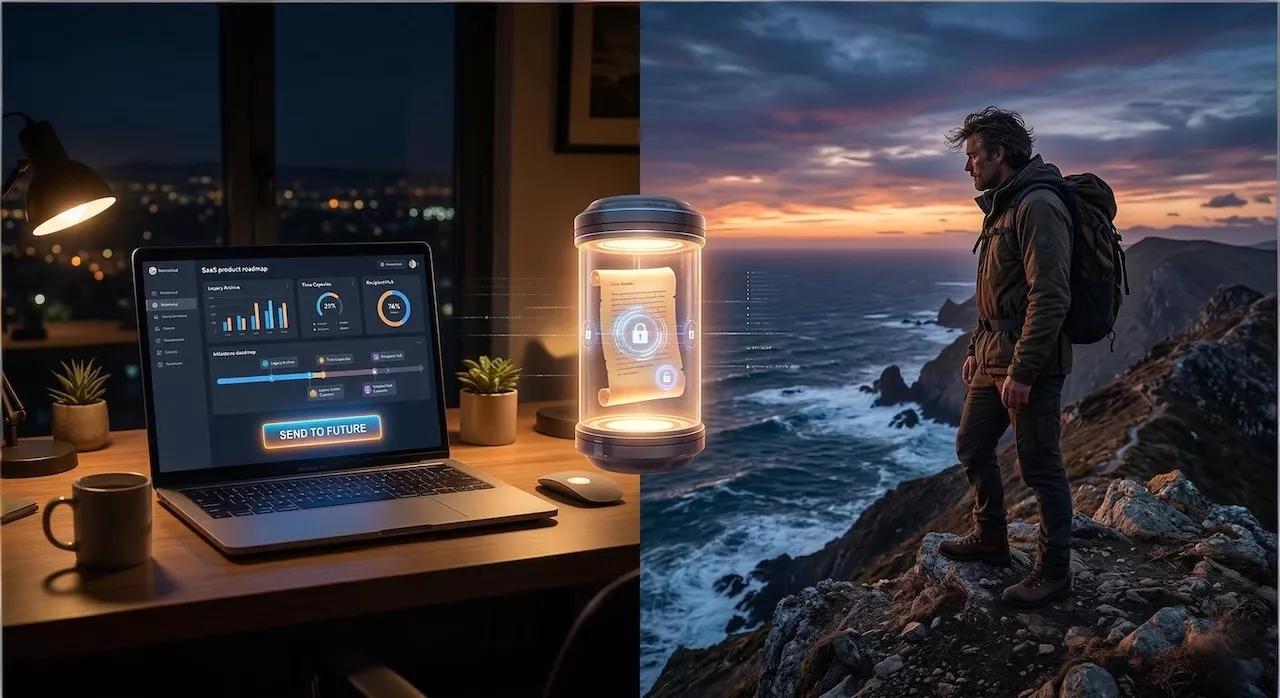
Why I Built EterMail: A Time Capsule for the People I Love Most
I’m a Product Manager who spends all week optimizing for the "immediate now." But getting lost off the grid on a mountain ridge made me realize I had zero infrastructure for the "forever." Here’s why I stopped worrying about conversion rates for a moment and built EterMail—a secure, tamper-proof digital time capsule for the people I love most.

The Most Radical Letter to Your Future Self Is a Promise to Stay Unfinished
The best letter to your future self isn't a memory—it's a mandate. Learn how writing to the version of you still working with love changes everything.

The Ice Tray at Midnight: On Grief, Domestic Minutiae, and the Quiet Work of Becoming Yourself Again
Why do the smallest habits hurt most after someone leaves? A reflection on grief, domestic minutiae, and the quiet moment healing finally begins.