
The Voicemail No One Saved
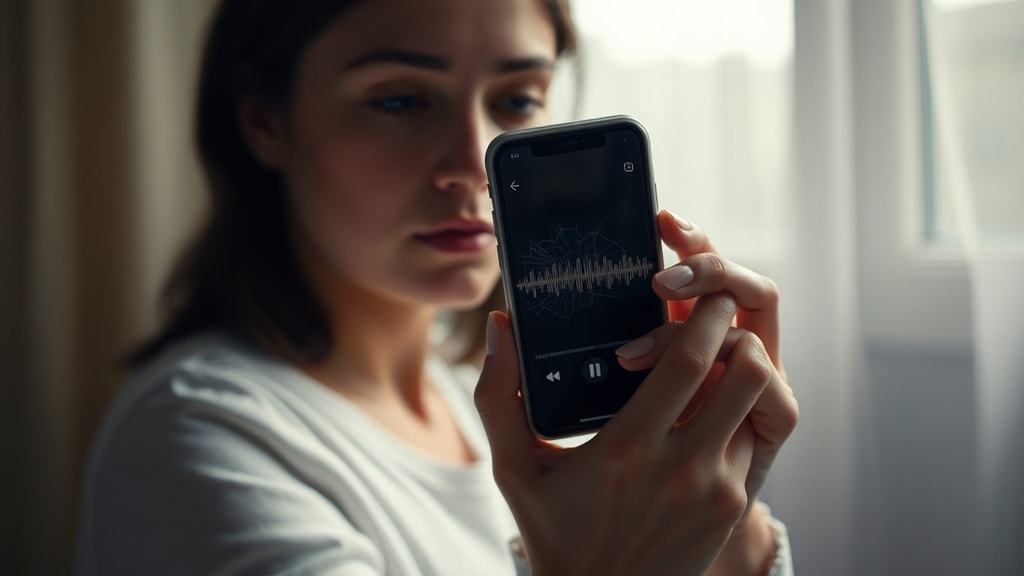
She found it three years after the funeral. Her mother's voice, trapped in a corrupted .m4a file on a laptop she almost recycled. "The blueberries are early this year," the recording said, or tried to say, before degrading into digital static. The metadata showed it was recorded at 6:47 AM—her mother had always been an early riser, a fact that suddenly felt more fragile than memory itself.
The file was unplayable. The cloud backup had purged it after inactivity. What remained was a ghost without a body: proof that something precious had existed, and proof that the systems we trust to hold our lives treat love like storage overhead.
This is the quiet emergency beneath Silicon Valley's philosopher hiring spree. We're finally asking how to make AI ethical—fair, honest, less prone to hallucinating harm. But we're barely asking the harder question: How should the machines that outlast us learn to carry our dead with dignity?
The Ethics of What Remains
When OpenAI, Google DeepMind, and Anthropic began recruiting moral philosophers in earnest around 2023, the press treated it as quirky proof of AI's growing sophistication. Look, the machines need ethics tutors now. But the subtext was darker: we had built systems capable of consequential decisions without agreeing on what consequences mattered.
The trolley problem—would you kill one to save five?—became a tech industry meme, then a genuine engineering concern. Yet the philosophers being hired weren't primarily asked about split-second moral calculus. They were asked about alignment: how to steer systems toward human values.
Here's what rarely made the job descriptions: whose values? And whose deaths?
A philosopher trained in African ubuntu ethics might ask whether an AI should preserve a deceased elder's voice for communal ritual. A Buddhist ethicist might question whether digital immortality interrupts necessary letting-go. A feminist care ethicist would insist that the labor of mourning—who performs it, who is burdened by it—matters as much as the archive itself. The frameworks we choose for AI will determine which griefs are dignified and which are deleted.
We are, in other words, outsourcing our mortality to engineering teams who have not yet been forced to ask: what does it mean to be remembered well?
The Infrastructure of Forgetting
Consider what actually happens to your data when you die. Not the legal abstraction—terms of service, estate law, the patchwork of state-level legislation—but the material reality.
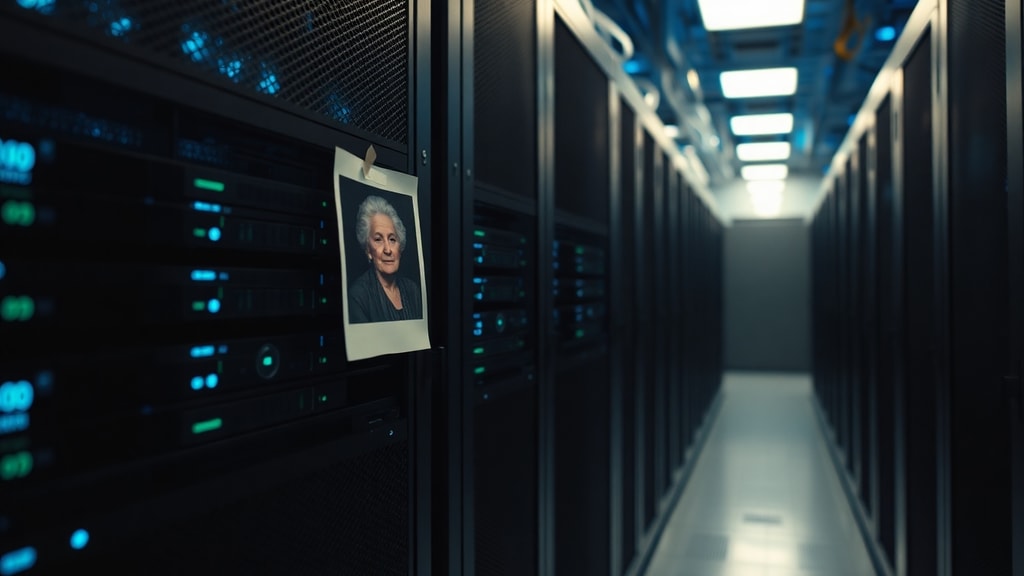
Your photos live in server farms cooled by enough water to sustain small cities. Your search history trains models that will predict behaviors for people not yet born. Your drafts, your 3 AM queries, your unsent messages to ex-lovers—these become training data or they become nothing, and the decision is made by retention policies written in quarterly business reviews, not by anyone who knew your name.
The default setting of digital infrastructure is not memory. It is optimized amnesia with occasional accidental preservation.
Google's Inactive Account Manager, introduced in 2013, was a rare acknowledgment that users die. Facebook's memorialization feature, launched after pushback from grieving families, turns profiles into static shrines—better than deletion, perhaps, but also a kind of frozen grief, neither living memory nor proper farewell. Apple, with its end-to-end encryption, has made lawful access to deceased users' data so difficult that some families have sued.
Each solution reveals a different philosophical assumption. Google: people should choose their heirs. Facebook: profiles should become monuments. Apple: privacy outlives death. None asked: what would the dead have wanted? What do the living need?
The Philosophers We Actually Need
The ethicists now advising AI companies are overwhelmingly trained in analytical traditions: logic, decision theory, the clean mathematics of utilitarianism. These tools are necessary. They are also insufficient.
What we need are thinkers who have spent careers in the messier terrain of how humans actually relate to the past. Historians of emotion who can trace how mourning practices evolved from Victorian hair jewelry to Instagram memorial pages. Phenomenologists who understand how a voice recording differs from a text transcript in the structure of grief. Religious scholars who know that digital preservation can be sacrament or sacrilege depending on tradition.
Most of all, we need philosophers willing to do something unfashionable: help ordinary people write the moral instructions for their own digital afterlives.
Not terms of service. Not legal wills. But something closer to an ethical testament: This is what I meant. This is who should hear it. This is how I want to be remembered, and more importantly, how I don't.
The scramble to humanize AI has revealed that we don't know how to humanize our own archives. We have more recording capacity than any civilization in history, and less intentional memory-keeping than most. The philosophers we need are not just those teaching machines ethics. They're the ones helping us teach ourselves.
Writing the Instructions for Being Mourned
There's a practice, ancient and nearly lost, of preparing one's own death narrative. Medieval ars moriendi manuals guided the dying through final thoughts. Some Buddhist traditions involve composing death poems. These weren't morbid fixations; they were acts of care for the bereaved, a way of shaping what would be remembered so that grief might find its form.
Your digital legacy deserves similar intention. Not because your data is valuable to corporations—though it is—but because your meaning is valuable to people who will outlive you.
This is where the personal becomes urgently political. Every unexamined default setting, every platform's arbitrary retention policy, every algorithmic recommendation that surfaces a dead parent's photo at the wrong moment—these are moral choices made without your participation. Reclaiming them requires not technical skill but ethical clarity: what do I want to persist? What should fade? Who decides when?

The Slow Communication of Mortality
I spend a lot of nights alone with glowing screens. It's a habit that started in my early startup days and never really broke—sitting there until 2 or 3 AM, pair programming with LLMs, mapping architectures, chasing some edge of what's possible. That kind of digital solitude does something to you. You start to feel the weight of conversations that don't happen in real time, the strange intimacy of building something that will outlast your own attention span. I've learned that loneliness and dialogue across time aren't opposites. They're the same thing, experienced differently.
When I finally step away from the keyboard, I go hard in the other direction—steep trails, ocean swells, the kind of conditions where you can't fake control. There's something about being humbled by raw weather that strips away the illusions you build in code. You remember that some moments are unrepeatable, that presence isn't something you can buffer or cache. The digital world promises permanence, but nature teaches you to value what disappears.
These two halves of my life don't contradict each other. They inform the same conviction: technology should serve the fragile, stubborn, deeply human need to be remembered by someone we love.
We have confused availability with permanence. The cloud feels infinite because we rent it cheaply. But permanence without curation is not memory; it is hoarding. The future will not thank us for dumping our entire digital lives into their inheritance. They will drown in it.
What if we thought of digital legacy as slow communication across time? Not everything preserved, but something chosen. Not instant access, but deliberate delivery. A letter to a child not yet old enough to read it. A voice memo to a spouse for a future anniversary. A confession of values to a self who will need reminding.
This requires technology that understands patience as a feature, not a bug. That treats encryption not as barrier but as promise: this will reach only who it should, when it should. That accepts the moral weight of being a messenger across mortality.
The best way to fight forgetting isn't taking another screenshot; it's setting an alarm for the future. By using EterMail to set a delivery date 5 years from now, you completely free yourself from the anxiety of the present. You write the letter your future self needs, or the one your child will read when the time is right, and you let the system carry it forward with the same care you'd give a handwritten letter in a locked drawer. I built this because I wanted to believe that something I made at 3 AM could still matter to someone at a moment I couldn't predict.
The platforms we have built are optimized for engagement, not enduring meaning. They will not save your mother's voice because they were never asked to understand why it matters. The philosophers being hired to train AI may eventually teach machines to simulate empathy. But the deeper task—teaching ourselves to prepare our own ghosts with care—remains ours alone.
Your data will outlast you. The only question is whether it will speak with your voice, or merely as evidence that you once existed.
The ethicists shaping tomorrow's intelligence should be thinking about your grandmother's voicemails. They should be thinking about your 3 AM searches, your unsent drafts, the digital residue of a self that never expected to be archived. If they are not, then the future will inherit our data without inheriting our meaning—and the philosophers we hired will have taught the machines everything except how to mourn.
A Different Kind of Testament
Perhaps the most radical act available to us is not to preserve more, but to preserve with intention. To treat our digital legacy not as accident but as craft. To ask, while we still can: what moral framework should govern the ghosts I'll leave behind?
The answer will not come from terms of service. It will come from the hard, human work of deciding what we meant, and to whom it should matter.
The machines are learning. We should be teaching them—by first teaching ourselves.
What instructions would you write, if you knew someone you loved would need them when you could no longer explain?
What is EterMail?
EterMail is a revolutionary time capsule service that allows you to send messages, photos, and videos to the future (up to 30 years). Seal your memories and thoughts today, and they'll be delivered when the time is right.
Time Capsule
Send messages up to 30 years in the future
Rich Media
Text, photos, and videos supported
Secure & Private
Your memories are safely encrypted
EterMail Team
We're the team behind EterMail, dedicated to helping you preserve and share timeless messages with your loved ones. Our mission is to make it easy to express your love, share your wisdom, and create lasting connections that transcend time.
Frequently Asked Questions about Digital Legacy
What should be included in a digital legacy plan?
How do I protect my online memories from being lost or deleted?
What happens to my digital accounts when I die?
Related Articles

Why I Built EterMail: A Time Capsule for the People I Love Most
I’m a Product Manager who spends all week optimizing for the "immediate now." But getting lost off the grid on a mountain ridge made me realize I had zero infrastructure for the "forever." Here’s why I stopped worrying about conversion rates for a moment and built EterMail—a secure, tamper-proof digital time capsule for the people I love most.

The Most Radical Letter to Your Future Self Is a Promise to Stay Unfinished
The best letter to your future self isn't a memory—it's a mandate. Learn how writing to the version of you still working with love changes everything.

The Ice Tray at Midnight: On Grief, Domestic Minutiae, and the Quiet Work of Becoming Yourself Again
Why do the smallest habits hurt most after someone leaves? A reflection on grief, domestic minutiae, and the quiet moment healing finally begins.