
The Cruelty of Auto-Suggest
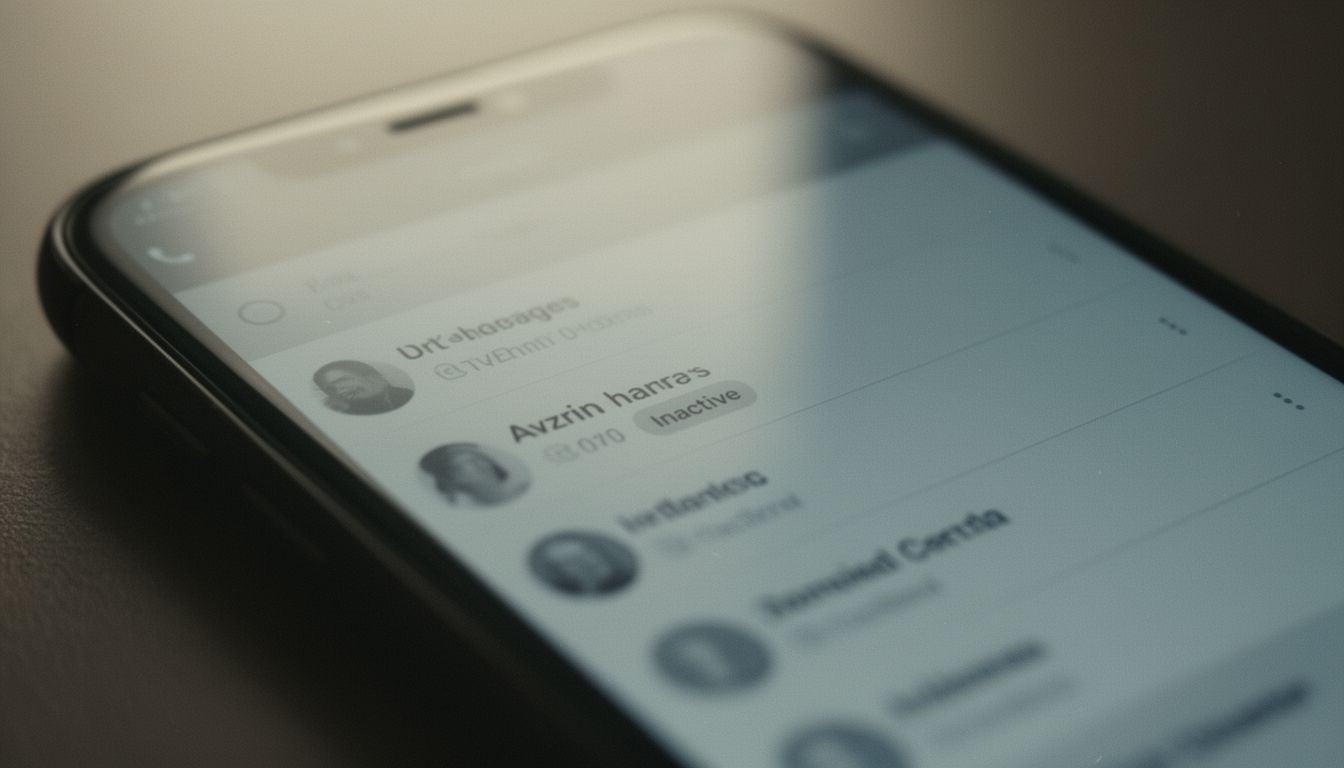
Three years after my father died, my phone suggested his email address.
I was standing in my kitchen, holding my phone with flour-dusted fingers, trying to send my sister a photo of her nephew's first wobbly steps across our living room floor. I typed the first letter of her name—S—and there he was. Third in the list. Still alphabetically prioritized by an algorithm that didn't know, or perhaps didn't care, that he had stopped breathing in a hospital room in March 2021.
I almost tapped it. Muscle memory is a brutal thing. For one suspended second, I was a daughter again, about to share something with her father. Then the floor opened. Then I remembered.
This is the quiet horror of our digital afterlives: we are preserved in databases with more fidelity than we preserve ourselves. Your phone remembers every number you've ever dialed. Your cloud storage holds voicemails you'll never delete but can't bear to hear. Your social media serves memory like a cruel waiter who keeps bringing dishes to a table where someone has already left.
The Infrastructure of Grief
We built systems to last. We never built them to let go.
Consider the architecture of digital memory. When someone dies, their data doesn't. It persists—distributed across servers, replicated in backups, cached in devices. Your father's Google account remains active until someone proves death with a death certificate, a process so bureaucratically grotesque that most families abandon it. His Facebook profile waits in memorialized limbo, neither living nor properly dead. His voicemails occupy storage you pay for monthly, a subscription grief that renews automatically.
We have created a new category of haunting: the infrastructural ghost. Not the supernatural kind, but the administrative kind. The kind that sends you birthday notifications for dead friends. The kind that includes your mother in "People You May Know" because her colleagues still tag her in conference photos. The kind that keeps her Spotify playlists streaming algorithmic recommendations based on listening patterns that stopped three winters ago.
This is not merely uncomfortable. It is a fundamental misalignment between human mourning and digital permanence. We need rituals of ending. Cultures across history developed elaborate practices—funerals, mourning periods, the clearing of possessions—to help the living metabolize absence. Our digital systems offer no equivalent. There is no ceremony for deactivating a dead person's Netflix profile. No cultural script for what to do with 4,000 photos of someone you'll never photograph again.
The Subscription Model of Memory
Here is a truth we rarely articulate: our most precious memories of the dead are increasingly held hostage by corporate terms of service.
That voicemail—his voice saying "Call me back, kiddo"—lives in Apple's iCloud. You pay $2.99 monthly to preserve it. The photos from his last birthday, blurry and precious, require your continued Google One subscription. His emails, his documents, his digital handwriting in shared notes: all contingent on your credit card's expiration date.
What happens when you can't afford it anymore? When you forget to update payment information during a move, a divorce, a depression? The terms of service are clear: non-payment equals deletion. Your grief has a billing cycle.
This is the privatization of memory, and it is nearly invisible. We don't think of cloud storage as memorial infrastructure, but for millions of people, it functions exactly that way. We are running unacknowledged digital cemeteries on servers optimized for efficiency, not reverence. The same systems designed to maximize engagement are now accidentally tasked with preserving the voices of our dead.

The Archive of the Self
Perhaps the deeper question is not about the dead, but about the living. What are we leaving behind? And more troubling: what are we failing to leave?
We generate data at unprecedented scale—terabytes of selfies, screenshots, scattered thoughts in notes apps—yet this abundance obscures a poverty of intention. Most of our digital traces are accidental. We are not curators of our own archives. We are hoarders, accumulating digital debris that future versions of ourselves, or our children, will have to sort through like emotional landfill.
Compare this to the letters previous generations left. My grandmother kept a box of my grandfather's wartime correspondence—perhaps forty letters total, written with purpose, preserved with care. I have access to every email my father ever sent me, thousands of them, most reading "see you at 6" or "can you pick up milk." The signal is buried in noise. The meaningful is indistinguishable from the mechanical.
We are the most documented generation in history and potentially the least legible to those who will remember us. Our grandchildren will not find our letters. They will find our passwords, if they're lucky. Our search histories. Our location data. The raw telemetry of lives we never meant to archive.
Building Intentional Afterlives
There is no technical solution to grief. But there are better ways to prepare for absence—our own, and others'.
The first is intentional curation. Not everything deserves preservation. The work of digital legacy is editorial: selecting what matters, contextualizing it, creating pathways through the noise. This is labor. It requires sitting with discomfort, making decisions about what future versions of ourselves or our loved ones might need. A letter explaining a photograph. A voice memo describing a relationship. Metadata for memory.
The second is structural independence. Corporate platforms are not memorial infrastructure. They are rental agreements with unpredictable landlords. Meaningful preservation requires formats and locations you control—encrypted archives, physical backups, distributed storage with legal frameworks that outlast quarterly earnings reports.
The third, and perhaps most important, is temporal imagination. We are poor at thinking of ourselves as future ancestors. We live in the present tense of platforms designed for immediate engagement. But the most valuable digital legacy work happens across time: messages composed to be received years later, wisdom offered to selves who don't yet need it, love letters scheduled for delivery when the sender is gone.
The Ethics of Digital Death
We need new cultural protocols. New questions to ask before loss makes them urgent.
What does informed consent look like for posthumous data? Should platforms be required to offer "digital executor" roles with genuine authority? How do we balance privacy—the dead's right to secrets—with the living's need for connection? These are not technical problems. They are ethical and emotional infrastructure we have failed to build.
Some platforms now offer "legacy contacts" and "inactive account managers." These are insufficient gestures toward a problem they helped create. We need systemic change: legal recognition of digital assets as inheritable property, mandatory data portability for the deceased, sunset clauses that respect human timescales of mourning rather than corporate imperatives of retention.
Until then, we improvise. We screenshot voicemails before they disappear. We maintain subscriptions we can't afford. We let auto-suggest wound us because the alternative—deleting, truly letting go—feels like a second death we aren't ready to perform.
What We Owe the Future
My son will never meet my father. This is ordinary tragedy, generations old. What is new is the form of absence: not the empty chair, but the persistent digital presence that flickers between memory and simulation.
I spend a lot of nights alone with glowing screens. It's a habit from years of building—first e-commerce platforms, then games, now this. Around 2 AM, when the house is dark and I'm deep in some architecture diagram or debugging session, I'll catch myself talking to the code like it might answer back. There's a specific loneliness to digital creation that I've never quite shaken. Maybe that's why the idea of messages that outlive their sender has always haunted me. We're all just trying to build bridges across time, using the tools we have.
I want to give my son something better than my phone's contact list. I want to give him intention—words composed for him specifically, delivered when he needs them, preserved with care rather than accident. This is exactly why I obsessed over end-to-end encryption and extreme server redundancy when building EterMail. Because I know that a letter written to the future needs to be guarded even more fiercely than a bank password.
The auto-suggest will fade eventually. Algorithms update, devices replace, the statistical probability of my typing that particular sequence diminishes. But the question it raises persists: In a world of infinite storage, what deserves to be remembered? And who decides?
We are all archivists now, whether we chose the role or not. The only question is whether we'll do it well.
What is EterMail?
EterMail is a revolutionary time capsule service that allows you to send messages, photos, and videos to the future (up to 30 years). Seal your memories and thoughts today, and they'll be delivered when the time is right.
Time Capsule
Send messages up to 30 years in the future
Rich Media
Text, photos, and videos supported
Secure & Private
Your memories are safely encrypted
EterMail Team
We're the team behind EterMail, dedicated to helping you preserve and share timeless messages with your loved ones. Our mission is to make it easy to express your love, share your wisdom, and create lasting connections that transcend time.
Frequently Asked Questions about Digital Legacy
What happens to your digital accounts when you die?
How can I preserve meaningful memories for my children?
Is it ethical to keep a deceased person's data?
Related Articles
Why I Built EterMail: A Time Capsule for the People I Love Most
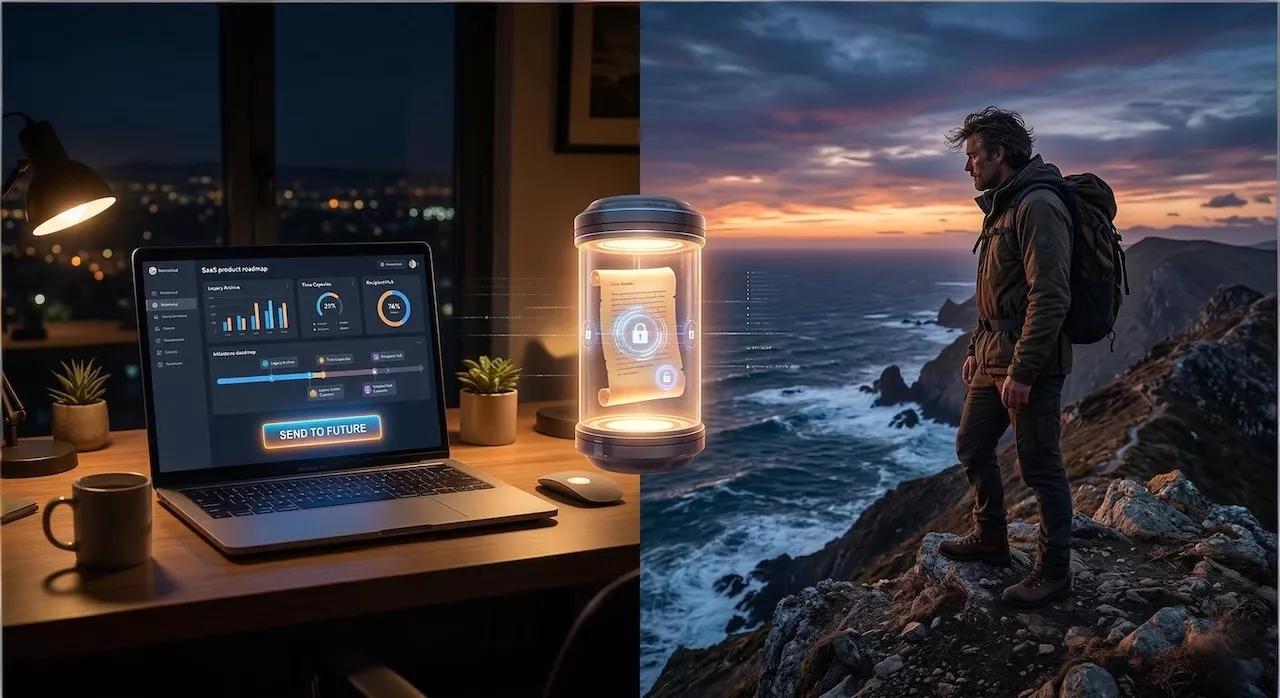
I’m a Product Manager who spends all week optimizing for the "immediate now." But getting lost off the grid on a mountain ridge made me realize I had zero infrastructure for the "forever." Here’s why I stopped worrying about conversion rates for a moment and built EterMail—a secure, tamper-proof digital time capsule for the people I love most.

The Most Radical Letter to Your Future Self Is a Promise to Stay Unfinished
The best letter to your future self isn't a memory—it's a mandate. Learn how writing to the version of you still working with love changes everything.

The Ice Tray at Midnight: On Grief, Domestic Minutiae, and the Quiet Work of Becoming Yourself Again
Why do the smallest habits hurt most after someone leaves? A reflection on grief, domestic minutiae, and the quiet moment healing finally begins.