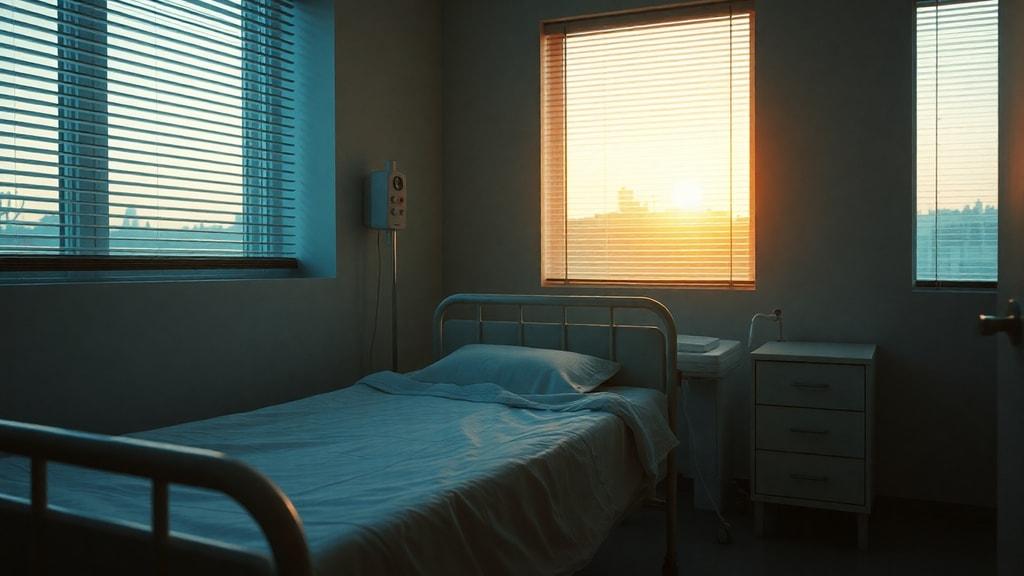
The Voicemail That Vanished
Three weeks after my mother died, I called her hospital's patient portal one last time. The automated voice asked for her date of birth, her medical record number, the last four digits of a Social Security number that now belonged to no one. I wasn't looking for test results or discharge summaries. I wanted the voicemail I'd left at 2 AM, the one where I'd sung her the lullaby she used to sing me, off-key and broken, because the nurse had said she might still hear. The system had archived everything except that. The algorithm had deemed it non-essential.
This is the quiet crisis of our medical digitization: the most mortal moments of our lives are being logged by platforms designed for throughput, not tenderness. We are told that healthcare has reached its "Uber moment," that AI will streamline, optimize, revolutionize. But revolution for whom? And what, exactly, is being left behind in the efficiency?
The Data That Isn't Yours, The Story That Was
The nurse's late-night note about your father's fear of thunderstorms. The way your grandmother's voice changed when the morphine finally worked. The question your child asked in the waiting room that you couldn't answer then and still can't. These fragments do not fit diagnostic codes. They resist standardization. They are, by the metrics of modern health systems, noise.
Yet this noise is the texture of being human in illness. Researchers at Stanford's Medicine and the Muse program have documented how patients who record their own illness narratives show measurably better psychological outcomes, even when clinical markers remain unchanged. The story itself is therapeutic. But the platforms capturing our bodies increasingly do not capture our becoming. They capture blood pressure, not the dread before the cuff tightens. They log medications, not the ritual of who brings the water glass, how they hold it, what they say.
When Epic Systems or Cerner or the next acquisition target pivots to a new business model, when your hospital system merges and migrates, what survives? The structured data. The billing codes. The compliance-friendly fields. The lullaby does not migrate.
The Corporate Voice of Your Own Vulnerability
There is a particular alienation in reading your own medical records and finding yourself rendered in a voice that is not yours, optimized for insurance pre-authorization, stripped of temporal texture. "Patient reports anxiety" does not contain the three hours you spent in the parking garage unable to enter the building. "Family history significant for" erases the Thanksgiving where your uncle finally explained what really happened to your grandfather, the story that made you schedule the appointment.
This is not a technical failure. It is a design choice baked into systems built to move patients through, not to hold them. The electronic health record, as currently architected, is a financial and legal document that happens to contain some medical information. It is not, and was never intended to be, a biography of embodiment.
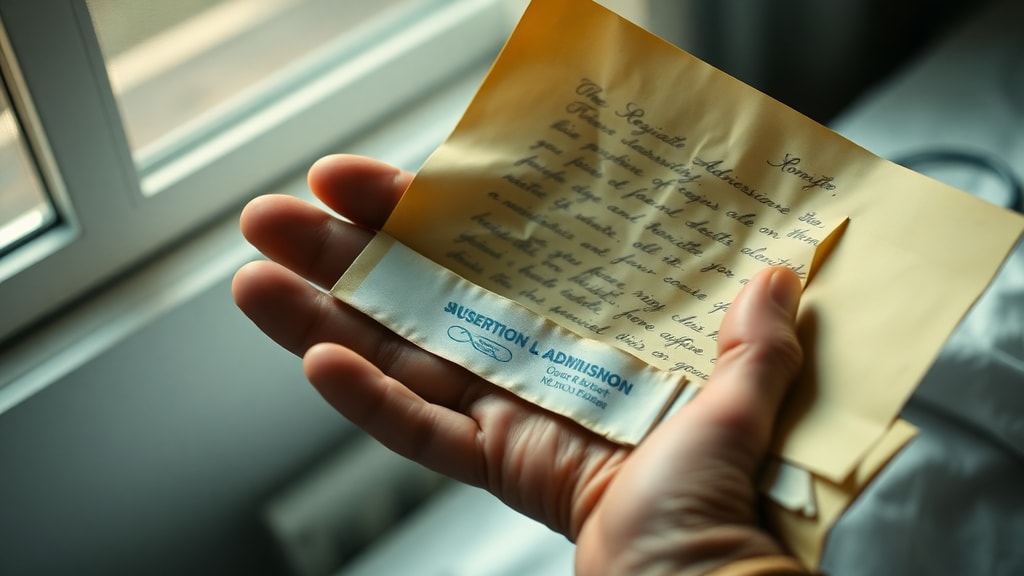
The Urgency of Counter-Archives
What would it mean to build a parallel record? Not in resistance to medical care, but in supplement to its blind spots? To write, while the memory is still cellular, what the machines cannot capture: the quality of light in the room when you received news, the specific absurdity of the magazine in the waiting area, the person who met your eyes across the infusion bay and did not look away.
This is where the concept of digital legacy must expand beyond the conventional boundaries of estate planning, beyond social media accounts and photo libraries. Your most urgent digital legacy may be the one you never thought to ask for: your own body, told back to you in a voice that isn't corporate, isn't optimized, and isn't already moving on to the next patient.
The health humanities movement has long argued for narrative competence in medicine—Rita Charon's work at Columbia on "narrative medicine" has demonstrated that clinicians who read and write reflectively provide measurably more empathic care. But narrative competence cannot be outsourced entirely to professionals. It must also be practiced by patients, by families, by anyone who understands that the story of an illness is not identical to its pathology report.
The Time Capsule of the Self That Survived
Consider the letter written to a future self who has, by definition of the address, survived. This is not toxic positivity. It is temporal solidarity—the self who writes reaching forward to the self who reads, across a gap that may include remission or recurrence, grief or unexpected grace. The letter preserves not just information but stance: how you faced uncertainty when you could not yet know its outcome.
I know something about building bridges across impossible gaps. For years, I've spent nights alone until 2 or 3 AM, "pair programming" with LLMs, mapping architectures that let consciousness persist beyond the moment of creation. That extreme digital solitude—hours of dialogue with systems that cannot truly answer back—taught me what it means to address something that may not be there when you finally arrive. The waiting. The trust. The loneliness of building for a future you may not inhabit. EterMail was born from that same midnight obsession: the belief that a message sealed against time is not storage, but a kind of consciousness transfer. The self who writes reaching toward the self who reads, across a gap that might include anything.

What the Machines Cannot Ask
AI diagnostics will improve. They already detect certain cancers earlier than human radiologists. But detection is not witness. The machine that flags a pulmonary nodule does not ask what you were planning to do with the decades you assumed remained. The algorithm optimizing your chemotherapy schedule does not know, cannot know, the conversation you need to have with your sister before the fatigue makes it impossible.
These are not failures of technology to be solved by better technology. They are category errors—the confusion of what is computable with what is meaningful. The most sophisticated health AI in the world cannot generate the question your future self most needs answered, because that question has not yet been formulated. It emerges in the writing, in the act of address, in the temporal stretch between the self who knows and the self who will have forgotten or transformed.
The Practice of Preserving What Resists Preservation
So what can be done? Not instead of medical care, but alongside it:
- Write during the waiting. The interstitial moments of healthcare—waiting rooms, parking structures, the liminal hours before sedation—are rich with unprocessed experience. Voice memos, hurried notes, the texture of institutional carpet under your thumb. These are data points in a personal archive that no EHR will capture.
- Record the failures of language. The moments when you could not say what you felt, when the available vocabulary—"pain," "anxiety," "concern"—felt like a mistranslation. These failures are themselves information about the limits of our systems, medical and linguistic.
- Address the specific future. Not "if I get better" but "when you read this on the anniversary of the surgery." Temporal specificity creates accountability between selves. The EterMail scheduling function enforces this: you choose the date, the future moment of opening, and the message waits in encrypted suspension.
- Include the bystanders. The person who drove you, who slept in the chair, who argued with the nurse about ice chips. Their experience is part of your medical story, even if no consent form captures it.
The Legacy of the Body, Told Back to Itself
We are accustomed to thinking of legacy as what we leave behind. But there is a prior legacy: the story we preserve for our own future consumption, the self we intentionally archive against the erasure of trauma, time, and platform migration. Your body, experienced and narrated in your own voice, becomes a resource you can draw upon when the corporate record proves insufficient—which it will.
The hospital system that logged your mother's final days will upgrade its software. The portal will redesign. The voicemail, already gone, will not be the last loss. But the letter you wrote to yourself at her bedside, sealed until the first anniversary of her death, remains. It waits in encrypted stillness. It will arrive in a voice that is yours, that was always yours, that the optimization never touched.
This is the digital legacy that matters most: not the accumulation of data points, but the preservation of voice across time. The body deserves its own historian. The patient, increasingly fluent in the language of platforms and portals, can also become fluent in the older language of address, of letter, of self to future self. The technology that enables this is not the technology that triages. It is the technology that waits, that holds, that keeps its promise to deliver what was entrusted, unchanged, when the time finally comes.
Your most mortal moments deserve more than efficient logging. They deserve duration. They deserve a voice that outlasts the platform that recorded them. They deserve, finally, to be told back to you by someone who was there—who was you—who still is.
<
What is EterMail?
EterMail is a revolutionary time capsule service that allows you to send messages, photos, and videos to the future (up to 30 years). Seal your memories and thoughts today, and they'll be delivered when the time is right.
Time Capsule
Send messages up to 30 years in the future
Rich Media
Text, photos, and videos supported
Secure & Private
Your memories are safely encrypted
EterMail Team
We're the team behind EterMail, dedicated to helping you preserve and share timeless messages with your loved ones. Our mission is to make it easy to express your love, share your wisdom, and create lasting connections that transcend time.
Frequently Asked Questions about Digital Legacy
What should I include in a digital legacy beyond legal documents?
How do I preserve medical experiences that hospitals don't record?
Why is my own voice important in health records when official documents exist?
Related Articles
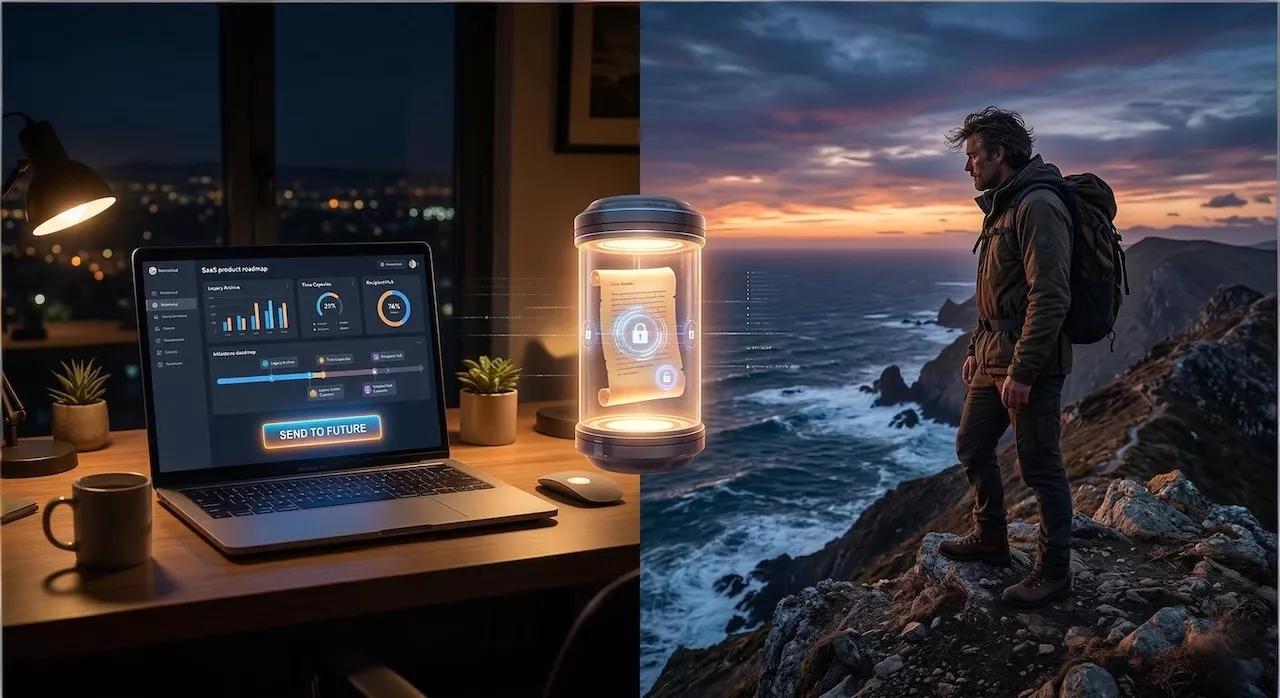
Why I Built EterMail: A Time Capsule for the People I Love Most
I’m a Product Manager who spends all week optimizing for the "immediate now." But getting lost off the grid on a mountain ridge made me realize I had zero infrastructure for the "forever." Here’s why I stopped worrying about conversion rates for a moment and built EterMail—a secure, tamper-proof digital time capsule for the people I love most.

The Most Radical Letter to Your Future Self Is a Promise to Stay Unfinished
The best letter to your future self isn't a memory—it's a mandate. Learn how writing to the version of you still working with love changes everything.
The Ice Tray at Midnight: On Grief, Domestic Minutiae, and the Quiet Work of Becoming Yourself Again
Why do the smallest habits hurt most after someone leaves? A reflection on grief, domestic minutiae, and the quiet moment healing finally begins.