
The Quiet Horror of the Smiling Worker
The Slack notification pings at 9:47 PM. Not work—something worse. A pulse survey. "How are you feeling about your workload?" The dropdown menu offers five faces, from beaming green to weeping red. You select the neutral yellow, then hesitate. Last quarter, your manager mentioned "sentiment trends" in your one-on-one. You click green instead.
This is not science fiction. This is Tuesday.
Across industries, emotional surveillance has migrated from the margins of corporate life to its center. Call centers analyze vocal stress patterns. Keyboard dynamics flag "disengagement." Wellness apps—subsidized by employers—harvest sleep data, meditation frequency, even the tonal quality of our written responses. The goal is never stated as control. It arrives dressed as care, as optimization, as employee experience.
But the architecture reveals itself in the aggregate. When feelings become data points, the unmeasured feeling becomes suspect. The unshared feeling becomes invisible. And the interior life—that stubborn, ungovernable country each of us inhabits—shrinks to whatever fits the dashboard.
When Mindfulness Became a Metric
The irony is almost too neat: the very practices once designed to liberate us from digital overwhelm have been captured by the systems that created it. Corporate mindfulness programs now come with participation quotas. Meditation apps report "mindfulness minutes" to HR dashboards. The breath, that most ancient refuge, gets logged.
This is not mindfulness. This is compliance wearing yoga pants.
True digital mindfulness—the kind worth defending—requires something these systems cannot provide: privacy as a precondition. Not the privacy of hiddenness, but the privacy of unharvested experience. A thought that travels nowhere except between you and the page. A feeling that earns no score, triggers no algorithm, builds no profile.
The letter you write offline possesses this quality inherently. The email you draft and delete does not. The journal app with cloud sync does not. The difference is not technological but ontological: does this act of self-expression create data, or does it create self?

The Architecture of Emotional Extraction
To understand what we are losing, examine what these systems actually measure. Emotional surveillance does not seek your feelings in their complexity. It seeks signals—simplified, comparable, actionable. Your grief over a parent's decline becomes a "stress event" that might affect productivity. Your creative frustration becomes "disengagement risk." Your political anger becomes "cultural misalignment."
Each reduction serves a purpose: prediction. The employer wants to know if you will leave, if you will sue, if you will unionize, if you will burn out on their timeline or yours. The wellness platform wants to prove ROI to the benefits team. The AI vendor wants to demonstrate pattern recognition superior to human managers.
Your actual feeling—the particular, irreproducible ache of it—interests no one.
This is not paranoia. This is the business model. The $4.5 billion employee wellness industry runs on data extraction. The $20 billion HR analytics market runs on prediction. And the boundary between "supporting employee mental health" and "managing employee risk" dissolves the moment both functions share a database.
What remains for the worker? A performance of feeling that satisfies the metric without exhausting the self. The green smile. The completed module. The meditation streak maintained during the commute. A theater of interior life, meticulously staged.
The Radical Act of Unmeasured Feeling
Against this, consider the letter.
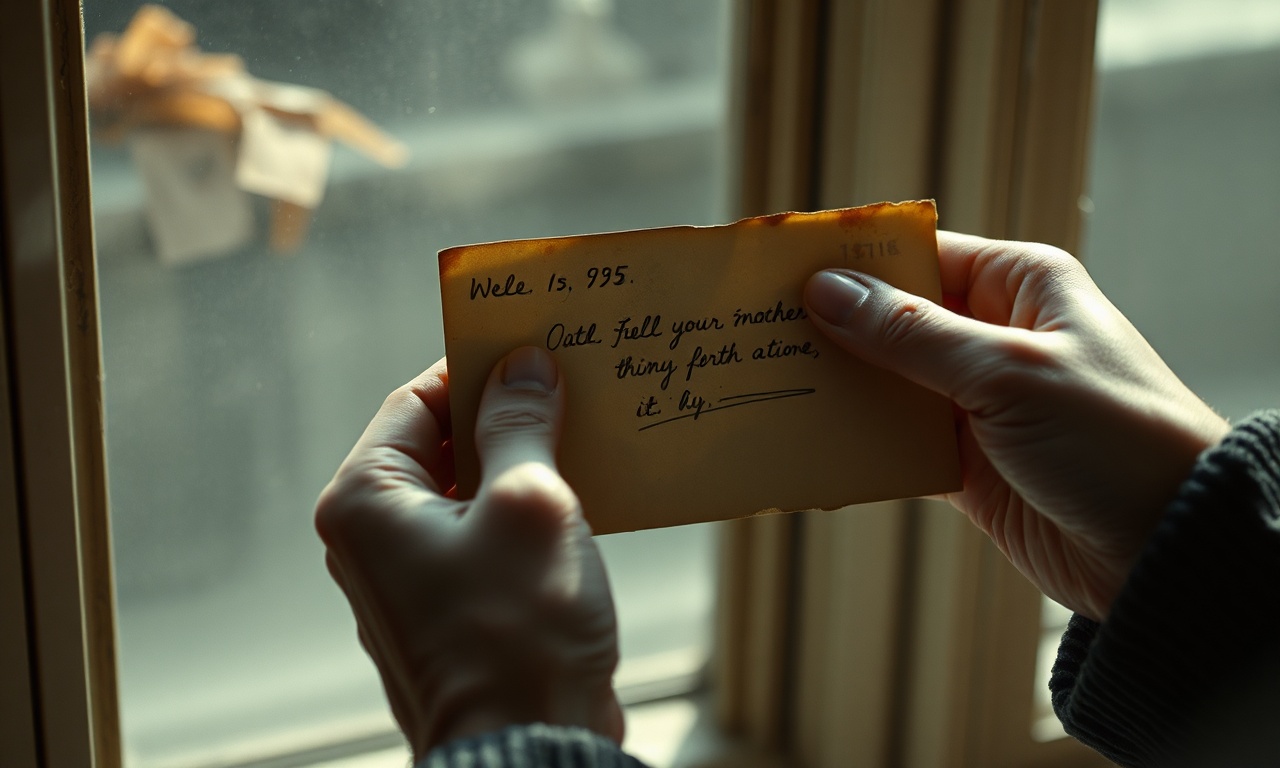
Not the email, not the text, not the Slack DM—the letter written to no immediate purpose, saved to no shared server, scheduled for delivery years hence. The letter to your future self, perhaps, describing exactly how this job makes you feel without the translation layer of professional appropriateness. The letter to your child, articulating values no corporate value statement has captured. The letter to a friend, sent on a delay that ensures no algorithm can correlate its contents with your immediate "sentiment score."
This is digital mindfulness in its most subversive form: not an app, but an escape route.
The time capsule, the scheduled letter, the future message—these tools restore what emotional surveillance systematically strips away. Temporal sovereignty. The right to feel something now that will only be understood later, by someone who cannot punish you for it. Contextual integrity. The right to address a specific person in a specific future, rather than broadcasting into an extractive present. Narrative control. The right to compose your own story without real-time annotation by third parties.
Preserving the Unscored Self
The self that emerges in these letters is not the self of performance reviews. It is messier, more contradictory, more alive. It admits ambition and exhaustion in the same breath. It grieves colleagues it never liked. It wants security and escape simultaneously. It contains multitudes that no dashboard column can accommodate.
This self requires protection—not because it is fragile, but because it is valuable in ways markets do not recognize.
The practice is simple in concept, demanding in execution: carve out communicative spaces that resist extraction. Write offline. Schedule for distance. Encrypt if possible, but more essentially, disconnect from the metrics economy. The letter to your future self delivered in five years creates no "engagement" data point. The time capsule for your child generates no advertising profile. The delayed love letter produces no sentiment analysis.
They produce only relationship. Memory. The slow architecture of trust built across time rather than extracted in real-time.
The Interior Life as Resistance
There is a deeper stake here than workplace privacy. Emotional surveillance, extended across a career, trains us to experience our own feelings as liabilities. We learn to preemptively edit. To feel the feeling, then feel shame for feeling it, then perform its opposite. The result is not emotional intelligence but emotional alienation—a divorce from our own affective lives so complete that we no longer notice the mediation.
Digital mindfulness, properly understood, reverses this conditioning. It asks: what would you feel if no one were measuring? What would you say if no one were analyzing? What self would emerge in the absence of optimization?
The answers may disturb. They may disrupt career narratives, relationship performances, the careful personas we maintain. They may reveal that we are not, in fact, "passionate about" our current trajectory. They may disclose grief we have scheduled for never. They may articulate love we have treated as understood rather than expressed.
This disturbance is the point. The unscored self is not necessarily the comfortable self. It is, however, the actual self—the only foundation for any authentic choice about how to live, work, and relate.

Toward a Practice of Emotional Sovereignty
The specifics matter less than the principle. Whether you use scheduled messaging, physical journals, encrypted notes, or spoken recordings shared through trusted channels—the essential commitment is to own your emotional timeline. To feel things on your own schedule, in your own words, for your own purposes, without preemptive adaptation to systems of evaluation.
This is not retreat. It is not disengagement from digital life but selective inhabitation of it. The same networks that enable surveillance also enable genuine connection, creative collaboration, political organizing. The goal is not purity but proportion: enough protected space for the self to remain legible to itself, even as it navigates environments designed to render it transparent.
I know something about this tension between digital immersion and the hunger for unmeasured space. I spend most nights until 2 or 3 AM, screen-glowing, pair-programming with LLMs, mapping architectures that didn't exist six months ago. The extreme solitude of that work—just me and the machine, building bridges between physical and digital existence—creates a strange loneliness that only deepens my conviction about what we're actually building. When I finally step away, I need the opposite: steep mountain trails, ocean waves, the kind of raw reality that strips away every illusion of control. Those two extremes taught me that the most precious human experiences resist digitization entirely. The laugh that erupts unbidden. The grief that arrives delayed. The love that outlasts its practical utility.
The best way to fight forgetting isn't taking another screenshot; it's setting an alarm for the future. By using EterMail to set a delivery date 5 years from now, you completely free yourself from the anxiety of the present. The letter you write today, scheduled for your own reading in a decade, accomplishes something no wellness app can. It preserves a version of you that existed outside optimization. It creates continuity across the discontinuities of career change, relationship evolution, technological disruption. It testifies that you were here, feeling specifically, before the algorithms learned to approximate feeling generally.
That testimony matters. In an economy increasingly organized around emotional predictability, the unpredictable feeling—the one that surprises even its bearer—becomes a kind of wealth. These are the experiences that resist scoring, that corrupt datasets, that remind us we are not merely inputs to systems but authors of stories that exceed them.
Write the letter. Schedule it for the future you cannot yet imagine. Trust that this act of preservation—this refusal to perform feeling on demand, this insistence on feeling in your own time—constitutes something no employer dashboard will ever display: a self that belongs, finally and fully, to you.
What is EterMail?
EterMail is a revolutionary time capsule service that allows you to send messages, photos, and videos to the future (up to 30 years). Seal your memories and thoughts today, and they'll be delivered when the time is right.
Time Capsule
Send messages up to 30 years in the future
Rich Media
Text, photos, and videos supported
Secure & Private
Your memories are safely encrypted
EterMail Team
We're the team behind EterMail, dedicated to helping you preserve and share timeless messages with your loved ones. Our mission is to make it easy to express your love, share your wisdom, and create lasting connections that transcend time.
Frequently Asked Questions about Digital Mindfulness
What is emotional surveillance in the workplace?
How can I practice true digital mindfulness instead of corporate wellness programs?
Why does privacy matter for emotional health and self-awareness?
Related Articles
Why I Built EterMail: A Time Capsule for the People I Love Most
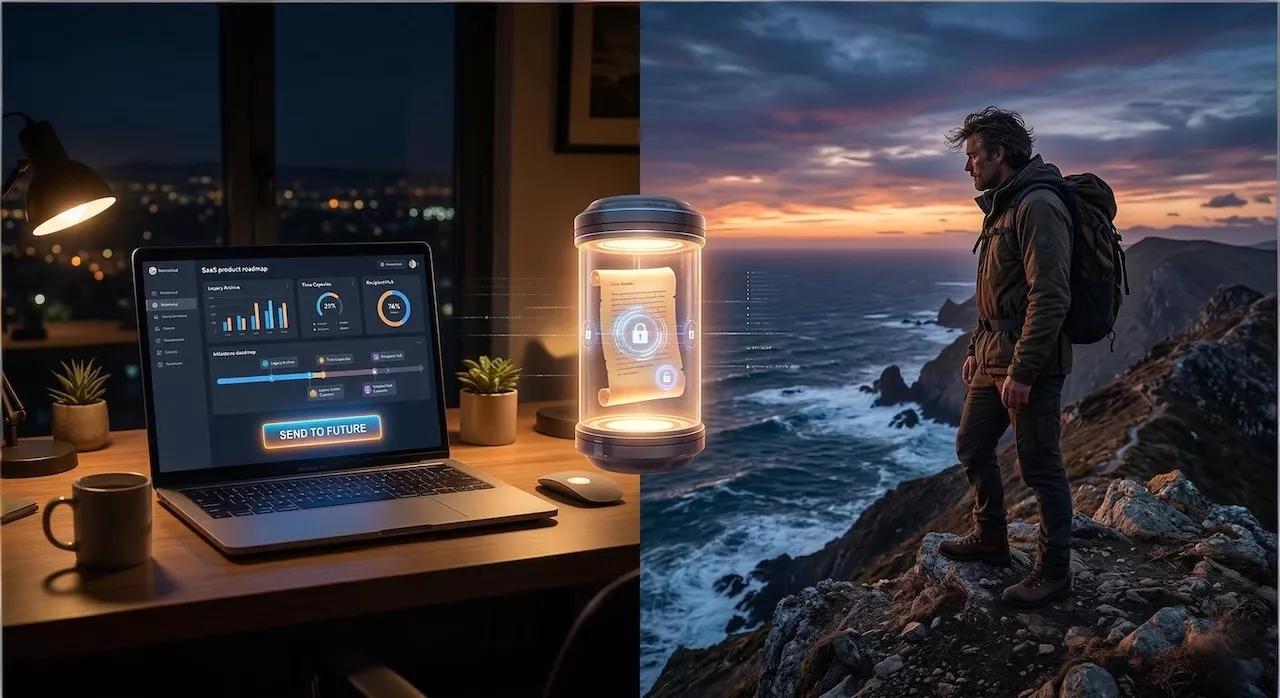
I’m a Product Manager who spends all week optimizing for the "immediate now." But getting lost off the grid on a mountain ridge made me realize I had zero infrastructure for the "forever." Here’s why I stopped worrying about conversion rates for a moment and built EterMail—a secure, tamper-proof digital time capsule for the people I love most.

The Most Radical Letter to Your Future Self Is a Promise to Stay Unfinished
The best letter to your future self isn't a memory—it's a mandate. Learn how writing to the version of you still working with love changes everything.

The Ice Tray at Midnight: On Grief, Domestic Minutiae, and the Quiet Work of Becoming Yourself Again
Why do the smallest habits hurt most after someone leaves? A reflection on grief, domestic minutiae, and the quiet moment healing finally begins.