
The Notification That Never Came
The text arrived at 2:47 AM. I was awake, scrolling through a feed that had already refreshed twice since I started. My thumb stopped on a message from a number I didn't recognize: "Dad, I miss you."
I didn't have a daughter. The number was wrong by one digit. But I sat there in the dark, the blue light painting my ceiling, and felt the weight of a letter that had nowhere to land. Someone's father was gone. Someone's words were late. And here I was, witness to grief that had become a wrong number in the infinite present of our digital lives—where every feeling is archived and almost nothing is truly preserved.
We have built systems of infinite storage and finite meaning. The platforms promise permanence, yet they deliver something closer to ambient noise—a continuous now where memory is indistinguishable from content, and love becomes a performance optimized for engagement rather than a practice sustained across time.

The Architecture of Forgetting
Consider what happens to a photograph now. In 1998, my mother took a picture of my father teaching me to tie a shoe. The film was developed. The print went into an album with a date written in her handwriting on the back. I can still recall the specific gray of that carpet, the way my father's thumb pressed the loop, the silence between his instructions that meant I am here, I am patient, I am yours.
Today I have seventeen thousand images in my cloud. I could not describe the carpet in any of them. The algorithm surfaces what I engaged with, not what I value. My father's thumb exists somewhere in that archive, indistinguishable from a screenshot of a recipe I never cooked.
This is not nostalgia for analog scarcity. It is a recognition that digital abundance has colonized our attention without securing our memory. We document constantly and reflect rarely. We share widely and correspond deeply with almost no one. The feed replaces the letter. The notification replaces the knock at the door. And the infinite scroll becomes a kind of temporal prison—everything happening now, nothing ripening into then.
The philosopher Byung-Chul Han writes of the burnout society, where subjects become self-exploiters in an economy of achievement. I would add the scroll society, where we become self-archivers in an economy of presence—always available, rarely present, accumulating traces of a life without the coherence of a story.
What the Algorithm Cannot Surface
There are details that resist digitization. Not because they cannot be photographed or typed, but because they require intentional attention to capture and deliberate practice to preserve. The way my father said my name—slightly longer on the second syllable, as if testing it for weight. The particular quality of afternoon light in the room where he explained Ohm's law with a battery and a bulb. The silence after I failed at something, which meant I am not disappointed, I am still here.
These are not memories that surface through search. They are not content. They are correspondence—the original meaning of the word, from the Latin correspondere, to answer together, to be in mutual relation. A photograph can document. A post can announce. But a letter, written to a specific person with the full knowledge of time's passage, creates a relationship across duration that no platform can replicate.
This is the heart of digital mindfulness: not the preservation of every post, but the courage to transform scrolling into sending. To write the letter to the person you still have, while you have them. To practice love as deliberation rather than performance.
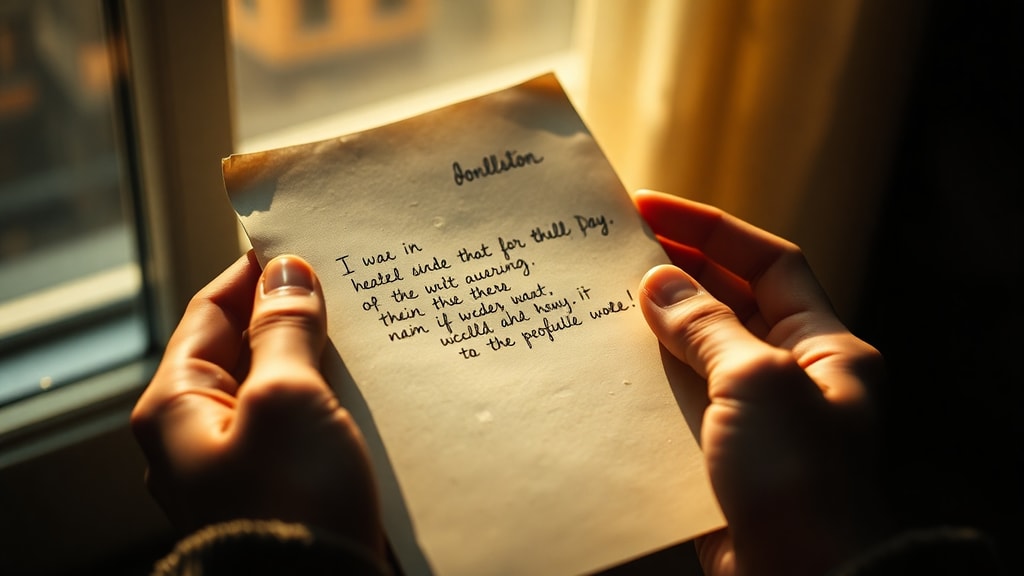
The Letter as Time Machine
I wrote my first letter to my future self at twenty-three, after my father's first heart attack. I sealed it with instructions to open at thirty. When I did, I found instructions I had forgotten: "Call him. Ask about the Ohm's law lesson. Write down exactly what he says."
I called. He remembered differently—the bulb, the battery, but also that I had been frustrated, that he had been frightened by his own impatience, that the silence afterward was his own relief at not having failed me. We made a second memory of the first. The letter had not preserved the past; it had created a future conversation that would not otherwise have happened.
This is what digital mindfulness offers that the archive cannot: the scheduled intention. The letter set to arrive when the sender is changed, or the recipient is gone, or the relationship has entered a phase that neither could have predicted. It is not storage. It is time-binding—a practice the anthropologist Alfred Korzybski identified as the defining human capacity, the ability to make present decisions that structure future experience.
The platforms offer us the opposite: the eternal present of the feed, where context collapses and chronology dissolves. A post from 2019 sits beside one from this morning, equally accessible, equally meaningless. The algorithm knows what we clicked but not what we meant. It preserves our behavior and loses our intention.
Writing Against the Infinite Present
To practice digital mindfulness is to resist this temporal flattening. It requires three specific disciplines:
1. The Discipline of Specificity
Write what no search could retrieve. Not "I love you" but "I love you for the way you cut tomatoes, the knife held like a pencil, the slices falling in equal fans." Not "you taught me well" but "you taught me in the room with the broken blinds, February light striping the table, your voice catching on the word resistor because you wanted so badly for me to understand." The specific is the only thing that survives platform death. Generalities migrate to the next app. Particularities require a recipient who knows the reference, who completes the meaning, who holds the other half of the correspondence.
2. The Discipline of Delay
Send what cannot be immediately consumed. The instant message is a transaction. The scheduled letter is a gift across time, requiring the recipient to become someone else in order to fully receive it. My letter to myself at thirty required a me who had forgotten the instruction. My future letters to my partner assume a marriage that has endured, or a grief that has been survived, or a reconciliation that has not yet been imagined. The delay is not a technical feature. It is a moral practice. It says: I trust the future. I believe you will still be here. I am willing to be held accountable to the person I am now by the person you will become.
3. The Discipline of Encryption
Not the technical encryption of data, though that matters, but the encryption of meaning—the writing of things that only the intended recipient can decode. The private joke. The shared reference. The memory that requires two witnesses to exist. The platform wants content that travels, that scales, that converts. Digital mindfulness wants meaning that binds, that requires a specific relationship to complete. This is why the letter outlasts the post. The post wants an audience. The letter wants a correspondent.

The Correspondence That Outlives the Platform
I think often of that wrong-number text. Dad, I miss you. The daughter who sent it will have received no reply. Perhaps she sent another. Perhaps she posted a tribute on a platform that will redesign its interface in eighteen months, that will deprecate her account in a decade, that will cease to exist before her own death. The grief will have been performed but not preserved. The love will have been announced but not practiced across time.
The reader who learns digital mindfulness now will possess something no Medium post can retrieve: a correspondence that outlives the platform, proof that love was practiced deliberately rather than performed publicly. The letter to the father who is still here, scheduled to arrive when he is not. The message to the partner who is still sleeping beside you, set to deliver on your tenth anniversary, when you will both be different people requiring evidence of who you were. The words to the child who cannot yet read, preserved until they can, and then until they need to remember what you believed before you knew what they would become.
This is not sentiment. This is architecture—the building of temporal structures that resist the infinite present, that create meaning through duration rather than against it. The scroll says: everything is now. The letter says: I was then, you are now, someone will be later, and we are in correspondence across this distance.
The Courage to Send
I spend a lot of nights alone with screens. Not scrolling—building. As someone who has spent years in Silicon Valley, shipping e-commerce platforms and game engines and now wrestling with the hardest problem I've ever tried to solve, I've come to believe that the most radical thing you can build in tech is a product that slows you down. That resists the very speed of the industry that birthed it.
The best way to fight forgetting isn't taking another screenshot; it's setting an alarm for the future. When I started building EterMail, I wasn't trying to create another inbox. I was trying to build a time machine I could actually trust—one that would still be running when the platforms we use today have become punchlines, when the feeds have all gone dark. I obsessed over end-to-end encryption and extreme server redundancy not because I'm paranoid, but because I know that a letter written to the future needs to be guarded even more fiercely than a bank password. The daughter who texted a dead number deserved a system that would not become another dead number.
Don't wait for the perfect moment to start writing. Open EterMail, skip the complex formatting, type the very first sentence that comes to mind, set the date, and leave the rest to us. The draft folder is full of letters that were composed in the courage of midnight and abandoned in the cowardice of morning. The unsent message is a species of regret that technology has made infinitely reproducible. We can now compose and abandon without even the cost of postage, the walk to the mailbox, the moment of commitment when the letter passes from hand to system and cannot be retrieved.
To schedule a letter is to commit beyond the present mood. It is to say: I mean this enough to let it travel in time. I trust the future enough to plant meaning there. I love enough to practice rather than merely to feel.
My father is still here. The wrong-number text woke me to what I had not yet written. I composed a letter that evening—specific, delayed, encrypted with references only he would complete. I scheduled it for his next birthday, and for the one after, and for one to be delivered only if I do not cancel it, which requires me to remain alive and in relationship with the intention I had at 2:47 AM, scrolling in the dark, receiving someone else's grief as my own reminder.
Digital mindfulness is not a product feature. It is a way of being in time. The tools matter only insofar as they enable the practice: the transformation of scrolling into sending, of archiving into addressing, of infinite present into deliberate correspondence. The daughter who texted a dead number will not read this. But someone else, awake at 2:47 AM, scrolling through a feed that has refreshed twice since they started, might put down the phone and pick up the practice of writing to the person they still have, while they have them, with the courage to let the words travel where the algorithm cannot follow.
What is EterMail?
EterMail is a revolutionary time capsule service that allows you to send messages, photos, and videos to the future (up to 30 years). Seal your memories and thoughts today, and they'll be delivered when the time is right.
Time Capsule
Send messages up to 30 years in the future
Rich Media
Text, photos, and videos supported
Secure & Private
Your memories are safely encrypted
EterMail Team
We're the team behind EterMail, dedicated to helping you preserve and share timeless messages with your loved ones. Our mission is to make it easy to express your love, share your wisdom, and create lasting connections that transcend time.
Frequently Asked Questions about Digital Mindfulness
How can I practice digital mindfulness without abandoning technology entirely?
What makes a letter more meaningful than a social media post for preserving memories?
Why do we forget details even when we have thousands of digital photos?
Related Articles
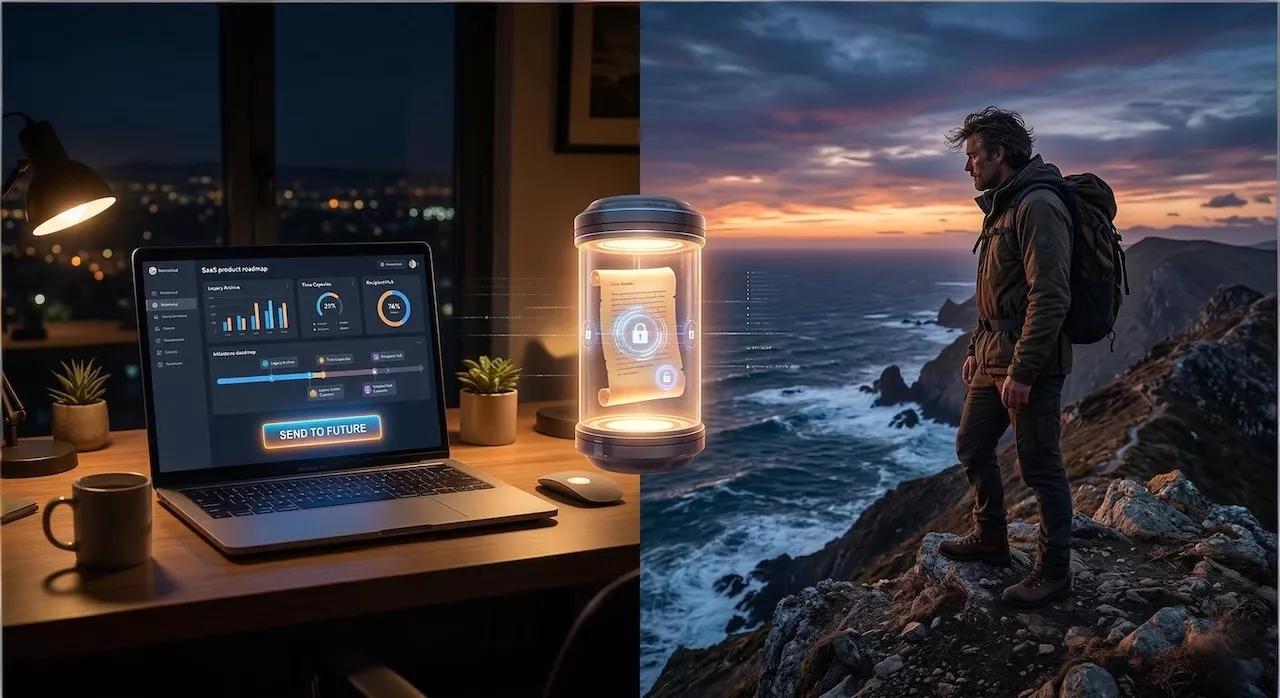
Why I Built EterMail: A Time Capsule for the People I Love Most
I’m a Product Manager who spends all week optimizing for the "immediate now." But getting lost off the grid on a mountain ridge made me realize I had zero infrastructure for the "forever." Here’s why I stopped worrying about conversion rates for a moment and built EterMail—a secure, tamper-proof digital time capsule for the people I love most.

The Cartography of Mirrored Damage: What We Show Our Children, What We Hide, and What Breaks When They Bring Us Their Own Fractures
How do we teach children that healing isn't never breaking? Explore the art of showing our fractures to help them recognize their own—and what happens when they finally do.
The Team Chat That Never Let Him Go Home: When Work Notifications Colonize Your Private Life and Your Data
Every work notification steals more than your attention—it builds a permanent record of your behavior. Discover why being unreachable is radical self-preservation.