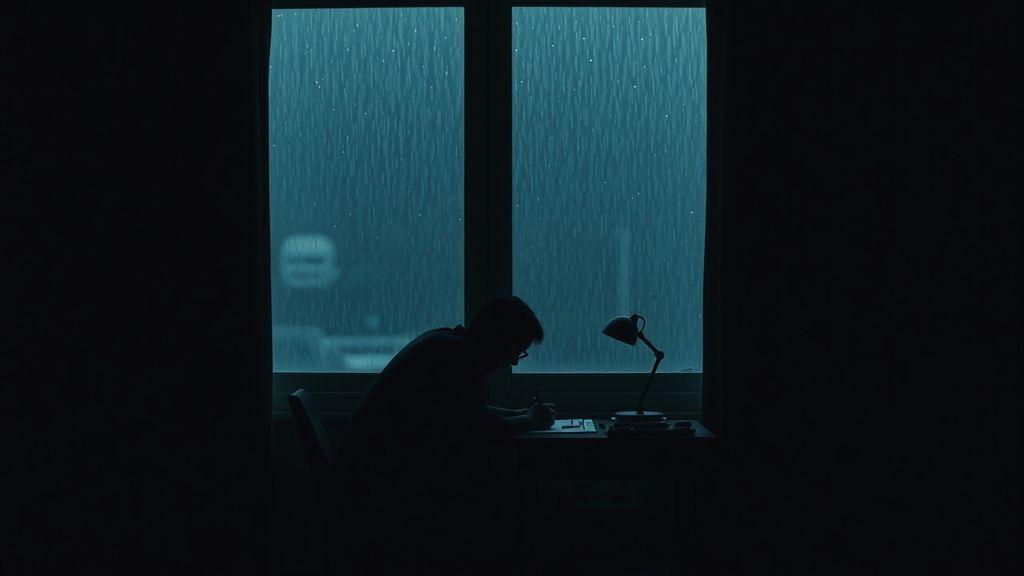
There is a particular loneliness that arrives at 2 AM, when you have scrolled through three hundred posts and cannot remember a single face. The feed moves like water through cupped hands—present, then gone, then replaced by something equally forgettable. We have built machines of infinite connection that somehow leave us more untethered than before, more certain that nothing we say or feel will survive the next refresh.
Nick Cave, in his correspondence with fans, once described creative work as "self-forgiveness"—the courage to believe that what you make matters even when the world insists it does not. That phrase lands with peculiar force now. We live in cynical times, not because we have stopped hoping, but because we have been trained to hide our hope behind irony, to treat sincerity as a vulnerability to be exploited. The algorithm rewards the quick take, the hot reaction, the perfectly calibrated indifference. It does not know what to do with the person who sits down to write something they will not send for ten years.
The Casual Cruelty of Efficiency
Our digital tools promised us liberation. Instead, they delivered a kind of temporal compression—the collapse of past, present, and future into a single, anxious now. The notification does not care what time it is where you are. The inbox does not recognize that you are grieving, or falling in love, or simply trying to remember who you were before the screens. Everything demands immediate response. Everything expires.
This is what Cave might call the casual cruelty of our age: the assumption that speed equals value, that presence must be constant, that feeling deeply is inefficient. We have learned to treat our own emotions as inconveniences, interruptions to be managed rather than experiences to be inhabited. The result is a kind of emotional flatness—not depression exactly, but a persistent dimming, as if someone has turned down the brightness on our inner lives.

The practice of writing slowly—deliberately, imperfectly, to a specific human being who may not read your words for years—interrupts this compression. It insists on duration. It claims that some things deserve to take time, that the future self reading your letter is as real as the present self writing it, that hope is not naive but structurally necessary to the act itself.
Writing as Self-Forgiveness
Consider what happens when you sit down to write a letter you will not send immediately. The first obstacle is always shame. You catch yourself performing, imagining how the recipient will read you, and you must consciously set that performance aside. You are not building a brand. You are not optimizing engagement. You are simply trying to be present to your own experience and to trust that another person might want to witness it.
This is the self-forgiveness Cave describes: the willingness to exist without guarantee. You forgive yourself for not having the right words, for the messiness of your feelings, for the possibility that you will change so completely that this letter will seem like it was written by a stranger. You write anyway. You write because the alternative—silence, the endless scroll, the refusal to commit anything to permanence—feels like a kind of dying while still alive.
The letter becomes evidence. Not evidence of your importance, but evidence of your attention. You noticed this. You felt this. You cared enough to record it, to entrust it to time, to believe that someone—perhaps your own future self—will need to know that you were here, that you dared to feel this much.
The Radical Architecture of Delay
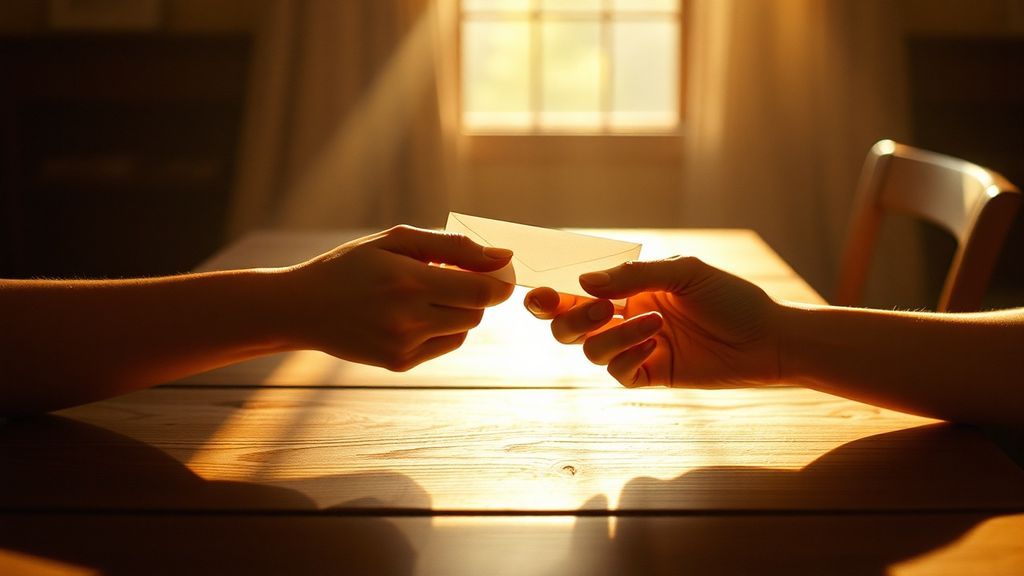
There is something politically subversive about delayed communication in an economy built on immediacy. The platform wants your reaction now, while the emotion is hot, while you are still reactive, before you have had time to think or feel your way through to something more considered. The delayed letter refuses this economy. It says: I will sit with this. I will revise. I will wait until the feeling has settled into meaning.
This is not the same as suppression. The letter does not deny emotion; it honors emotion by giving it form. The act of writing transforms the chaotic swarm of feeling into something with structure—sentences, paragraphs, a beginning and an end. You are not your feelings; you are the one who shapes them, who chooses which ones to preserve and how to frame them. This is agency. This is the opposite of the algorithmic passivity that characterizes so much of our digital lives.
The delay also creates a peculiar intimacy. When you write knowing your words will not be read for years, you are freed from the pressure of response. You do not need to manage the other person's reaction. You can be more honest, more strange, more fully yourself. The letter becomes a time capsule of your consciousness, sealed against the erosion of memory and the distortions of nostalgia.
What We Owe Our Future Selves
I know this feeling intimately—the 2 AM solitude of a builder hunched over glowing code, "pair programming" with LLMs until the city outside goes quiet. There's a strange resonance between that digital solitude and writing to someone across time. Both require believing that a signal sent into the void will find its receiver. Both demand patience that the current internet rarely rewards.
We are, most of us, terrible ancestors to our own futures. We leave no record, no map of how we became who we are. The photos on our phones are uncurated, uncontextualized, meaningless without the stories we never write down. The posts we made have disappeared into the platform's archives, if they were archived at all. We have become prolific in our production and impoverished in our preservation.
The letters we write now may be the only proof future selves have that we dared to feel this much—that we were not merely consuming and reacting, but also reflecting, hoping, trying to make sense of our lives in real time. This is not sentimentality. It is a practical recognition that memory is constructed, that the stories we tell about ourselves shape who we become, and that we have some responsibility to our future selves not to leave them entirely alone with the fragments.
The Practice of Digital Mindfulness
The best way to fight forgetting isn't taking another screenshot; it's setting an alarm for the future. I built EterMail because I kept losing my own words—drafts abandoned in folders, intentions dissolved into notifications. By using EterMail to set a delivery date 5 years from now, you completely free yourself from the anxiety of the present. You write the messy truth today, seal it, and let time do the work of perspective.
Digital mindfulness is not about retreating from technology but about using it with intention. It asks: what do I want to preserve? Who do I want to become? What would it mean to treat my future self, or the people I love, with the same care I bring to my most immediate obligations?
Writing eternal letters—time capsules scheduled to arrive years or decades from now—cultivates a particular quality of attention. You must imagine the person who will read this. You must consider what they will need to hear, what you wish someone had told you, what you are still learning that might be useful to remember. This is empathy across time, a refusal to treat the future as unreal or the past as disposable.
The platform that enables this is not the point. The point is the practice: the slow, imperfect, courageous act of committing your present self to paper, trusting that it will matter to someone, trusting that hope is not foolish but fundamental. In cynical times, this trust is itself a kind of resistance. It insists that some things are worth preserving, that some feelings deserve to survive the scroll, that we are capable of more than the algorithm assumes.
The Courage of Hope
Nick Cave wrote that creative work requires "the courage of hope in cynical times." This courage is not optimism. It does not promise that everything will be fine. It simply refuses the cynic's easy dismissal, the protective irony that prevents us from being wounded by caring. It says: I will write this letter. I will send it into the future. I will believe that someone will need it, even if I cannot know who or when or why.
The letters we preserve now are small acts of this courage. They are proof that we were here, that we felt deeply, that we tried to connect across the distances—between present and future, between self and other, between the efficiency the world demands and the slowness that human life actually requires. They are, in the end, the only inheritance that matters: not the data we accumulated, but the meaning we made from it, the love we took the time to articulate, the hope we dared to put into words.
What is EterMail?
EterMail is a revolutionary time capsule service that allows you to send messages, photos, and videos to the future (up to 30 years). Seal your memories and thoughts today, and they'll be delivered when the time is right.
Time Capsule
Send messages up to 30 years in the future
Rich Media
Text, photos, and videos supported
Secure & Private
Your memories are safely encrypted
EterMail Team
We're the team behind EterMail, dedicated to helping you preserve and share timeless messages with your loved ones. Our mission is to make it easy to express your love, share your wisdom, and create lasting connections that transcend time.
Related Articles

Why I Built EterMail: A Time Capsule for the People I Love Most
I’m a Product Manager who spends all week optimizing for the "immediate now." But getting lost off the grid on a mountain ridge made me realize I had zero infrastructure for the "forever." Here’s why I stopped worrying about conversion rates for a moment and built EterMail—a secure, tamper-proof digital time capsule for the people I love most.

The Most Radical Letter to Your Future Self Is a Promise to Stay Unfinished
The best letter to your future self isn't a memory—it's a mandate. Learn how writing to the version of you still working with love changes everything.

The Ice Tray at Midnight: On Grief, Domestic Minutiae, and the Quiet Work of Becoming Yourself Again
Why do the smallest habits hurt most after someone leaves? A reflection on grief, domestic minutiae, and the quiet moment healing finally begins.