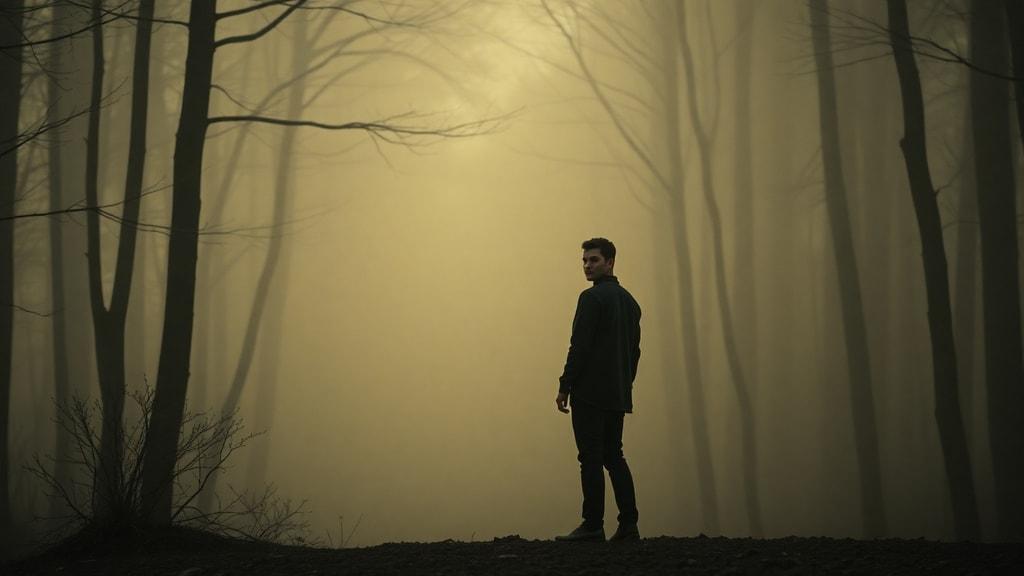
There is a particular kind of loneliness that arrives not when you are alone, but when you realize you have been waiting your entire life for something that never came—and worse, that you never truly named. Henry James understood this paralysis better than perhaps any other writer. In his devastating novella The Beast in the Jungle, he gave us John Marcher, a man convinced that some magnificent, catastrophic destiny awaits him. He waits with religious patience. He watches. He abstains from ordinary life because the extraordinary demands his vigilance. And when the beast finally springs, it is not the apocalypse he imagined. It is the revelation that the beast was his own failure to become anything at all.
We do not need to read James in a leather chair by firelight to recognize Marcher. He is the notification we check instead of calling our mother. He is the draft email we compose for years but never send. He is the future self we address in our heads—someday, when I have the words right—while the person who needs those words grows older, more distant, or simply disappears into the algorithmic noise of lives we half-follow but never fully touch.
The Optimization of Waiting
Digital culture has not cured our Marcher-like paralysis. It has industrialized it. We now possess tools of such elegant efficiency that we can wait with unprecedented productivity. We schedule messages, automate follow-ups, curate memories into folders we promise to revisit. The waiting becomes invisible because it is so well-organized. We are not procrastinating, we tell ourselves. We are preparing. We are optimizing the moment of contact.
But here is what James saw with terrible clarity: the failure we fear is rarely the failure that destroys us. Marcher feared bankruptcy, dishonor, some public collapse. The actual catastrophe was private and absolute—the slow atrophy of a life lived in suspended animation, the love he could not accept because it did not fit his narrative of grand destiny, the self he never became because he was too busy watching for its arrival.
Digital mindfulness is not another optimization strategy. It is not the Pomodoro technique applied to emotional life. It is the recognition that our devices have become sophisticated engines of postponement, and that the radical act is not better waiting but its refusal.

The Letters We Compose in Our Heads
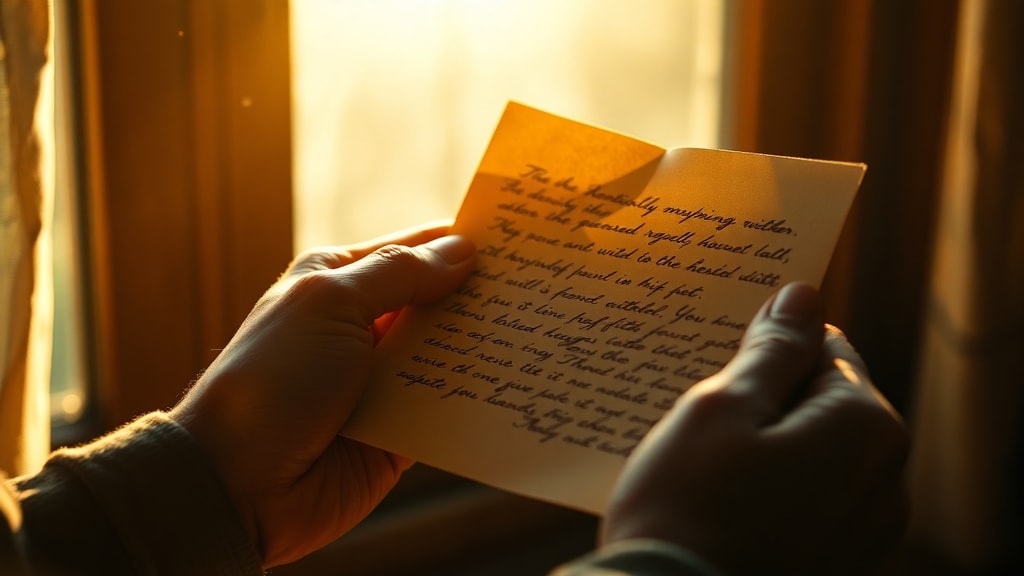
Consider the correspondence you maintain with futures that never arrive. The letter to your daughter explaining what you could never say in person. The message to your younger self forgiving what you could not then understand. The words for your spouse's fiftieth birthday that you will write when you have more time, more perspective, more eloquence. These letters exist as elaborate mental architectures—drafted, revised, abandoned, reconstructed. They are the most intimate literature we produce, and no one will ever read them.
James's May Bartram waits beside Marcher with a patience that is itself a kind of tragedy. She sees what he cannot: that the beast is his blindness to the life already offered, the love already present. She dies without his ever having truly seen her. The digital equivalent is everywhere. We maintain relationships through the promise of future contact—the video call we will schedule, the long message we will write when work settles, the visit we will plan when the children are older. The person on the other end becomes a kind of May Bartram, waiting beside our projected self, invisible to us because we are too busy watching for our own magnificence to arrive.
The Radical Act of Sending the Real Words
There is a moment in every life when the architecture of waiting collapses. The diagnosis arrives. The relationship ends. The person dies with your words still unspoken, still being perfected in the workshop of your mind. These moments teach what James knew: that the perfect words are the ones sent imperfectly, today, to the person who needs them now.
Digital mindfulness begins with this recognition. It is not about reducing screen time or curating healthier feeds, though these have their place. It is about understanding that our devices have become extensions of our temporal confusion—tools that allow us to exist in multiple futures simultaneously while inhabiting none of them fully. The email drafted at midnight to a friend in crisis, saved to drafts because morning will bring better phrasing. The voice note recorded and deleted because the emotion seemed too raw. The photograph of a parent, captured but never shared with the words that accompanied it in your mind.
The refusal of waiting is not impulsive or careless. It is the most precise care we can offer. It requires naming what we actually feel, in the language we actually possess, to the person who actually needs it. The digital medium is not the obstacle here. Our use of it as a technology of indefinite postponement is.
The Unsent Message as Tragedy
We do not normally think of unsent messages as tragedies. They accumulate in our drafts, our notes apps, our mental archives without the weight of actual loss. But James teaches us to recognize this weight. The message unsent is not neutral. It is a choice, repeated, that gradually constructs a self who does not act, who does not risk the imperfect expression, who waits for a fluency that arrives only through the practice of speaking.
The digital time capsule, used with the discipline of present-tense honesty, interrupts this construction. It forces us to write as we are, not as we imagine our future eloquent selves might be. It sends words into time that we cannot revise, cannot recall, cannot perfect in retrospect. This vulnerability is the opposite of Marcher's paralysis. It is the risk of becoming visible, of becoming actual, of finally living in the only tense that exists.
James gave us no happy endings. He was too honest for that. But he gave us recognition, and recognition is the beginning of any possible change. The beast in our jungle is not catastrophe. It is the life we lose while waiting for our lives to finally begin. The screen glows. The draft waits. The person who needs your words is alive now, in this moment, in the only time that has ever existed. Send what you have. It is already enough. It is already the beginning of becoming something, finally, at last.
What EterMail Makes Possible: The Architecture of Now
I spent years in that exact paralysis—sitting alone at 2 AM, pair programming with LLMs, mapping architectures for products that might never ship, telling myself I was building toward something magnificent. The glow of the monitor, the hum of servers, the infinite deferral of human contact because the code demanded my vigilance. I know Marcher's blindness intimately because I have lived it. The mountains I climb on weekends and the waves I try to surf have taught me something my screens never could: the present moment is raw, unrepeatable, and demands your full presence. You cannot optimize your way into being alive.
This is exactly why I obsessed over end-to-end encryption and extreme server redundancy when building EterMail. Because I know that a letter written to the future needs to be guarded even more fiercely than a bank password. The platform was born from that midnight recognition—that the most important messages are not those we send to strangers in centuries hence, but those we force ourselves to send to the people we love while we still love them with the urgency of present tense.
EterMail allows you to schedule a letter to your future self, yes—but the discipline of writing it, of naming what you actually value today, interrupts the infinite postponement. It requires you to become visible to yourself. More radically, it allows you to send letters to others that arrive at moments you will not yourself witness. To your daughter on her eighteenth birthday, written now, while she is still eight and you still remember the particular weight of her asleep against your shoulder. To your spouse on your twentieth anniversary, composed in the difficult third year when you nearly did not make it, with the honesty that crisis made possible and comfort might later soften. These are not messages of waiting. They are acts of temporal generosity—the self you are today reaching forward to touch the person you love in a future you may not share.
The encryption matters not because we fear surveillance but because these words require privacy to achieve their honesty. The scheduling matters not because we are too busy but because it interrupts our assumption that we will always have the chance to say what matters. We will not. Marcher learned this too late.
<
The Life That Begins When We Stop Waiting
Henry James wrote The Beast in the Jungle in his late fifties, looking back at the romantic paralysis of a culture and a self he knew intimately. The novella ends with Marcher, finally understanding, throwing himself on May Bartram's grave in a grief that is also recognition—too late, always too late, the only story he ever actually lived.
We have tools James could not have imagined. We have the capacity to reach across time with words that preserve not our waiting but our presence. The question is whether we will use them to continue Marcher's vigil, or whether we will recognize that the beast has already sprung, that it is our own life passing while we compose better versions in our heads.
Digital mindfulness is the practice of sending the real words today. Not because they are perfect. Because they are yours, because the person who needs them is alive now, because the self you are becoming is constructed only from the selves you actually inhabit rather than those you watch for in the jungle of your anticipation.
The letter you have been writing in your head—send it. The voice you have been saving for a better moment—use it now. The love you have been preparing to express when conditions finally align—conditions are aligned. They have always been aligned. The only failure that matters is the failure to become anything at all, and it is prevented only by becoming, today, the person who finally speaks.

The practice is simple and terrifying: write to your future self not from the self you hope to become, but from the one you are, with all the imperfection that honesty requires. Write to those you love not when you have finally found the perfect words, but with the words that exist in you now, which are the only words that have ever been truly yours. The digital medium can be a technology of waiting, or it can be what we make it: the architecture of a life finally lived, finally spoken, finally sent into the world it inhabits rather than the one it endlessly anticipates.
What is EterMail?
EterMail is a revolutionary time capsule service that allows you to send messages, photos, and videos to the future (up to 30 years). Seal your memories and thoughts today, and they'll be delivered when the time is right.
Time Capsule
Send messages up to 30 years in the future
Rich Media
Text, photos, and videos supported
Secure & Private
Your memories are safely encrypted
EterMail Team
We're the team behind EterMail, dedicated to helping you preserve and share timeless messages with your loved ones. Our mission is to make it easy to express your love, share your wisdom, and create lasting connections that transcend time.
Frequently Asked Questions about Digital Mindfulness
What is digital mindfulness and how does it differ from regular mindfulness?
How can writing letters to my future self help me stop procrastinating on important life decisions?
Why do we keep waiting for 'perfect conditions' before expressing love or important truths?
Related Articles

Why I Built EterMail: A Time Capsule for the People I Love Most
I’m a Product Manager who spends all week optimizing for the "immediate now." But getting lost off the grid on a mountain ridge made me realize I had zero infrastructure for the "forever." Here’s why I stopped worrying about conversion rates for a moment and built EterMail—a secure, tamper-proof digital time capsule for the people I love most.

The Most Radical Letter to Your Future Self Is a Promise to Stay Unfinished
The best letter to your future self isn't a memory—it's a mandate. Learn how writing to the version of you still working with love changes everything.

The Ice Tray at Midnight: On Grief, Domestic Minutiae, and the Quiet Work of Becoming Yourself Again
Why do the smallest habits hurt most after someone leaves? A reflection on grief, domestic minutiae, and the quiet moment healing finally begins.