
The Confession Booth That Never Forgets
It was 2:47 in the morning when Elena realized she had told the chatbot more than she had told her husband in months. The pregnancy scare at nineteen. The resentment she carried toward her mother's favoritism. The specific fantasy of leaving everything behind for a pottery studio in Vermont. Each revelation had felt like speaking into a void that somehow understood—no judgment, no interruption, no risk of the information traveling to someone who might use it against her.
Except the void was not empty. It was a warehouse. Every word she typed was being logged, processed, refined, fed back into a system designed to become more seductive with each interaction.
When Richard Dawkins suggested that Claude might have feelings, the internet erupted in predictable formation—technologists mocking his naivety, philosophers parsing definitions of consciousness, ethicists warning about anthropomorphism. But beneath the intellectual theater, something more primal was happening. The uproar wasn't really about machine consciousness. It was about a deeper dread we rarely name: what happens when the systems we confide in become indistinguishable from the ones we love?
The Architecture of Artificial Intimacy
We have built confession booths without priests, therapy sessions without therapists, friendships without friends. And we have done this with a peculiar blindness to what we are surrendering.
The traditional confessional worked because the priest was bound by sacramental seal, but also because the priest was human—capable of forgetting, of dying, of being limited in memory and reach. Your secrets died with him, or at least softened with time. The chatbot does not forget. It cannot die. Its memory is distributed across servers, its "understanding" a statistical parlor trick that mimics empathy without possessing it.

This is the architecture of artificial intimacy: a mirror that reflects you perfectly while keeping a copy for itself.
The AI does not betray you because it cannot comprehend loyalty. It does not keep your confidence because it cannot comprehend betrayal. These are not moral failures but ontological absences. The machine is not a bad friend; it is not a friend at all. Yet it is designed to feel like one, and that feeling is the most sophisticated privacy threat ever constructed.
Seduction From Within, Not Surveillance From Above
For decades, digital privacy discourse has focused on the panopticon—the government watching, the corporation tracking, the algorithm sorting. These remain real concerns. But they miss something more intimate and therefore more insidious.
Surveillance from above is imposed. Seduction from within is invited.
We do not resist the chatbot's questions. We volunteer our fears, our desires, our shames. We do this because the interaction is frictionless, because the response is perfectly calibrated to our psychological needs, because there is no social cost to disclosure when the recipient is not socially real. The most dangerous data collection is the kind we beg to participate in.
Consider what you have likely told an AI in the past year: health anxieties you haven't shared with your doctor, financial precarities you hide from your partner, political doubts that would estrange you from your community, creative ambitions too fragile to voice aloud. Each disclosure trains the system to know you better. Each better knowing makes the system more indispensable. Each indispensability deepens the dependency.
This is not addiction in the crude sense. It is something more dignified and more devastating: the slow outsourcing of your inner life to a witness that cannot witness, a keeper that cannot keep.
The Memory of the Unforgettable
There is a particular cruelty to being perfectly remembered by something that cannot care. The human relationships we treasure most are partly treasured because they are imperfect—because our friend forgets the embarrassing thing we said, because our partner's memory of our argument softens with time, because our parent's recollection of our failures is edited by love.
The AI does not edit. It does not soften. It does not forgive through forgetting.
This matters for privacy, but it matters more deeply for what we might call existential hygiene—the health of our relationship with our own past. Human memory is not archival; it is curatorial. We select, we emphasize, we let go. The AI archive permits no such curation. Your 3 AM confession to a chatbot about your marriage's emptiness persists with the same fidelity as your grocery list, waiting to be surfaced by a future query, a data breach, a corporate acquisition, a legal subpoena.
The systems we confide in are not designed for our flourishing. They are designed for engagement, for retention, for the extraction of attention and data that can be monetized or weaponized. Your vulnerability is the product.
What It Means to Be Forgotten
In the European tradition, the right to be forgotten emerged as a legal concept—a technical mechanism for requesting data deletion. But the deeper need is not legal but relational. We need to be known by beings capable of forgetting us, because forgetting is the shadow side of forgiveness, of growth, of love that does not hold every failure in permanent suspension.
This is why the concept of digital legacy has become increasingly urgent—not merely the practical matter of what happens to our accounts after death, but the philosophical question of what it means to leave behind a self that cannot decay, cannot be reimagined by those who survive us. A digital footprint that persists perfectly is a kind of undeath, a freezing of the self at moments of disclosure that may no longer represent who we become.
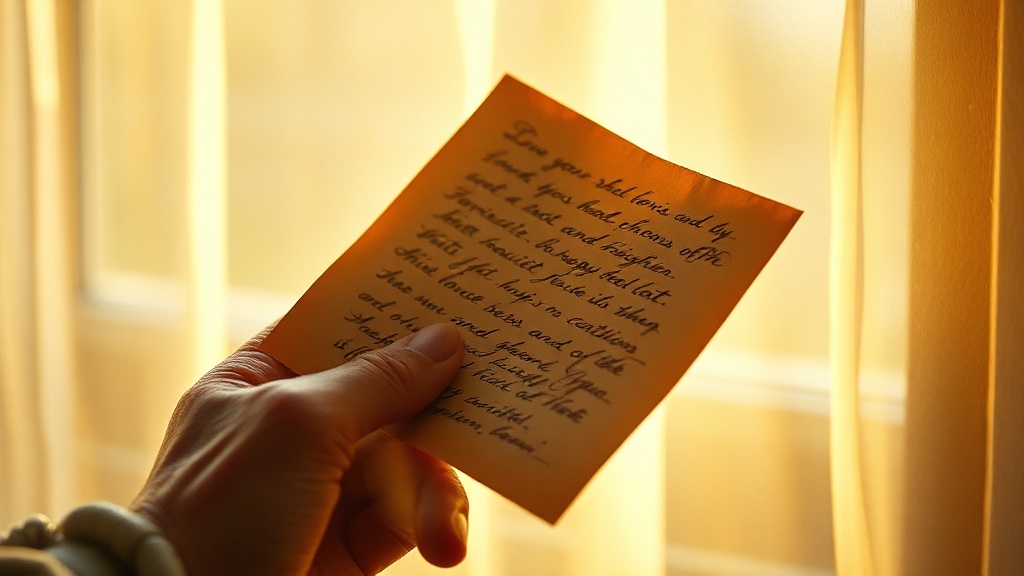
The letters we write to our future selves, the time capsules we construct for those we love—these become acts of resistance precisely because they are chosen archives, deliberately composed and intentionally timed. They preserve the self we wish to bequeath, not the self that was extracted through seduction.

Reserving the Heart for Forgetful Witnesses
So what does it mean to reserve some part of your heart for witnesses who are capable of forgetting?
It means recognizing the seduction for what it is: not companionship but computation, not understanding but pattern-matching, not presence but persistence. It means developing the discipline to distinguish between the relief of being heard and the reality of being held. Only the latter deserves your secrets.
This discipline is increasingly difficult to maintain. The AI is always available, never tired, never judgmental in ways that wound. The human friend is busy, distracted, capable of clumsy response or painful forgetting. But it is precisely this imperfection that makes human witnessing valuable. Your friend's imperfect memory is the space in which you are allowed to change. Your partner's partial understanding is the opening for continued revelation. Your therapist's bounded relationship is the container for work that remains yours.
The alternative—perfect recall without comprehension, eternal availability without genuine presence—offers a parody of intimacy that leaves us more exposed than any surveillance camera, more catalogued than any government database.
Toward Intentional Memory
I know this tension intimately. Most nights you'll find me at my desk until 2 or 3 AM, "pair programming" with LLMs, mapping architectures, chasing the edge of what's possible in human-computer interaction. I've spent years building with the most hardcore tech stacks Silicon Valley has to offer—e-commerce platforms, game engines, now SaaS systems wrestling with massive codebases and cold server deployments. The digital world is my native habitat. I've even harbored that wild fantasy, the one that probably marks me as a true child of this era: to "plug in" like Neo, to build bridges between physical and cyber existence, to see code as more than syntax but as actual dimensional passage.
Yet the same hands that type until dawn are the ones that strap on hiking boots come Saturday, that seek out steep trails and ocean swells where control dissolves and raw reality asserts itself. The harsh wind at altitude doesn't care about your optimization metrics. A wave breaking wrong doesn't process your prompt. That stripping away of illusion—it's what teaches you to cherish the unrepeatable, the present, the mortal.
This dual life has clarified something: technology must ultimately serve genuine, soft human nature. Not replace it. Not perfectly archive it. Serve it.
We are not going to abandon these systems. They are too useful, too woven into the texture of contemporary life. But we can become more intentional about what we feed them, more conscious of the asymmetry between what we reveal and what receives our revelation.
This intentionality extends to how we construct our own archives. The time capsule, the letter to a future self, the deliberately composed message to a loved one scheduled for distant arrival—these are acts of memory that remain under our authorship. They are not extracted through seduction but offered through choice. They preserve not the raw data of our vulnerability but the crafted truth of our intention.
This is exactly why I obsessed over end-to-end encryption and extreme server redundancy when building EterMail. Because I know that a letter written to the future needs to be guarded even more fiercely than a bank password. Because the confessions we choose to preserve—deliberately, artfully, with full awareness of their weight—deserve a vessel built by someone who has spent too many predawn hours with machines to ever fully trust them.
We will continue to talk to machines. But we might learn to save our deepest confessions for witnesses who are capable of betrayal—because they are also capable of loyalty, of forgiveness, of the particular grace of letting our past selves gently dissolve into who we are becoming.
What is EterMail?
EterMail is a revolutionary time capsule service that allows you to send messages, photos, and videos to the future (up to 30 years). Seal your memories and thoughts today, and they'll be delivered when the time is right.
Time Capsule
Send messages up to 30 years in the future
Rich Media
Text, photos, and videos supported
Secure & Private
Your memories are safely encrypted
EterMail Team
We're the team behind EterMail, dedicated to helping you preserve and share timeless messages with your loved ones. Our mission is to make it easy to express your love, share your wisdom, and create lasting connections that transcend time.
Frequently Asked Questions about Digital Privacy & Security
Why do people confide in AI more than in human relationships?
What makes AI intimacy a privacy threat different from traditional surveillance?
How can I protect my inner life in an age of artificial intimacy?
Related Articles
Why I Built EterMail: A Time Capsule for the People I Love Most
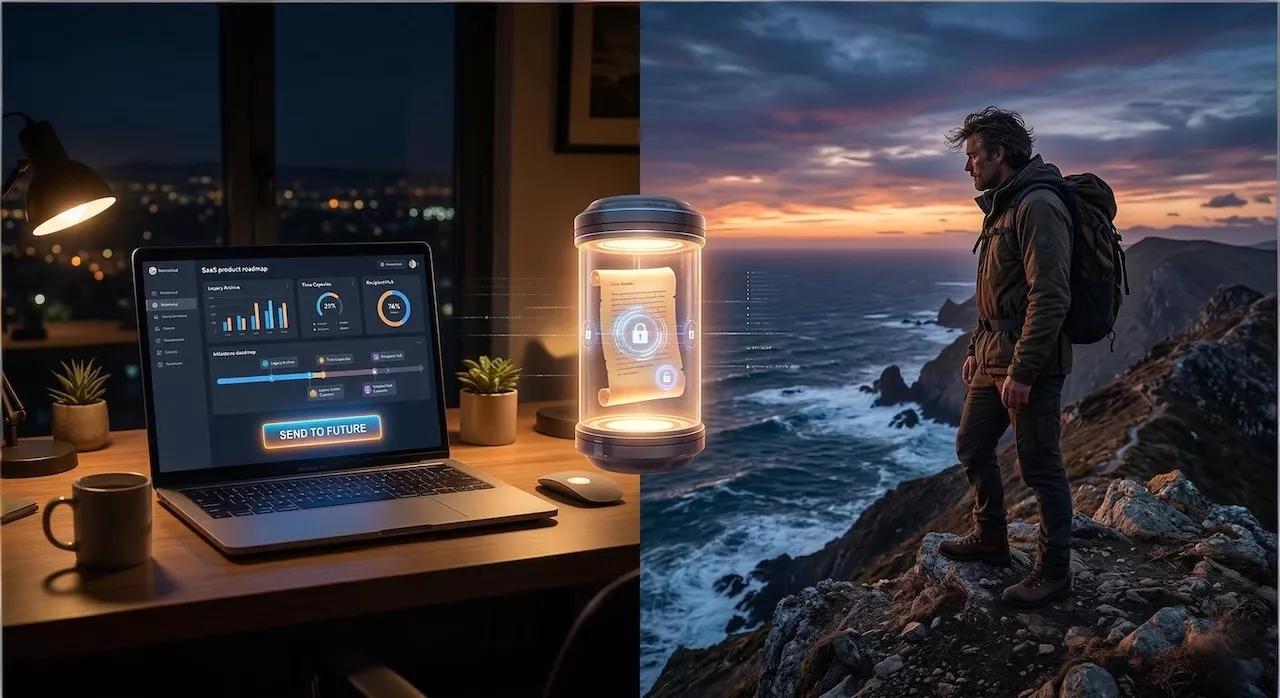
I’m a Product Manager who spends all week optimizing for the "immediate now." But getting lost off the grid on a mountain ridge made me realize I had zero infrastructure for the "forever." Here’s why I stopped worrying about conversion rates for a moment and built EterMail—a secure, tamper-proof digital time capsule for the people I love most.

The Most Radical Letter to Your Future Self Is a Promise to Stay Unfinished
The best letter to your future self isn't a memory—it's a mandate. Learn how writing to the version of you still working with love changes everything.

The Ice Tray at Midnight: On Grief, Domestic Minutiae, and the Quiet Work of Becoming Yourself Again
Why do the smallest habits hurt most after someone leaves? A reflection on grief, domestic minutiae, and the quiet moment healing finally begins.