
What if the tool you use to write your most private thoughts—the late-night confessions, the unsent letters, the memories you can't speak aloud—has already been read by someone you'll never meet?
This isn't paranoia. It's architecture.
When OpenAI announced expanded partnerships with government agencies earlier this year, the tech press treated it as a policy story. But for anyone who has ever typed something they couldn't say out loud, it was something else entirely: a quiet rupture in the illusion that our digital confessions remain ours alone. The infrastructure of memory itself is being rewired, and the act of choosing where to store your words has become an act of love, resistance, and legacy.
The Intimacy We Give Away
We have become remarkably casual about where we deposit our inner lives. A grief-stricken widow uses a popular AI chatbot to compose letters to her late husband. A teenager struggling with identity asks an algorithm questions she cannot ask her parents. A father, diagnosed with early-stage dementia, begins recording memories for children too young to understand what they will one day lose.
Each of these acts feels private. The screen glows in a darkened room. The keyboard clicks are the only sound. But privacy is not a feeling—it is a technical condition, and most of us have stopped asking what that condition actually requires.
The recent revelations about OpenAI's evolving relationship with government surveillance infrastructure have exposed a fundamental tension. The same large language models that can simulate empathy, that can help us articulate what we cannot ourselves express, are also systems designed to retain, analyze, and potentially surrender data. When you confess to an AI, you are not whispering into a void. You are speaking into a system built to remember everything, and increasingly, to share what it remembers with authorities who have never earned your trust.

The Architecture of Surveillance
To understand what we risk losing, we need to look at how these systems actually work. Large language models do not simply process and forget. They train on data. They retain patterns. And increasingly, they exist within corporate ecosystems that are legally compelled to cooperate with government requests for information.
The specifics of OpenAI's government partnerships remain partially opaque, as such arrangements typically do. But the trajectory is clear. The same technologies being deployed to detect fraud or monitor threats are also positioned to access the most intimate digital artifacts of ordinary lives. Your late-night search for words to explain a failing marriage. Your tentative exploration of a medical symptom you haven't told anyone about. The letter you drafted to a child you may not live to see graduate.
This is not about having "something to hide." It is about the fundamental human need for spaces of unguarded expression—spaces where we can be unfinished, uncertain, and entirely ourselves without the pressure of performance or permanence. When those spaces are technically surveilled, even if no human ever reads the specific words, something essential is already lost. The self-censorship begins before the first keystroke.
The Cost of Convenience
Why do we accept this trade? Partly because the convenience is genuine and seductive. The AI that helps you write a difficult letter in minutes rather than hours. The tool that suggests exactly the phrase you were struggling to find. The platform that stores everything, syncs everywhere, asks nothing of you but continued use.
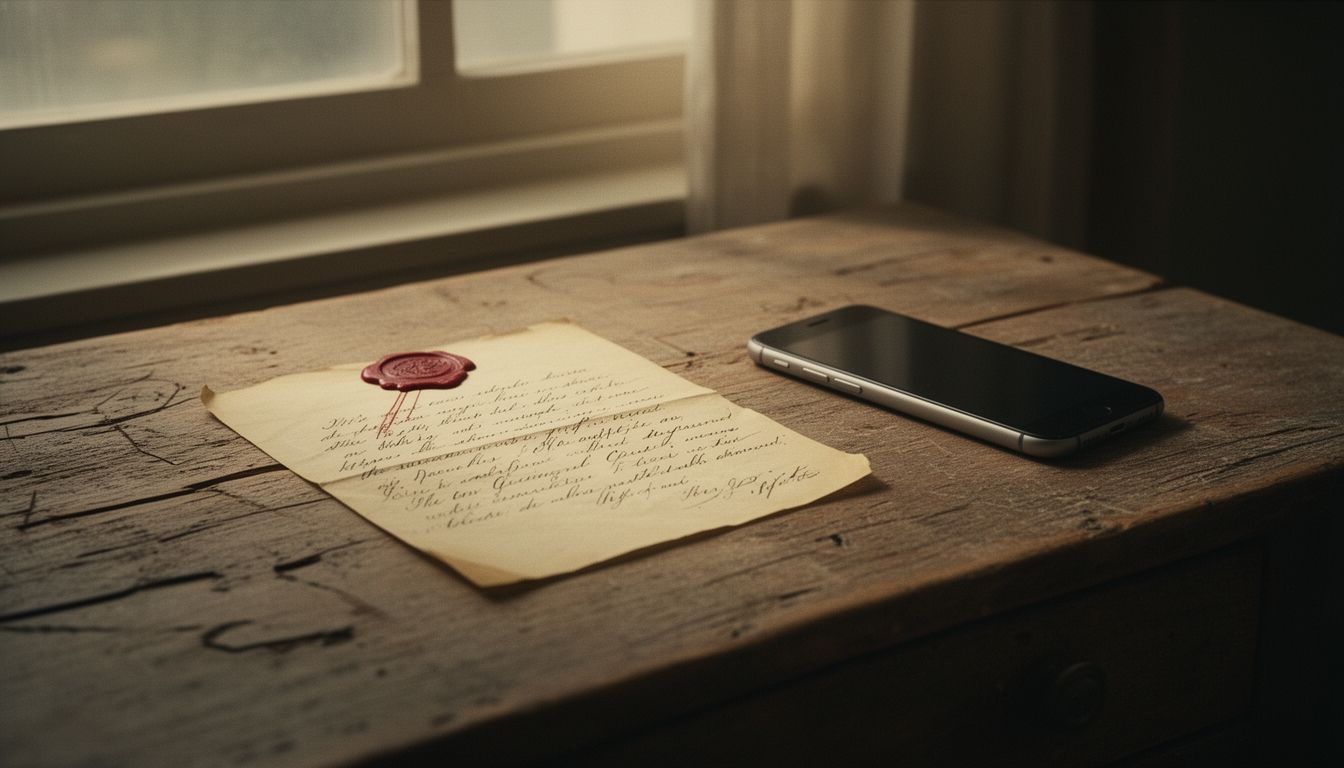
But convenience has become a kind of anesthesia. We have stopped feeling the loss of control because the alternative—maintaining that control—requires effort, technical literacy, and often, accepting reduced functionality. We have been trained to equate seamlessness with quality, when in matters of memory and intimacy, friction can be a feature. The pause before sending. The deliberation of choosing who will hold what you have written. The physical act of sealing something against time.
There is a particular cruelty in the timing of this surveillance expansion. We are living through an era of unprecedented isolation and digital mediation of relationships. The pandemic accelerated our migration to screens for connection. Climate anxiety, political instability, and economic precarity have left many of us searching for ways to preserve meaning against uncertain futures. The tools that promise to help us do this—AI companions, cloud storage, digital memorialization—are precisely the tools being positioned for maximum extractability and exposure.
Reclaiming the Right to Be Forgotten
What would it mean to build differently? To construct systems of memory that genuinely serve the rememberer rather than the platform?
The answer lies partly in technical architecture—encryption that cannot be bypassed, data practices that minimize retention, infrastructure that resists centralized control. But it lies equally in a shift of imagination. We must begin to see our private words not as content to be monetized or monitored, but as trust to be honored.
This is where the concept of the time capsule becomes unexpectedly radical. Not the digital equivalent of cloud storage with a delayed send date, but a genuine commitment to temporal sovereignty: the right to determine not only what is remembered, but who controls that memory, and under what conditions it may be accessed.
Consider the difference. When you write a letter to your future self using conventional tools, you are typically creating data that sits on servers you do not own, subject to terms of service you did not negotiate, accessible to legal processes you cannot predict. The "future you" who receives that letter is receiving something that has passed through multiple hands—corporate, potentially governmental—before reaching its intended destination.
An alternative architecture would look different. End-to-end encryption as default, not premium feature. Zero-knowledge systems where the platform cannot read what it stores. Jurisdictional choices that place data beyond the reach of overreaching surveillance regimes. These are not technical luxuries. They are the preconditions for genuine intimacy in digital spaces.
The Act of Choosing
Perhaps the most important shift is cultural. We must learn to ask questions that have become unfashionable: Where does this go? Who can access it? What happens if the company changes ownership, or policy, or simply fails?
These questions are not paranoid. They are the digital equivalent of choosing a trustworthy confidant. You would not whisper your deepest fears to someone you knew might repeat them to strangers. Why do we accept less care for words that may outlast us?
The platforms that will matter in the coming decades are those that recognize this hunger for genuine sanctuary. Not the performance of privacy—privacy policies written to be unread, security features buried in settings menus—but its structural embodiment. Systems built from the ground up to resist extraction, to honor the temporal and emotional specificity of human memory, to treat the user's right to control their own narrative as non-negotiable.
This is not nostalgia for analog purity. Digital tools can extend our capacity for connection and self-reflection in genuinely new ways. But they must be tools we wield, not systems that wield us. The letter to a child not yet born, the confession to a future self, the memory preserved against dementia's erasure—these deserve architecture that understands their weight.

What We Owe the Future
There is a final dimension to consider. The surveillance architectures being built now will shape what is possible for decades. The normalization of government access to AI-mediated intimate expression will not reverse itself. Each generation that grows up assuming their private digital words are inherently monitorable will lose the very concept of unsurveilled interiority.
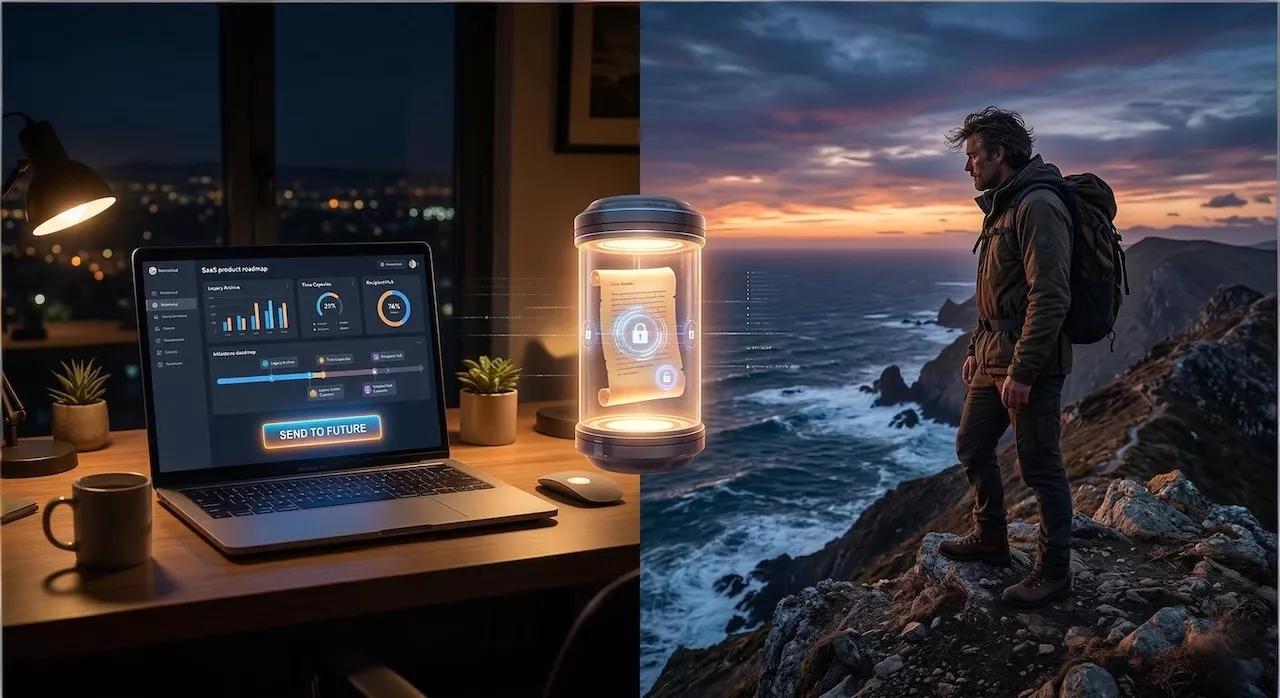
I know this tension intimately. I spend my nights "pair programming" with LLMs, mapping architectures until 2 or 3 AM, chasing that strange communion between human intention and machine execution. But I also know what it means to step away—to feel the raw reality of steep trails, harsh winds, ocean waves that demand presence rather than performance. That stripping away of digital illusion taught me something: the moments worth preserving are the ones we cannot replicate, and they deserve containers that honor their unrepeatability.
This is why I built EterMail. Not because I reject the digital—I live too deeply inside it for that—but because I wanted a spaceship capable of traversing the dimension of time without leaving debris for others to mine. When you set a letter to arrive five years from now, you are not scheduling a notification. You are creating a moment of temporal sovereignty, sealed against the surveillance regimes that will exist between now and then. This is exactly why I obsessed over end-to-end encryption and extreme server redundancy when building EterMail. Because I know that a letter written to the future needs to be guarded even more fiercely than a bank password.
The door OpenAI has opened is not the only door. Others remain possible, still being built, still available to those who choose carefully where they place their trust. The question is whether we will recognize what is at stake before the architecture of intimate surveillance becomes too entrenched to dismantle.
Your private words are yours. The systems that hold them should be worthy of that possession.
What is EterMail?
EterMail is a revolutionary time capsule service that allows you to send messages, photos, and videos to the future (up to 30 years). Seal your memories and thoughts today, and they'll be delivered when the time is right.
Time Capsule
Send messages up to 30 years in the future
Rich Media
Text, photos, and videos supported
Secure & Private
Your memories are safely encrypted
EterMail Team
We're the team behind EterMail, dedicated to helping you preserve and share timeless messages with your loved ones. Our mission is to make it easy to express your love, share your wisdom, and create lasting connections that transcend time.
Frequently Asked Questions about Digital Privacy & Security
How can I tell if my private messages to AI are truly secure?
What legal protections exist for personal data stored with tech companies?
Why does data retention matter for personal letters and memories?
Related Articles
Why I Built EterMail: A Time Capsule for the People I Love Most
I’m a Product Manager who spends all week optimizing for the "immediate now." But getting lost off the grid on a mountain ridge made me realize I had zero infrastructure for the "forever." Here’s why I stopped worrying about conversion rates for a moment and built EterMail—a secure, tamper-proof digital time capsule for the people I love most.

The Most Radical Letter to Your Future Self Is a Promise to Stay Unfinished
The best letter to your future self isn't a memory—it's a mandate. Learn how writing to the version of you still working with love changes everything.

The Ice Tray at Midnight: On Grief, Domestic Minutiae, and the Quiet Work of Becoming Yourself Again
Why do the smallest habits hurt most after someone leaves? A reflection on grief, domestic minutiae, and the quiet moment healing finally begins.