The Photo That Knew Too Much
She posted it without thinking—the golden hour shot of her daughter's first steps on the weathered deck behind their new home. Seventy-three likes. Fourteen comments about how fast children grow. And somewhere in the metadata, buried beneath the pixels like a whisper she never spoke: precise GPS coordinates, a timestamp accurate to the second, the serial number of her iPhone.
Three weeks later, a stranger appeared at her door asking about the "for sale" sign that didn't exist. He knew her name. He knew her daughter's name. He knew exactly where to find them.
We have been taught to fear the obvious dangers—the public profiles, the overshared addresses, the tagged locations. But the most intimate surveillance operates in silence, encoded in the very files we treasure most. Every photograph is a diary entry written in data, and most of us have never learned to read our own handwriting.

The Invisible Ink of Digital Memory
EXIF data—Exchangeable Image File Format—sounds like technical jargon best left to forensic analysts. In truth, it is the autobiography your devices write without your consent. When you capture a moment, your phone records not merely what you saw, but where you stood, how high you were, which direction you faced, even the temperature and atmospheric pressure.
This was designed as convenience. The same data that lets you sort photos by location also lets anyone with basic software reconstruct your movements with disturbing precision. Researchers have demonstrated that analyzing just four geotagged photos can predict a person's home address with 90% accuracy. Your morning coffee ritual. Your evening running route. The bedroom window where you photographed last night's sunset.
The metadata of memory has become a map of vulnerability—not because we are careless, but because the architecture of digital life was built for connectivity, not privacy. We were never asked whether our most cherished moments should carry coordinates. The choice was made for us, buried in settings menus we were never shown.
The Patterns We Unwittingly Publish
Consider what emerges from a year of casual photo sharing:
- Temporal fingerprints: The 7:15 AM timestamp on your gym locker room mirror selfie, every Tuesday and Thursday without fail
- Spatial routines: The progression of coordinates tracing your commute, your coffee shop, your child's school, your therapist's office building
- Relational networks: The consistent appearance of the same background architecture in photos from multiple accounts, revealing connections you never explicitly named
- Predictive behavior: Machine learning models that identify your vacation patterns, your weekend preferences, your likely location next Saturday at 2 PM
We are not sharing photographs. We are publishing itineraries. And we are doing so in a permanent, searchable, machine-readable format that outlives our intentions, our relationships, and sometimes our own memories of why we were there.
The Asymmetry of Digital Exposure
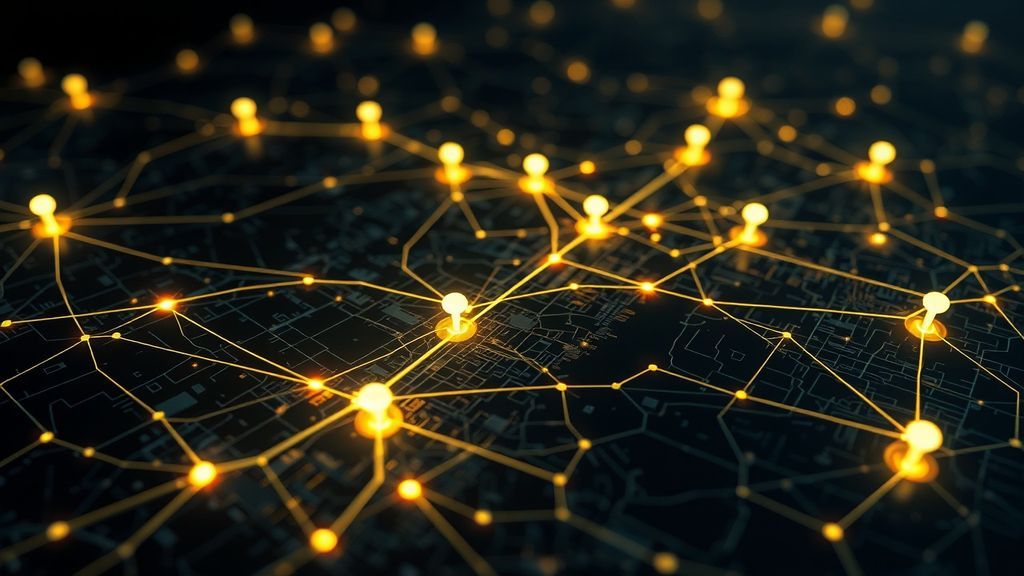
The cruelty of metadata exposure lies in its asymmetry. The teenager sharing photos with friends lacks the technical literacy to understand what she reveals. The domestic violence survivor posting celebratory images cannot see the coordinates that lead directly to her new, supposedly secret address. The political dissident documenting protest participation has no warning that timestamp and location data constitute evidence.
Meanwhile, the entities harvesting this information—data brokers, surveillance advertisers, malicious actors—operate with sophisticated tools and institutional knowledge. Privacy has become a literacy test that most fail through no fault of their own.
This is not merely a technical problem. It is an ethical failure of design. We have built systems that extract maximum information while placing minimum responsibility on those who profit from its extraction. The burden of privacy protection falls, as it so often does, on the most vulnerable individuals least equipped to bear it.
Reclaiming Sovereignty Over Your Digital Geography
Protecting your location data requires neither paranoia nor technical expertise—merely intentional curation of which versions of yourself deserve to survive. The goal is not invisibility but agency: the power to decide what persists, what connects, what can be traced back to your physical existence.
Immediate protective measures:
- Disable location services for your camera app (iOS: Settings > Privacy & Security > Location Services > Camera > Never; Android varies by manufacturer, typically Camera app settings)
- Audit your existing photo library using tools like ExifTool or simpler alternatives like Photo Exif Editor to strip historical data
- Review social platform settings: Instagram, Facebook, and Twitter all strip some metadata but retain and utilize it internally; consider this insufficient protection
- Establish sharing protocols: Before sending photos to anyone outside your trusted circle, use your phone's built-in sharing options that specifically exclude location data
Deeper structural changes:
- Separate capture and sharing devices: Consider a dedicated camera without connectivity for sensitive moments, creating physical air gaps between creation and publication
- Embrace temporal distance: The most powerful privacy protection may be delay—sharing photos weeks or months after capture disrupts the real-time tracking that makes metadata valuable
- Cultivate analog rituals: Printed photographs, physical letters, tangible time capsules exist outside the extractive logic of digital platforms
The Philosophy of Selective Permanence
There is something profound in choosing what survives. Not every moment deserves immortality. Not every memory benefits from precise documentation. The photograph whose location you cannot remember may, paradoxically, preserve something more essential—the feeling, the quality of light, the person you were—precisely because it cannot be placed on a map.
This is where the question of metadata intersects with deeper inquiries about digital legacy and intentional memory. We are among the first generations to face decisions about what persists beyond our lifetimes—not through deliberate archival choices, but through default settings we never questioned.
The same data that exposes your present location will, left unmanaged, expose your children's childhood homes, your parents' final residences, the hospitals where you received difficult diagnoses. Your metadata outlives your context. The coordinates of a grief-stricken 3 AM walk remain searchable long after the grief has transformed into something you no longer recognize.
Toward Technologies of Intention
What would it mean to build systems that honor the temporal complexity of human experience? That recognize that some moments want to be found, and others want to be lost? That understand memory not as data to be maximally extracted, but as trust to be carefully stewarded?
I think about this constantly—often at 2 AM, hunched over my screen, wrestling with the same architectures I both build and distrust. As someone who has spent years in the trenches of Silicon Valley, shipping code across e-commerce platforms and game engines and now SaaS infrastructure, I've developed a strange relationship with digital permanence. I know exactly how fragile servers are. I know how easily data bleeds between systems that promised containment. And I know the particular loneliness of staring at a terminal at 3 AM, building something you hope will outlast the platforms that threaten to swallow it.
This is why I became obsessed with time-locked communication—not as a feature, but as a philosophy. When I built EterMail, I wasn't trying to solve a technical problem. I was trying to solve a human one: how do we send messages that matter without feeding the surveillance machine that devours everything else?
The answer, I realized, wasn't just encryption (though that matters). It was temporal privacy—the radical act of choosing when information becomes accessible, to whom, and under what circumstances. This is exactly why I obsessed over end-to-end encryption and extreme server redundancy when building EterMail. Because I know that a letter written to the future needs to be guarded even more fiercely than a bank password.
The technology that enables this is not merely protective but philosophically aligned with how memory actually functions. We do not experience our lives as fully searchable databases. We remember in fragments, in delayed recognitions, in moments when the past suddenly illuminates the present. Tools that replicate this structure—messages that arrive only when their time has come, memories that surface according to human intention rather than algorithmic prediction—restore something that metadata extraction has stolen.
The Courage to Be Unfindable
There is a particular freedom in moments that cannot be located. The conversation held on a street corner whose name you've forgotten. The photograph whose provenance is lost to dead batteries and abandoned accounts. The memory that exists only in the mismatch between two people's recollections.
To protect your location data is to claim this freedom deliberately. It is to recognize that your patterns of movement—your vulnerabilities, your routines, your sacred ordinary spaces—deserve protection not because you have something to hide, but because you have something to preserve: the possibility of surprise, of safety, of being present without being tracked.
The metadata stripped from your photographs does not destroy the memory. It liberates it. The image of your daughter's first steps remains luminous without coordinates. The sunset still burns. What disappears is only the infrastructure of surveillance that would turn your joy into someone else's data point.
In an age of total connectivity, the choice to be temporarily unfindable is an act of self-respect. It is the recognition that you are not a resource to be harvested, a pattern to be predicted, a set of coordinates to be sold. You are a person moving through time and space, entitled to the dignity of your own geography.
Your memories belong to you. Their locations should too.
What is EterMail?
EterMail is a revolutionary time capsule service that allows you to send messages, photos, and videos to the future (up to 30 years). Seal your memories and thoughts today, and they'll be delivered when the time is right.
Time Capsule
Send messages up to 30 years in the future
Rich Media
Text, photos, and videos supported
Secure & Private
Your memories are safely encrypted
EterMail Team
We're the team behind EterMail, dedicated to helping you preserve and share timeless messages with your loved ones. Our mission is to make it easy to express your love, share your wisdom, and create lasting connections that transcend time.
Frequently Asked Questions about Digital Privacy & Security
How do I remove location data from photos I've already taken?
Can someone find my home address from photos I post online?
Why do social media platforms collect location data from my photos?
Related Articles

When Your Own Voice Betrays You: Deepfakes, Trust, and the Fragile Architecture of Identity
Deepfakes don't just steal money—they dissolve the boundary between authentic you and manufactured you. Learn why protecting your digital identity is now the most intimate form of self-preservation.
The Great Travel Meltdown of 2026: When Your Passport Becomes Someone Else's Data
What happens when every boarding pass and passport scan becomes a permanent ledger of your life? Here's how travelers are reclaiming control.

When AI Knows You Better Than You Know Yourself: The Quiet Crisis of Digital Identity
What happens when AI can simulate you more convincingly than you remember yourself? Explore why digital privacy is now about preserving the irreducible mystery of self.