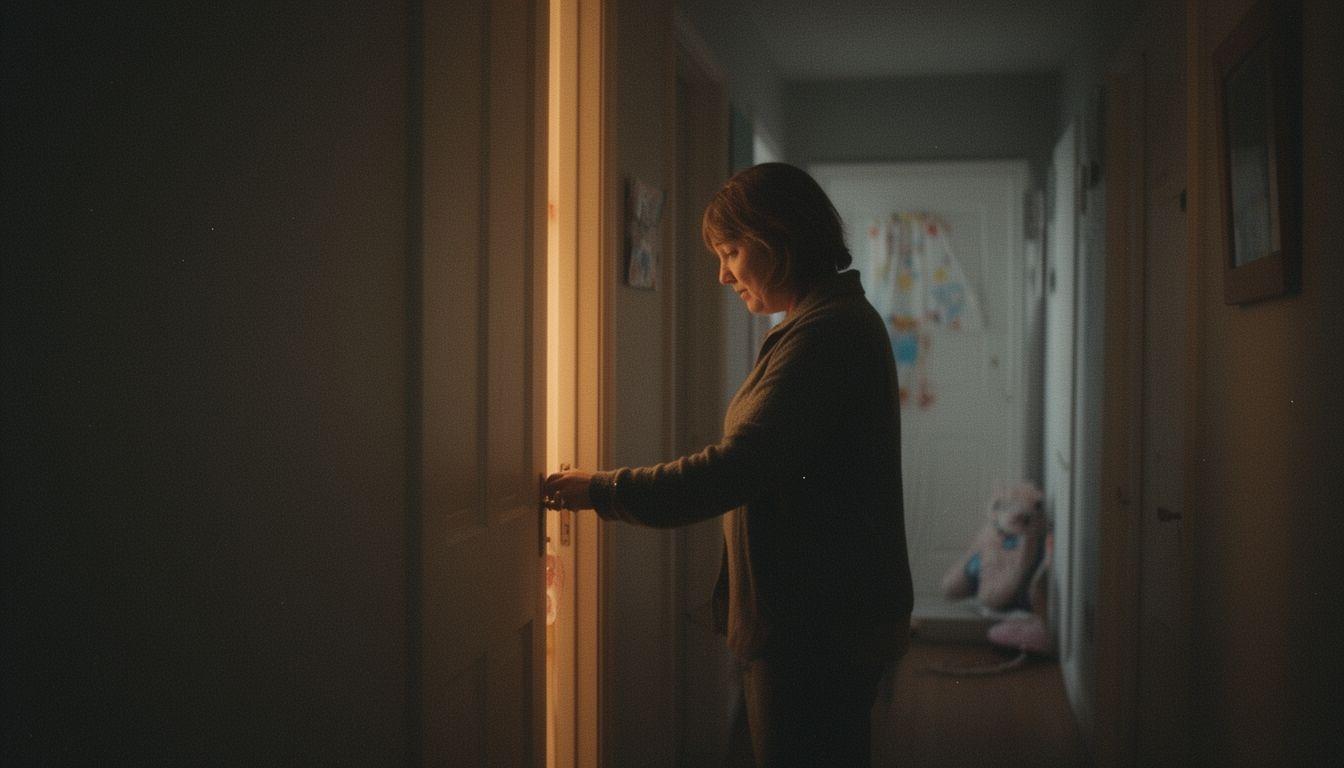
There is a sound my father made that I cannot reproduce. Not the timbre of his voice, though that too has faded to approximation. No—this was the particular way he would clear his throat outside my bedroom door at night, a deliberate, almost theatrical ahem that announced his presence without demanding acknowledgment. I was meant to believe I was falling asleep alone. He was meant to believe I didn't know he was there. We maintained this fiction for years, two performers in a play neither of us had scripted.
I think about this now, standing outside my own daughter's door, manufacturing my own repertoire of sounds. The exaggerated jangle of keys when I come home early from work. The practiced casualness of "just checking" on a teenager who pretends to sleep. The refrigerator door held open three seconds longer than necessary, broadcasting that someone is still awake, still nearby, still holding the perimeter.
We are composers, we parents. And the music we write is not for our own ears.
The Unheard Repertoire
Every household develops its own acoustic signature, a private language of presence that children absorb without conscious recognition. The footfall on specific stairs. The particular rhythm of a mother's typing through the wall. The way a father's breathing changes when he reads the same picture book for the forty-seventh time, still performing surprise at the reveal he has memorized.
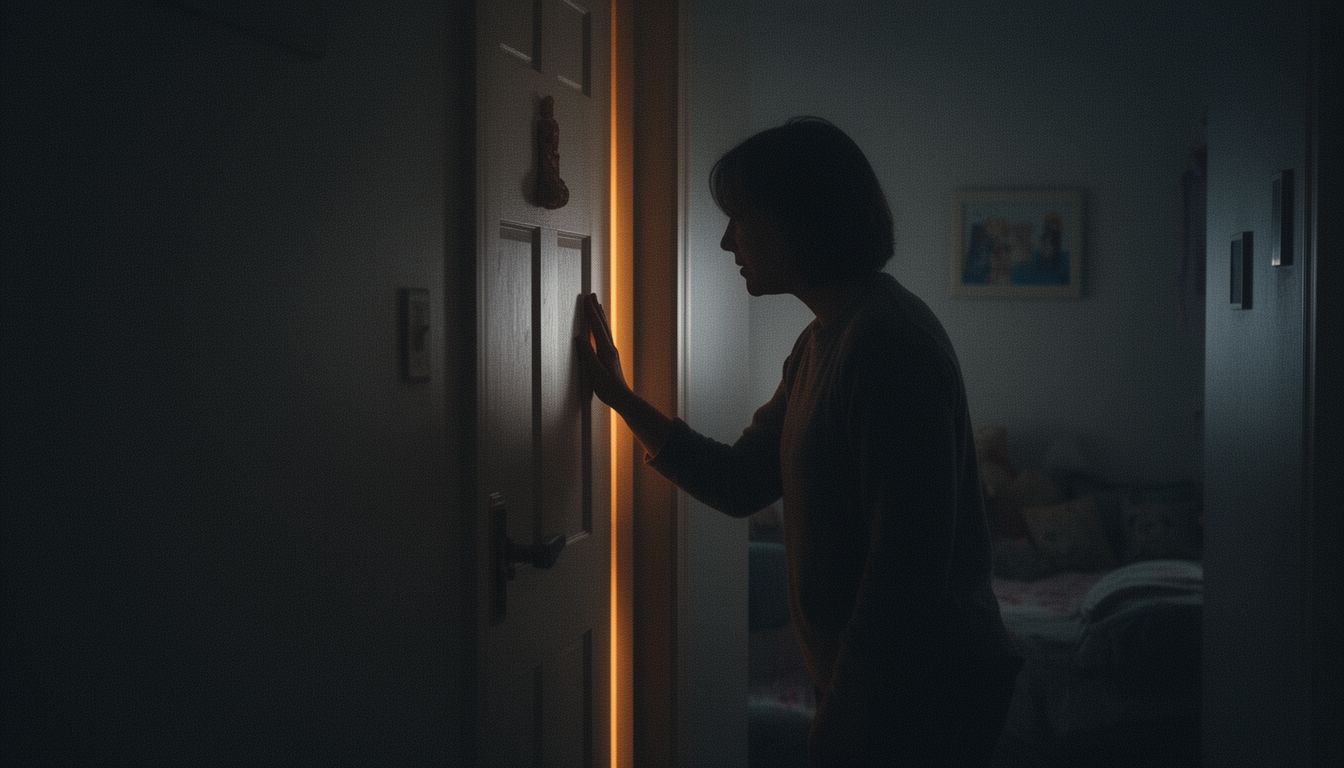
These sounds form what we might call the acoustics of waiting—the ambient noise of parental vigilance, composed and performed without audience acknowledgment. We believe we are being subtle. We believe the performance is for us alone, a way to discharge the unbearable tension of loving something mortal. But children are recording devices of exquisite sensitivity. They hear everything. They simply learn, as we did, to pretend they don't.
The anthropologist Mary Catherine Bateson once wrote that parenting is "composed of improvisation within a repeating structure." I would add: it is scored for instruments the performers cannot see. We play for ears we assume are closed, not realizing that the entire composition depends on their being open.
The Architecture of Reassurance
Consider the deliberate cough. In acoustic terms, it is a remarkably inefficient communication—ambiguous, non-semantic, easily misattributed. Yet it persists across cultures, across generations, across the vast differences that separate my father's Depression-era childhood from my daughter's algorithm-curated present. Why?
Because the cough operates in the register of the subliminal. It does not demand response. It does not interrupt the child's experience of solitude, which they need, with the intrusion of connection, which they also need. It offers presence without pressure, proximity without demand. It says: I am here if you need me, and I will pretend you don't need me so that you can discover whether you do.
This is the fundamental paradox of parental love, rendered in sound. We are most present when we appear to absent ourselves. We are most loving when we simulate indifference. The child who calls out "I'm fine" to an empty room is practicing independence; the parent who answers from just beyond the door is practicing restraint.
And we get it wrong constantly. We cough when silence would serve better. We jangle keys when stillness is required. We "just check" at the precise moment when genuine non-intervention would communicate trust more eloquently than any words. Parenting is, among other things, a long education in the sounds we should not make.
When the Recording Surfaces
My daughter is thirteen now. The other night, she emerged from her room at 11 PM, long after I had performed my final cough and retreated to my own end of the apartment. She wanted to tell me something—something about a friend, a small betrayal, nothing that would register on any scale of adolescent crisis. But she had waited. She had lain in the dark, listening to the sounds of me not being there, until she could bear the solitude no longer.
"I knew you were still awake," she said. "I could hear you not coming."
I understood her perfectly. The sound of a parent not intervening is itself a composition, as deliberate and scored as any cough. I had been practicing restraint. She had been listening to my practice. And what she heard, finally, was not reassurance but permission: the space to need me, created by my apparent withdrawal.
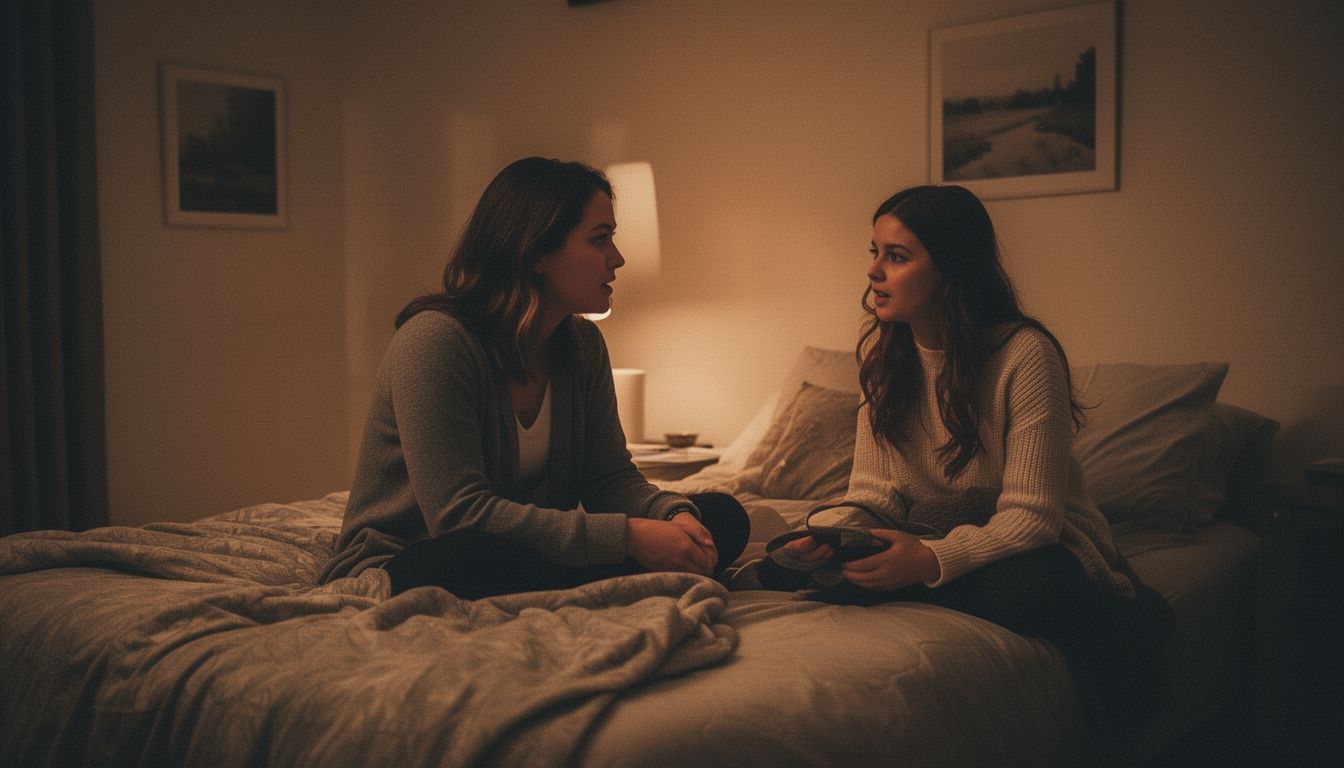
This is the moment the acoustics shift. The child who once needed our presence begins to need our absence. The sounds we composed to reassure them—I am here, I am watching, you are safe—become the very sounds that constrain them. They need to believe we are not listening. They need to practice being unheard.
And so we learn new compositions. The exaggerated silence of a parent who knows their child is crying behind a closed door and does not open it. The careful non-observation of a teenager's changed appearance, their new vocabulary, their experimental selves. We become composers of negative space, of rests and fermatas, of all the music that happens between the notes we no longer play.
The Archive We Cannot Curate
What happens to these sounds? The coughs and key-jangles, the practiced casualness and the deliberate silences—where do they go when the children leave, when the houses empty, when we stand in hallways that no longer require our presence?
They become, I think, the unconscious archive of love. Not the love we declared, which children experience as pressure and obligation. Not the love we performed for witnesses, which they experience as theater. But the love we expressed when we believed ourselves unobserved, the love that took the form of sound without semantics, presence without demand.
My father died before I could ask him about his cough. I will never know if he knew I heard it, if he composed it for my benefit or his own, if it represented love or anxiety or simply the inability to be still in the face of his sleeping child. The sound survives without its composer's intention. This is the condition of parental love: we produce effects we cannot control, meanings we did not intend, archives we cannot curate.
Writing What Cannot Be Spoken
I have begun writing letters to my daughter that she will not read for years. Not because I have wisdom to impart—she will have surpassed whatever I know by the time she opens them—but because I want to leave a record of the sounds I made, and why I made them. The cough explained. The silence annotated. The love that took the form of restraint, translated into language she can examine when she no longer needs to pretend she wasn't listening.
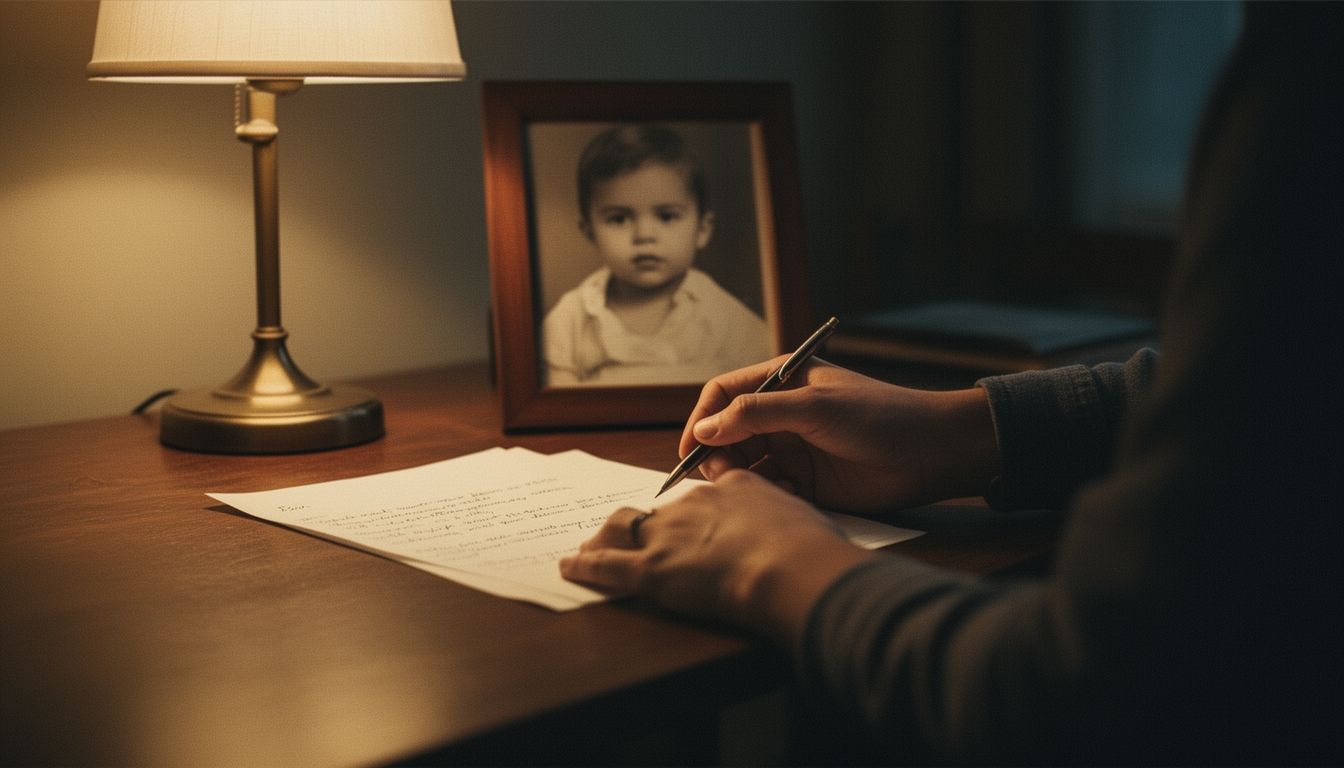
This is, perhaps, the final composition: the translation of acoustic love into written form. The letter that arrives years after it was written, when the sounds have faded and the house has changed and the child has become someone who can read her parent's intention with the generosity that distance permits. The letter that says: I was there. I was trying. I did not know what sounds to make, so I made these, and I am sorry for the ones that reached you wrong, and I am grateful for the ones you heard correctly without telling me.
I build software for a living—SaaS platforms, AI systems, the kind of infrastructure that runs on cold precision. Most nights you'll find me at my desk until 2 or 3 AM, pair-programming with LLMs, mapping architectures in the blue glow of multiple monitors. That extreme digital solitude has taught me something about loneliness, about conversations that happen across impossible distances. EterMail grew out of that obsession: the belief that a message written in one moment and received in another is not a delayed communication but a dialogue across time. When I set a letter to deliver five years from now, I'm not scheduling an email. I'm building a bridge between who I am tonight and who she will be then. The best way to fight forgetting isn't taking another screenshot; it's setting an alarm for the future. By using EterMail to set a delivery date years from now, you completely free yourself from the anxiety of the present—knowing that what matters will find its way home, regardless of what noise fills the space between.
The Silence They Needed Most
My daughter will leave soon. This is the composition I am practicing now: the sound of a house that does not require her presence to be complete, performed so that she does not feel required to complete it. The coughs will stop. The key-jangles will become efficient, unperformed. The "just checking" will become genuine absence, the kind that does not need to announce itself.
And perhaps, in some future room, she will remember the sounds I made. Perhaps she will recognize, in her own manufactured coughs outside her own child's door, the lineage she has joined. The acoustics of waiting are hereditary. We learn them from being waited for. We teach them by waiting ourselves.
The silence I am learning now is the final gift. The permission to be unheard, to be unnecessary, to be the parent of someone who no longer needs parenting. It is the most difficult composition I have attempted. I do not know if I am performing it correctly. I only know that she is listening, as she always has been, and that someday she will understand what I meant by saying nothing at all.
What is EterMail?
EterMail is a revolutionary time capsule service that allows you to send messages, photos, and videos to the future (up to 30 years). Seal your memories and thoughts today, and they'll be delivered when the time is right.
Time Capsule
Send messages up to 30 years in the future
Rich Media
Text, photos, and videos supported
Secure & Private
Your memories are safely encrypted
EterMail Team
We're the team behind EterMail, dedicated to helping you preserve and share timeless messages with your loved ones. Our mission is to make it easy to express your love, share your wisdom, and create lasting connections that transcend time.
Frequently Asked Questions about For Our Children
What should I write in a letter to my child for them to read in the future?
How do I preserve my voice and memories for my children after I'm gone?
Why do children remember small gestures more than grand parental declarations?
Related Articles
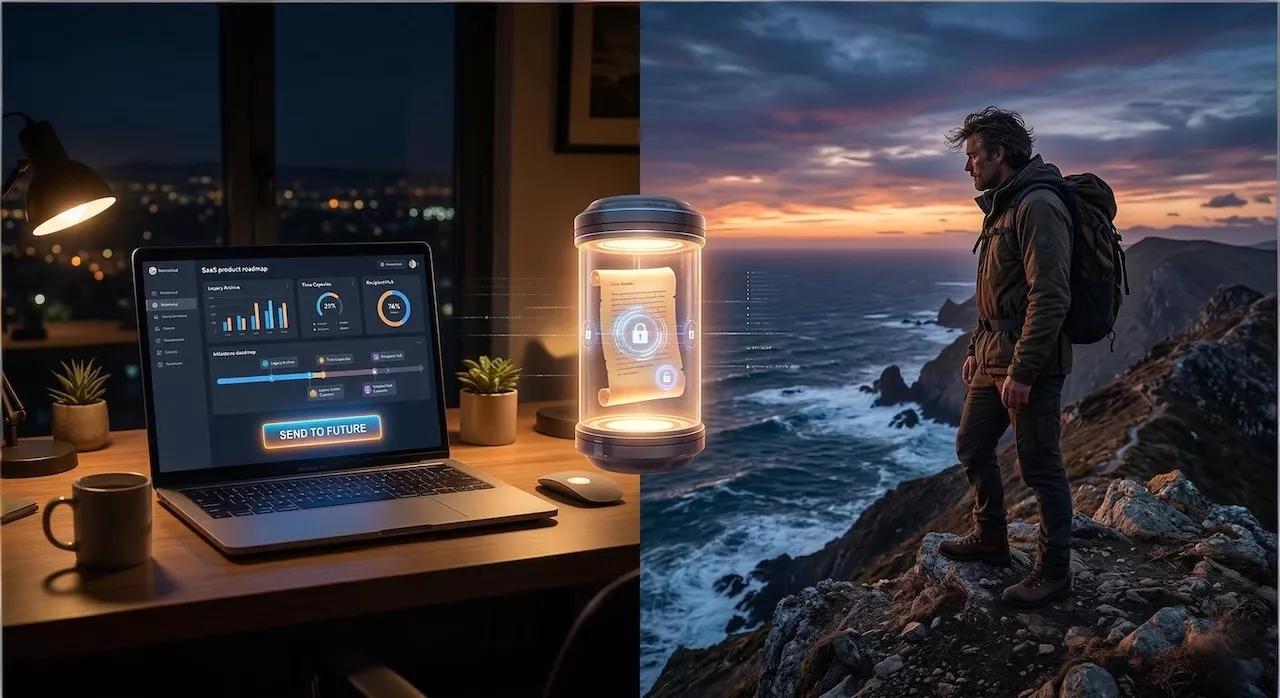
Why I Built EterMail: A Time Capsule for the People I Love Most
I’m a Product Manager who spends all week optimizing for the "immediate now." But getting lost off the grid on a mountain ridge made me realize I had zero infrastructure for the "forever." Here’s why I stopped worrying about conversion rates for a moment and built EterMail—a secure, tamper-proof digital time capsule for the people I love most.
The Most Radical Letter to Your Future Self Is a Promise to Stay Unfinished
The best letter to your future self isn't a memory—it's a mandate. Learn how writing to the version of you still working with love changes everything.
The Ice Tray at Midnight: On Grief, Domestic Minutiae, and the Quiet Work of Becoming Yourself Again
Why do the smallest habits hurt most after someone leaves? A reflection on grief, domestic minutiae, and the quiet moment healing finally begins.