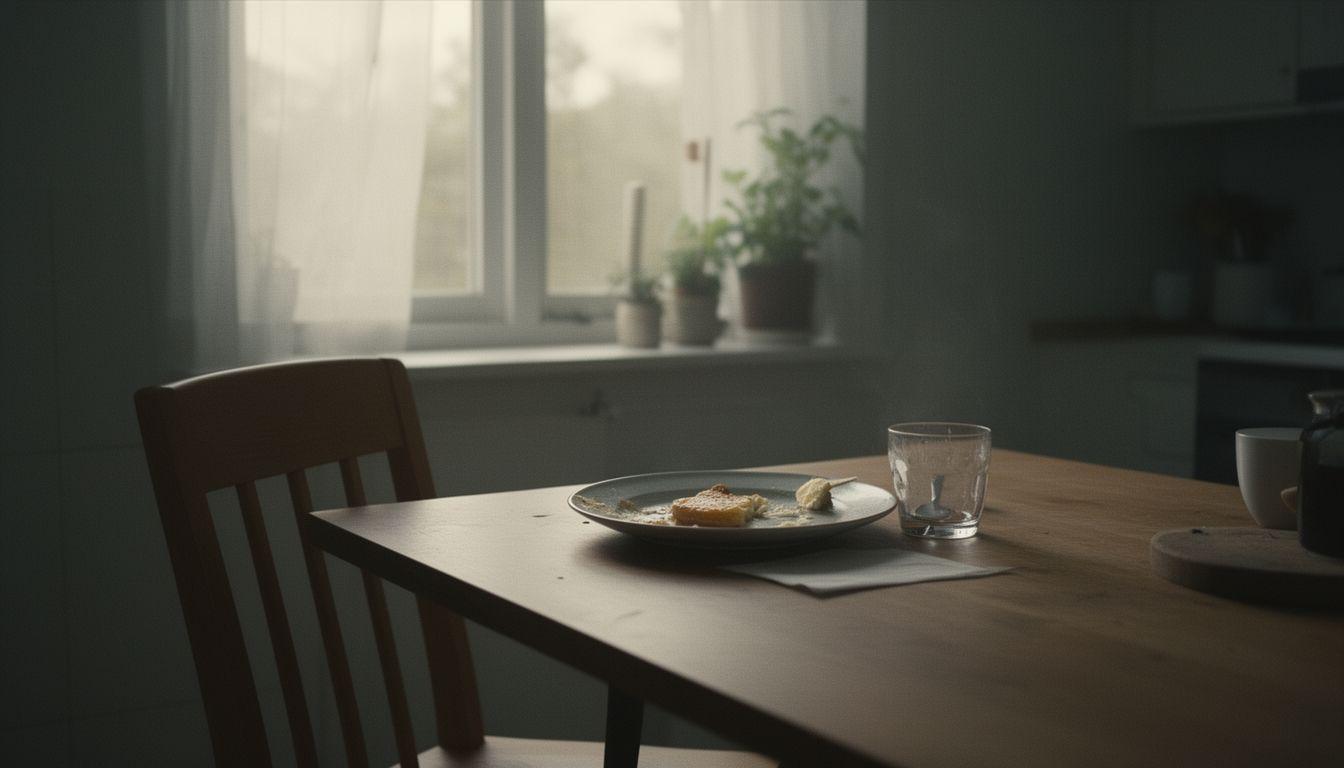
The Pancake That Wouldn't Stop Burning
The griddle was too hot. You knew it, had known it for years, but you kept the dial at seven because that's where your daughter liked the edges—crisp, almost carbonized, the way she would scrape them with her fork and leave the centers pale and doughy. You made six this morning. Ate two. The other four sit on a paper towel, cooling into something inedible, while you stare at the fourth burner where the coffee pot used to hum.
You don't have four children. You have one. She moved to Portland three years ago.
This is the choreography of absence: the meals we cook for our children who are no longer there to eat them. The extra pancake left burning on the griddle. The sandwich cut into triangles by muscle memory. The birthday cake frosted in a flavor they outgrew at fourteen. We feed empty chairs not because we forget, but because forgetting would mean admitting the version of family we built—the us that included them at this table—no longer exists.
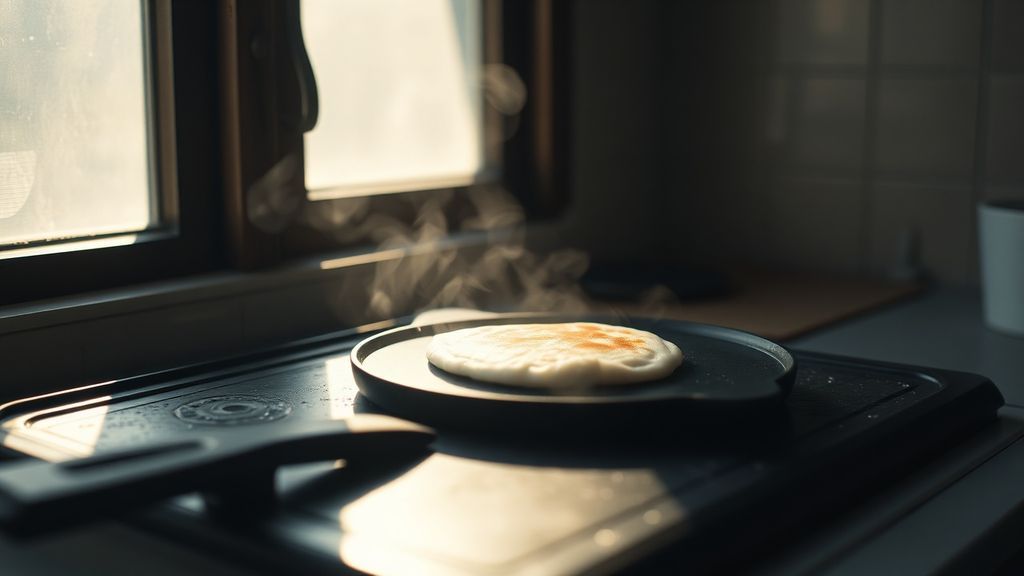
The Geometry of Muscle Memory
Your hands know things your mind refuses to acknowledge.
Tuesday was always early dismissal. You still buy string cheese in bulk, though no one has packed a lunch box since 2019. The bread knife finds the diagonal without consultation, producing two perfect triangles that fit together like a puzzle you no longer need to solve. Your son hated crusts. Your daughter needed her grapes halved, "the long way, Mom, not across." These incisions are surgical now, performed on sandwiches you will eat alone, standing at the counter, wondering why they taste of nothing.
Feeding empty chairs is a ritual of sustaining. Each redundant meal is a vote against the entropy of change, a small refusal to accept that the people we cooked for have become people who cook for themselves, or don't cook at all, or cook differently—in apartments we haven't seen, with partners we haven't met, following dietary restrictions that arrived without warning via text message.
The anthropologist would call this preservation behavior. The therapist might suggest unresolved grief. You call it Tuesday.
The Cake That Outlived Its Occasion
She wanted strawberry frosting. Not the good kind—fresh berries folded into buttercream—but the artificial pink from a can, the kind that leaves a chemical film on the roof of your mouth. You bought it for her eighth birthday, her twelfth, her fifteenth. By sixteen she was "trying to eat clean." By seventeen she was vegan. By eighteen she was gone, and you were in the baking aisle, your hand reaching for the pink can before your brain could intervene.
We frost cakes in flavors our children outgrew because growth feels, in the body of a parent, like a series of small deaths. Each rejected meal is evidence of their departure from the selves we knew how to nourish. The child who needed her macaroni shaped like dinosaurs became someone who pronounces quinoa correctly. The boy who measured his age in chicken nuggets now posts photos of omakase dinners you cannot afford and would not enjoy.
The cake sits in your freezer, wrapped in foil, labeled in her handwriting from some previous year. You tell yourself you'll throw it out. You tell yourself this every month.
When Two Becomes One Again
There is a moment—unglamorous, unphotographed—when you finally plate only what you need.
For some it arrives suddenly: the morning you wake and make exactly one egg, no toast, no performance of abundance. For others it creeps in, the gradual reduction of a recipe divided by four, then by two, then by one and a half because you might want leftovers, or you might not, and the math of your own hunger has become unfamiliar.
This is when you taste your own hunger for the first time. Not the biological signal, but the deeper appetite: for a life structured around your own rhythms, your own preferences, the meals you would choose if no one else's needs were negotiating at the table. It is terrifying in its specificity. You discover you have forgotten what you like. The palate atrophies when subordinated to others for decades.
The first solo dinner that satisfies is a betrayal. The second is a practice. The third begins to feel like something you could build toward.
The Letters We Leave Unwritten
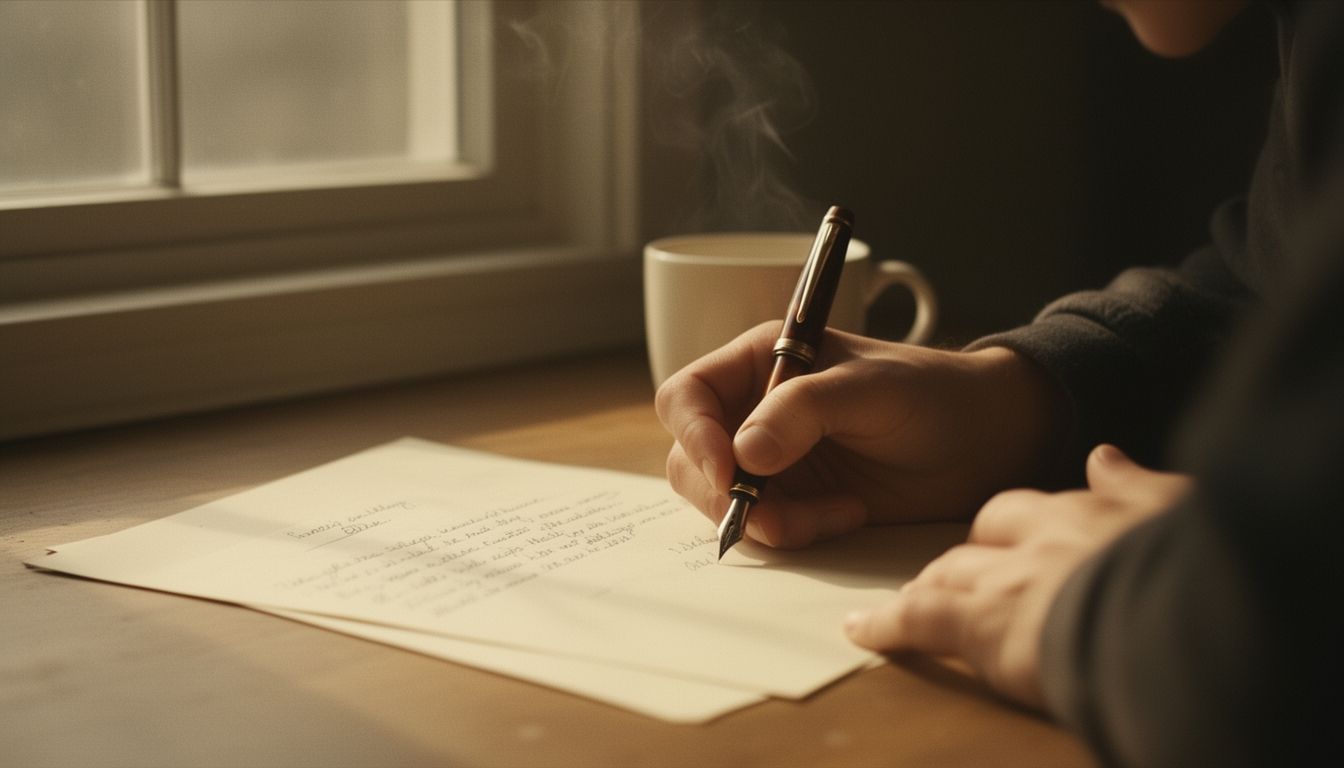
What would you tell them, if you could send something forward? Not the practicalities—how to roast a chicken, what your grandmother's face looked like—but the emotional truth of this transition: that you are learning to feed yourself again, that their absence has become a presence you no longer fight, that you forgive them for growing up and forgive yourself for grieving it.
Some parents write these letters and burn them. Others let them calcify into resentment, the unspoken accusation that their children should want the pink cake, should call more often, should recognize the labor of love in every wasted pancake.
There is a third option: the deliberate preservation of what matters, released on a timeline that respects both your need to speak and their need to hear it when they are ready. A letter to your daughter when she turns thirty, when she might have her own child refusing crusts. A message to your son on his first Father's Day, when the geometry of muscle memory will suddenly, devastatingly, make sense to him.
I built EterMail because I know what it's like to sit alone at 2 AM, coding while the world sleeps, holding conversations with people who aren't there. Those late nights taught me that the most important words often need time to find their audience—not because we're afraid to speak, but because the person who needs to hear them hasn't arrived yet. When you write to your future self, or to a child who won't understand until they're older, you're practicing a kind of faith: that the connection will survive the distance, that meaning can be deferred without being lost. That's why I obsessed over making sure those letters actually arrive, with end-to-end encryption and redundant servers, because a message sent across years deserves the same care as one sent across the room.
The Empty Chair as Teacher
Eventually the chair moves. You put it back against the wall, or give it away, or stack it with others in the basement where your children's height marks still record a growth that has plateaued. The absence becomes spatial, literal, harder to ignore.
This is the invitation: to stop performing family and start inhabiting your own life. To cook the spicy food your daughter hated. To eat at hours that suit your digestion, not a school schedule that no longer governs you. To discover whether you actually enjoy cooking, or only enjoyed cooking for.
The empty chair teaches that love was never in the excess. It was in the attention, the repetition, the willingness to make one person's preferred pancake four thousand times. That capacity for focused care does not disappear when its object leaves. It waits, patient and hungry, to be redirected toward your own future self—the one who will need to be fed, remembered, sustained through changes she cannot yet imagine.
What Remains on the Table
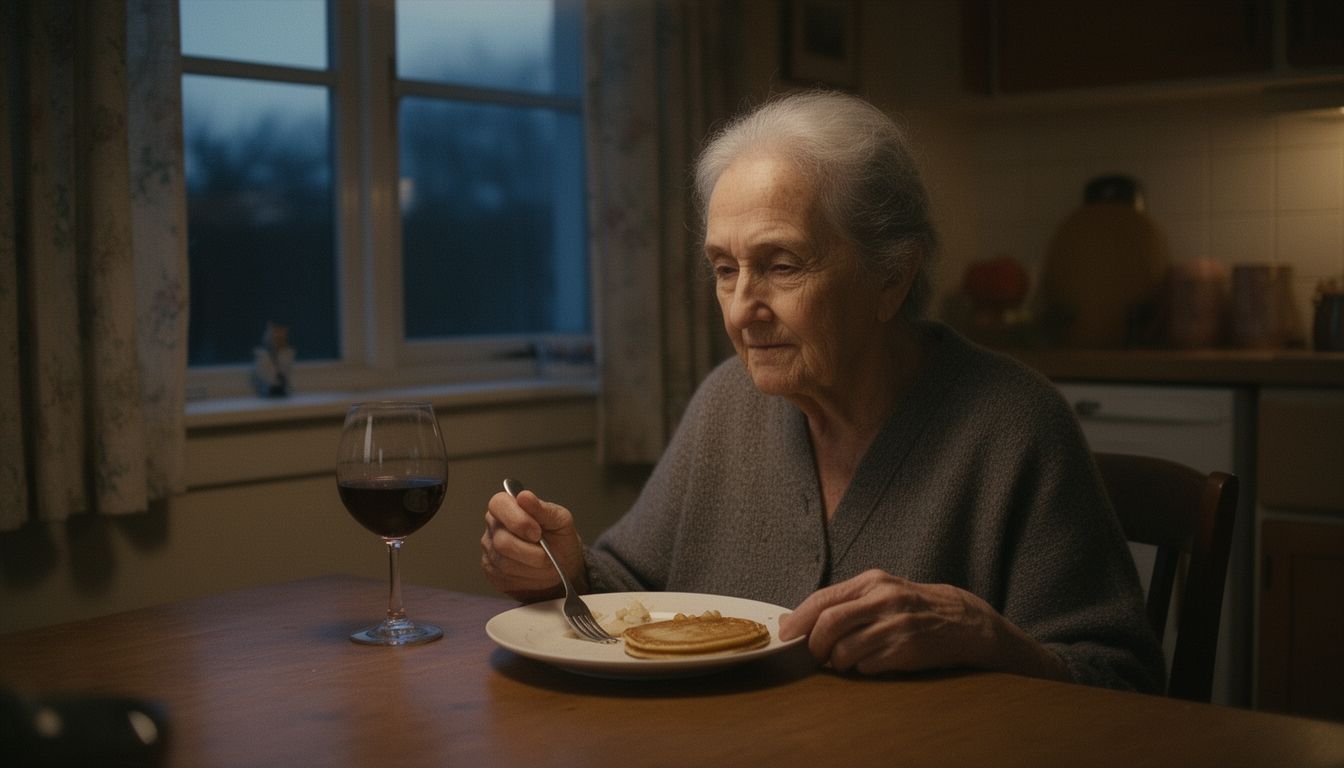
You make one pancake tomorrow. Burn it slightly, out of habit. Eat it standing at the counter, and notice—really notice—the texture, the sweetness, the particular melancholy of a morning without urgency.
This is not failure. This is the slow, unglamorous work of learning your own hunger. The choreography of absence eventually gives way to a different dance: one where you are both the dancer and the audience, the cook and the one who finally, fully, sits down to eat.
The meals we made for them were always, in some sense, messages to the future—attempts to encode love into something they could carry with them, something that would outlast our daily presence. When we finally learn to cook for ourselves again, we are not abandoning that project. We are extending it. The nourishment we provide our own future selves—attentive, patient, willing to wait—becomes the model for how we hope they will eventually learn to feed themselves.
And perhaps, when the letter arrives, or the time capsule opens, or the scheduled message appears in their inbox years from now, they will recognize what we were trying to say. Not just I loved you, but I learned to love myself again, and you can too.
What is EterMail?
EterMail is a revolutionary time capsule service that allows you to send messages, photos, and videos to the future (up to 30 years). Seal your memories and thoughts today, and they'll be delivered when the time is right.
Time Capsule
Send messages up to 30 years in the future
Rich Media
Text, photos, and videos supported
Secure & Private
Your memories are safely encrypted
EterMail Team
We're the team behind EterMail, dedicated to helping you preserve and share timeless messages with your loved ones. Our mission is to make it easy to express your love, share your wisdom, and create lasting connections that transcend time.
Frequently Asked Questions about For Our Children
How do I cope with empty nest syndrome when cooking for myself?
What should I write in a letter to my adult child about our changing relationship?
Why do parents keep making too much food after children leave home?
Related Articles

Why I Built EterMail: A Time Capsule for the People I Love Most
I’m a Product Manager who spends all week optimizing for the "immediate now." But getting lost off the grid on a mountain ridge made me realize I had zero infrastructure for the "forever." Here’s why I stopped worrying about conversion rates for a moment and built EterMail—a secure, tamper-proof digital time capsule for the people I love most.

The Most Radical Letter to Your Future Self Is a Promise to Stay Unfinished
The best letter to your future self isn't a memory—it's a mandate. Learn how writing to the version of you still working with love changes everything.
The Ice Tray at Midnight: On Grief, Domestic Minutiae, and the Quiet Work of Becoming Yourself Again
Why do the smallest habits hurt most after someone leaves? A reflection on grief, domestic minutiae, and the quiet moment healing finally begins.