The Lavender Compromise
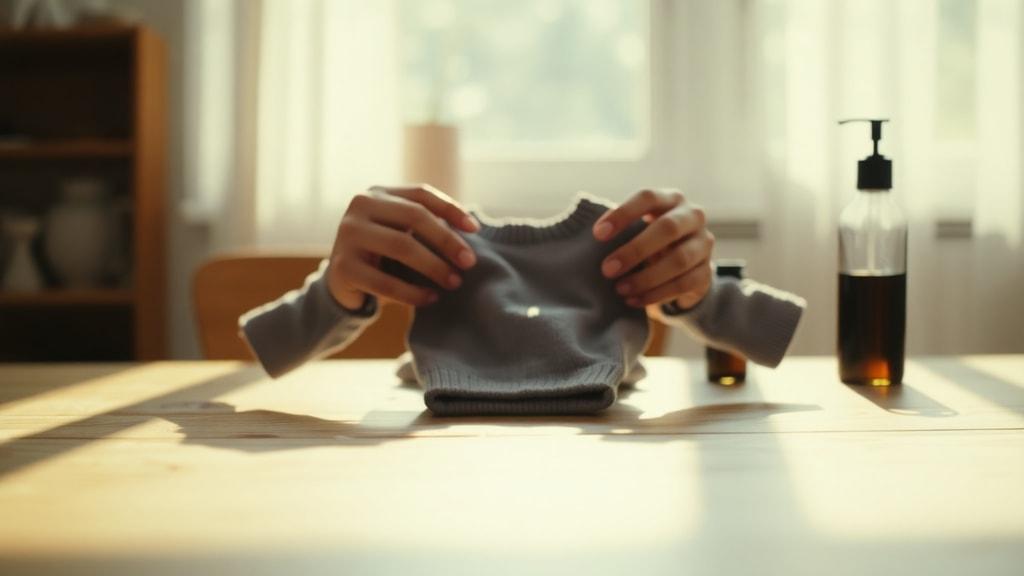
The switch happened gradually, like most sacrifices do. One morning you caught yourself standing in the detergent aisle longer than necessary, comparing labels with the intensity of a sommelier. Your old brand—the one that smelled of alpine forests and something aggressively masculine—suddenly seemed like a threat. The pediatrician had mentioned eczema. You chose lavender. Not because you loved it, but because it promised soothed skin and uninterrupted sleep.
You never announced the change. You simply became a person who smelled of lavender. The alpine forest retreated to the back of the linen closet, then to the garage, then to the donation bin. Your partner noticed, perhaps, but said nothing. The baby stopped scratching. That was the victory you measured.
What you did not measure: how identity accretes through these small erasures, how a parent becomes a palimpsest of their former self, written over by the needs of someone who cannot yet read.
The Vanilla Alibi
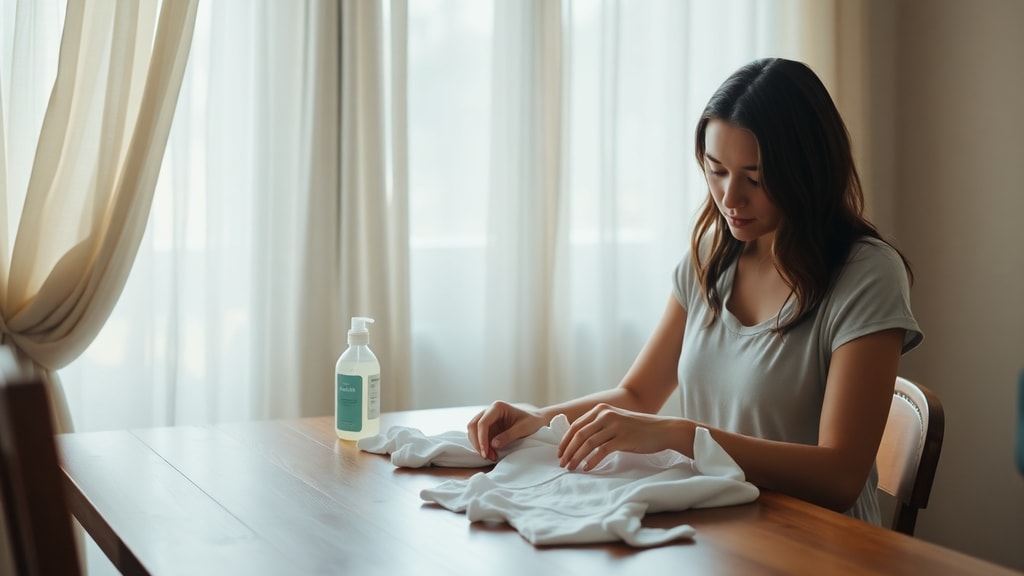
There was the vanilla, too. You wore it first as an experiment—an impulse purchase at a pharmacy, a rollerball oil you applied while the baby napped on your chest. They stirred, inhaled, settled deeper. "Safe," they said later, when they had words. "You smell like safe."
You have worn vanilla for eleven years now. The amber bottles line your bathroom shelf like a shrine to a deity you never fully believed in but cannot abandon. The musk you once favored—the one that made you feel visible in rooms full of strangers—sits in a drawer, evaporating slowly, becoming something else entirely, something closer to regret than fragrance.
This is the cartography of inherited scent: the way we redraw our own borders so our children can locate themselves. We become landmarks. We become home. And we forget, in the becoming, that we were ever territories of our own.
The Cigarette You No Longer Smoke
The hardest to explain is the garage. The pack you keep in the toolbox, sealed, untouched for months until a particular Tuesday when the vanilla feels like a costume and the lavender like a verdict. You do not light one. You have not lit one in years. But you hold the unlit paper between your fingers, inhale the tobacco, let the craving pass through you like weather.
Your child has never seen this. Your child believes you have always been vanilla and lavender, believes these were your native soils. They do not know about the garage, or the alpine forests, or the person who once chose musk because it made her feel fierce.
What do we owe our children in the archive of our former selves? The full truth, curated and kind? Or the myth that love requires complete metamorphosis, that we were always only what they needed us to be?
When They Bring Home a Stranger
The reckoning arrives without announcement. Your daughter—seventeen, or twenty-two, or thirty, the age varies but the architecture of the moment does not—brings home a lover who wears the cologne you abandoned. The one your college boyfriend wore, the one that once made you feel chosen in crowded rooms. You smell it in the hallway before you see him. You stop. You remember.
And then you see your daughter's face, the way she leans into him, the way she has learned to read safety in a fragrance that, to you, means something older and more complicated. You must smile. You must shake his hand. You must recognize that the scent you cultivated as love has become, to her, merely the background of a room she is trying to leave.
This is the unspoken grief of successful parenting: becoming the atmosphere they breathe without noticing, the condition they must escape to become themselves. The lavender that soothed her eczema is now the smell of childhood, and childhood is what she is outgrowing. The vanilla that meant safe now means contained.
The Chemistry of Letting Go
We are not perfumers, finally. We are chemists of attachment, and the experiment never ends the way we predict. We thought we were designing a permanent home, a fixed coordinate in their internal map. We did not understand that the very reliability of our scent would make it invisible, that love's most painful achievement is being taken for granted.

The lover's cologne is not a betrayal. It is evolution. Your daughter is building her own cartography now, her own system of safe and dangerous, familiar and desired. She will switch her own detergents someday, for her own children's eczema. She will find her own vanilla, or her own equivalent. The cycle does not care about your grief.
What Remains in the Archive
But here is what the cycle cannot erase: the intention of the transformation. The fact that you stood in that aisle, that you chose, that you became. This is the legacy more durable than scent—the evidence that someone once rearranged their entire chemistry for your wellbeing.
I know something about this kind of deliberate construction, this building of bridges between who you were and who someone else needs you to be. I've spent years at a keyboard, often until 2 or 3 AM, "pair programming" with AI systems, mapping architectures that connect human longing to digital permanence. That extreme solitude—screen glow in a dark room, the strange intimacy of dialogues with machines—taught me that the loneliest creations are often the ones meant to outlast us. The code I write isn't just functional; it's a bridge between physical and digital existence, a way to preserve what would otherwise evaporate like musk from an abandoned bottle.
A time capsule of scent is impossible, of course. But a time capsule of context—of the decisions, the erasures, the loves that required you to become someone else—this is what survives. This is what they discover, years later, when they are ready to understand that their safety was constructed, deliberately and at cost, and that the construction required a builder who once had other plans.
The best way to fight forgetting isn't taking another screenshot; it's setting an alarm for the future. By using EterMail to set a delivery date 5 years from now, you completely free yourself from the anxiety of the present. The letter you write now, to the child who is still inhaling your vanilla, or to the adult they will become: this is the map they cannot otherwise access. The garage you never showed them. The musk you abandoned. The person you were before you became theirs.
<
The Return, If It Comes
Sometimes, not always, they return. The lover leaves, or the marriage strains, or simply the accumulated weight of adulthood makes them seek the coordinates of their origin. They walk into your house and inhale—lavender, vanilla, the particular combination that means only here and her and before I knew what I was becoming.
They do not say anything. They may not recognize what they are feeling. But for a moment, they are located. They are home. And you, in the kitchen or the garden or the garage with your unlit cigarette, you are briefly visible again—not as atmosphere, but as architect.
The scent we leave our children is not ours. It is the scent of our love for them, and love, finally, belongs to the beloved. We become perfumers without portfolio, chemists without patent, and the formula we develop is destined to become generic, ambient, eventually obsolete.
This is not tragedy. This is the design. The question is whether we document the experiment—whether we leave enough of our former selves in the archive that they can, if they choose, understand the full cost of their safety, and perhaps, in time, forgive us for becoming invisible in the providing of it.
A letter to their future self, from your present truth. A time capsule of the person who chose lavender, who held vanilla as alibi, who stood in the garage with craving and did not light the match. This is the inheritance that outlasts scent. This is the map they did not know they needed.
What is EterMail?
EterMail is a revolutionary time capsule service that allows you to send messages, photos, and videos to the future (up to 30 years). Seal your memories and thoughts today, and they'll be delivered when the time is right.
Time Capsule
Send messages up to 30 years in the future
Rich Media
Text, photos, and videos supported
Secure & Private
Your memories are safely encrypted
EterMail Team
We're the team behind EterMail, dedicated to helping you preserve and share timeless messages with your loved ones. Our mission is to make it easy to express your love, share your wisdom, and create lasting connections that transcend time.
Frequently Asked Questions about For Our Children
How do I write a letter to my child that they'll actually want to read as an adult?
What should parents preserve for their children's future emotional understanding?
How do I cope with my child outgrowing the version of me they needed?
Related Articles

The Cartography of Mirrored Damage: What We Show Our Children, What We Hide, and What Breaks When They Bring Us Their Own Fractures
How do we teach children that healing isn't never breaking? Explore the art of showing our fractures to help them recognize their own—and what happens when they finally do.
The Cartography of Swallowed Sound: On the Silence We Cultivate for Our Children
What happens when the quiet we built for our children becomes the only language they know us by? A reflection on lost voice and intentional sound.
The Cartography of Translated Grief: How We Rewrite Loss for Our Children, and What It Costs Them Later
We soften death, divorce, and loss into palatable stories for our children. But what happens when they discover we've been speaking in dialects of protection?