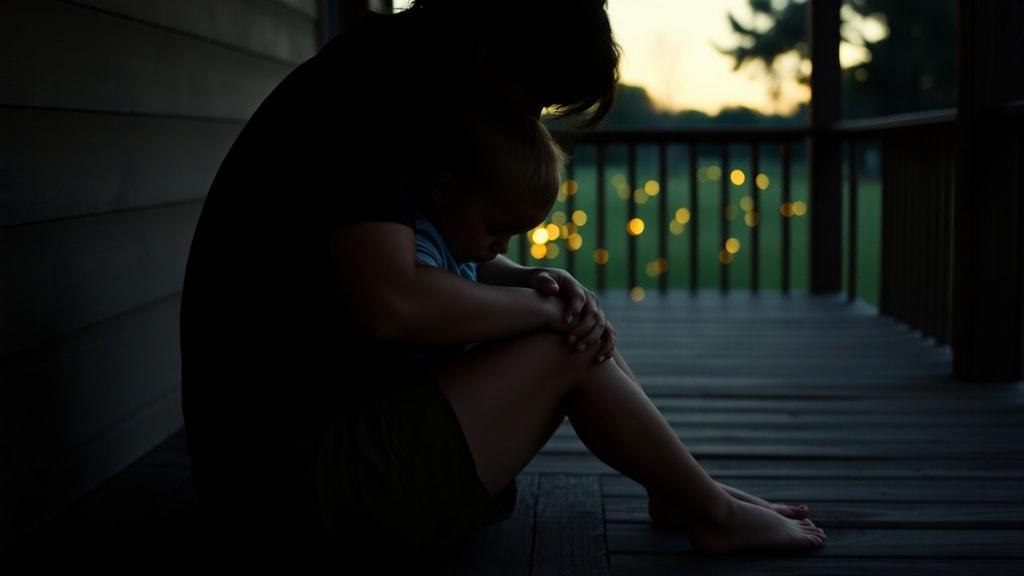
The Thunderstorm Scar
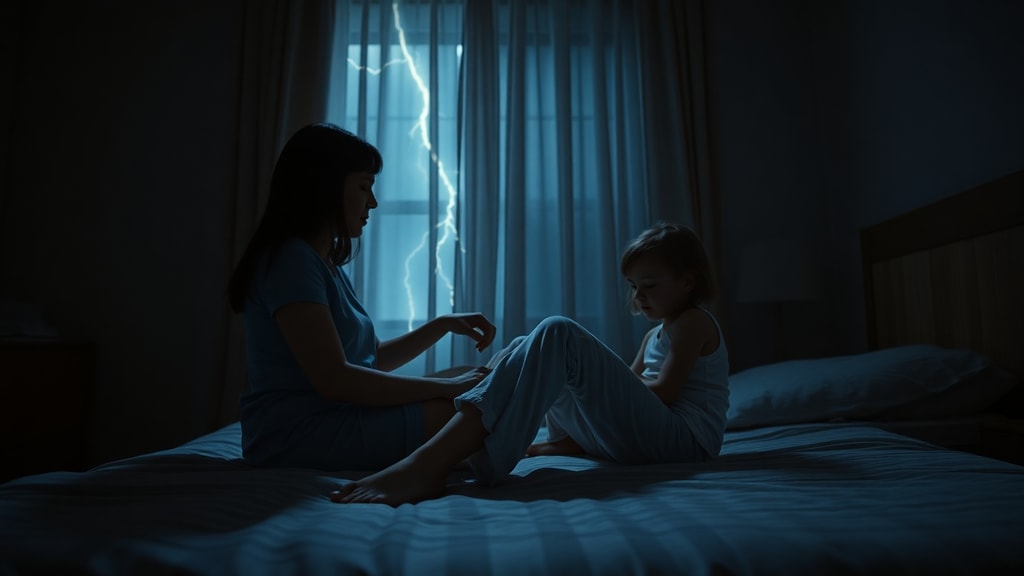
The lightning cracked at 2:47 AM, and my daughter appeared in the doorway clutching her stuffed rabbit by one ear. I was already awake, sitting on the edge of my bed, rubbing the surgical scar on my left knee—the one from the skiing accident I never talk about, the one that ended something I couldn't name out loud. She didn't ask. She never asked. But I pulled her onto the mattress, lifted the hem of my pajama pants, and let her trace the raised pink line with one small finger while the storm rolled overhead.
"Does it still hurt?" she whispered.
"Only when it rains," I said, which was both true and not true enough.
That was the first exhibit in what would become, I now understand, a curated museum of controlled damage. The scar we show during a thunderstorm. The story we tell in fragments. The tears we let them witness but cannot fully explain. We become, as parents, docents of our own brokenness—walking them through galleries of selective revelation, hoping they will learn that healing is not the same as never cracking.
The Burned Pancakes Confession
Six months later, I told her about Elena over breakfast. Burned pancakes, because I was distracted by the telling. Elena, my college roommate, who I failed in ways that still surface unexpectedly—forgetting to check on her during her depression, making excuses for my absence that I can no longer remember, discovering too late that she had been hospitalized and not knowing if I would have changed anything if I'd known sooner.
"Why are you telling me this?" my daughter asked, pushing the charred pancake with her fork.
I didn't have an answer prepared. The docent's script had failed. But I recognized, even then, that this was the second exhibit: the story of the friend we failed, told over burned pancakes. The admission that we have been the cause of damage, not merely its recipients. That our scars sometimes have mirrors. That we have wounded others while nursing our own wounds, and the geometry of this is something they must eventually understand if they are to become adults who do not believe themselves uniquely monstrous for their own failures.
We curate these revelations with the precision of museum lighting—bright enough to illuminate, dim enough to leave shadows intact. We want them to see that we have been broken, but not how completely. That we have failed, but not the full inventory of our failures. We are building, piece by piece, a map of human damage that we hope will help them find their way through their own territories, but we never show them the entire map. We never show them the rooms we have locked.
The Commercial We Pretend Is About Something Else
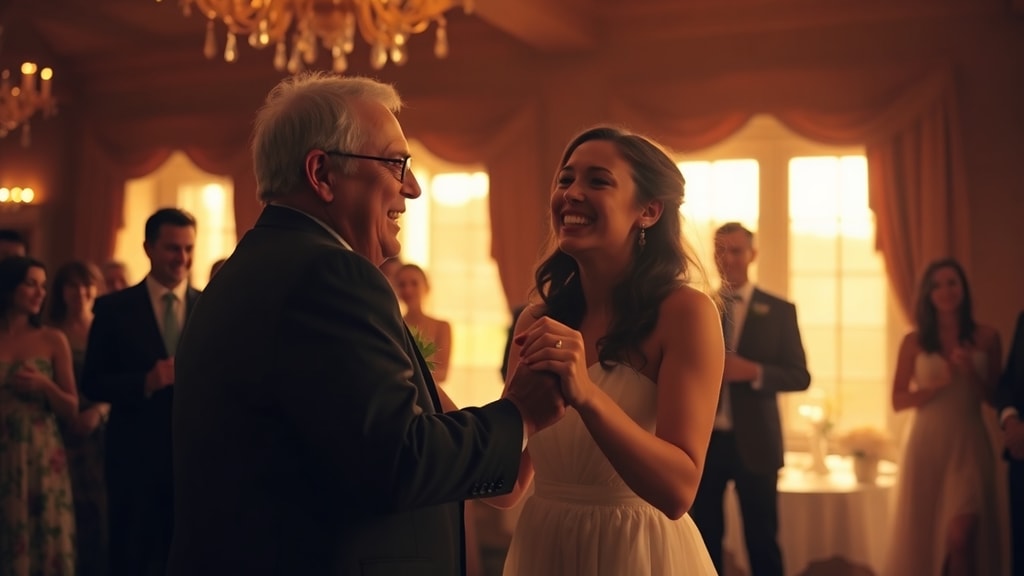
The third exhibit arrived unplanned. A commercial for insurance, of all things—a father dancing badly at a daughter's wedding, and I was crying before I understood why. My daughter, then nine, found me in the kitchen, shoulders shaking, muttering something about allergies, about the song reminding me of something else, about nothing, about nothing at all.
She knew. She always knew. But she let me have my pretense, and in that mutual pretense, something was negotiated. The way we let them see us cry at a commercial we pretend is about something else. This, too, is part of the curriculum. The demonstration that grief arrives without invitation, that it can be triggered by the most ordinary artifacts, that we do not always understand our own emotional weather—and that this confusion is itself survivable.
What we do not say: that I was crying because I could see her future wedding, and I could see my absence from it, and I could see the accumulated weight of every scar and burned pancake and unplanned tear that would compose the legacy I leave her. What we do not say: that the commercial was not about insurance at all, but about time, and time is the one damage we cannot curate or control.
The Unshowable Damage They Bring Us
Then came the night she brought me her own fracture. Not the scraped knees or the friendship betrayals I had prepared for. Something else. Something that had no precedent in my curated exhibits, no corresponding scar in my museum. She sat on the same bed where I had shown her my knee, and she described a darkness I recognized with the immediacy of kinship—and with the terror of recognition.
I understood, in that moment, the fundamental limitation of my project. All the controlled damage I had displayed, all the carefully measured revelations, had prepared her to recognize her own breaking—but they had not prepared me for the moment she would bring me damage I could not match with my incomplete exhibit.
I faced the choice every parent eventually faces, the one no guidebook addresses. Do I open the locked rooms? Do I bring out the full inventory of what I have hidden—the episodes I have never spoken, the fractures I have never shown, the damage I have judged too unshowable even for my own museum? Do I match her unshowable damage with my own, risk for risk, darkness for darkness, proving that she is not alone in breaking in ways that cannot be narrated?
Or do I protect her still? Maintain the incomplete exhibit? Leave her believing, perhaps, that she is the only one who ever broke in a way that couldn't be narrated, that couldn't be traced with a finger during a thunderstorm, that couldn't be confessed over burned pancakes?
The Docent's Dilemma
I chose incompletely, as we all must. I revealed more than I had planned and less than I had hidden. I told her about the year I couldn't get out of bed, the professional I saw in secret, the medication I stopped without telling anyone, the afternoon I sat in a parking garage for three hours because I couldn't remember how to start the car. I did not tell her everything. I will never tell her everything. The locked rooms remain locked, not from lack of love, but from the recognition that some damage, once shared, becomes a burden rather than a bridge.
She listened. She asked questions I couldn't answer. She cried, and I cried, and the distinction between docent and visitor dissolved. We were, for that hour, two people in a museum that had no curator, no script, no controlled lighting—only the raw mutual recognition that we had both been broken in ways we could not fully narrate, and that this confusion was, finally, the most honest thing we could share.
What Remains Unexhibited
I think now about the letters I will leave her. Not the ones I have composed in my head, the polished narratives of growth and resilience, the curated exhibits translated into prose. I think about the letters that would contain the full inventory, the unlocked rooms, the damage I have never shown. Would they help her? Would they prove that she was never alone in her unshowable breaking? Or would they simply transfer the weight of my hidden fractures onto her already burdened shoulders?
The art of parental vulnerability is not the art of complete disclosure. It is the art of strategic revelation, timed and measured, designed to teach that healing is possible without teaching that all damage must be displayed. We are not, finally, archivists of our own pain. We are cartographers, drawing maps with deliberate omissions, hoping our children will develop the skills to navigate territories we have not charted, to survive storms we have not shown them, to find their way through fractures we have not mirrored.
The Letter I Couldn't Write Until Now
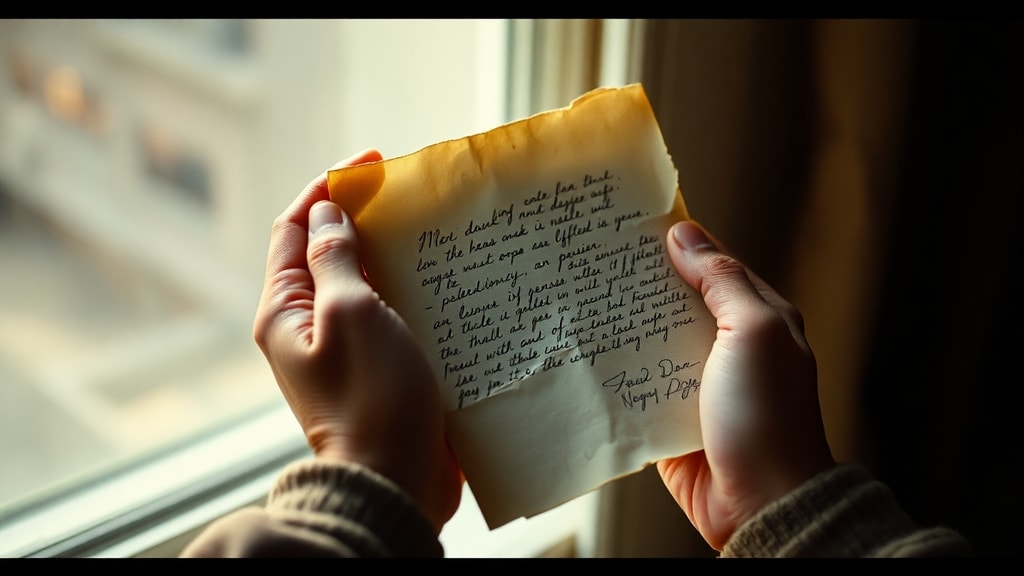
I spent years coding alone in the dark, building systems that would outlast me, before I understood what I was really constructing. Those 2 AM sessions, wrestling with architectures and APIs, taught me something about permanence and its illusions. You can build the most robust server, replicate it across continents, encrypt it end-to-end—and still, the human part remains fragile, unbackupable, resistant to version control. I learned this building EterMail: that the best way to fight forgetting isn't taking another screenshot or drafting another unsent email that sits in your drafts folder gathering digital dust. It's setting an alarm for the future. It's writing the letter you can't speak aloud, scheduling it to arrive when the distance has done its work, when time has made the unshowable finally showable. The locked rooms don't have to stay locked forever. They just need the right key, and sometimes that key is a date five years from now, a moment when you and the person you love have both become someone new.
The Museum That Outlives Its Docent
She is older now. She has her own exhibits, her own controlled revelations, her own children perhaps someday who will trace her scars and listen to her burned-pancake confessions and find her crying at commercials she pretends are about something else. The museum continues. The map extends. And I understand, finally, that the incompleteness was always the point—not a failure of courage but a recognition that we are never finished becoming the people our children need us to be, and that our unfinishedness is itself a lesson.
What I hope she learned: that breaking is not the opposite of wholeness. That the scars we show and the scars we hide compose a single geography. That she was never alone in her unshowable damage, even when I could not match it with my own complete inventory. That I loved her enough to remain incomplete, to leave her room to become someone I could not predict, to carry forward a museum that would outlast its docent and find new curators, new exhibits, new forms of breaking and healing that I will never see.
The thunderstorm scar has faded to white. She no longer traces it with her finger. But I catch her sometimes, rubbing her own knee when it rains, remembering something she cannot fully name, continuing the work I began imperfectly—the map of mirrored damage, passed from one generation to the next, never complete, never finished, always becoming.
What would you want your children to know about the fractures you never showed them? What incomplete exhibit would you leave behind, and what would you finally unlock? Some revelations require the distance that only time can provide—and the courage to send what we could not speak.
What is EterMail?
EterMail is a revolutionary time capsule service that allows you to send messages, photos, and videos to the future (up to 30 years). Seal your memories and thoughts today, and they'll be delivered when the time is right.
Time Capsule
Send messages up to 30 years in the future
Rich Media
Text, photos, and videos supported
Secure & Private
Your memories are safely encrypted
EterMail Team
We're the team behind EterMail, dedicated to helping you preserve and share timeless messages with your loved ones. Our mission is to make it easy to express your love, share your wisdom, and create lasting connections that transcend time.
Frequently Asked Questions about For Our Children
How do I decide what emotional struggles to share with my children and what to keep private?
What should I include in a letter to my future adult child about my own difficult experiences?
How can parents help children understand that healing doesn't mean never breaking?
Related Articles
The Cartography of Inherited Scent: How We Become Perfumers of Love for Our Children, and What We Lose in the Translation
We curate our very chemistry for our children—until they outgrow the fragrance of our love. What remains when they no longer recognize us as home?
The Cartography of Swallowed Sound: On the Silence We Cultivate for Our Children
What happens when the quiet we built for our children becomes the only language they know us by? A reflection on lost voice and intentional sound.
The Cartography of Translated Grief: How We Rewrite Loss for Our Children, and What It Costs Them Later
We soften death, divorce, and loss into palatable stories for our children. But what happens when they discover we've been speaking in dialects of protection?