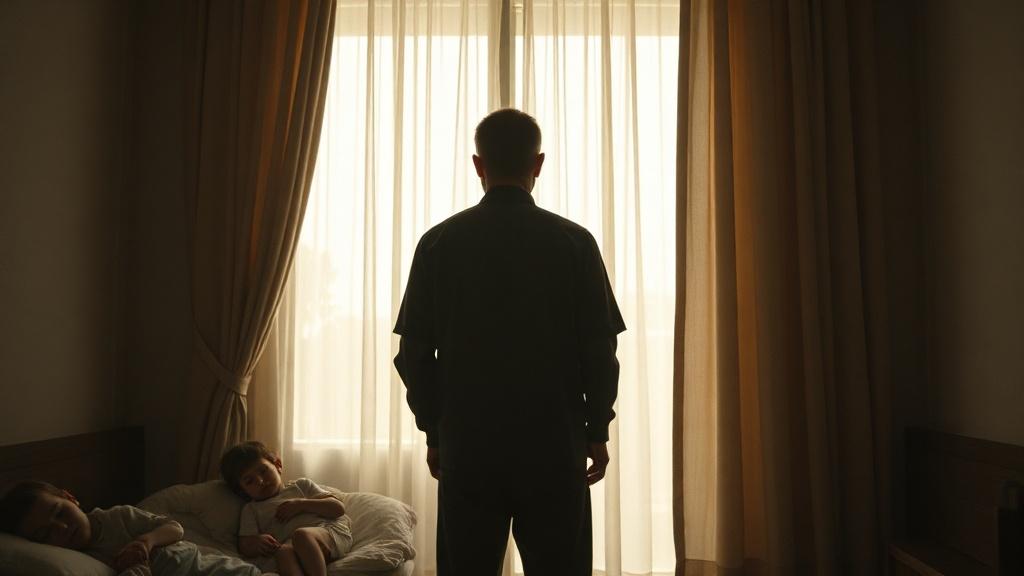
The Bowl at 6 AM
You learn the acoustics of your house the way a musician learns an instrument—by touch, by failure, by the particular frequency of a mistake. The cereal poured in slow motion so the flakes don't clink against the ceramic. The refrigerator door opened with two fingers, not the full palm, because the seal makes a sound like a gasp. The coffee grinder banished to the garage, where its scream becomes someone else's problem, or no one's.
This is not martyrdom. This is cartography. You are mapping the territory of another person's rest, another person's concentration, another person's fragile peace—and you are erasing yourself from the map as you go.
I remember the first morning I caught myself holding a sneeze into the couch cushion during my daughter's Zoom class. Not because she would be embarrassed. Because the sound of my body functioning felt like an intrusion. Like vandalism. I sat there with my face pressed into synthetic velvet, eyes watering, thinking: When did I become a person who apologizes for existing in his own home?
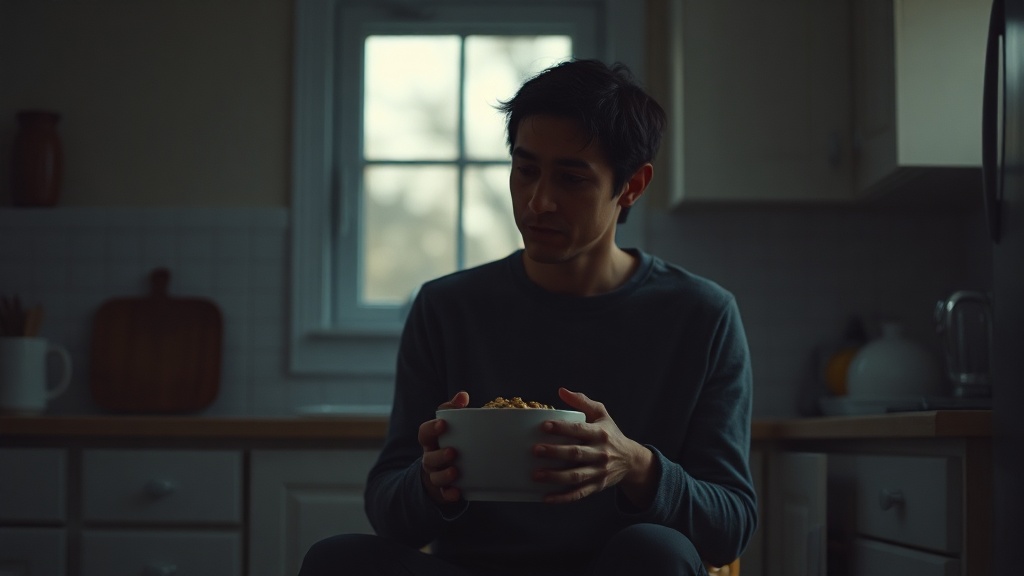
The Librarian of Your Own Volume
There is a specific grief in realizing you have become a librarian of your own volume, checking out smaller and smaller versions of yourself. The music you used to play at volumes that shook the windows—now one earbud, one channel, one half of a stereo field while the other ear listens for nightmares, for coughs, for the particular silence that means a child has stopped breathing and you must run.
You tell yourself this is temporary. This is the season. You will get yourself back when they are older, when the house empties, when the risk of waking someone disappears like morning fog. But seasons have a way of becoming climates. Temporary accommodations become permanent architecture. The body forgets what it knew.
I used to sing. Not well, but fully—with the kind of commitment that requires no audience, only the pleasure of vibration in the chest. Now I hum. Now I mouth words in the car when I'm alone, surprised by the shape of my own jaw, the unfamiliar effort of making sound without constraint. The muscle memory of volume has atrophied. I have trained myself so thoroughly in suppression that the release feels not like freedom but like transgression.
The Language We Leave Behind
Here is what I fear: that my children will remember me as quiet. That the silence I cultivated for their benefit will become the only language they know me by. That they will describe me to their own children as soft-spoken, reserved, someone who kept to himself—and none of it will be wrong, and all of it will be incomplete.
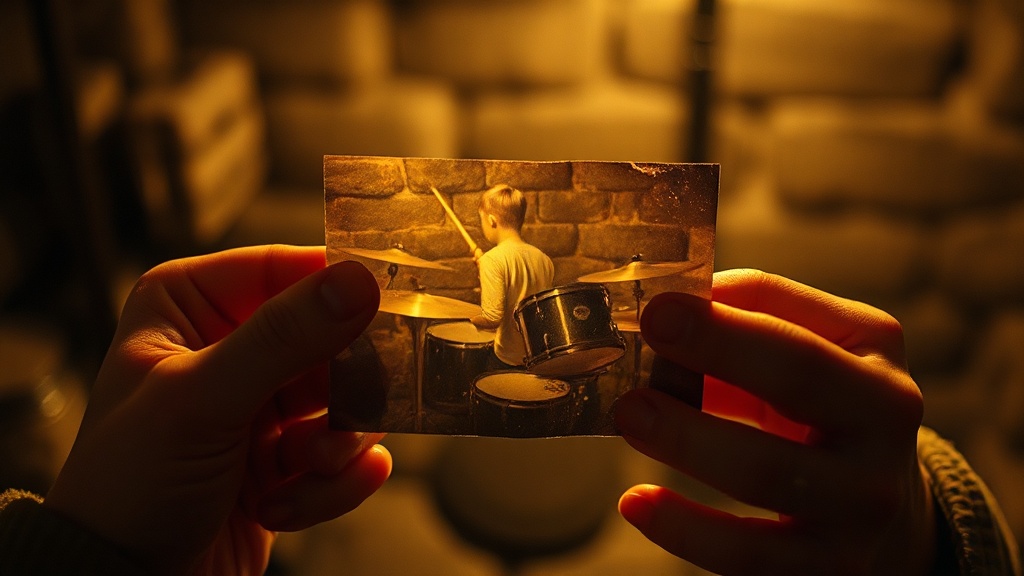
Because I was not always this. Because there was a self before the swallowed sound, a person who argued with passion, who laughed at volumes that startled birds, who played drums badly and enthusiastically in a basement that smelled like mildew and ambition. That person is not gone. He is archived. He is waiting in a folder I no longer know how to open.
The philosopher Byung-Chul Han writes about the burnout society, the achievement subject who exploits herself. But there is a quieter burnout, too—the parental subject who silences herself into nonexistence, who performs absence as a form of care until absence becomes identity. We do not talk about this exhaustion because it looks like peace. Because the house is finally still. Because everyone is sleeping through the night.
The Ethics of Reclaiming Sound
There is no clean resolution here. The choice is not between silence and noise, between self-erasure and selfishness. The choice is more difficult: when and how to let yourself be heard again, knowing that your sound will now be unfamiliar to the people who share your space.
I tried, once, playing a record at the volume I remembered. My daughter, then nine, appeared in the doorway not with complaint but with confusion. Dad? As if the sound were a symptom. As if I were malfunctioning. I turned it down. I did not try again for months.
But here is what I have come to understand: our children do not need us to be silent. They need us to be intentional. The cereal poured slowly is an act of love. The cereal poured slowly forever, without ever explaining why we are careful, without ever letting them hear what careful sounds like when it chooses to release—this is not love. This is a haunting. This is teaching them that adulthood means disappearance.
Writing Toward the Unarchived Self
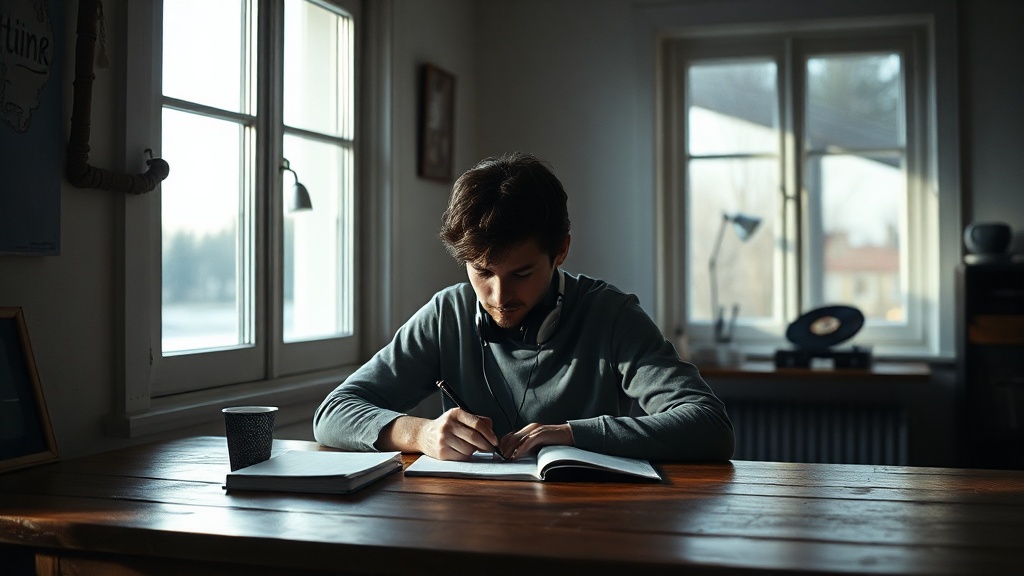
I have started writing letters. Not the practical kind—permission slips, grocery lists, the administrative poetry of running a household—but letters to my children that contain sound. I describe the music I loved and why it mattered. I recount arguments I had before I learned to swallow them. I write about the person I was when volume was not a moral question, and I write about the person I became when it was, and I try to trace the path between them without making either one a villain.
These letters are not for now. They are for later—when my children are older, when they are wondering who I was beyond the quiet, when they are perhaps becoming quiet themselves and need to know that silence is a choice, not a destiny.
I spend most of my nights alone with a screen, "pair programming" with LLMs until 2 or 3 AM, mapping architectures for the products I'm building. That extreme digital solitude has given me a strange intimacy with loneliness—with the feeling of speaking into a void and trusting that something, somewhere, will eventually answer. These letters to my children operate on the same logic. I am writing into a temporal void, trusting that a future version of someone I love will receive these words and recognize the vibration of a person who refused to be fully archived.
This is where digital legacy meets living intention. The letters I write through EterMail are scheduled to arrive when my children reach ages I cannot yet imagine. They are time capsules of sound, attempts to preserve not just what I did but how I felt, how I vibrated, what I allowed myself to express when expression still came easily. They are, in some ways, rehearsals for my own reclamation—practice in speaking fully, even if the audience is temporal distance itself.
The Cartography Reversed
I am trying, now, to reverse the map. Not by abandoning care—my daughter still has Zoom classes, the cereal still pours at 6 AM—but by introducing small sounds deliberately. The record at half-volume on Saturday afternoons, with explanation. The humming that becomes singing that becomes, occasionally, the full-throated thing. The sneeze released into a tissue, unapologetic, followed by excuse me spoken at normal volume, not whispered.
My son, younger, has started asking about the music. What is this? Why do you like it? These questions are invitations. They are maps he is drawing of me, and for the first time in years, I am allowing complexity into the territory. I am letting him hear that I contain multitudes, that I existed before his needs, that I continue to exist with needs of my own.
The silence we cultivate for our children is a gift. The silence we forget to interrupt becomes a debt they will spend years understanding. They will wonder, eventually, why we disappeared into our own care. They will wonder if their own volume is too much, if their own needs are too loud, if adulthood means learning to make no sound at all.
What We Owe the Future
I do not want my children to receive only my quiet. I want them to receive my intention, my struggle, my imperfect and ongoing attempt to be both present and whole. The letters I write and schedule for their future selves are part of this—they are evidence that I was thinking of them, yes, but also thinking of myself, also trying to remain visible, also refusing to let the only inheritance be silence.
There is a particular loneliness in being unheard by the people you love most. It is not their fault. It is the architecture we built together, the accommodations that became habits that became identity. Reversing it requires not volume alone but vulnerability—the admission that we have been quiet, that quiet has cost us something, that we are trying to speak again even when the words come rusty, even when the sound surprises everyone in the room.
My daughter is twelve now. Last month, she asked me to play that record again—the one she had found confusing at nine. We listened together. She did not love it, not yet, but she heard me in it. She heard something of who I was, who I am still trying to be. This is what you sound like, she said, and I did not correct her. I let the statement stand. I let myself be known by my sound, finally, in the house where I had spent so many years learning to make none at all.
The cereal still pours at 6 AM. But sometimes, now, I let the spoon clink.
What is EterMail?
EterMail is a revolutionary time capsule service that allows you to send messages, photos, and videos to the future (up to 30 years). Seal your memories and thoughts today, and they'll be delivered when the time is right.
Time Capsule
Send messages up to 30 years in the future
Rich Media
Text, photos, and videos supported
Secure & Private
Your memories are safely encrypted
EterMail Team
We're the team behind EterMail, dedicated to helping you preserve and share timeless messages with your loved ones. Our mission is to make it easy to express your love, share your wisdom, and create lasting connections that transcend time.
Frequently Asked Questions about For Our Children
How do I write a letter to my future child without knowing who they'll become?
What should parents include in an emotional legacy for their children?
How can I preserve my authentic self while being a present parent?
Related Articles
The Cartography of Mirrored Damage: What We Show Our Children, What We Hide, and What Breaks When They Bring Us Their Own Fractures
How do we teach children that healing isn't never breaking? Explore the art of showing our fractures to help them recognize their own—and what happens when they finally do.
The Cartography of Inherited Scent: How We Become Perfumers of Love for Our Children, and What We Lose in the Translation
We curate our very chemistry for our children—until they outgrow the fragrance of our love. What remains when they no longer recognize us as home?
The Cartography of Translated Grief: How We Rewrite Loss for Our Children, and What It Costs Them Later
We soften death, divorce, and loss into palatable stories for our children. But what happens when they discover we've been speaking in dialects of protection?