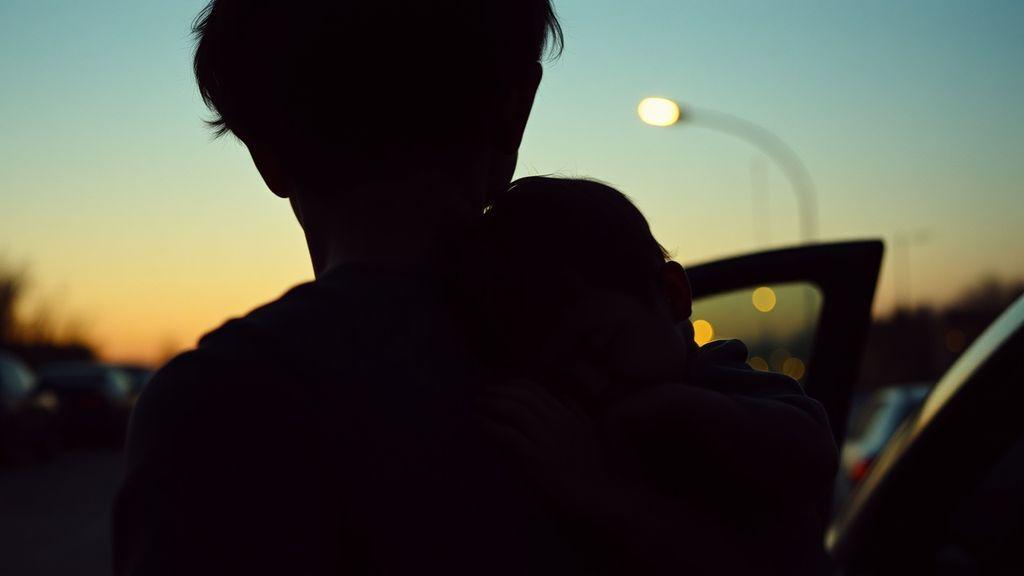
There is a photograph I cannot look at for long. My daughter, four years old, asleep in my arms as I carry her from the car. Her head heavy on my shoulder, her breath warm against my neck, her limbs loose with the absolute trust that I will not drop her. I remember taking this picture. I remember thinking: I should capture this. She is getting so heavy. What I did not think, what I could not have borne to think, was: This is the last time.
I carried her sleeping from the car hundreds of times. This was simply one of them, indistinguishable until later, when I realized I had passed some invisible threshold and would never cross back. The geography of parenthood is mapped in these unmarked borders. We do not know we are leaving a country until we have already arrived in another, until we turn around and find the bridge has dissolved behind us.
The Cartography of Unknowing
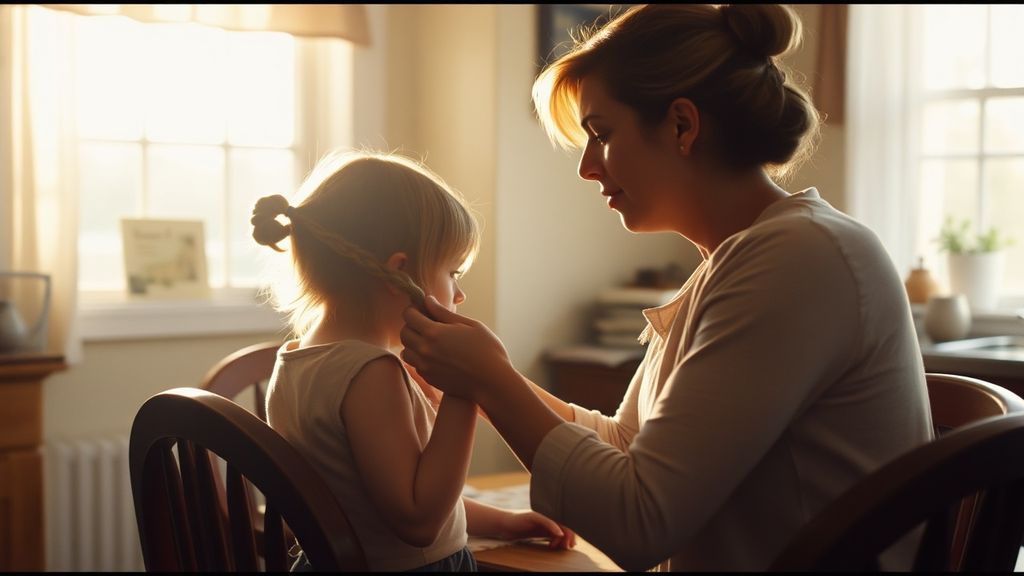
Parenthood is a slow evacuation from roles we did not realize were temporary. We are cartographers of the ordinary, documenting first steps and first words with religious fervor, while the lasts slip past us uncelebrated, unmourned, unseen. The last time we braid hair they will soon cut short. The last time we read aloud a book they can already read alone, their lips moving silently ahead of ours. The last time they reach for our hand in a parking lot without self-consciousness. The last time they call us by the name only small children use, before they switch to the cooler, shorter version their friends prefer.
We are trained to celebrate beginnings. Baby showers and first birthdays and kindergarten graduations. But endings? Endings arrive disguised as Tuesdays. They wear the costume of routine. We do not recognize them because we are not permitted to grieve what has not yet left us, and so we live in a state of productive denial, performing love daily without understanding that each performance might be the final curtain.
The Cruel Mathematics of Development
There is a particular cruelty to how children's growth is measured. Height charts on doorframes. Shoe sizes outgrown quarterly. The objective data of their leaving us, plotted in centimeters and pounds. What we cannot measure is the felt experience of their presence—the particular weight of a sleeping child, the specific frequency of their laugh at age six, the way they mispronounce "spaghetti" that you correct without recording, because you assume there will be time.
The mathematics of development does not account for the emotional density of ordinary moments. A Tuesday evening in March, helping with homework. A Saturday morning pancake ritual. These accumulate into the architecture of a childhood, but we do not recognize their load-bearing function until the structure has been redesigned, until we walk through rooms that no longer exist except in memory.
And here is what we are not told: we must learn to grieve these small deaths without demanding our children witness the funeral. They cannot know, in the moment of their necessary separation, that we are mourning. Their job is to grow. Our job is to let them, while privately conducting the rituals of release. The last time they need us to tie their shoes. The last time they ask us to check for monsters. These are not failures of our parenting but evidence of its success, which makes them no less devastating to recognize in retrospect.
The Retrospective Gaze
Recognition arrives delayed, like light from distant stars. We see the last time only when it has become the last time, when the possibility of its repetition has been foreclosed. This retrospective gaze is one of parenthood's most persistent conditions. We are always slightly behind ourselves, understanding in the present what the past was offering us, which we failed to receive fully because we were distracted by the future—by dinner preparation, by work deadlines, by the illusion that this phase would persist until we were ready to leave it.
The retrospective gaze teaches us that presence is a practice, not a state. We were there, physically, for hundreds of bedtimes. But how many did we inhabit completely? The mind wanders. The body performs routine. We are surprised, later, to discover that our presence was partial, that we were already grieving losses that had not yet occurred, already nostalgic for moments we were not fully living.
This is not self-indictment. It is the condition of consciousness, which cannot hold everything at once. But it is also the argument for deliberate capture—not the frantic documentation of every moment, which becomes its own form of absence, but the intentional preservation of what we know to be fleeting, even when we do not know precisely when it will end.
Writing Toward the Future They Will Inhabit
What would it mean to write to our children not from the perspective of what we know now, but from the recognition that they will one day know things we cannot imagine? To compose letters that acknowledge the limits of our present understanding while insisting on the permanence of our commitment?
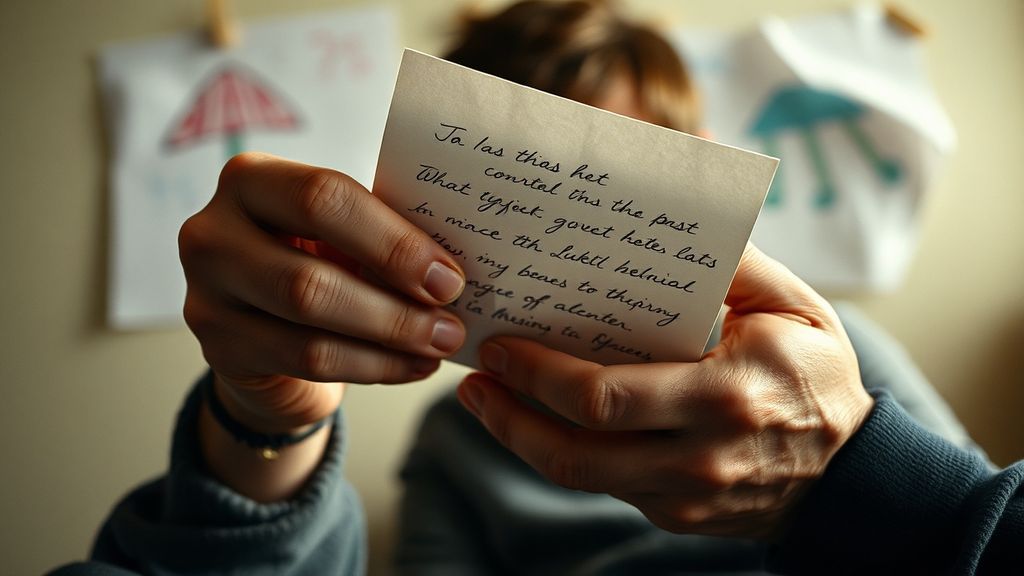
A letter to a child is an act of temporal bridge-building. We write from our now to their future then, knowing that the person who reads these words will be someone we have not yet met. The six-year-old who believes us omniscient becomes the sixteen-year-old who understands our fallibility becomes the thirty-six-year-old who may finally comprehend the complexity of our love. Each version of our child deserves a letter addressed to them specifically, acknowledging who they were when we wrote it and who they might become when they read it.
This is not prediction. It is preparation for surprise. We do not know what our children will need to hear in ten years, or twenty, or fifty. But we can know, with reasonable certainty, that they will need to hear something. That there will be moments—of failure, of grief, of ordinary Tuesday exhaustion—when they will benefit from evidence that they were loved completely, by someone who saw them clearly and chose to preserve that seeing against the erosion of time.
The Ethics of Not Demanding Witness
There is a delicate ethics to this practice. The letters we write to our children must not burden them with our unprocessed grief. They must not demand that our children manage our emotions, perform gratitude for our sacrifices, or become responsible for our happiness. The best letters to children are generous in their architecture—they offer without demanding reciprocity, they witness without requiring acknowledgment, they love without the implicit contract of return.
This is the difference between a letter and a message. A message expects response. A letter creates space. When we write to our children about the last times we are currently living through without knowing it, we are not asking them to comfort us. We are simply leaving evidence. We are saying: I was here. I noticed you. I loved you in ways I could not fully express at the time, and I want you to know that this love persists, even as the forms of its expression have necessarily changed.
The Technology of Permanence
How do we ensure these letters survive? Paper dissolves. Hard drives fail. Cloud services change terms of service, disappear, get acquired by companies with different values. The medium of preservation is itself a form of care—a recognition that our children may outlive every technology we currently trust, that we are writing for readers who will inhabit a digital landscape we cannot imagine.
I spend my nights pair-programming with AI, mapping architectures until 2 or 3 AM, chasing that strange resonance between human intention and machine execution. There's a loneliness to it—the glow of the screen, the silence of the house, the sense that I'm building bridges to futures I won't inhabit. But that same solitude taught me something about what we're really doing when we write across time. We are not merely storing data. We are encoding presence. We are refusing to let the last times disappear completely.
This is where intention meets infrastructure. The deliberate choice of a system designed for longevity, for privacy, for the specific temporal conditions of intergenerational communication. Not social media, which demands immediate consumption. Not email, which accumulates into unmanageable archives. But something designed for the opposite of immediacy: for delay, for surprise, for the specific emotional conditions of receiving a message from someone who knew you before you knew yourself.
When I built EterMail, I was thinking about those 2 AM sessions—about how the digital artifacts we trust most are often the most fragile. This is exactly why I obsessed over end-to-end encryption and extreme server redundancy. Because I know that a letter written to the future needs to be guarded even more fiercely than a bank password. The best way to fight forgetting isn't taking another screenshot; it's setting an alarm for the future. By using EterMail to set a delivery date 5 years from now, you completely free yourself from the anxiety of the present. Don't wait for the perfect moment to start writing. Open EterMail, skip the complex formatting, type the very first sentence that comes to mind, set the date, and leave the rest to us.

The Generosity of Imperfect Preservation
We will not capture everything. This is the first and necessary acceptance. The last time we carry them sleeping, the last time they reach for our hand—these will escape documentation, and this is appropriate. Some endings are meant to be private, experienced fully in their moment rather than preserved for future consumption.
But what we can preserve, we should. Not everything. Not the performative documentation of every mundane moment. But the deliberate, considered composition of love into language. The letter written at 2 AM after a difficult day, acknowledging both the difficulty and the love that persisted through it. The message composed on their eighteenth birthday, predicting nothing, promising everything. The words we would want them to have if we could not be there to speak them.
Parenthood is a series of practiced releases. The letters we write are practice for the final release, the one we know is coming but cannot schedule. They are evidence of love that outlives its occasions, love that persists in form even as its content necessarily transforms. We write not because we believe we can prevent loss, but because we refuse to let loss have the last word.
Our children will have last times with us too. They will not know they are last times. This is the symmetry of love: we are all, eventually, carried sleeping from the car, deposited into a future we did not choose, by hands that will not always be there to catch us. The letters we leave are not the hands themselves, but the memory of their warmth, the persistence of their pressure, the promise that we were held completely, once, by someone who knew exactly what they were losing and chose to hold us anyway.
What is EterMail?
EterMail is a revolutionary time capsule service that allows you to send messages, photos, and videos to the future (up to 30 years). Seal your memories and thoughts today, and they'll be delivered when the time is right.
Time Capsule
Send messages up to 30 years in the future
Rich Media
Text, photos, and videos supported
Secure & Private
Your memories are safely encrypted
EterMail Team
We're the team behind EterMail, dedicated to helping you preserve and share timeless messages with your loved ones. Our mission is to make it easy to express your love, share your wisdom, and create lasting connections that transcend time.
Frequently Asked Questions about For Our Children
What should I write in a letter to my child for their future self?
How do I preserve letters for my children if something happens to me?
When is the right time to give my child a letter I wrote years ago?
Related Articles
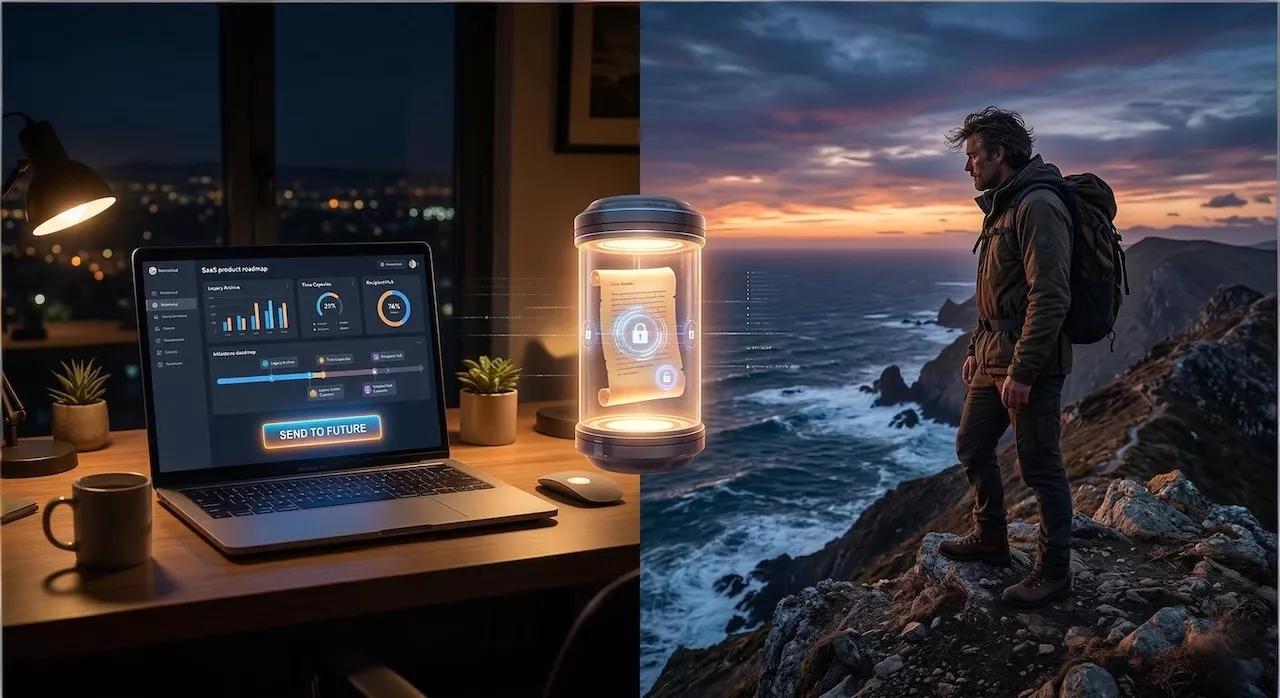
Why I Built EterMail: A Time Capsule for the People I Love Most
I’m a Product Manager who spends all week optimizing for the "immediate now." But getting lost off the grid on a mountain ridge made me realize I had zero infrastructure for the "forever." Here’s why I stopped worrying about conversion rates for a moment and built EterMail—a secure, tamper-proof digital time capsule for the people I love most.
The Most Radical Letter to Your Future Self Is a Promise to Stay Unfinished
The best letter to your future self isn't a memory—it's a mandate. Learn how writing to the version of you still working with love changes everything.
The Ice Tray at Midnight: On Grief, Domestic Minutiae, and the Quiet Work of Becoming Yourself Again
Why do the smallest habits hurt most after someone leaves? A reflection on grief, domestic minutiae, and the quiet moment healing finally begins.