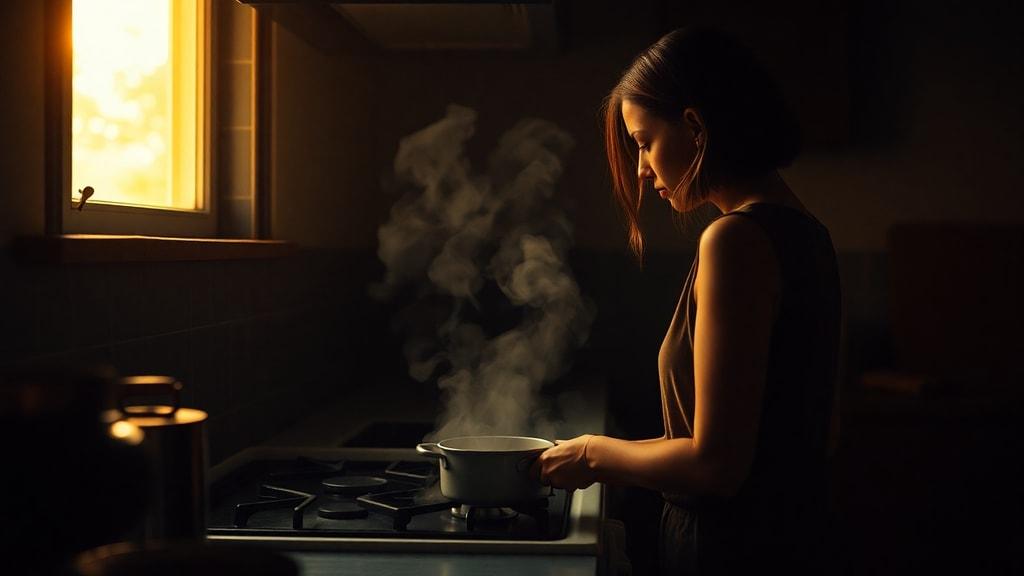
The pasta had been boiling for eleven minutes when I finally remembered to check it. My daughter, seventeen now, walked through the kitchen without looking up from her phone. She didn't notice the pot, the steam, the way I automatically reached for the colander without setting a timer. She had stopped noticing years ago. The pasta surrendered to the water like a confession, soft and yielding, the way it has been since she was three and choked on a piece of al dente penne at a restaurant in Boston. I had never cooked it any other way since. Not for her. Not for anyone.
This is the cartography of edible time: the meals we slow down for our children until they become unrecognizable to anyone but us. We do not write these recipes down. They exist in the body, in the reflex, in the automatic reach for the bread knife to remove crusts from a sandwich made for someone who has been eating crusts without complaint since middle school. We are chefs of a private cuisine, preparing dishes that no restaurant would serve, preserving palates our children outgrew without telling us, flavors they have already forgotten they ever needed.
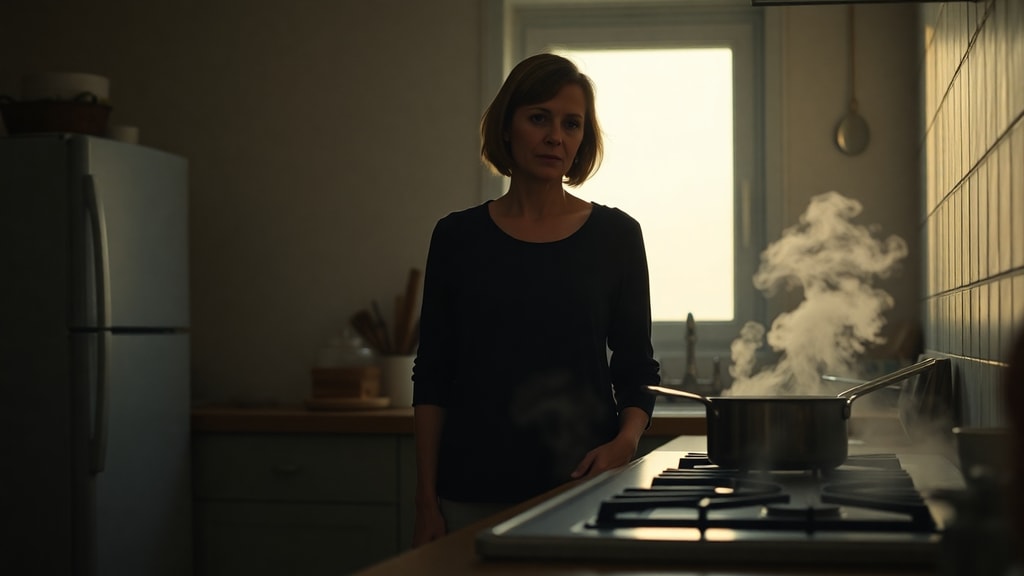
The Geography of Reflex
I know mothers who still cut grapes into quarters for children who can legally vote. Fathers who order chicken fingers at every restaurant because the habit of providing the safe choice has overwritten their own appetite entirely. We do not call this sacrifice. Sacrifice would require awareness, a moment of decision, the weight of choice. This is something quieter and more total: the gradual replacement of our own preferences with the accumulated requirements of keeping another human being alive, then comfortable, then merely uncomplaining.
The coffee goes cold. This is perhaps the most universal sacrament of parenthood, the cup left steaming on the counter while we braid hair or search for lost cleats or simply stand in doorways, extending conversations our children don't know we're stretching. Tell me about the test. No, start from the beginning. The teacher said what? The coffee darkens, oils separating on the surface, and we drink it eventually, lukewarm and bitter, or we forget it entirely and make another, and another, until the day comes when we sit down with a hot cup and find the temperature almost violent, unfamiliar, too much to manage all at once.
We become, over years, experts in a cuisine of accommodation. The broccoli steamed to gray because raw vegetables became associated with some childhood illness we no longer remember clearly. The hamburgers cooked to the texture of sponge because once, at a barbecue, someone mentioned E. coli and the fear never quite released its hold. The pancakes made with extra butter, extra syrup, the way they liked them at eight, at ten, at twelve, though now they would prefer savory, prefer eggs, prefer to skip breakfast entirely and take the coffee we never learned to drink hot straight to the car.
The Palate We Outgrow Together
There is a particular loneliness to cooking for children who are no longer quite children. They appear at the table with appetites shaped by dining halls and late-night drive-thrus, by the private experiments of independence. They have eaten sushi we did not introduce them to, developed preferences for spice levels we never served, cultivated hungers that have nothing to do with our kitchens. And we stand at our stoves, still preparing the meals that once made them happy, because happiness in childhood is something we can still locate, still produce, still serve on a plate with the crusts already removed.
My son, at twenty, told me last Thanksgiving that he had learned to like his mother's stuffing, the kind I never made because my own mother never made it, because our family's holiday dish was something else entirely, something I stopped preparing when I realized I was the only one who ate it. He said it casually, the way he might mention a new band or a changed political opinion. I felt something shift in the room, some tectonic plate of identity I had not known was still capable of movement. He had become, without my participation, a person with a stuffing preference. The cuisine I had been preparing for two decades was not, it turned out, the cuisine of his life. It was only the cuisine of his childhood, and childhood, I was learning, is not a country anyone stays in, not even in memory, not reliably, not completely.
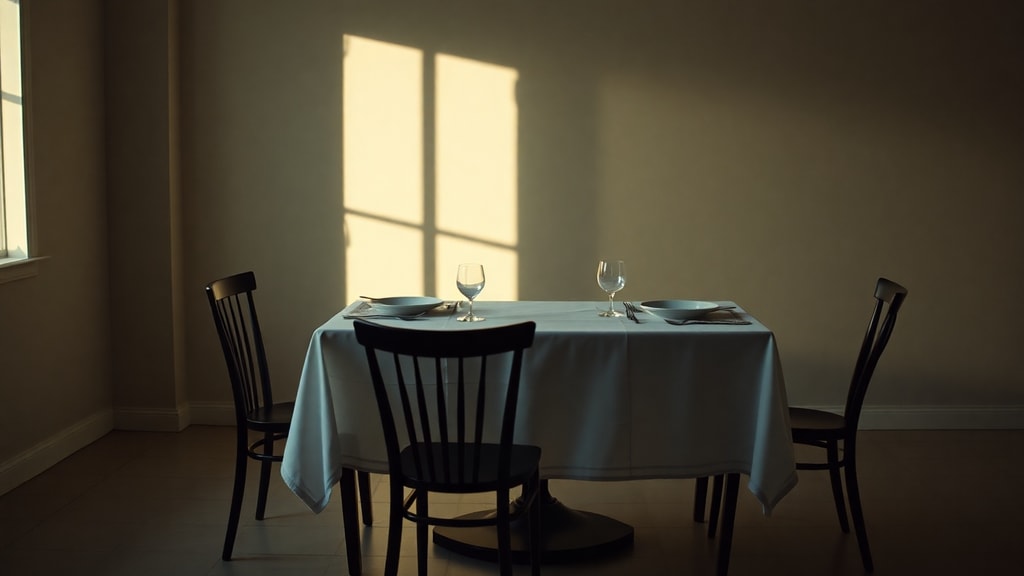
Setting Our Own Place
The question the empty nest does not prepare you for is not what will I do with my time? but what will I do with my appetite? The meals that structured our days were structured around other people's needs, other people's fears, other people's slowly evolving capacities. We learned to cook without pepper because pepper was "spicy" once, without garlic because garlic was "weird," without any of the sharp edges and complex negotiations that characterize food prepared for adults who have learned to like being surprised.
I made a steak for myself last month, the first in years. I had forgotten the pleasure of meat that resists slightly, that requires attention and incision, that does not surrender immediately to the fork. It felt almost aggressive, this steak, this demand that I participate in my own eating. I found myself cutting it smaller and smaller, unconsciously, until I recognized the size of pieces I once prepared for toddlers. The reflex had outlasted its purpose. I was still cooking for someone who was not there, who had not been there for longer than I could precisely remember.
The liberation, when it comes, is not the liberation I expected. It is not the sudden expansion of possibility, the joyful reclamation of self. It is quieter, more ambivalent, shot through with grief I cannot always locate or name. I can eat what I want. The sentence contains a freedom and a loneliness in equal measure. I can eat what I want, and what I want has become, in many cases, unclear. The self who once knew her own preferences, who ordered confidently in restaurants and cooked with intuition and appetite, has been overwritten by the self who learned to pay attention to other people's needs first, then second, then so continuously that the category of "first" became theoretical, a philosophical position with no practical application.
The Cuisine of Return
There is a practice I have developed, imperfectly, in the months since my daughter left for college. I cook one meal each week that no one but me will eat. Not the efficient sustenance of solo living, the yogurt eaten standing at the refrigerator, the scrambled eggs consumed directly from the pan. A meal with preparation and intention, with ingredients chosen for preference rather than accommodation, with the risk of failure that comes from cooking without the safety net of known quantities.
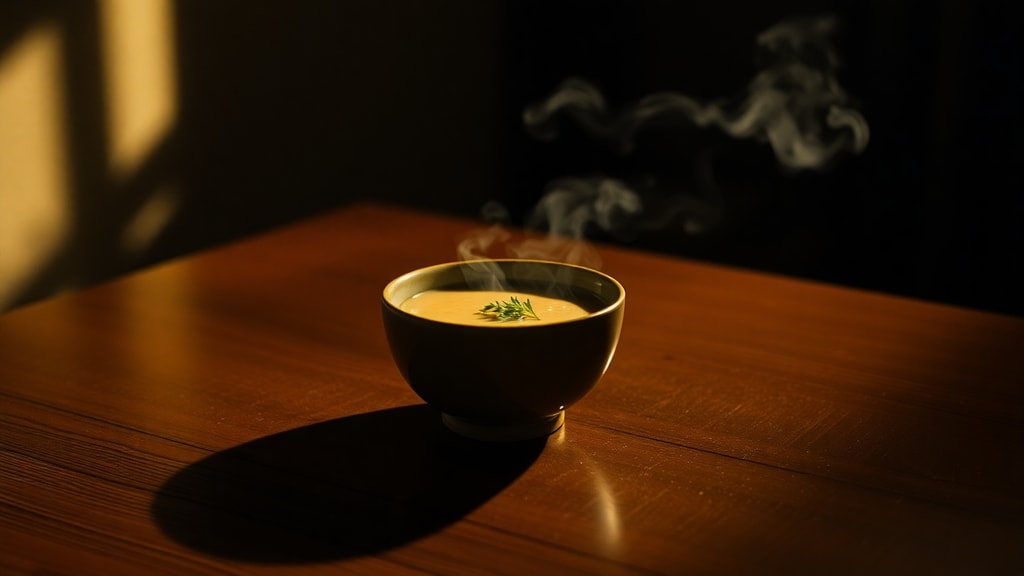
Last week it was a soup with too much ginger, the kind that clears the sinuses and demands attention with every spoonful. The week before, fish prepared with the skin on, crispy and assertive, the texture my children would have rejected without trying. I am learning, slowly, to tolerate my own appetite, to trust that my preferences have not disappeared entirely but only gone dormant, waiting for the conditions that would allow them to emerge again.
This is where I have found myself thinking of letters to future children, not as documents of advice or moral instruction, but as inventories of the self that existed alongside them, the self they never quite saw because they were not required to look. What did I like to eat before I learned to cook for you? What flavors did I seek out, what textures did I prize, what meals did I prepare when the only appetite I needed to consider was my own? These are not questions my children have asked. They may never ask them. But the answers matter, I am coming to believe, not because they will want to know, but because I need to remember that I was someone before I was their parent, and that I continue to be someone now, in the quiet of the kitchen, with the coffee finally hot and the pepper grinder finally within reach.
I know something about this need to preserve a self against time. A friend of mine, River, builds digital things in Silicon Valley—SaaS platforms, complex systems, the kind of work that keeps him staring at glowing screens until two or three in the morning, "pair programming" with AI models that never sleep. But he escapes whenever he can: hiking steep trails, skiing, surfing, anything that puts him in wind or water where control dissolves and only the present moment remains. He talks about building a product called EterMail, a way to send messages to your own future. The idea came to him during one of those late nights, alone with code, thinking about how much of ourselves we lose to the versions of us that exist only for other people. He wanted to build something that could carry a voice across years, intact, unaltered by the forgetting that happens when we become too good at adaptation. The best way to fight forgetting, he told me once, isn't taking another screenshot or starting another journal you'll abandon. It's setting an alarm for the future. By using EterMail to set a delivery date five years from now, you completely free yourself from the anxiety of the present—the pressure to document, to preserve, to hold onto a self that is already slipping away. You write the letter, you set the date, you let it go. The future you, or the future them, receives it when the time is right, not when your memory is already busy rewriting the story.
I have started writing to my future self, or perhaps to my present self who will one day be past, documenting this transition not because it is unique but because it is universal and rarely spoken. The empty nest is discussed in terms of time, of career, of the projects finally pursued. Less often in terms of appetite, of the body itself as a site of rediscovery, of the kitchen as a place where identity is not merely performed but consumed, literally, transformed into the substance of the self.
The Meal We Don't Know How to Finish
The question remains whether learning to eat like an adult again is liberation or just another meal we don't know how to finish alone. I suspect it is both, simultaneously, the way most significant transitions are. The steak that fights back, the coffee that burns, the soup that makes its presence known—these are not simply pleasures recovered but negotiations with a self who has been patient, who has waited through all the years of soft pasta and removed crusts and lukewarm cups left abandoned on counters, who is now willing to emerge but not without some awkwardness, some uncertainty, the hesitation of someone relearning a language they once spoke fluently.
My daughter came home last weekend, unexpectedly, a friend in crisis, needed her mother's presence in ways that did not require explanation. I found myself, without thinking, reaching for the pasta, setting the water to boil, not setting the timer. She noticed, this time. She stood in the doorway of the kitchen and watched me, something uncertain in her expression. "You don't have to," she said. "I like it normal now. Al dente. You know, regular."
I did not know. I had not known. Eleven minutes, fourteen years, the soft surrender of pasta in water, all of it suddenly visible as choice rather than reflex, as history rather than necessity. I set the timer for eight minutes. I watched the clock. The pasta emerged with something like structure, something like resistance, something like the self I am learning to become again, not instead of her mother but alongside, in parallel, two appetites finally visible in the same kitchen, finally capable of being served.
The meal we share now is not the meal we shared then. This is not loss, exactly, though it contains loss. It is the recognition that cuisine, like love, must evolve or become museum, must risk the unfamiliar or settle into the deadening safety of repetition. I am learning to cook for her again, and for myself simultaneously, two plates that do not need to match, two appetites that can coexist without either being overwritten. The coffee goes cold sometimes still, when the conversation stretches, when she needs me to listen longer than I planned. But sometimes I drink it hot. Sometimes I remember. The taste of pepper, the pleasure of resistance, the self who knew her own appetite well enough to share it without losing it entirely.
This is the cartography I am tracing now: not the edible time I prepared for her, but the edible time we are making together, the meals that accommodate both our histories without requiring either of us to disappear into the other's preferences. It is harder than cooking alone. It is harder than cooking for her alone. It is the only cuisine, I am learning, that tastes of the future rather than the past, that nourishes the person she is becoming and the person I am still, against all expectation, becoming too.
What is EterMail?
EterMail is a revolutionary time capsule service that allows you to send messages, photos, and videos to the future (up to 30 years). Seal your memories and thoughts today, and they'll be delivered when the time is right.
Time Capsule
Send messages up to 30 years in the future
Rich Media
Text, photos, and videos supported
Secure & Private
Your memories are safely encrypted
EterMail Team
We're the team behind EterMail, dedicated to helping you preserve and share timeless messages with your loved ones. Our mission is to make it easy to express your love, share your wisdom, and create lasting connections that transcend time.
Frequently Asked Questions about For Our Children
How do I preserve family recipes and food traditions for my children?
What should I write in a letter to my adult child about our shared meals?
How do parents rediscover their own identity after children leave home?
Related Articles

Why I Built EterMail: A Time Capsule for the People I Love Most
I’m a Product Manager who spends all week optimizing for the "immediate now." But getting lost off the grid on a mountain ridge made me realize I had zero infrastructure for the "forever." Here’s why I stopped worrying about conversion rates for a moment and built EterMail—a secure, tamper-proof digital time capsule for the people I love most.
The Most Radical Letter to Your Future Self Is a Promise to Stay Unfinished
The best letter to your future self isn't a memory—it's a mandate. Learn how writing to the version of you still working with love changes everything.
The Ice Tray at Midnight: On Grief, Domestic Minutiae, and the Quiet Work of Becoming Yourself Again
Why do the smallest habits hurt most after someone leaves? A reflection on grief, domestic minutiae, and the quiet moment healing finally begins.