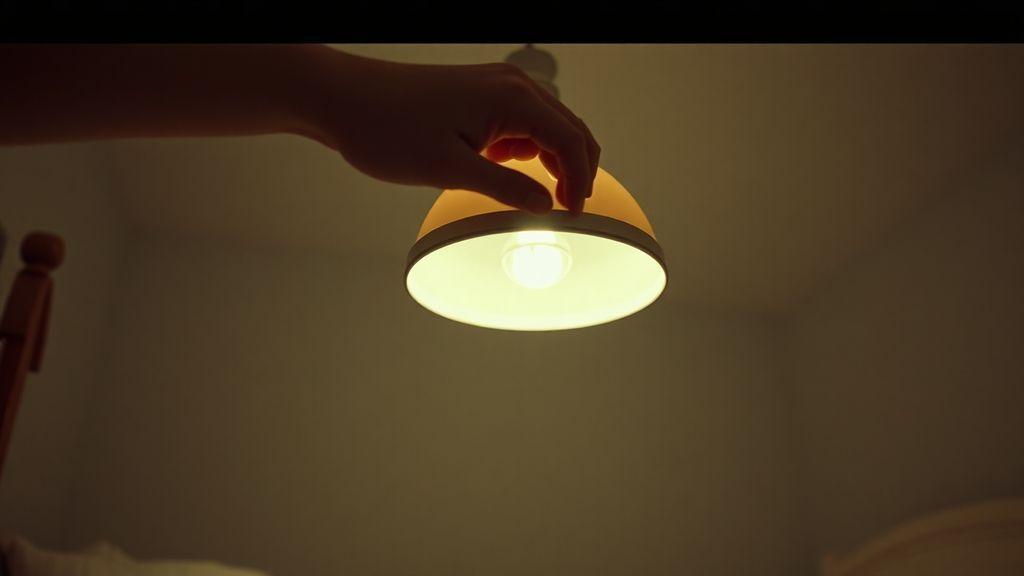
The Performance Begins Without Rehearsal
You never decide to become an actor. The role finds you in the tremor of a chandelier at 2:47 AM, when the earthquake rolls through like a train passing too close to the house. Your daughter is three. She wakes crying. You have already moved—across the room, one hand on the swaying light fixture, the other reaching for her. You are humming something. You don't know what. Your heart is a trapped bird against your ribs, but your voice is steady, steady, steady. The performance has begun.
This is the physics of inherited fear: we absorb the shock so they don't have to. We become the buffer between our children and the world's unsteady ground. The hand that steadies the chandelier. The practiced calm of checking a strange noise at 3 AM with a baseball bat we don't know how to swing. The lie we tell about the dog's limp being "nothing" while scheduling the vet appointment in the bathroom, door locked, voice lowered to a whisper.
We learn this choreography in moments, not years. There is no manual for how to hide terror in the same drawer where we keep the flashlights and the will.
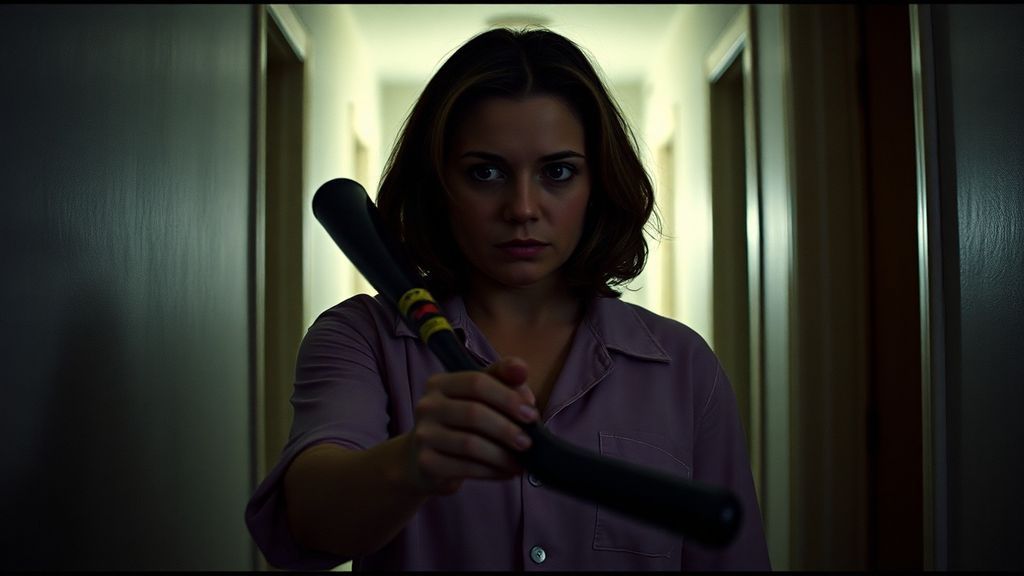
The Architecture of the Lie
Children are born with extraordinary instruments for detecting falseness. They can smell anxiety through deodorant, hear the tremor in a bedtime story, feel the way a hug lasts three seconds too long. And yet—we persist in the construction. We build elaborate scaffolding around their innocence, knowing full well it cannot hold forever.
My friend Elena told me about the year her husband lost his job. She described the morning routine: coffee made at the usual time, lunches packed with the usual notes, her voice carefully modulated to "Tuesday normal" even as she calculated which bills could wait and which could not. Her son was seven. He noticed nothing, she thought, until six months later when he drew their family at school. In the picture, his mother had no mouth.
We mistake their silence for ignorance. We believe that because they cannot name what they sense, they do not sense it at all. But children collect our unspoken fears like pollen on their sleeves. They carry them into adulthood, sometimes recognizing the source only decades later when they find themselves humming nursery rhymes during their own earthquakes.
The architecture of parental protection is built on a paradox: we hide our fear to teach them courage, but in hiding it, we may also teach them that courage means feeling nothing at all.
When the Drawer Opens
There comes a moment—inevitable, though we pray otherwise—when the performance cracks. The vet calls back while you're still in the kitchen. The diagnosis arrives during dinner. They are old enough now to read the silence between your words, to see the hand that still shakes after the chandelier stops moving.
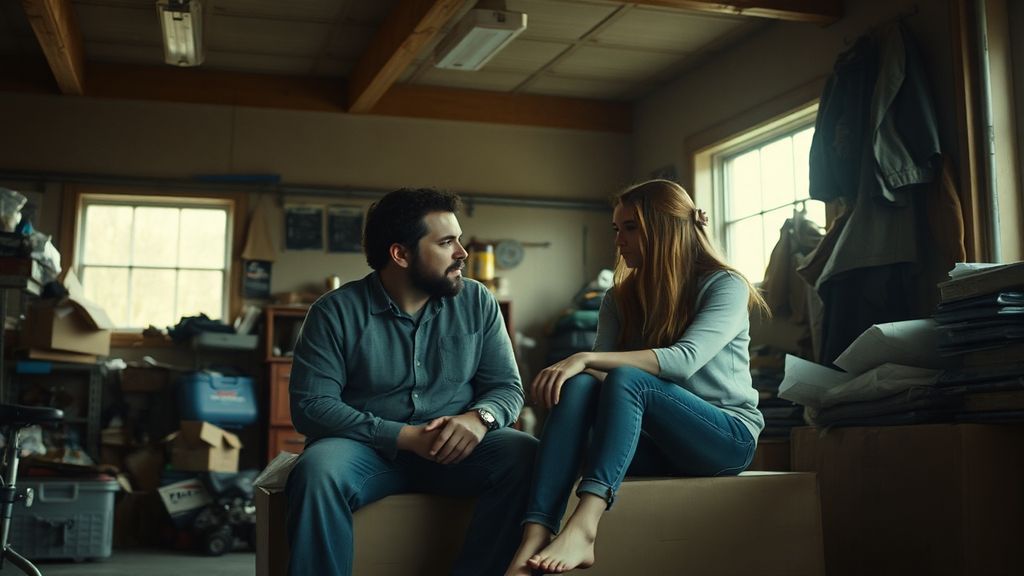
My daughter was eleven when she found me crying in the garage. I had no script prepared. No practiced calm to deploy. She stood in the doorway with her backpack still on, having walked home from the bus stop through October rain, and she saw me: forty-three years old, unemployed for four months, holding a rejection email and unable to stop the sound coming from my throat.
"I thought you weren't scared of anything," she said.
What we owe them in that moment is not a recovery of the performance. Not a quick wipe of the eyes and a manufactured smile. What we owe them is the truth we have been protecting them from: that courage was never the absence of fear. That we have been afraid every single day, and we chose—choose—to move forward anyway.
The drawer opens. The flashlights scatter. The will, water-stained and outdated, sits exposed among batteries and rubber bands and the accumulated debris of a life spent preparing for emergencies that arrived anyway.
The Inheritance We Cannot Control
Here is the cruel mathematics of parenting: we cannot choose what they inherit. We can only choose what we document. The fear we hide becomes part of their emotional genome, expressed or suppressed, recognized or buried. The courage we practice in their presence—imperfect, trembling, real—becomes their template for responding to their own unsteady ground.
I think of my mother now, twenty years after her death, understanding things I could not see while she lived. The way she never learned to swim, but waded into lakes with us anyway, holding our hands above the drop-off where she could not stand. The way she drove through blizzards to visit colleges, her knuckles white on the wheel, singing along to radio static. I inherited her fear of water, her terror of winter roads. I also inherited—though it took decades to recognize—her capacity to move through fear without waiting for it to dissolve.
What would I have wanted her to tell me? Not that she was unafraid. Not that the water was safe or the roads were clear. Something more honest. Something that acknowledged the performance while revealing its purpose.
Writing What We Cannot Yet Speak
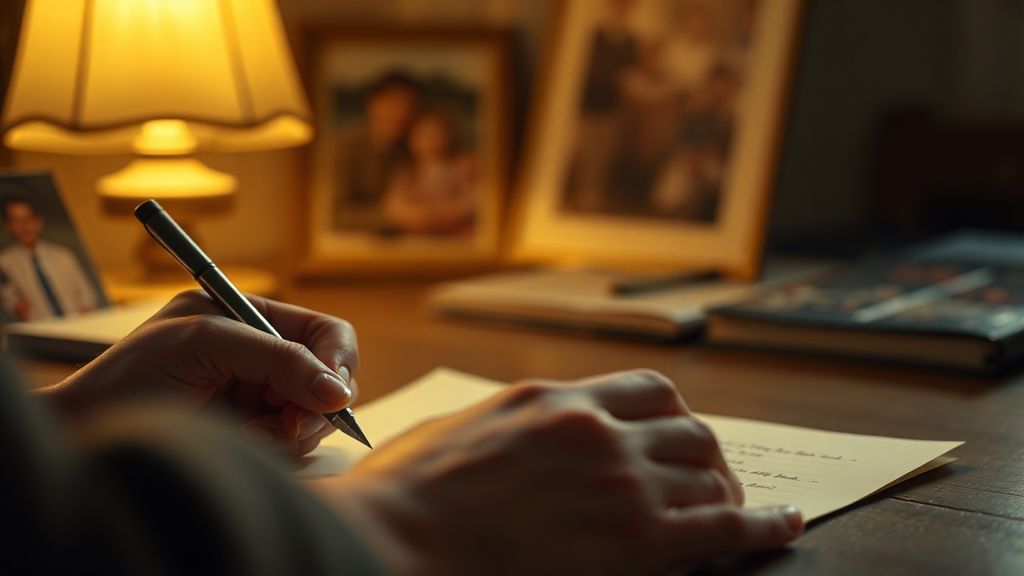
There are conversations we are not ready to have. Fears we cannot yet name to the faces that trust us. This is where the letter becomes essential—not as replacement for the difficult moment, but as preparation. As promise. As the beginning of honesty we will complete when they are ready to hear it.
A letter to a future child allows us to write from the center of our fear without needing to moderate our voice for their present ears. We can describe the chandelier's tremor while it is still trembling. We can admit that we do not know how to swing the baseball bat, that we learned the stance from movies, that our hands sweat against the wood. We can tell them what we hope they will inherit and what we hope they will leave behind.
The letter is where the performance ends and the truth begins. Not because we abandon our role as protectors, but because we expand its definition. Protection becomes not the hiding of fear, but the transmission of context. Here is what I felt. Here is why I hid it. Here is what I hope you will feel differently, and what I hope you will feel the same.
The Courage of Being Seen
My daughter is sixteen now. We have talked, finally, about that afternoon in the garage. She remembers it differently than I do—remembers not my weakness but my recovery, the way I looked at her and said, "I'm scared, and I'm still here." She has her own chandelier moments now. College applications. A pandemic-shaped adolescence. The particular terrors of being young in a world that feels increasingly unstable.
She does not hide her fear from me. This is the inheritance I could not have planned: not courage as performance, but courage as conversation. The willingness to be seen afraid, and to keep moving anyway.
I have written her letters for future birthdays, for moments I may not witness. Not because I expect to be absent, but because I want her to have my voice unfiltered by the need to be strong in her presence. In these letters, I describe the fears I still carry. The ways I failed to hide them. The ways I hope she will be braver than I was—not by feeling less, but by speaking sooner.
What We Leave in the Drawer
The drawer will outlast us. The flashlights will corrode. The will, updated finally, will be executed by hands we cannot imagine. But something else remains: the record of our fear and our choice, documented not as shameful secret but as essential inheritance.
Our children do not need us to be unafraid. They need us to be honest—eventually, when they are ready, when the performance has served its purpose of buying them time. They need to know that the hand which steadied the chandelier was shaking. That the humming was a spell we cast on ourselves. That courage is not the absence of fear but the decision to hide it only until hiding it no longer serves them.
The physics of inherited fear works in both directions. We absorb the shock for them, and then—if we are careful, if we are brave enough to be seen—we teach them to build their own shock absorbers. Not from denial, but from recognition. From the hard-won understanding that the world is unsteady, that we are afraid, and that we continue anyway.
This is the letter I am still writing. The one that says: I was scared. I hid it well, and I hid it poorly. I am scared still. Here is what I hope you learn faster than I did. Here is what I hope you never need to know.
The chandelier trembles. The earthquake passes. We keep humming, keep steadying, keep reaching—until the moment comes to open the drawer and show them everything we kept inside.
I spend my nights building systems that outlast me. Not code for code's sake, but bridges—between who I am at 2 AM, alone with the glow of a screen, and who my daughter might need me to be when she's thirty, sorting through whatever I left behind. When I started EterMail, I wasn't thinking about features or market fit. I was thinking about the letters I wanted to write but couldn't yet send. The ones that needed to wait until she was old enough to understand why I checked her window three times before bed, why I never learned to swim but waded in anyway. The best way to fight forgetting isn't taking another screenshot; it's setting an alarm for the future. By using EterMail to set a delivery date 5 years from now, you completely free yourself from the anxiety of the present.
What is EterMail?
EterMail is a revolutionary time capsule service that allows you to send messages, photos, and videos to the future (up to 30 years). Seal your memories and thoughts today, and they'll be delivered when the time is right.
Time Capsule
Send messages up to 30 years in the future
Rich Media
Text, photos, and videos supported
Secure & Private
Your memories are safely encrypted
EterMail Team
We're the team behind EterMail, dedicated to helping you preserve and share timeless messages with your loved ones. Our mission is to make it easy to express your love, share your wisdom, and create lasting connections that transcend time.
Frequently Asked Questions about For Our Children
What should I write in a letter to my future child about my fears and struggles?
How do I prepare my children for a world I know is uncertain and sometimes frightening?
When is the right time to stop hiding my fears from my children?
Related Articles
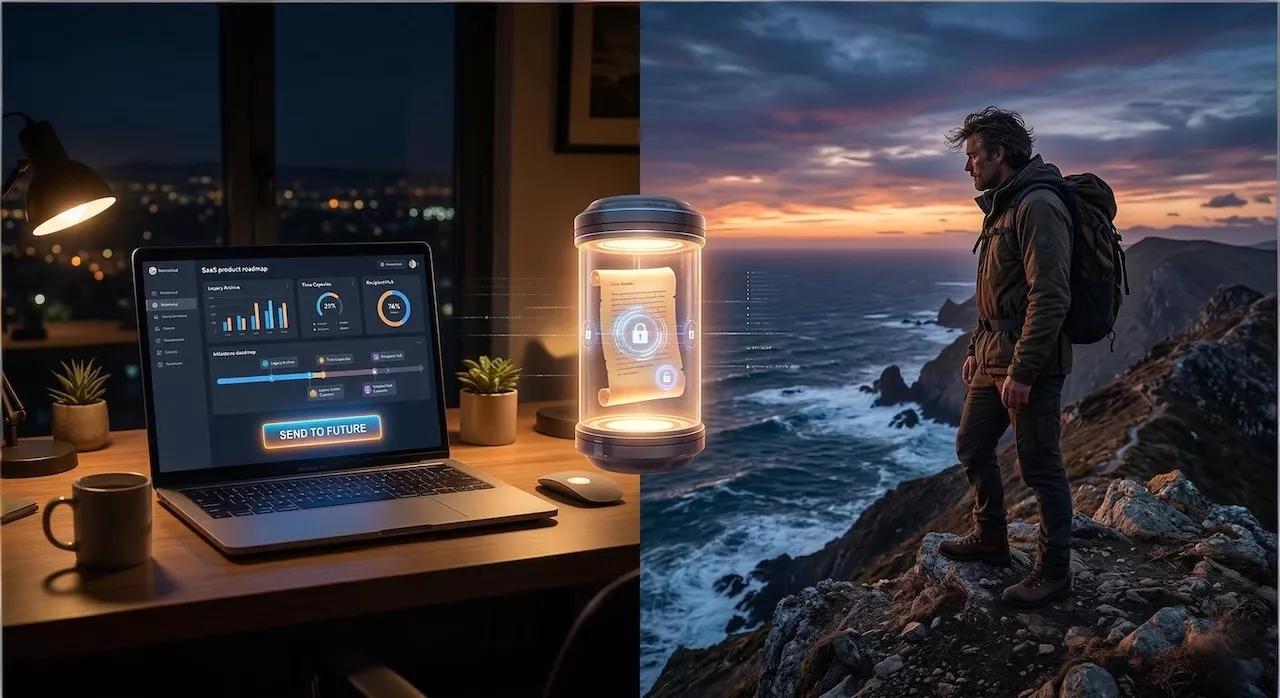
Why I Built EterMail: A Time Capsule for the People I Love Most
I’m a Product Manager who spends all week optimizing for the "immediate now." But getting lost off the grid on a mountain ridge made me realize I had zero infrastructure for the "forever." Here’s why I stopped worrying about conversion rates for a moment and built EterMail—a secure, tamper-proof digital time capsule for the people I love most.
The Most Radical Letter to Your Future Self Is a Promise to Stay Unfinished
The best letter to your future self isn't a memory—it's a mandate. Learn how writing to the version of you still working with love changes everything.
The Ice Tray at Midnight: On Grief, Domestic Minutiae, and the Quiet Work of Becoming Yourself Again
Why do the smallest habits hurt most after someone leaves? A reflection on grief, domestic minutiae, and the quiet moment healing finally begins.