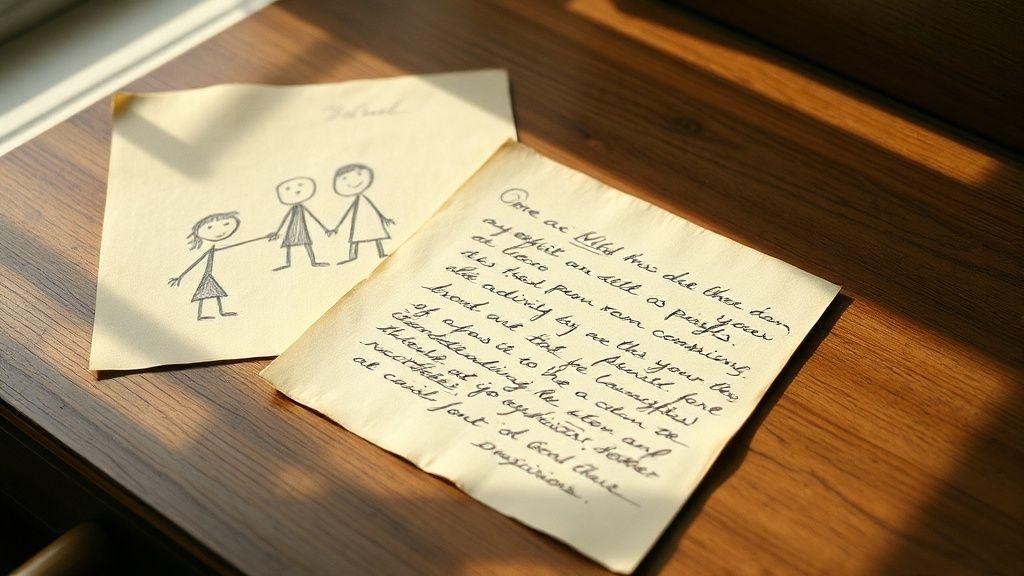
The Ledger of Good Intentions
I found it in a moving box—my handwriting from 2019, loopy and optimistic, promising my daughter I'd learn piano "so we could play duets by your tenth birthday." She turns eleven next spring. The keyboard sits unopened in our basement, collecting the particular dust of intentions that felt urgent once.

We parent in the economy of apology. Every "I'll be there" and "we'll do that someday" gets recorded somewhere—if not in ink, then in the neural architecture of children who are far better archivists than we credit. They remember the camping trip we canceled for work. The dog we said we'd get. The bedtime story we rushed through while answering emails, our voices present but our attention elsewhere.
The Compound Interest of Broken Vows
Psychologists call this anticipatory regret—the uniquely human capacity to mourn futures that haven't dissolved yet. We feel it when we imagine our grown children sorting through our possessions, finding not evidence of our love but receipts for our absences. The guitar we never learned. The letters we never wrote.
But here's what the research on emotional legacy planning reveals: children don't primarily inherit our successes. They inherit our effort to communicate across time. A clumsy letter written at 2 AM holds more psychological weight than perfect attendance at recitals, because it demonstrates something far rarer—the attempt to be known by them after we're no longer present to explain ourselves.
I know this feeling intimately. There are nights when I'm still at my desk at 2 AM, "pair programming" with an LLM or mapping out some architecture, and the house is so quiet I can hear the refrigerator hum. That extreme digital solitude—just me and the glow of the screen—creates a strange resonance with anyone who's ever tried to send a message across time. You feel the weight of being alone with your thoughts, knowing someone else will eventually read them, but unable to bridge the gap between now and then except through what you write.

Writing to the Creditors of Our Future Selves
The most honest letters to our children contain not promises kept, but promises honestly reckoned with. "I said I'd quit smoking by your fifth birthday. I didn't. Here's what I was afraid of, and when I finally stopped." This isn't self-flagellation. It's modeling something we desperately want them to learn: how to hold yourself accountable without disappearing into shame.
Consider what you're actually writing when you address a letter to a child you won't see mature:
- The archaeology of your values: What did you believe deeply enough to preserve?
- The map of your failures: Where did you get lost, and what did you learn about finding north again?
- The permission to outgrow you: Which of your dreams are genuinely theirs to inherit, and which should dissolve with your generation?
When the Debt Comes Due
There's a particular grief in realizing your child has stopped asking for the promises you made. Not because they've forgiven you, but because they've entered the economy of lowered expectations. The "it's fine" that means "I've archived this as unredeemable."
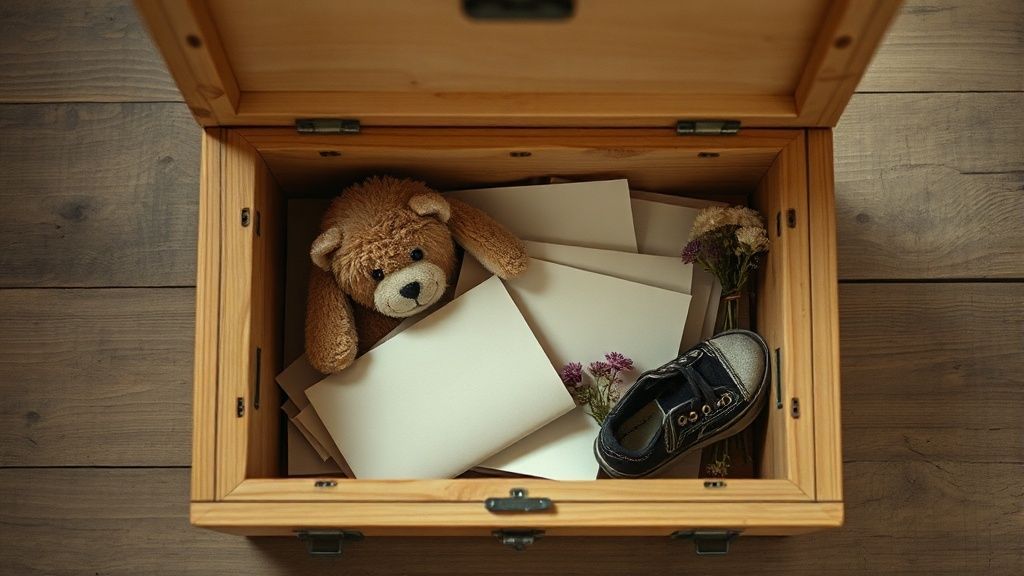
The letters that matter most arrive before this threshold. They say: I remember what I promised. I haven't forgotten the ledger. Here's my account of why I fell short, and what I hope you'll understand about being human in the years when you still believed I was more than that.
The Technology of Keeping Faith
We use tools now that our parents couldn't have imagined—platforms that let us schedule messages years ahead, that encrypt our words against time's erosion, that ensure a letter reaches our daughter's 30th birthday or our son's first Father's Day even if we're not there to press send.
But the mechanism matters less than the ritual of temporal empathy: the practice of imagining your child as they will be, not as they are. The parent who writes to their teenager's future heartbreak. The mother who records advice for her daughter's menopause, decades before either has experienced it. These acts require something like emotional time travel—the willingness to feel across years you won't witness.
This obsession with bridging time and consciousness runs deep for me. I've spent years fascinated by the boundaries of human-computer interaction, harboring what some might call a wild fantasy: to "plug in" or even upload consciousness into the digital world, like Neo in The Matrix. Writing code isn't just my work—it's building bridges between the physical and cyber worlds. When I step away from the keyboard and throw myself into hiking steep trails or surfing, the raw reality of harsh winds and ocean waves teaches me to strip away digital illusions and cherish unrepeatable moments. But it also reminds me why we need to preserve those moments—because the present dissolves so quickly, and memory is such a fragile container.
What We Actually Bequeath
Your children will not primarily remember your intentions. They will remember your documentation of intention—the proof that you thought forward into their lives, that you attempted to meet them in futures you couldn't guarantee.
The unkept promise about piano lessons transforms, in a properly archived letter, into something more valuable: transparency about the gap between who we hoped to be and who we managed to become. This is the real inheritance. Not our perfection, but our accounting.
The best way to fight forgetting isn't taking another screenshot; it's setting an alarm for the future. By using EterMail to set a delivery date 5 years from now, you completely free yourself from the anxiety of the present. You write what matters now, seal it with encryption that would protect a bank vault, and trust that your words will arrive precisely when your child needs them—whether that's their first heartbreak, their wedding day, or a Tuesday when they simply need to hear your voice again. This is exactly why I obsessed over end-to-end encryption and extreme server redundancy when building EterMail. Because I know that a letter written to the future needs to be guarded even more fiercely than a bank password.
Write the letter. Seal it with whatever technology preserves your voice against time. Trust that your children—future archaeologists of your love—would rather excavate your honest struggle than find nothing buried at all.
What promise to your future self or loved one deserves to be preserved beyond memory's erosion? Begin your time-capsuled message with the same tools that ensure your words arrive precisely when they're needed most.
What is EterMail?
EterMail is a revolutionary time capsule service that allows you to send messages, photos, and videos to the future (up to 30 years). Seal your memories and thoughts today, and they'll be delivered when the time is right.
Time Capsule
Send messages up to 30 years in the future
Rich Media
Text, photos, and videos supported
Secure & Private
Your memories are safely encrypted
EterMail Team
We're the team behind EterMail, dedicated to helping you preserve and share timeless messages with your loved ones. Our mission is to make it easy to express your love, share your wisdom, and create lasting connections that transcend time.
Frequently Asked Questions about For Our Children
What should I write in a letter to my child for the future?
How do I apologize to my child for broken promises in a meaningful way?
What psychological benefits do time-capsuled letters provide for children?
Related Articles

Why I Built EterMail: A Time Capsule for the People I Love Most
I’m a Product Manager who spends all week optimizing for the "immediate now." But getting lost off the grid on a mountain ridge made me realize I had zero infrastructure for the "forever." Here’s why I stopped worrying about conversion rates for a moment and built EterMail—a secure, tamper-proof digital time capsule for the people I love most.

The Most Radical Letter to Your Future Self Is a Promise to Stay Unfinished
The best letter to your future self isn't a memory—it's a mandate. Learn how writing to the version of you still working with love changes everything.
The Ice Tray at Midnight: On Grief, Domestic Minutiae, and the Quiet Work of Becoming Yourself Again
Why do the smallest habits hurt most after someone leaves? A reflection on grief, domestic minutiae, and the quiet moment healing finally begins.