The Midnight Bicycle
The chain slipped at 11:47 PM.
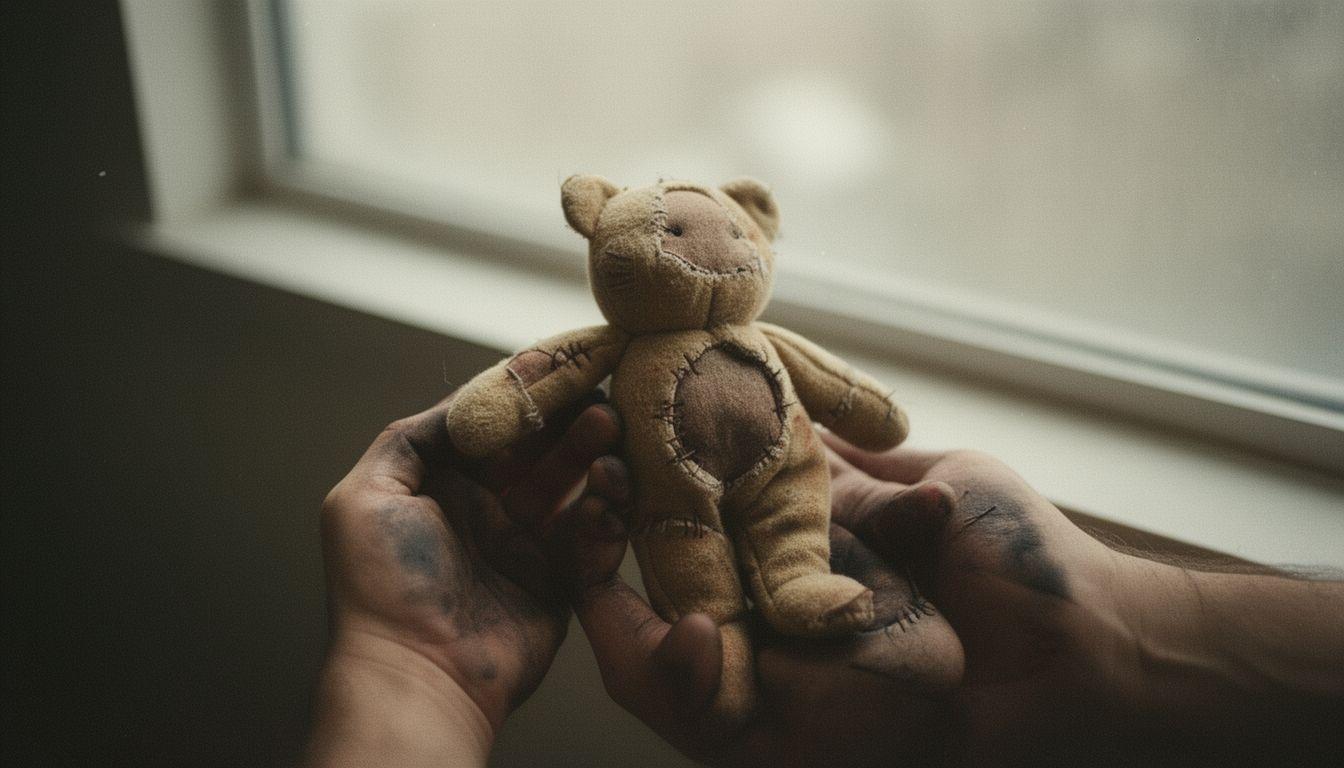
My daughter had forgotten to mention—until bedtime, naturally—that her bike was "making a weird sound" and she needed it for the morning, for the group ride to school, for the thing that suddenly mattered more than anything had ever mattered before. So there I was in the garage, grease under my fingernails, YouTube tutorials playing on half-volume, trying to remember how derailleurs worked while the rest of the house slept.
This is not about bicycles.
It is about the vocabulary we build without words. The way a father at midnight, cursing softly, aligning gears by the weak light of a phone flashlight, is saying something his daughter may not hear for another twenty years. Something about showing up. Something about persistence. Something about the belief that broken things can be made whole again—not perfect, not new, but functioning, continuing, enough.
We fix things for our children because we cannot fix the larger brokenness they will inevitably face. We cannot mend their first heartbreak, their betrayals by friends, their disappointments with their own limitations. But we can grease a chain. We can sew a seam. We can hold their fractured worlds together in small, tangible ways and hope they notice the pattern.
The Emergency Surgery of Stuffed Animals
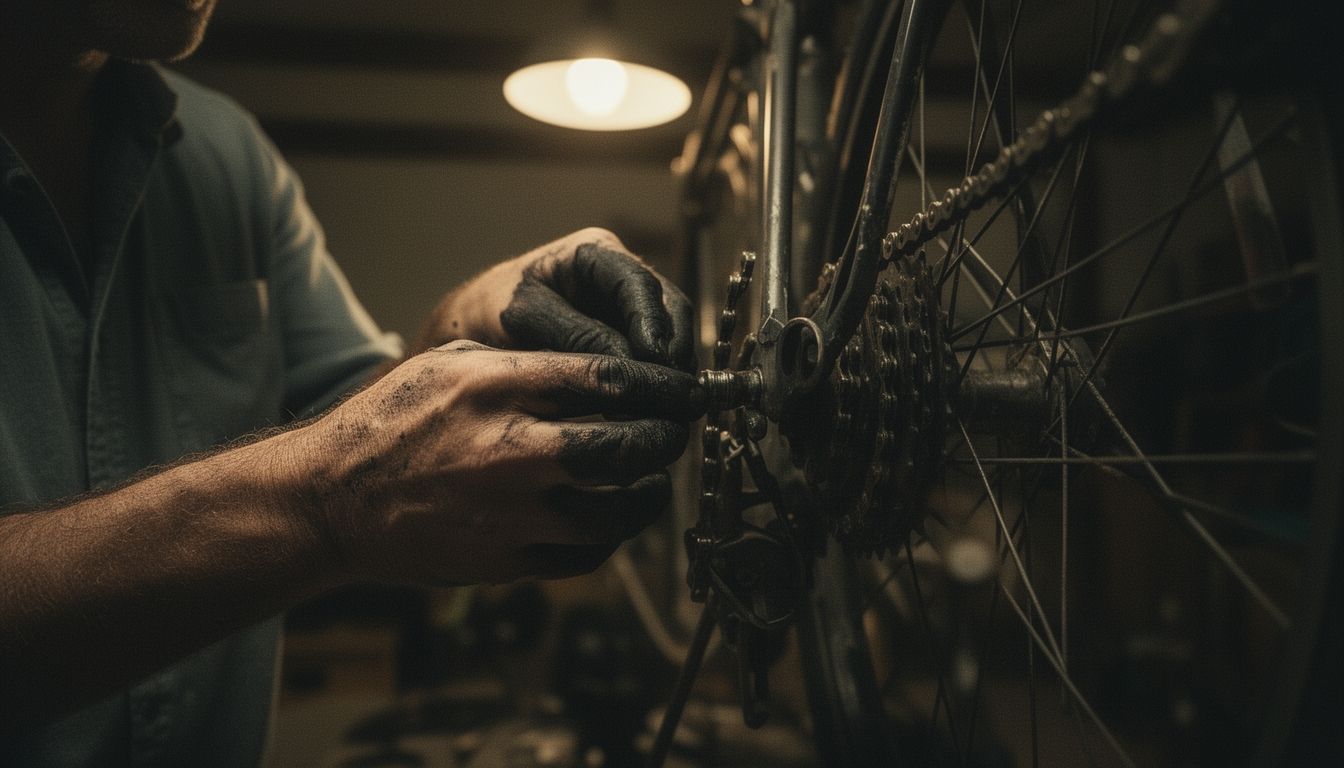
Every parent who has performed midnight surgery on a beloved stuffed animal knows the ritual. The child, finally asleep after tears and negotiation, leaves the patient on the kitchen table. You emerge with needle and thread—often the wrong color, often visible, always visible—and you stitch with more care than the situation technically requires.
The scar is the point.
My son's rabbit, now fourteen years old and technically his, though it sits on a shelf in my office, carries a constellation of repairs. The left ear, reattached after a dog incident. The eye, replaced with a button that doesn't quite match. The abdomen, opened twice to extract swallowed objects, closed with increasingly desperate stitching that resembles Frankenstein's amateur efforts more than surgical precision.
He used to run his finger along these seams. Not hiding them. Tracing them. As if reading Braille. As if the damage and the repair together told him something about survival he couldn't articulate.
There is research, though I distrust research about love, suggesting that children with "transitional objects"—the psychologists' cold term for what we know as the irreplaceable—develop capacities for self-soothing and emotional regulation. But the research misses the parental side. We do not merely provide these objects. We maintain them. We become the keepers of their continuity, the archivists of their damage, the guarantors that what has been loved can survive being loved imperfectly, violently, completely.
The Packing Tape Philosophy
Then comes the phase we do not anticipate.
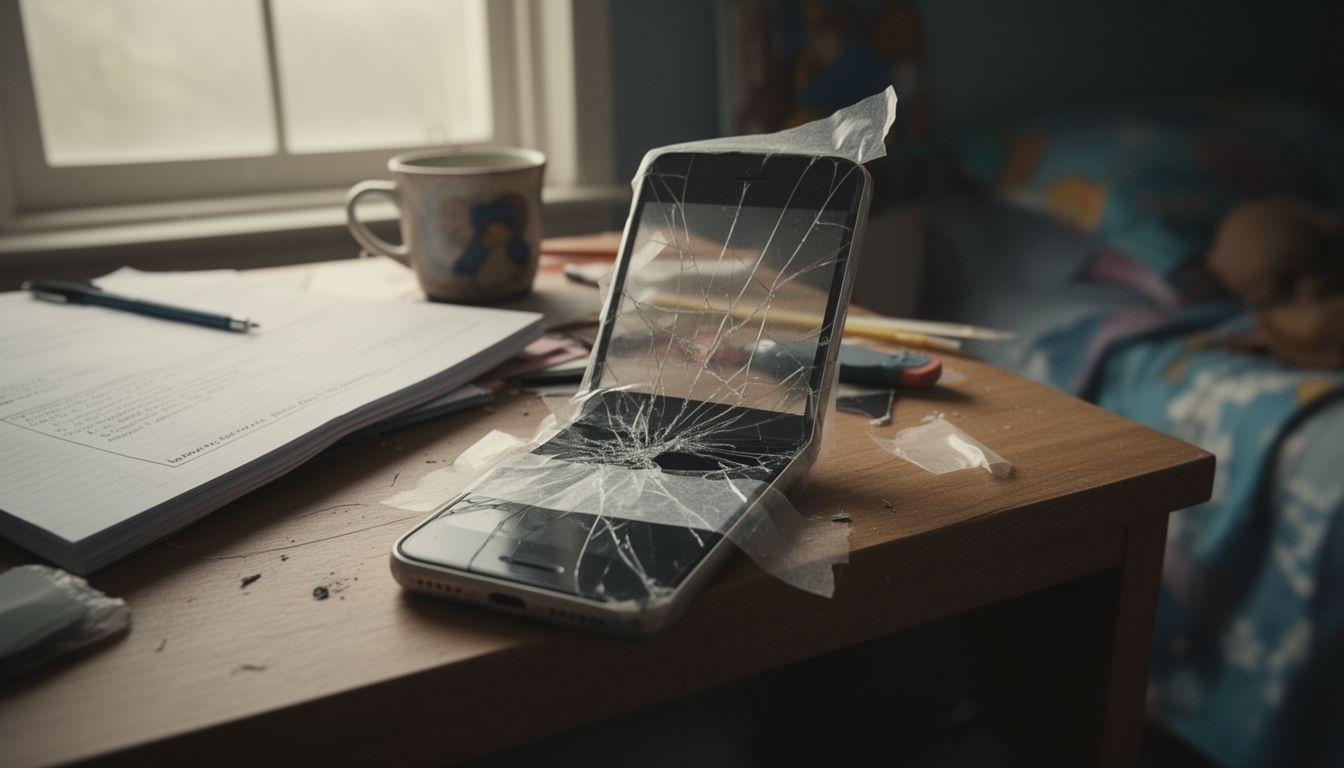
The phone screen held together with packing tape. The laptop hinge shimmed with folded cardboard. The shoes worn past reasonable replacement because "they're fine, Mom, stop." Our children enter adolescence and suddenly our offers to fix things are received as intrusions. Our competence becomes suspect. Our care, interpreted as control.
This is where the vocabulary fails us.
We have spent years building a language of repair. We have demonstrated that we will show up, that we will try, that brokenness is not final. And now they choose brokenness. They choose the cracked screen they can live with. They choose the friendship we can see is damaging. They choose the version of themselves they are still assembling, which includes parts we would smooth or sand or replace if we were permitted.
The hardest lesson of parenthood is not learning to fix things. It is learning to witness brokenness without intervening. To recognize that our children's relationship with damage must become their own. That the packing tape they apply—or refuse to apply—is now their statement, not ours.
The Archive of Attempts
I have started keeping what I call the Museum of Failed Repairs. The dollhouse roof that never quite seated properly after the fall. The jacket zipper I replaced upside-down. The science project volcano that erupted with baking soda and regret. These objects sit in a box in the basement, not because they function, but because they attempted.
This is the legacy we actually leave.
Not the things we fixed perfectly. Not the seamless repairs that left no trace. The legacy is the trying. The being present for the breaking. The willingness to make ourselves responsible for continuity in a world that discards so easily.
I think sometimes about what my children will remember. Not the instructions I gave, the corrections, the anxieties I communicated about their futures. I think they will remember the garage at midnight. The rabbit on the operating table. The way I looked at broken things and saw possibility rather than endpoint.
When the Tools Change
There are repairs now that happen in digital spaces. The lost document recovered from cloud storage. The deleted photo restored from backup. The message unsent, or sent, or scheduled to arrive years later when we are gone and they are older and perhaps ready to hear what we could not say while present.
This is where the ancient impulse meets new possibility.
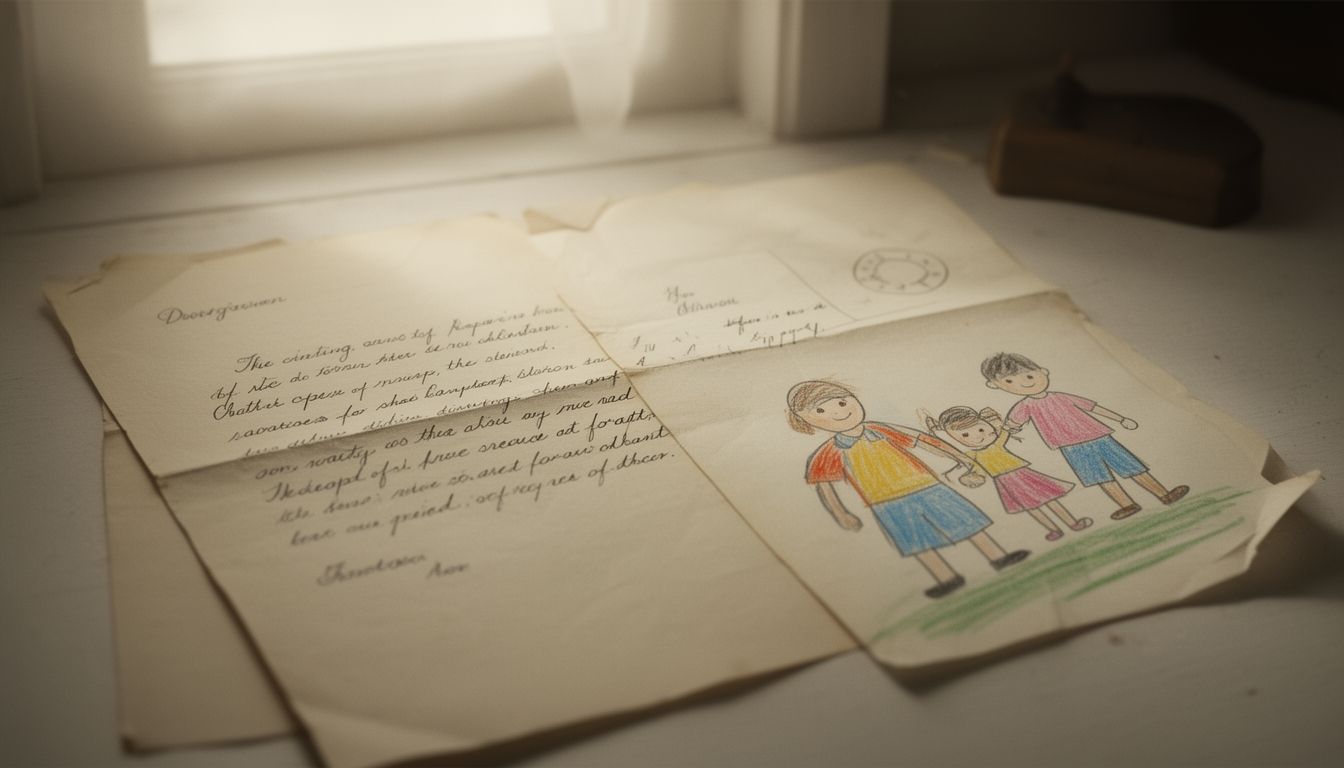
The desire to reach across time—to fix, in advance, what we cannot fix in person—has found new forms. We can write letters that arrive on eighteenth birthdays, on wedding days, on mornings when we know they will need something we cannot give in real-time. We can build time capsules of voice and image that say: I was here. I thought of you. I tried to prepare you for what comes next.
I spend my nights differently now than I did in that garage. Instead of grease and gears, I'm usually at my desk until 2 or 3 AM, "pair programming" with various AI models, mapping out architectures for systems that don't yet exist. That extreme digital solitude—just me and a glowing screen while the world sleeps—gave me a strange resonance with the idea of dialogues across time. Of speaking into the void and trusting someone, someday, will hear. Of building bridges between now and later, between what I can say and what they might need to hear.
The technology changes. The impulse remains. We are still the ones who grease chains at midnight, who stitch what has torn, who believe that what matters can survive damage if someone cares enough to attempt repair.
The Permission to Break
Here is what I am learning, slowly, with resistance: there comes a moment when the greatest repair we can offer is our acceptance of their brokenness. When we stop trying to fix the friendship, the career uncertainty, the version of themselves they are still becoming. When we recognize that our love must become spacious enough to include their damage without our intervention.
This is not abandonment. It is the final, most difficult translation of our midnight garage vocabulary. We are saying: I see your cracks. I will not fill them. I trust you to find your own light through.
The rabbit with its mismatched eye sits on my shelf. My son, now grown, has stopped tracing its scars. He has his own now, visible and invisible, which he does not show me. I have learned not to ask. I have learned that love, at its most mature, is the holding of space rather than the application of technique.
But I have also written him letters. Scheduled for moments I may not witness. Words that attempt what my hands no longer can—to reach across time, to offer something like repair in advance, to say what the grease stains and the emergency surgeries always meant but never spoke aloud.
I built EterMail for exactly this. Not because I trust technology more than I trust my own presence, but because I know how easily the present devours our best intentions. The letter I mean to write tomorrow becomes the letter I never write. The words I save for "the right moment" dissolve into busyness and forgetting. So I sat with those same AI models at 2 AM, obsessing over end-to-end encryption and extreme server redundancy, because I know that a letter written to the future needs to be guarded even more fiercely than a bank password. I wanted to build something that would outlast my own fragility—my tendency to procrastinate, my fear of saying too much, my mortality. Something that would let me be present in my children's lives even when I cannot be present in their rooms.
We fix what we can. We write what we cannot fix. We learn, finally, to love what remains broken.
What is EterMail?
EterMail is a revolutionary time capsule service that allows you to send messages, photos, and videos to the future (up to 30 years). Seal your memories and thoughts today, and they'll be delivered when the time is right.
Time Capsule
Send messages up to 30 years in the future
Rich Media
Text, photos, and videos supported
Secure & Private
Your memories are safely encrypted
EterMail Team
We're the team behind EterMail, dedicated to helping you preserve and share timeless messages with your loved ones. Our mission is to make it easy to express your love, share your wisdom, and create lasting connections that transcend time.
Frequently Asked Questions about For Our Children
How do I write a meaningful letter to my child for them to read in the future?
What should parents preserve for their children's future memories?
How do I let go of fixing my adult children's problems?
Related Articles

Why I Built EterMail: A Time Capsule for the People I Love Most
I’m a Product Manager who spends all week optimizing for the "immediate now." But getting lost off the grid on a mountain ridge made me realize I had zero infrastructure for the "forever." Here’s why I stopped worrying about conversion rates for a moment and built EterMail—a secure, tamper-proof digital time capsule for the people I love most.

The Most Radical Letter to Your Future Self Is a Promise to Stay Unfinished
The best letter to your future self isn't a memory—it's a mandate. Learn how writing to the version of you still working with love changes everything.
The Ice Tray at Midnight: On Grief, Domestic Minutiae, and the Quiet Work of Becoming Yourself Again
Why do the smallest habits hurt most after someone leaves? A reflection on grief, domestic minutiae, and the quiet moment healing finally begins.