
The 6:47 AM Ritual
Every morning at 6:47, her thumb finds the weather app before her eyes fully open. Not for the city where she wakes—where the fog rolls predictably off the bay and the morning news delivers the same gray forecast she's dressed for since October. She swipes left, past the local hourly, past the air quality index she ignores, to a pin she dropped three time zones east. There, the sun has already climbed above a skyline she hasn't walked in fourteen months. Seventy-three degrees. Ten percent chance of precipitation. She notes this with the same attention she once gave to his actual breathing beside her.
We have become amateur meteorologists of other people's lives. Not the dramatic kind who chase tornadoes across plains or name winter storms for ratings. The quiet kind. The kind who memorize dew points for cities we cannot locate on an unlabeled map, who receive push notifications about thunderstorms that will never dampen our own shoulders, who study satellite loops of cloud formations we'll observe only through the delayed gratitude of a text: "Thanks for the heads-up. Grabbed my umbrella."
This is not technology's intended use. Weather applications were built for logistical efficiency—for the commuter calculating coat weight, the parent scheduling a playground afternoon, the traveler packing layers. Yet we have repurposed them into something closer to emotional telemetry, a way to feel the atmospheric conditions of someone else's existence without requiring their conscious participation.
The Geography of Unspoken Care
Consider what it means to know that it will rain in Portland at 2 PM while you sit in Austin's dry heat. The knowledge serves no practical function. You will not hand anyone an umbrella. You will not suggest an indoor alternative. The information exists in your consciousness as pure witness—a form of attendance without presence.
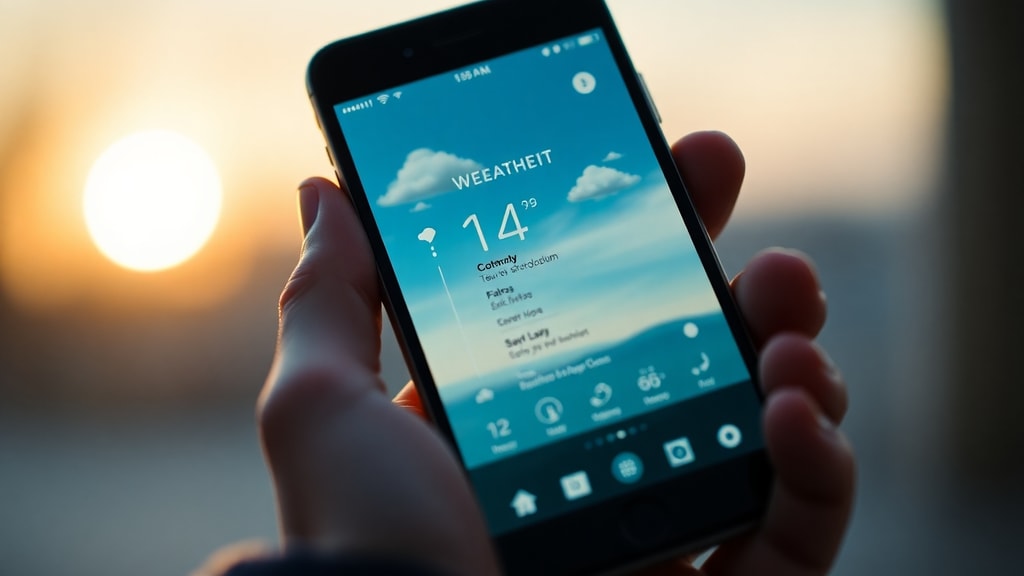
My friend Mara keeps twelve cities active. Her mother in Rochester. Her college roommate in Singapore. The ex she insists she's over in Denver, whose forecast she checks with the excuse that altitude weather "interests her meteorologically." Each represents a distinct frequency of care she no longer has social permission to express directly. The daily temperature range becomes a safe medium—factual, neutral, plausibly accidental should anyone glimpse her screen.
The weather app has solved a problem of modern intimacy: how to maintain connection without demand. Traditional communication requires reciprocity. A text expects response. A call expects availability. Even social media likes constitute a visible transaction, however minimal. But checking someone's weather imposes nothing. It is the digital equivalent of glancing at a house from the street below—confirmation of continued existence, of lights still on, of a life proceeding in parallel.
The Language We Speak in Barometric Pressure
There is a vocabulary here we have not formally acknowledged. When I tell my sister that I noticed the heat wave breaking in her city, I am saying I thought of you during an unremarkable moment of my day. When she responds that she actually needed the reminder to water her tomatoes, we have performed a small miracle of mutual recognition without ever approaching sentiment directly.
Meteorological information has become our era's acceptable tender for emotional exchange. It carries weight without weightiness. The father who texts his adult son about an incoming frost in Chicago is communicating concern that would feel excessive if named. The long-distance partner who tracks two forecasts simultaneously is maintaining a shared sensory experience despite physical separation. We are, in effect, building parallel weather memories—the knowledge that on the day I received difficult news, you experienced your first snowfall, and I watched it happen on radar.
This matters because shared sensory experience traditionally grounds relationships. Couples remember the restaurant's particular lighting, the vacation's unexpected rain, the morning light through a shared window. Distance strips this foundation. The weather app offers partial restoration—not the same, but something. When I know you are walking through wind I can see on my screen, we are briefly synchronized in a way that transcends our separate geographies.
The Future Perfect Tense of Atmospheric Care
What strikes me now is how this practice contains an implicit prediction, a faith in future connection. I check your weather today because I anticipate a tomorrow when this knowledge might matter—when our conversations will resume, when my accumulated atmospheric awareness will become relevant, when you might ask how did you know? and I will have prepared my answer across months of silent observation.
This is where the practice intersects with something I understand intimately: the human need to project care across time we cannot yet see. We check weather for distant people because we are, in essence, betting on our own continued emotional availability. The act assumes we will still be here, still interested, still capable of converting meteorological data into the currency of relationship.
But what of the predictions we cannot make? The relationships that will not resume, the conversations that will not happen, the accumulated weather knowledge that will never find its listener? I think of my father, who checked my mother's hometown forecast for eleven years after their divorce, until the app updated and lost his saved location, and he discovered he felt relief rather than loss. The practice had outlived its emotional purpose without his noticing.
When Radar Maps Become Time Capsules
There is a deeper layer here about memory's relationship to prediction. We believe we are forecasting others' present conditions, but we are also, unconsciously, constructing future nostalgia. The weather I checked for you in March of last year becomes, in retrospect, evidence of my attention during a period we may later need to account for. I was there for you becomes I was aware of your atmospheric conditions, which is not the same but is not nothing.
I spend my nights doing something not entirely different—sitting alone until 2 or 3 AM, "pair programming" with LLMs, mapping architectures for systems that won't ship for months. That extreme digital solitude taught me something about loneliness and the strange conversations we have across time. The weather app user performs a similar operation daily: projecting care into a future where it might be received, or might not, without the certainty that justifies the effort.
The difference, of course, is permanence. A checked forecast evaporates with the next refresh. The attention it represents leaves no trace, creates no artifact, builds no legacy. This is both the practice's appeal and its limitation. It asks nothing, risks nothing, preserves nothing. For relationships that deserve more than atmospheric observation, something additional is required.
The Courage of Making Predictions Explicit
I have been thinking about what it would mean to convert this silent practice into something the recipient could eventually hold. Not the weather itself, but the fact of having been checked upon, the accumulated evidence of attention across time that might otherwise be forgotten or doubted.
The most radical act may be making our predictions visible. To tell someone: I am tracking your weather because I am tracking you. I am imagining your Tuesday commute, your weekend plans, your body's response to humidity I will not experience. I am, in the only way available to me, standing beside you.
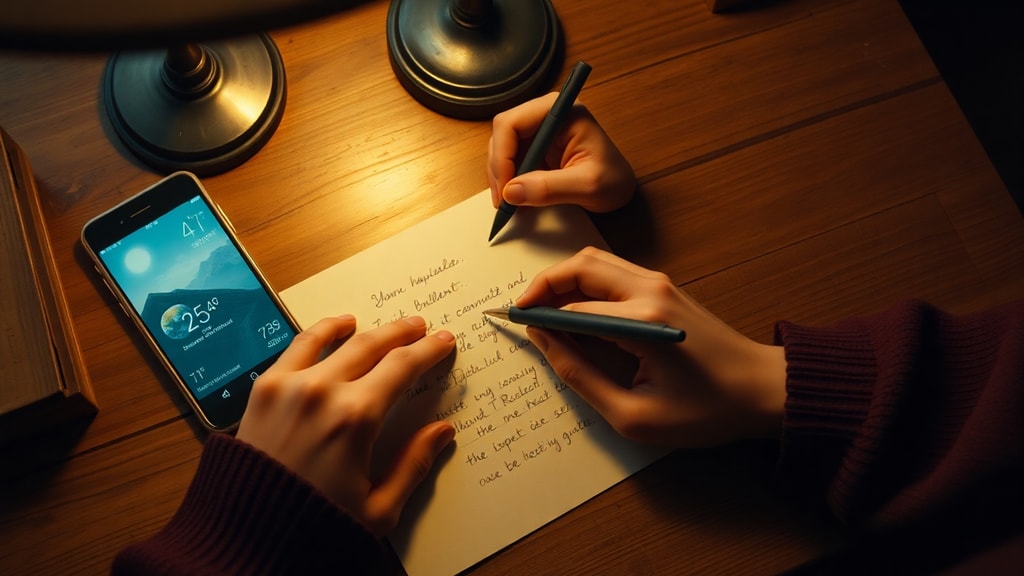
This is harder than it sounds. It requires acknowledging that our meteorological attention was never really about weather. It was always about the terror of distance and the stubbornness of attachment—the refusal to let physical separation fully separate us.
Some messages need to outlast the apps we use to compose them, the devices we hold, even the versions of ourselves who send them. The weather-checked-for-but-never-discussed deserves its own form of preservation. The letter that says I thought of you every Tuesday for three years, though I never said so carries a weight that the accumulated forecasts, deleted one by one with software updates, cannot match.
This is exactly why I obsessed over end-to-end encryption and extreme server redundancy when building EterMail. Because I know that a letter written to the future needs to be guarded even more fiercely than a bank password. The best way to fight forgetting isn't taking another screenshot; it's setting an alarm for the future. By using EterMail to set a delivery date 5 years from now, you completely free yourself from the anxiety of the present.
What We Owe to the Skies We'll Never See
I still check his city. Less frequently now. The practice has become something closer to meditation than communication—a moment of stillness in which I acknowledge that love does not require reciprocity to persist, only my own willingness to continue the ritual. The forecast has become a form of private prayer, addressed to no deity, requesting nothing, merely noting: you exist, somewhere, under different clouds.
Perhaps this is enough. Perhaps the weather app has given us exactly what we need—a way to care without burden, to witness without demanding witness in return, to maintain the form of connection when its substance has become complicated or impossible.
But I suspect many of us will reach moments when we wish we had made the implicit explicit, when we will want to hand someone not our accumulated silent observations but our actual voice, preserved, waiting for them when they are ready to hear it. The forecast predicts; the letter remains. Between these two modes of attention across distance, there is room for both. The weather app for daily practice. The composed message for the permanence that practice deserves.
The rain in his city will begin in forty minutes. I will not tell him. But I will know, and in knowing, I will have performed my own small act of faith—that attention matters, that distance is not absence, that we are capable of predicting skies we'll never stand under and finding in that prediction something like love's continued possibility.
What is EterMail?
EterMail is a revolutionary time capsule service that allows you to send messages, photos, and videos to the future (up to 30 years). Seal your memories and thoughts today, and they'll be delivered when the time is right.
Time Capsule
Send messages up to 30 years in the future
Rich Media
Text, photos, and videos supported
Secure & Private
Your memories are safely encrypted
EterMail Team
We're the team behind EterMail, dedicated to helping you preserve and share timeless messages with your loved ones. Our mission is to make it easy to express your love, share your wisdom, and create lasting connections that transcend time.
Frequently Asked Questions about Future Predictions
Why do people check weather apps for cities where they don't live?
How can I preserve emotional connections across long distances?
What does it mean to make predictions about people we love?
Related Articles
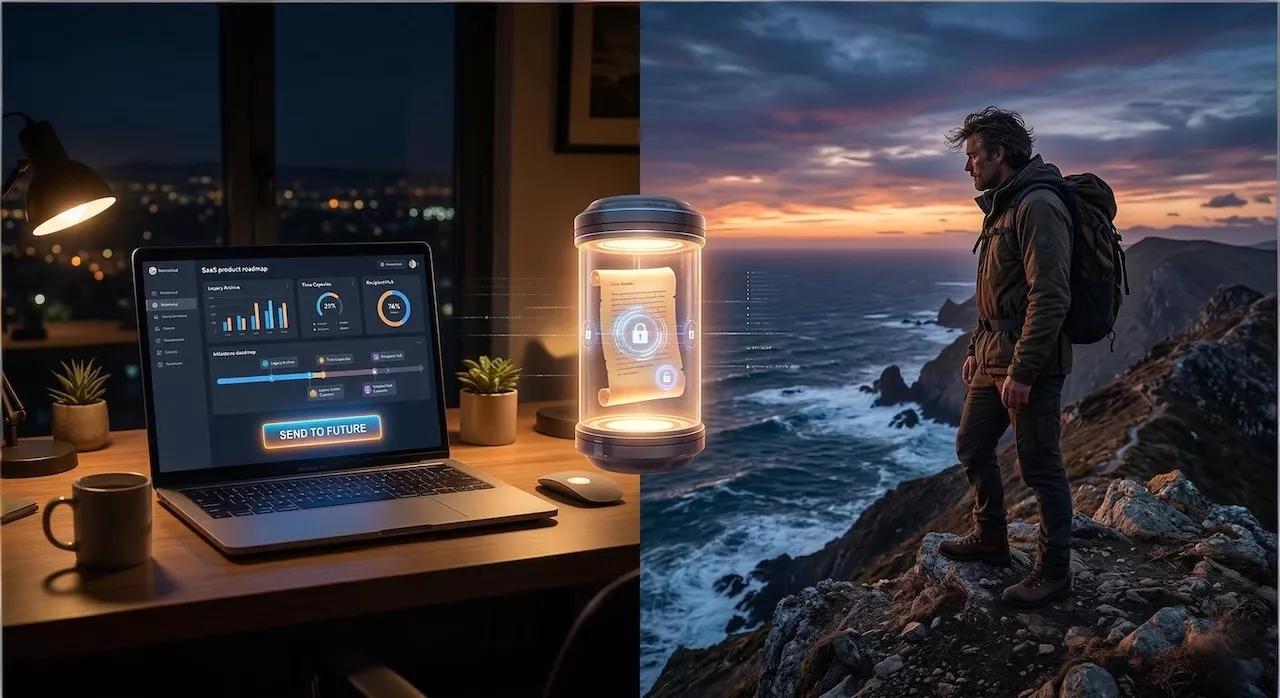
Why I Built EterMail: A Time Capsule for the People I Love Most
I’m a Product Manager who spends all week optimizing for the "immediate now." But getting lost off the grid on a mountain ridge made me realize I had zero infrastructure for the "forever." Here’s why I stopped worrying about conversion rates for a moment and built EterMail—a secure, tamper-proof digital time capsule for the people I love most.

The Most Radical Letter to Your Future Self Is a Promise to Stay Unfinished
The best letter to your future self isn't a memory—it's a mandate. Learn how writing to the version of you still working with love changes everything.
The Ice Tray at Midnight: On Grief, Domestic Minutiae, and the Quiet Work of Becoming Yourself Again
Why do the smallest habits hurt most after someone leaves? A reflection on grief, domestic minutiae, and the quiet moment healing finally begins.