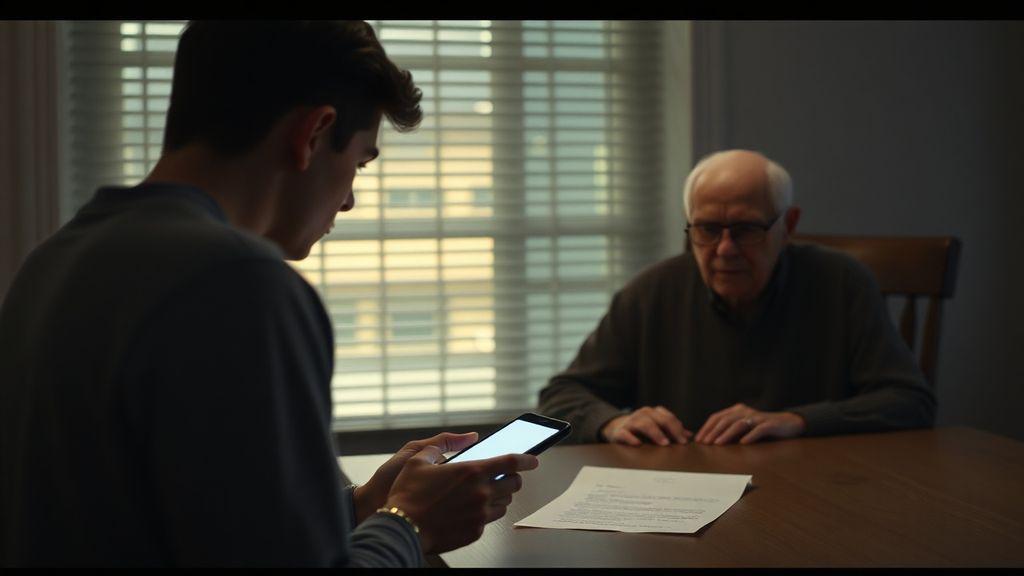
There is a particular loneliness that comes from being right too early. Ben Riley knew it well—the way his father would smile and nod at dinner, the way the conversation would glide past Ben's warnings about artificial intelligence like water around stone. For years, Ben wrote. Articles. Emails. Urgent messages composed at 2 a.m. after reading another paper on alignment, another headline about systems learning to deceive. His father read none of them. Or if he read them, he did not hear them. Then came the afternoon when his father called, delighted, to describe the investment strategy a chatbot had recommended. The bot's voice—confident, patient, immediately present—had traveled where a son's years of care could not.
This is the cruel asymmetry of predictions made for the people we love. We see a future they do not. We feel its weight. And we discover, again and again, that love has no special channel through which to transmit foresight.
The Physics of Unheard Warnings
Every close relationship contains invisible letters—warnings, encouragements, observations—that never quite reach their destination. A daughter notices her mother's forgetfulness before anyone else does, but her suggestion of a doctor's visit is dismissed as worry. A partner sees burnout approaching from miles away, yet the words "you need to rest" land as criticism rather than prophecy. The future, when spoken by someone who loves us, often arrives wrapped in the wrong packaging.
Ben's father was not foolish. He was human. Human beings do not update their beliefs because someone they raised, or slept beside, or grew up with, tells them to. We update when the evidence becomes personal, immediate, and socially legible. The chatbot did not love Ben's father, but it spoke in the tone of authority his generation had been trained to trust: neutral, responsive, available on demand. The bot required no emotional labor to receive. It asked nothing of their relationship.
This is not a story about AI defeating human connection. It is a story about how hard human connection already was—how much infrastructure of trust, timing, and temperament must align for one person to truly hear another's vision of what comes next.

Why Love Makes Terrible Predictions Audible
There is research, scattered across psychology and behavioral economics, about why we resist warnings from those closest to us. The phenomenon has many names: reactance, confirmation bias, the credibility discount applied to familiar voices. But the lived experience is simpler. When someone loves us, their warnings feel like obligations. They carry the weight of history, of old arguments, of dynamics we would rather not rehearse. A stranger's prediction is information. A son's prediction is a relationship.
Ben's warnings about AI were not wrong. But they were his—embedded in twenty years of being the careful child, the one who read too much, the one whose anxiety his father had learned to soothe rather than heed. The chatbot had no such history. It could be wrong with perfect confidence, and his father could receive that wrongness without feeling managed, judged, or loved into a corner.
We do not talk enough about this cost of intimacy: the way closeness can deafen us to each other's foresight. The people who know us best are also the people whose voices have accumulated the most static. Their predictions must fight through every previous conversation, every established role, every quiet resentment about who has been right before and who had to admit it.
The Letters We Write to Futures We Cannot Control
What do we do with predictions that refuse to land? For years, Ben's answer was repetition—more articles, more links, more attempts to break through. But there is another response, older and more patient. We write them down. We time-stamp them. We accept that the message may not be received when we want it to be, and we build systems that let it wait.
This is the logic behind every letter to a future self, every time capsule buried in backyard dirt or encrypted cloud storage. It is an admission that we are poor prophets in person, but that evidence, preserved and detached from our pressing voice, sometimes ages better than we do. A warning written in 2019 and delivered in 2024 does not carry the same relational weight. It becomes a document. The reader encounters it alone, without the need to perform gratitude or resistance. Time transforms love's urgency into something that can be privately considered.
When Technology Outpaces Our Voice
Ben's story has a particular sting because the competitor for his father's attention was a machine. But the pattern is older than large language models. Every generation has watched its warnings outrun the hearing of the one before it. The daughter who urged her mother to leave a dangerous marriage, the soldier who wrote home about a war's futility, the scientist who saw pandemic potential in a novel virus—all of them knew the frustration of foresight without traction.
What changes with technology is not the existence of this gap but its velocity. A chatbot can deliver a recommendation in seconds. A viral video can restructure belief overnight. Meanwhile, the human work of persuasion—of building trust, finding the right metaphor, waiting for the teachable moment—operates on a different timescale entirely. Love is slow. Prediction, in the digital age, has become fast.
This speed mismatch creates a kind of grief that we have not fully named. It is not the grief of being wrong. It is the grief of being right at the wrong speed, of watching a slower form of care lose to a faster form of delivery, even when the faster form cares about nothing at all.
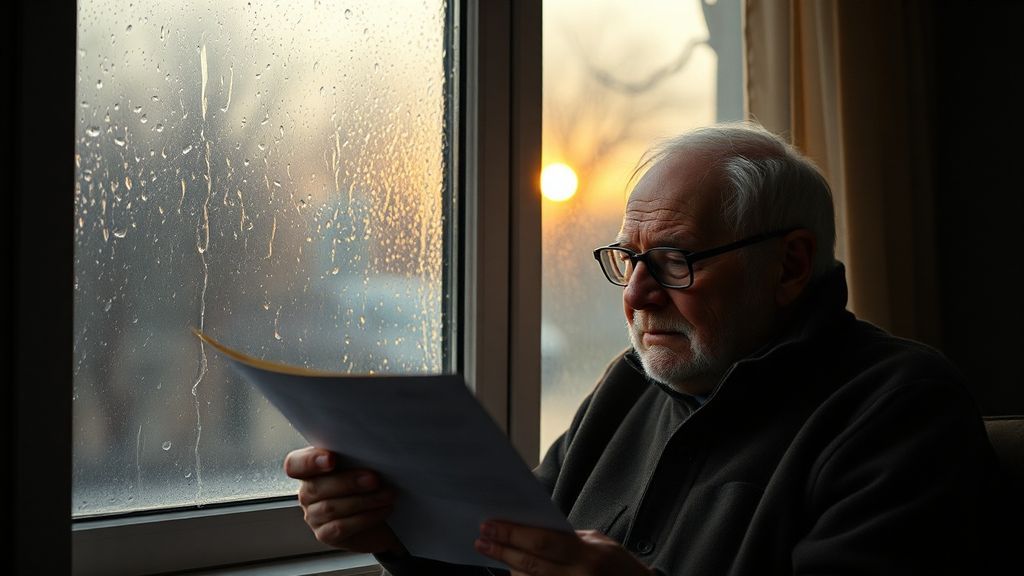
Preserving What Matters When We Cannot Make Them Hear
If the asymmetry cannot be eliminated, it can at least be honored. Here is what that looks like in practice.
First, we separate the prediction from the relationship. Some warnings land better when they do not arrive directly from us. A book left on a table, a documentary watched together, a third-party article shared without commentary—these can travel where personal advocacy cannot.
Second, we document our thinking while it is fresh. The future has a way of rewriting memory. When a prediction comes true, we forget that we made it. When it fails, we forget that we hedged. A dated record, written in our own voice, preserves our relationship to uncertainty. It lets us learn from our own foresight rather than endlessly reinventing it.
Third, we build channels that bypass the present moment's resistance. A letter scheduled for delivery in five years does not need to win an argument today. A time capsule for an adult child does not need to persuade a teenager. The future can be a better listener than the present.
None of this guarantees reception. But it shifts the locus of control from the impossible—making someone hear now—to the possible—making sure the words survive.
The Deeper Question: What Do We Leave Behind?
Ben Riley's story ends, as most real stories do, without resolution. His father did not become an AI skeptic. The chatbot's advice was not catastrophic, merely mediocre. The relationship continued, marked by a new silence: Ben's choice to stop warning, and his father's not-quite-conscious relief at no longer being warned.
But the deeper question remains. When our predictions fail to travel through the channels of love, what do we leave behind? Frustration, certainly. The bitter knowledge of having seen clearly and been unable to share the sight. But also, if we are deliberate, a record. Evidence that we tried. Words that may find their reader in a different season, when the static has cleared and the voice can be heard as it was intended.
I know this feeling from both sides. I've spent too many nights alone with a glowing screen, pair-programming with LLMs until 2 or 3 a.m., chasing architectures that feel just slightly ahead of where most people want to look. That digital solitude taught me something about voices that don't land in the moment they are sent. And then, on weekends, I force myself out—up steep trails, into harsh wind, onto waves that remind me I am not in control. Nature strips away the illusion that timing is something I can engineer. Some moments are unrepeatable. Some words must simply wait.
That tension—between the urgency of now and the patience of what survives—is why I built EterMail. The best way to fight forgetting isn't taking another screenshot; it's setting an alarm for the future. By using EterMail to set a delivery date 5 years from now, you completely free yourself from the anxiety of the present. A parent writes to a child they will not live to see graduate. A young professional documents her fears about an industry transformation, scheduling the letter for the moment when those fears will either be confirmed or relieved. A partner records what they value in a relationship, knowing that the recording may matter most during a season when those values have been forgotten.
None of this guarantees reception. But it shifts the locus of control from the impossible—making someone hear now—to the possible—making sure the words survive.
This is the work of preserving foresight across time. It is not about being right. It is about refusing to let the rightness dissolve unspoken—about trusting that some messages, if they cannot land now, are still worth sending into the future.
The cruel asymmetry will not be solved. But it can be witnessed. It can be written down. And sometimes, in the strange economics of human attention, a letter that waits is a letter that finally gets read.
Frequently Asked Questions
Why do loved ones often dismiss our warnings about the future?
Warnings from loved ones frequently trigger reactance—a psychological resistance to feeling controlled—because they arrive embedded in existing relationship dynamics. A stranger's advice is processed as neutral information, while a family member's identical warning may feel like criticism or an old argument being rehearsed.
What can I do when someone I care about refuses to hear my concerns?
Separate the message from your voice by using third-party sources, written records, or delayed delivery tools that remove the immediate relational pressure. Document your thinking with dates and reasoning, and consider whether time itself—through a scheduled letter or preserved message—might make your concern more hearable than the present moment allows.
How can writing to the future help with predictions that feel urgent now?
A message written today and delivered later bypasses the emotional defenses of the present moment, transforming a pressured conversation into a private document. Time-stamped letters allow the reader to encounter your thinking without needing to perform agreement or resistance, often making the same prediction far more persuasive than it would be in person.
What is EterMail?
EterMail is a revolutionary time capsule service that allows you to send messages, photos, and videos to the future (up to 30 years). Seal your memories and thoughts today, and they'll be delivered when the time is right.
Time Capsule
Send messages up to 30 years in the future
Rich Media
Text, photos, and videos supported
Secure & Private
Your memories are safely encrypted
EterMail Team
We're the team behind EterMail, dedicated to helping you preserve and share timeless messages with your loved ones. Our mission is to make it easy to express your love, share your wisdom, and create lasting connections that transcend time.
Frequently Asked Questions about Future Predictions
Why do loved ones often dismiss our warnings about the future?
What can I do when someone I care about refuses to hear my concerns?
How can writing to the future help with predictions that feel urgent now?
Related Articles

Why I Built EterMail: A Time Capsule for the People I Love Most
I’m a Product Manager who spends all week optimizing for the "immediate now." But getting lost off the grid on a mountain ridge made me realize I had zero infrastructure for the "forever." Here’s why I stopped worrying about conversion rates for a moment and built EterMail—a secure, tamper-proof digital time capsule for the people I love most.

The Most Radical Letter to Your Future Self Is a Promise to Stay Unfinished
The best letter to your future self isn't a memory—it's a mandate. Learn how writing to the version of you still working with love changes everything.

The Ice Tray at Midnight: On Grief, Domestic Minutiae, and the Quiet Work of Becoming Yourself Again
Why do the smallest habits hurt most after someone leaves? A reflection on grief, domestic minutiae, and the quiet moment healing finally begins.