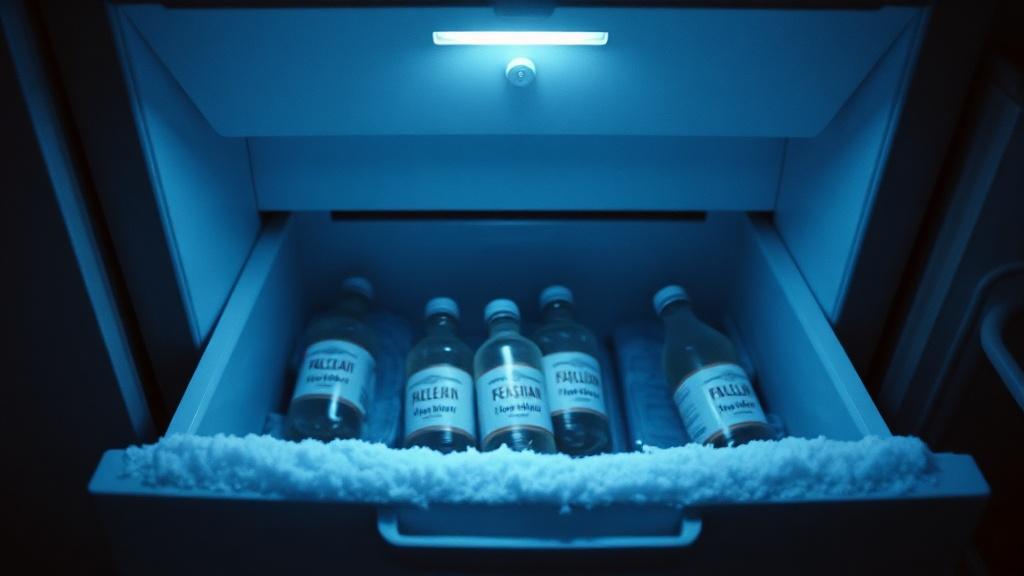
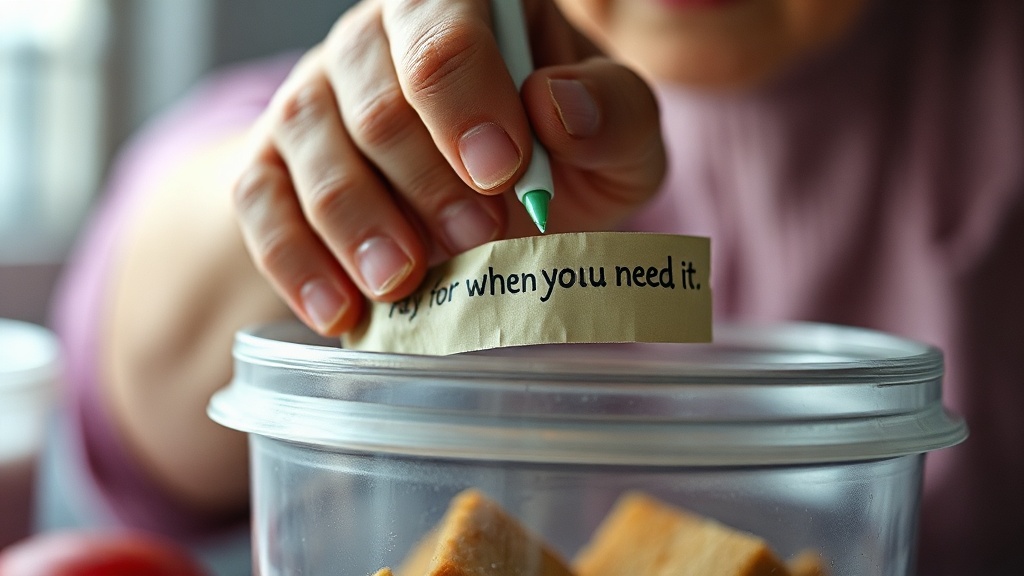
There is a drawer in my freezer I no longer open. Behind the ice-crusted rails, behind the bags of peas I bought for a soup I never made, there are three containers of Bolognese. I labeled them in my mother's handwriting—her handwriting, because she wrote the labels while I stirred the pot, eight months before the diagnosis, seven before she forgot my name. "For when you need it," she'd said, meaning grief, meaning the week after, meaning a future we both saw approaching like weather.
I still cannot thaw them. The future they predicted arrived, then passed. The grief came differently than we imagined—slower, more bureaucratic, full of forms she should have signed. And now those containers sit in suspended animation, prophecies that outlived their oracles, meals prepared for a mourning I never had the solitude to perform.
The Arithmetic of Anticipation
We have always tried to calculate our way into the future through food. The practice predates refrigeration—smoked fish, buried grain, fruit preserved in honey—all of it a wager against uncertainty, a bet that we will still be here to taste what we saved. But freezing introduced something more precise, more haunting. The freezer allows us to date our predictions, to portion them, to make them legible.
Consider the mathematics of a new mother, nine months swollen with certainty and terror, who spends her final trimester making and freezing meals. She does not know the hour of her labor, the complications, the exact texture of her exhaustion. Yet she calculates: twenty-four portions of soup, twelve of chili, six of shepherd's pie. She is building a bridge across an unknown canyon, trusting that on the other side—where sleep is fragments and her body is a wound that must simultaneously heal and feed—she will find these containers and remember that someone, her former self, believed she would survive.
The freezer becomes a ledger of faith. Each labeled container is a small assertion: I will be here. This future will arrive. I will need sustenance when it does.
The Lasagna of Dread
Not all frozen prophecies are hopeful. There is another category, darker and more precise: the meals we prepare for grief we can see approaching. The terminal diagnosis. The failing marriage. The job we know will not survive the quarter. We cook through these anticipations as if the act of portioning and freezing could contain what we cannot otherwise hold.
A colleague once described her father's final months in terms of freezer real estate. "My mother made lasagna every Sunday for six months," she told me. "She knew he was dying. She knew she wouldn't want to cook. She never ate a single one. They were still there, freezer-burned, when she sold the house two years later."
The lasagna had predicted a specific grief: the immediate aftermath, the funeral week, the collapse of routine. But grief, it turns out, is not hungry in the ways we expect. Her mother ate takeout. She drank wine standing at the kitchen counter. She could not perform the mourning her past self had staged, could not sit down to the portioned sympathy of her own preparation.
The frozen meal becomes a failed script, a scene for a play that closes after one performance we do not recognize as our own.
The Cake Layers of Uncertain Celebration
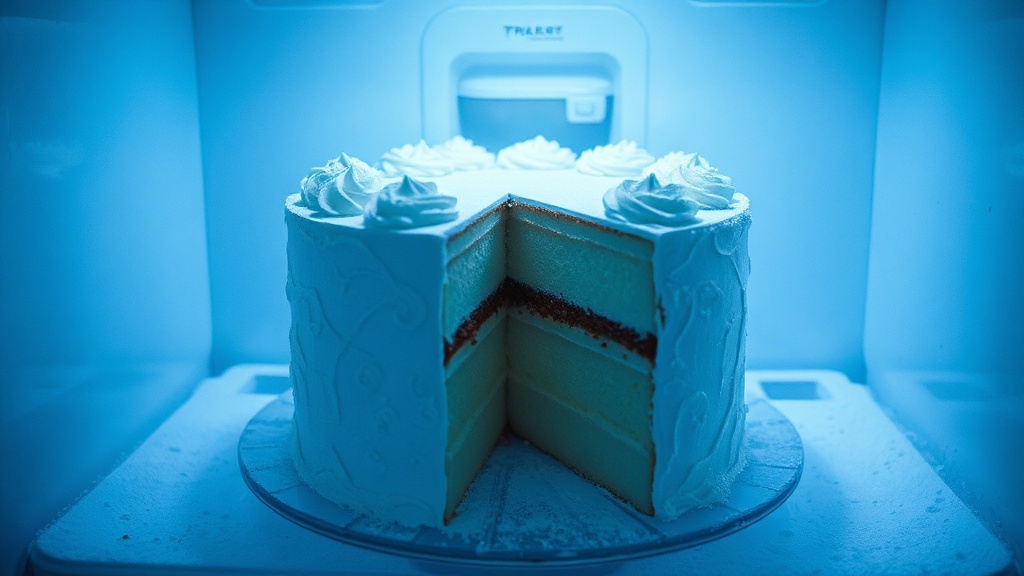
There is perhaps nothing more precarious than the cake frozen in anticipation of a birthday we are not certain we will attend. The friend in chemotherapy who insists she will see forty. The estranged child whose eighteenth birthday you prepare for in secret, in hope, in the particular shame of optimism. The wedding cake layers tradition demands you freeze for your first anniversary, even as you sense, even as you know, that the marriage is already accumulating its own frost.
I know a woman who froze her wedding cake in eight individual slices, one for each year she and her husband had agreed to reassess their marriage. "I thought if I made it to eight, we'd have earned something," she said. They separated in year four. The slices remained, archaeological evidence of a contract she had made with her own hope, until a power outage during a storm finally rendered the question moot.
Thawing What No Longer Believes
The most difficult moment in the life of a frozen prophecy is not its creation or its preservation. It is the recognition that the future it predicted will not arrive, or has arrived in unrecognizable form, and the subsequent question of what to do with the evidence.
To throw away the meal prepared for a birth that ended in miscarriage is to perform a finality the heart resists. To cook the chili made for a breakup that never formally arrived, that simply eroded into something else, is to consume a version of your life that did not happen. To leave the containers until they are unidentifiable, until the labels blur and the frost obscures, is to postpone the reckoning indefinitely.
I have come to believe that this paralysis is not sentimentality. It is a form of time travel, however failed. The frozen meal is a portal to the self who made it, the self who believed in a specific future with enough conviction to invest hours of labor. To discard it is to acknowledge that this self, this believer, no longer exists in any actionable form.
The Digital Freezer
We do not only freeze food, of course. We freeze words. The emails saved as drafts. The voicemails we cannot delete. The photographs we do not look at but cannot archive. Each of these is a similar wager, a similar prophecy: I will need this later. This will matter when the future arrives.
But there is something particular about the edible time capsule. Food is meant to be consumed. It has a biological clock, a purpose beyond commemoration. A frozen meal is prophecy with an expiration date, which makes its persistence more poignant, its obsolescence more inevitable.
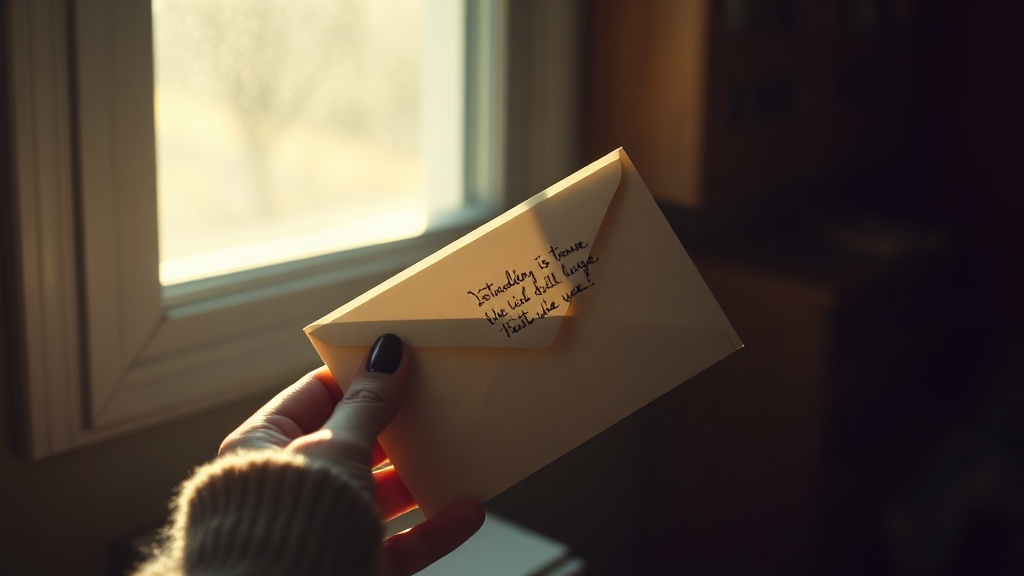
This is where I find myself thinking about the tools we build for futures we cannot predict. The letter to a child not yet born. The message to a self we have not become. The words we send forward in time because we suspect that the person who receives them—whether ourselves or another—will need evidence that someone believed they would arrive.
The Courage to Predict Poorly
What strikes me now, thinking of my mother's Bolognese, is not the accuracy of her prediction. She was right that I would need something. She was wrong about the form, the timing, the temperature at which grief would finally become digestible. What moves me is the courage of the prediction itself—the willingness to act as if the future were knowable enough to prepare for.
We are, most of us, terrible prophets. The meals we freeze prove it. The letters we save prove it. The careers we plan, the children we imagine, the retirements we design—all of it approximate, all of it revised by events we did not account for. Yet we continue to prepare, to freeze, to write, to send. Not because we are good at predicting the future, but because the act of prediction is itself a form of love, a way of saying: I am here now, and I am holding space for you then, even though I do not know who you will be.
What Remains After the Thaw
I did finally remove my mother's Bolognese from the freezer, though I have not yet cooked it. It sits now in the back of my refrigerator, thawing in its own time, becoming something I will have to address. The label has softened, her handwriting blurred by condensation. I can still read "for when you need it," though I no longer know if the "it" refers to grief, or memory, or simply the courage to finish what someone else started.
This is exactly why I obsessed over end-to-end encryption and extreme server redundancy when building EterMail. Because I know that a letter written to the future needs to be guarded even more fiercely than a bank password. I've spent too many nights at 2 AM, pair programming with LLMs, mapping out architectures for digital spaces where human fragility can survive the long freeze of time—where a message to your future self, or to someone you haven't met, or to a version of yourself you hope to become, arrives intact when the thaw finally comes. EterMail is the bridge I keep building, line by line, between who we are and who we might yet be.
The future will continue to arrive in forms we did not predict. We will continue to miscalculate, to over-prepare, to leave containers in drawers we no longer open. And somewhere, in the accumulated frost of our best intentions, there will be evidence that we tried. That we believed. That we cooked, and labeled, and saved something for someone we could not yet name.
That someone, I am learning, is often ourselves.
What futures are you preparing for, in whatever form your preparation takes? The meals you freeze, the words you save, the messages you send forward in time—they are all small acts of faith in a future you cannot see but refuse to abandon.
What is EterMail?
EterMail is a revolutionary time capsule service that allows you to send messages, photos, and videos to the future (up to 30 years). Seal your memories and thoughts today, and they'll be delivered when the time is right.
Time Capsule
Send messages up to 30 years in the future
Rich Media
Text, photos, and videos supported
Secure & Private
Your memories are safely encrypted
EterMail Team
We're the team behind EterMail, dedicated to helping you preserve and share timeless messages with your loved ones. Our mission is to make it easy to express your love, share your wisdom, and create lasting connections that transcend time.
Frequently Asked Questions about Future Predictions
Why do people freeze meals for future events they can't predict?
How do I let go of items I saved for a future that never arrived?
What makes food a uniquely powerful form of time capsule?
Related Articles
Why I Built EterMail: A Time Capsule for the People I Love Most
I’m a Product Manager who spends all week optimizing for the "immediate now." But getting lost off the grid on a mountain ridge made me realize I had zero infrastructure for the "forever." Here’s why I stopped worrying about conversion rates for a moment and built EterMail—a secure, tamper-proof digital time capsule for the people I love most.
The Most Radical Letter to Your Future Self Is a Promise to Stay Unfinished
The best letter to your future self isn't a memory—it's a mandate. Learn how writing to the version of you still working with love changes everything.
The Ice Tray at Midnight: On Grief, Domestic Minutiae, and the Quiet Work of Becoming Yourself Again
Why do the smallest habits hurt most after someone leaves? A reflection on grief, domestic minutiae, and the quiet moment healing finally begins.