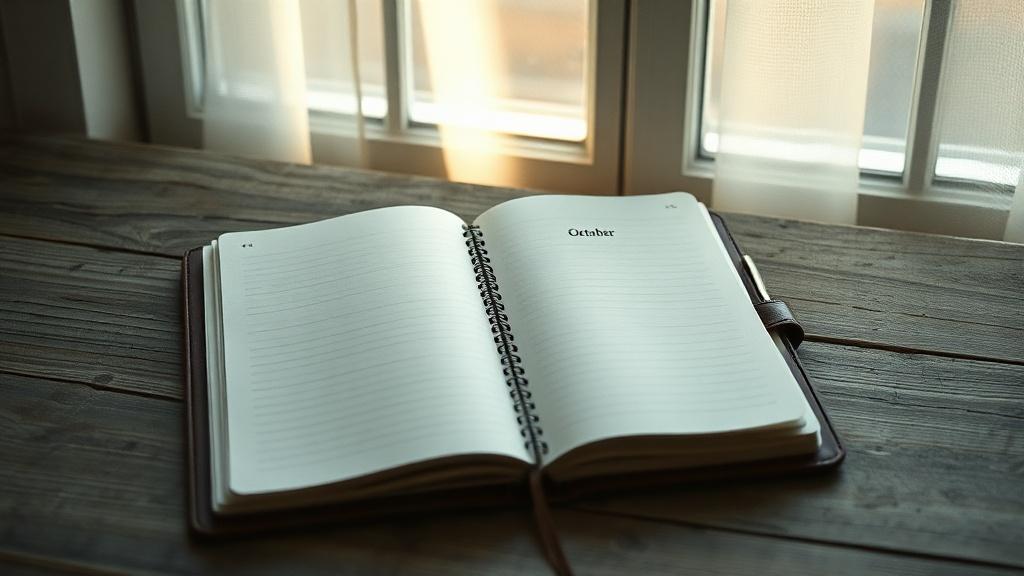
The Weight of a New Planner in December
There is a particular hunger in late December. Not for the holidays, exactly, but for the organization of what comes after. You stand in the stationery aisle or scroll through leather-bound options online, and you are not merely buying paper. You are buying a version of yourself that has everything figured out.
The planner you select matters. Linen cover or minimalist black? Hourly breakdowns or generous white space? Each choice projects a future self: the disciplined executive, the creative freelancer, the balanced parent who somehow finds time for morning pages. You pay for this object, carry it home, and begin the sacred ritual of transfer—birthdays, anniversaries, the dentist appointment six months out. The blank boxes of January stare up at you, waiting to be filled with the architecture of a life you are certain will unfold as designed.
And for a while, you believe it.

The Architecture of Certainty
January arrives with its peculiar intensity. The ink is permanent, the commitments numerous. You block out gym sessions at 6 AM, pencil in networking events, color-code a promotion timeline you discussed once with your manager. The planner becomes a contract with your future self, signed in the optimistic haze of a new year when failure feels theoretical, distant, belonging to other people.
This is the season of future predictions at their most seductive. We do not merely plan; we prophesy. We predict who we will love in March, where we will travel in June, what we will have achieved by September. The planner's grid offers a comforting illusion: that time is territory to be conquered, that sufficient preparation can eliminate uncertainty.
But life, as it always does, begins its quiet erosion.
The Thinning of Commitment
By March, something shifts. The gym sessions migrate from ink to pencil, then to a lighter pencil, then to erasure. The networking event gets a small diagonal line through it—rescheduled, you tell yourself, though no new date materializes. The promotion timeline remains visible but somehow embarrassing, like a child's drawing of an airplane that no longer fools anyone.
The pages of April and May fill differently. Fewer ambitions, more maintenance. Doctor's appointments. Car services. The birthday you almost forgot. The planner becomes less a map of where you're going and more a record of what you're managing to survive.
Then comes the summer, and with it, the first completely blank week. You don't notice it at first. The planner sits in a bag, then a drawer. You begin using your phone for everything, telling yourself it's temporary, that you'll return to the system, that the leather cover deserves better than this abandonment.
The Archaeology of Desk Drawers
If you have lived enough years, you have a drawer like mine. Inside, three, four, seven planners accumulate, their spines uncracked or half-filled, their final pages pristine. Each represents a particular future self I was certain would emerge: the one who meditated daily, the one who learned Portuguese, the one who finally wrote the novel.
These objects are not failures. They are something more complicated—evidence of hope, of the human insistence on believing we can predict our own evolution. The unused pages of October are not empty because I gave up. They are empty because I became someone else, someone the December version of me could not have imagined, someone whose needs and fears and unexpected joys required a different kind of calendar entirely.

The Futures We Scheduled But Never Lived
There is a particular grief in finding an old planner, flipping to a month you once filled with purpose, and recognizing none of it happened. The wedding that became a separation. The move that became staying, then leaving differently. The career pivot that sounded brave in January and irresponsible by August.
We do not talk enough about the mourning of predicted futures. When plans dissolve, we are expected to pivot quickly, to find the lesson, to reframe. But something is lost in the dissolution—the specific texture of a life you could almost touch, the person you were going to be, the certainty that felt, however briefly, like safety.
The planner preserves this grief in amber. Its crossed-out lines and abandoned boxes are archaeological evidence of who we thought we were becoming, and the distance between that projection and whoever arrived instead.
Learning to Leave October Empty
I am learning, slowly, to choose differently. Not to stop planning entirely—there is value in intention, in marking the days with purpose—but to hold those plans more gently. To use pencil more often. To leave space for the unscheduled, the unexpected, the future that arrives without invitation and demands accommodation.
There is a radical practice in leaving October empty on purpose. Not as failure, not as absence of ambition, but as an act of trust. The recognition that the person who will inhabit those weeks does not yet exist, is being shaped by experiences you cannot currently imagine, and may need something your December self could never predict.
This is where the digital time capsule offers something the paper planner cannot. Where the planner demands immediate commitment, the time capsule invites delayed revelation. You write to a future self you acknowledge you cannot fully know. You ask questions rather than supply answers. You preserve a moment's truth—this is what I hope, this is what I fear, this is who I am right now—and release it to time's unpredictable current.
The Courage of Revised Predictions
The planners in my drawer taught me something I resisted learning: that future predictions are not promises but prayers. We utter them into uncertainty, hoping the articulation itself might shape what comes. Sometimes it does. More often, life intervenes with its own agenda, and we are left holding objects that map territories we never visited.
The question becomes what we do with this recognition. Do we stop planning, stop hoping, stop the December ritual entirely? Or do we continue, but with a different relationship to the empty boxes—seeing them not as failures waiting to happen, but as necessary space for the unpredictable?
I still buy planners. I cannot help myself; the hunger persists. But now I write differently. Fewer predictions, more questions. Less architecture, more annotation. I leave October empty not because I have no plans, but because I am finally, imperfectly, learning to trust whoever I will be when it arrives.
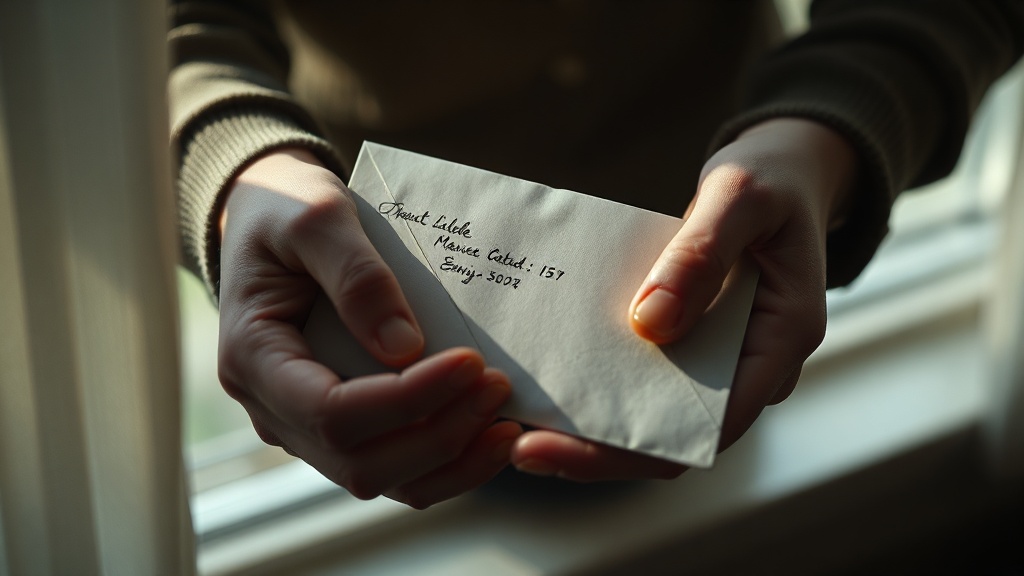
And in the space between certainty and mystery, I write letters. To the self who will open that drawer years from now and remember, with the clarity only distance provides, what it felt like to stand in December, holding a new planner, believing that this year, finally, the future would cooperate.
The Builder's Dilemma
I spend most nights alone with a screen, pair-programming with LLMs until 2 or 3 AM, mapping architectures for products that don't yet exist. That digital solitude does something to you. You start to feel time differently—compressed, elastic, something you can hack rather than inhabit. I've built things across e-commerce, games, now SaaS. I've wrestled with massive codebases and cold server deployments. And I've learned that the same impulse that drives me to build perfect systems also drives me to plan perfect years. Both are illusions. Both miss the point.
The weekend before last, I was surfing in half-frozen water, losing control to a wave I misjudged. That raw, unscripted moment—salt burning, board tumbling, the ocean indifferent to my plans—stripped something clean. It reminded me that the most real experiences refuse scheduling. They arrive when you leave October empty.
The Quiet Precision of Letting Go
The planners remain in my drawer. I do not discard them. They are, collectively, a memoir written in appointments and ambitions, a record of how I have learned and unlearned my own expectations. Each represents a year when I thought I knew what October would hold, and each represents the moment I discovered I was wrong.
There is precision in this, too. Not the precision of fulfilled plans, but the precision of honest witness. The planner does not lie. It shows exactly when the ink thinned, when the pencil appeared, when the page went blank. It documents the exact week when certainty became unsustainable, when the future I predicted gave way to the future I received.
This is the work, I think. Not to predict more accurately, but to hold our predictions more lightly. To plan with full commitment and release with full grace. To fill January with hope and leave October with space, trusting that the person who arrives there will know what to do with the days we could not prepare for.
The best way to fight forgetting isn't taking another screenshot; it's setting an alarm for the future. By using EterMail to set a delivery date 5 years from now, you completely free yourself from the anxiety of the present. You write to who you might become, not who you insist on being. You ask instead of command. And when that letter finally arrives—when the future you opens words from a past self you barely remember—you meet yourself with the only honesty time allows: surprise, recognition, and the strange comfort of knowing you were always, even in your most certain moments, a mystery waiting to unfold.
What is EterMail?
EterMail is a revolutionary time capsule service that allows you to send messages, photos, and videos to the future (up to 30 years). Seal your memories and thoughts today, and they'll be delivered when the time is right.
Time Capsule
Send messages up to 30 years in the future
Rich Media
Text, photos, and videos supported
Secure & Private
Your memories are safely encrypted
EterMail Team
We're the team behind EterMail, dedicated to helping you preserve and share timeless messages with your loved ones. Our mission is to make it easy to express your love, share your wisdom, and create lasting connections that transcend time.
Frequently Asked Questions about Future Predictions
Why do we feel compelled to plan our entire year in advance?
How can I set goals without becoming attached to specific outcomes?
What should I do with old planners that represent abandoned dreams?
Related Articles

Why I Built EterMail: A Time Capsule for the People I Love Most
I’m a Product Manager who spends all week optimizing for the "immediate now." But getting lost off the grid on a mountain ridge made me realize I had zero infrastructure for the "forever." Here’s why I stopped worrying about conversion rates for a moment and built EterMail—a secure, tamper-proof digital time capsule for the people I love most.

The Most Radical Letter to Your Future Self Is a Promise to Stay Unfinished
The best letter to your future self isn't a memory—it's a mandate. Learn how writing to the version of you still working with love changes everything.

The Ice Tray at Midnight: On Grief, Domestic Minutiae, and the Quiet Work of Becoming Yourself Again
Why do the smallest habits hurt most after someone leaves? A reflection on grief, domestic minutiae, and the quiet moment healing finally begins.