The Clothes We Keep: How Our Wardrobes Hold Letters to Futures We No Longer Believe In
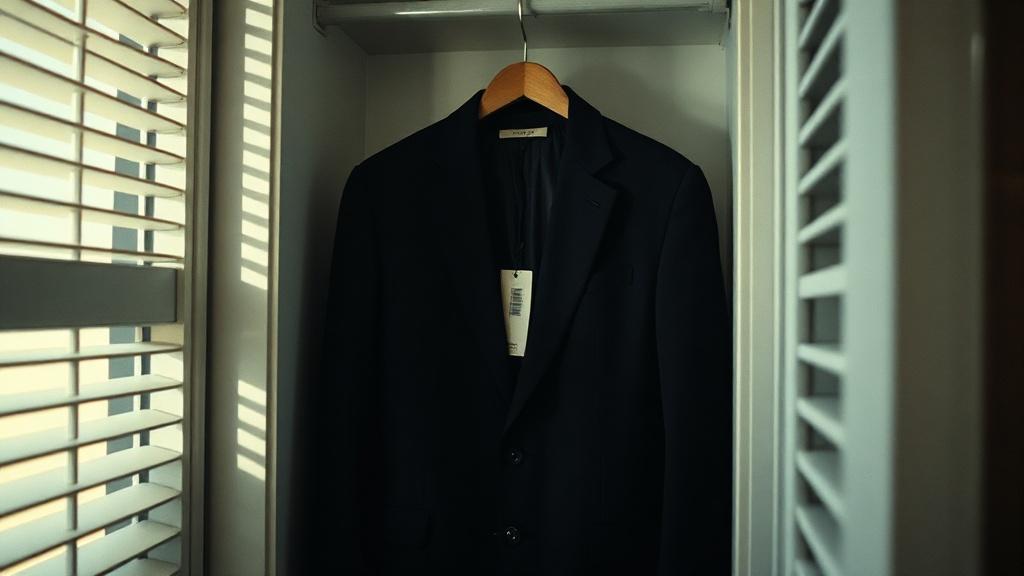
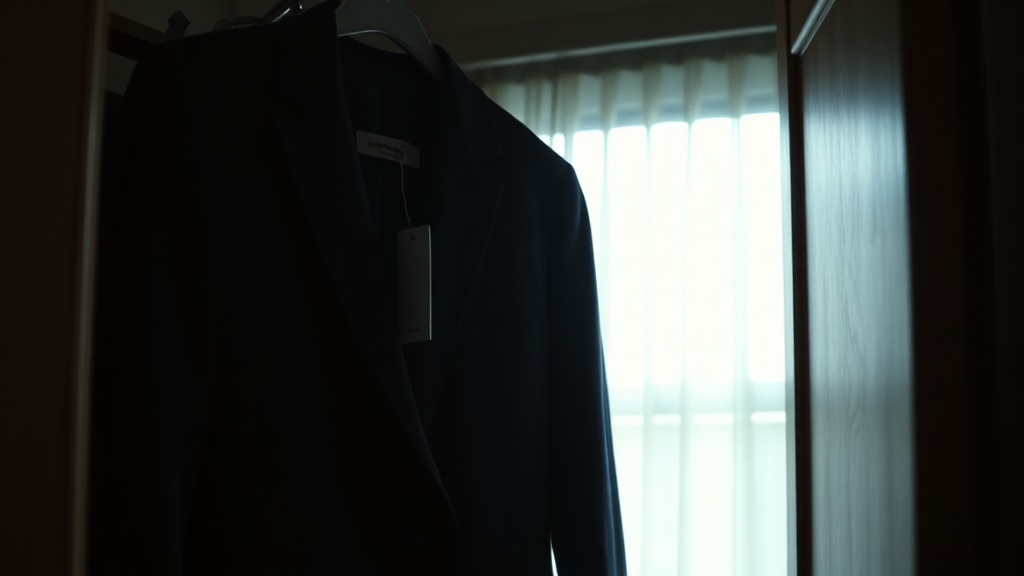
There is a navy blazer in my closet with the tags still on. I bought it six years ago for a promotion interview that was canceled the morning of, when the company froze all hiring. The blazer has moved with me twice. I have never worn it. Sometimes I touch the sleeve and remember the person who stood in the fitting room mirror believing that version of his life was already in motion—that the future was not a question but a corridor he was simply walking down.
We do not talk enough about the clothes we keep as predictions. Not the sentimental pieces, the inherited scarves or concert t-shirts, but the garments purchased for futures we dressed for in advance. The wedding guest dress for the engagement that ended in silence. The jeans sized down, waiting. The maternity top bought in hope, then stored in a box that moved to the basement. These items hang in our closets like unopened letters to selves we never became, their fabric slowly outlasting the certainty that once justified their purchase.
The Fabric Prophecy: When We Dress for Futures Not Yet Arrived
Every prediction begins with desire. We buy the interview suit because we can already feel the handshake, the offer letter, the altered trajectory. We select the dress for the wedding we are certain will happen, the vacation we have already mentally photographed, the body we are disciplined enough to reclaim. Clothing is our most intimate form of manifesting—we literally wrap ourselves in the architecture of who we intend to be.
The psychologist Carl Jung wrote about the tension between who we are and who we might become, but he did not account for the fast fashion hanging in our closets, the Zara blouses and Uniqlo trousers that become monuments to stalled transformation. A 2019 study in the Journal of Consumer Research found that people consistently overestimate their future self-control, purchasing aspirational items they believe will motivate behavioral change. The treadmill becomes a coat rack. The blazer becomes a ghost.
What distinguishes these fabric prophecies from ordinary shopping is their temporal orientation. They are not bought for now. They are bought for then—the then we have already constructed in narrative form. The then where we are thinner, partnered, employed, healed, arrived. And when that then dissolves, when the engagement ends or the promotion evaporates or the pregnancy does not take, we are left holding not just disappointment but a physical object that requires decision. Do we discard the evidence of our misaligned hope? Or do we let it hang there, a costume for a play that closed in previews?
The Weight of Unworn Possibility
I have a friend who kept her wedding dress for eleven years after the divorce. It lived in a garment bag at the back of her closet, and she told herself it was practical—expensive, beautiful, maybe her daughter would want it. But her daughter was six when the marriage ended, and by the time she might have cared about such things, fashion had cycled twice. The truth my friend eventually admitted: the dress was a prediction she could not bear to falsify. To sell it or donate it would be to acknowledge that the future she had stood in, trembling with joy, was not delayed or diverted but definitively over.
This is the particular cruelty of fabric prophecies. Unlike written predictions, which yellow and can be burned, or verbal predictions, which fade and can be denied, clothing persists in three dimensions. It occupies space. It demands storage. It greets you each morning when you reach for something else. The jeans that no longer fit are not merely tight; they are a daily referendum on whether you have become who you promised. The interview suit is not merely unworn; it is a suit of armor for a battle that never happened, its shoulder pads still shaped for a confidence you no longer possess.

The Geography of Stalled Futures
Our closets become maps of abandoned geography. The top shelf holds the formal wear for galas we imagined attending. The bottom drawer compresses the workout clothes for the marathon we never trained for. The dry-cleaning bag preserves the coat for the European winter we kept postponing until the relationship ended, until the money went elsewhere, until the possibility simply aged out of plausibility.
Marie Kondo's method asks whether items spark joy, but the unworn prediction does not spark joy. It sparks something more complicated—longing laced with grief, ambition tangled with shame. The dress bought for the wedding that kept getting postponed does not fail to spark joy because it is ugly. It fails because the joy it was purchased to participate in never arrived. You cannot fold such an item into grateful farewell. You must first acknowledge the loss it represents.
This is where the closet becomes more than storage. It becomes a private museum of futures that felt inevitable and were not. The curator is tired. The museum has no visitors. And still the collection grows, because we keep believing we will grow into what we have already bought.
Folding What We No Longer Believe
There comes a moment—often unmarked, often surprising—when you reach for the blazer or the dress or the jeans and feel nothing. Not hope. Not grief. Not even the familiar ache of disappointed ambition. Simply the recognition that the person who purchased this item no longer exists in a form that could wear it. The future she predicted has been replaced by futures you could not have imagined and now, somehow, inhabit.
Folding such an item is its own small ceremony. It is not failure. It is the honest accounting of a life that refused to follow the script. The navy blazer I finally donated went to a job training program for formerly incarcerated men. I never met the person who wore it to his own interview, his own corridor of possibility. But I imagine him standing in a mirror, adjusting the sleeves, believing in a future that this time might hold. The prediction passes. The fabric remains. The hope, somehow, transfers.

What We Owe the Selves We Never Became
The philosopher Kieran Setiya distinguishes between "telic" activities, which aim at completion, and "atelic" activities, which have no endpoint—walking, loving, thinking. Our predictions are relentlessly telic. We buy the dress for the wedding, the suit for the job, the jeans for the body. We imagine a finish line, a moment of arrival, a self finally consistent with its intentions. But life, Setiya argues, is mostly atelic. It unfolds. It revises. It keeps going past the points where we imagined it would pause for our satisfaction.
The clothes we keep are our attempt to make life telic, to stitch a finish line into fabric and wait at it. When we finally fold them, donate them, release them, we are not abandoning hope. We are converting it from a specific prediction to a more durable orientation—the willingness to be surprised by who we become rather than disciplined into who we planned.
The Letters We Write Instead
There is a practice I have developed, not to replace the fabric prophecies but to honor what they attempted. Each season, I write a letter to a future self I cannot precisely imagine. Not the self who got the promotion or married at the venue or lost the weight. The self who survived the winter I cannot yet name. The self who found something unexpected in the corridor's turn I did not predict. I seal these letters with a date far enough away that I will have changed in ways I cannot control.
I started this practice during a period when I was building something new—a platform for exactly this kind of temporal reaching. I would stay up until two or three in the morning, not coding for some client deadline, but wrestling with how to preserve human intention across time without trapping it in the rigidity of a prediction. The same hours I once spent mapping server architectures or pair-programming with LLMs, I now spent thinking about softness, about forgiveness, about how technology could hold hope without demanding its fulfillment.
The best way to fight forgetting isn't taking another screenshot; it's setting an alarm for the future. By using EterMail to set a delivery date 5 years from now, you completely free yourself from the anxiety of the present. You write not to the self you are performing, but to the self you cannot yet know. You skip the complex formatting, type the very first sentence that comes to mind, set the date, and leave the rest to the architecture. The platform was built for this exact human tendency—to reach forward, to predict, to address someone not yet arrived. It acknowledges that predictions fail, that futures bend, that the self who opens a letter in five or ten or twenty years will be someone the writer could not have accurately addressed. And it preserves the attempt anyway—not as pressure, not as demand, but as evidence that you once cared enough to reach across time and try.
The navy blazer was a letter written in fabric, addressed to a self who never arrived. The letters I write now are softer, more forgiving, more willing to be surprised. They do not require me to fit into anything. They only require me to remain, in some form, worth addressing.
The Generosity of Release
I think sometimes of all the unworn clothes in all the closets, all the predictions quietly expiring in garment bags and storage bins. We are not foolish for having made them. We were not wrong to believe in futures that felt inevitable. The failure of a prediction is not the failure of the person who made it. It is simply the news that life is larger than our plans for it, more various, more strange.
To fold what we no longer believe we will grow into is not to abandon ambition. It is to make room for ambition that fits who we are becoming rather than who we once decided to be. The closet clears. The mirror reflects someone you did not predict. And somewhere, in a letter you wrote and forgot, a future self is waiting to open your words and recognize, with surprise and tenderness, the person who cared enough to send them.
That person was not wrong. That person was only early. That person was only human. That person is still, in ways you cannot yet see, becoming you.
What is EterMail?
EterMail is a revolutionary time capsule service that allows you to send messages, photos, and videos to the future (up to 30 years). Seal your memories and thoughts today, and they'll be delivered when the time is right.
Time Capsule
Send messages up to 30 years in the future
Rich Media
Text, photos, and videos supported
Secure & Private
Your memories are safely encrypted
EterMail Team
We're the team behind EterMail, dedicated to helping you preserve and share timeless messages with your loved ones. Our mission is to make it easy to express your love, share your wisdom, and create lasting connections that transcend time.
Frequently Asked Questions about Future Predictions
Why do we keep clothes that no longer fit our lives?
How can writing to my future self help me process disappointed expectations?
What is the psychology behind buying clothes for futures that haven't happened yet?
Related Articles

The Unread Prophecies on Our Shelves: What Our Abandoned Books Reveal About the Futures We Outgrow
Why do we keep books we never read? The quiet archaeology of unread books as prophecies of futures we outgrew, and the courage to finally let go.
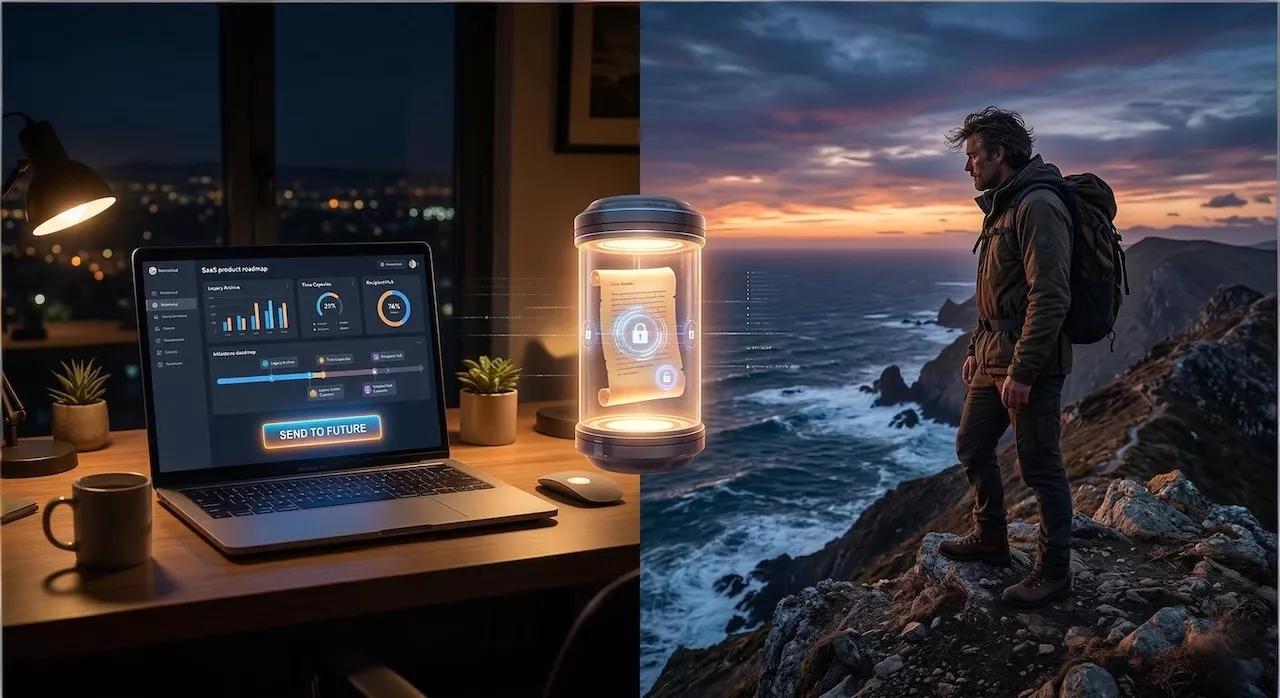
Why I Built EterMail: A Time Capsule for the People I Love Most
I’m a Product Manager who spends all week optimizing for the "immediate now." But getting lost off the grid on a mountain ridge made me realize I had zero infrastructure for the "forever." Here’s why I stopped worrying about conversion rates for a moment and built EterMail—a secure, tamper-proof digital time capsule for the people I love most.

The Most Radical Letter to Your Future Self Is a Promise to Stay Unfinished
The best letter to your future self isn't a memory—it's a mandate. Learn how writing to the version of you still working with love changes everything.