The Moment the Promise Broke
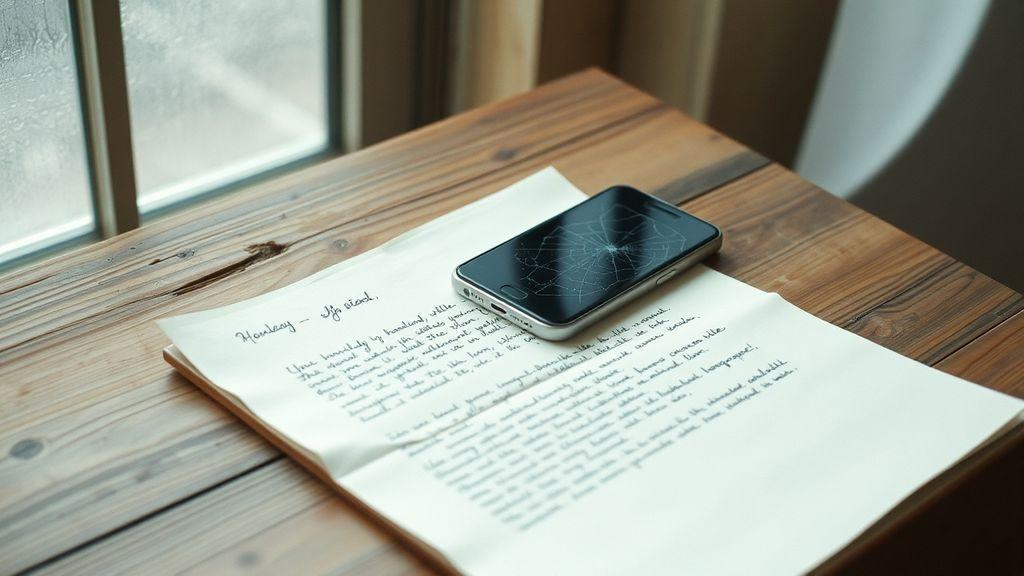
Sarah found her father's voice in a drawer last March. Not a phone—those had long since been recycled—but a corrupted SD card, its plastic casing cracked like dried clay. The recording was from 2019, the last time he'd sung her daughter to sleep. She'd paid for cloud backup. She'd trusted the seamless sync. What she hadn't predicted was the company dissolving in 2022, taking 40,000 user archives with it into liquidation, or the format becoming unreadable by 2024's operating systems.
This is the quiet betrayal we don't discuss when we speak of future predictions. We've been trained to forecast which device we'll carry, which platform we'll inhabit, which subscription tier unlocks the features we imagine needing. But the hardware is getting worse while demanding more. AI's hunger for processing power has created a peculiar economic inversion: electronics that degrade faster and cost more, a one-two punch that makes the tech optimism of the 2010s read like ancient propaganda.
The question isn't what you'll upgrade to. It's what you'll still be able to read.

The Prediction We Were Trained to Make
Silicon Valley built a mythology around forward motion. Each keynote promised that the next version would solve what the current one broke. We learned to anticipate our own needs through the lens of corporate roadmaps: storage tiers, ecosystem lock-in, the gentle coercion of planned obsolescence disguised as innovation.
Future predictions became a consumer sport. Which iPhone? Which cloud service? Which smart home ecosystem would still exist in 2030? We treated permanence as a feature to be purchased rather than a condition to be engineered.
But the ground is shifting beneath that framework. The same AI revolution promising to organize our memories is accelerating hardware turnover. Training models require specialized chips; those chips require rare materials; those materials create supply bottlenecks that drive prices upward while quality control frays. The $1,200 phone lasts eighteen months. The cloud service that felt eternal gets acquired and sunsetted. The file format that seemed universal becomes orphaned.
We've been predicting the wrong futures. We've been forecasting our consumption rather than our survival.
What Remains When the Platform Dies
Consider the archaeological record of your own digital life. The LiveJournal entries you can't access. The Flickr albums trapped behind abandoned Yahoo accounts. The voicemails that vanished when your carrier "upgraded" its infrastructure. Each loss seemed exceptional, personal, a technical glitch rather than systemic design.
But pattern recognition reveals the truth: digital permanence was never the business model. Engagement was. Retention was. The permanent storage of your memories served those goals only incidentally, and when the economics shifted, so did the architecture of preservation.
This is where future predictions must pivot. Not: What will I want to access in 2045? But: What will still be readable when every platform I currently use has been abandoned, acquired, or legislated out of existence?
The radical act of forecasting now requires imagining infrastructure failure as the default condition. Not pessimism—pragmatism. The same clear-eyed assessment that leads coastal homeowners to elevate their foundations leads us to ask: what format survives the flood?

The Upgrade Cycle as Existential Risk
There's a particular grief that comes from technological orphaning. It's not quite like losing a physical photograph to fire or flood. Those tragedies carry the weight of finality, of nature's indifference. Platform death feels more like breach of contract, a violation of the implicit promise that your monthly payments and your patient learning curves would be honored with continuity.
The psychological research on this is still emerging, but early work on digital bereavement suggests we experience these losses as disruptions to narrative identity. Our memories don't exist in isolation; they exist in relation to our anticipated future selves. The letter you wrote at twenty-five to be opened at forty-five isn't merely text. It's a temporal bridge, a wager that the person you will become will still recognize the person you were.
When that bridge collapses because a startup failed or a format expired, the damage isn't just technical. It's ontological. You lose the capacity to witness your own becoming.
This is why the current moment demands a different kind of prediction. We must forecast not which technology will dominate, but which technologies will outlast domination itself. We must identify the formats, protocols, and practices that resist enclosure by corporate strategy.
Preservation as Prediction
The most accurate future predictions are now those that assume platform volatility. This doesn't require retreating to analog—though analog has its place—but it does require architectural thinking about your own memory infrastructure.
What does this look like in practice?
Separation of content and container. Your words, your photographs, your voice—these must exist in formats that transcend any single service. Plain text. Standard image formats. Open protocols. The moment your memories become indistinguishable from the platform that hosts them, you've accepted temporal fragility as the price of convenience.
Cryptographic rather than corporate trust. End-to-end encryption isn't merely about privacy from surveillance. It's about durability through independence. When your content is encrypted before it reaches any server, the server's fate becomes irrelevant to your access. The decryption keys travel with you, not with the platform.
Time as a design parameter. Most digital services are built for immediacy. The architecture of delay—of intentional asynchronicity—requires different engineering. Messages meant for years hence need storage that doesn't depend on monthly active user metrics. They need commitment mechanisms that outlast business cycles.

The Letter as Infrastructure
There is a reason the personal letter has survived every technological transition since clay tablets. Not because it's primitive, but because it's protocol-independent. A letter requires only literacy and preservation. It doesn't need servers, subscriptions, or compatible operating systems. It needs only intention and care.
Digital letters can inherit this resilience if we build them differently. The time capsule letter—written now, delivered years hence—represents a prediction about your own continuity. You are wagering that you will still exist, still matter to yourself, still want to hear from who you were.
I know this wager intimately. There are nights I sit until 2 or 3 AM, "pair programming" with LLMs, mapping architectures while the world sleeps. That digital solitude teaches you something about dialogues across time—how a message sent into silence requires faith that something on the other end will still be listening. But I've also learned that faith needs scaffolding. The same impulse that drives me to hike steep trails, to feel the raw reality of wind and waves, reminds me that permanence isn't found in the most advanced stack. It's found in stripping away what doesn't serve the essential human need: to be witnessed across time.
This is exactly why I obsessed over end-to-end encryption and extreme server redundancy when building EterMail. Because I know that a letter written to the future needs to be guarded even more fiercely than a bank password. The platforms that enable genuine time-delayed correspondence aren't optimized for engagement. They're optimized for commitment. They use encryption not as a marketing feature but as a structural guarantee. They schedule delivery not through reminder apps but through cryptographic time locks that function regardless of corporate health. They store redundantly, geographically distributed, resistant to single points of failure.
Don't wait for the perfect moment to start writing. Open EterMail, skip the complex formatting, type the very first sentence that comes to mind, set the date, and leave the rest to us. The best way to fight forgetting isn't taking another screenshot; it's setting an alarm for the future. By using EterMail to set a delivery date 5 years from now, you completely free yourself from the anxiety of the present.
Writing Against Obsolescence
The act of composing a letter to your future self is already a form of temporal resistance. It insists that the present moment contains value that the present moment cannot fully assess. It requires you to imagine a reader—yourself, aged, altered—who deserves the courtesy of your attention.
But this resistance must extend to the medium itself. The letter written in a proprietary app that won't exist in five years is a letter addressed to absence. The letter encrypted and distributed across independent infrastructure is a letter that honors its own stakes.
We are living through a peculiar inversion of technological progress. The tools promising to preserve everything are accelerating the rate of loss. The solution is not to abandon digital life but to reclaim its architectural decisions—to choose formats, protocols, and services that treat permanence as a first-class requirement rather than a legacy feature.
Your future self is not a consumer segment. Your future self is a moral claimant on your present attention, deserving of memories that survive the upgrade cycles you cannot predict and the platform deaths you cannot prevent.
The prediction you make today—about what will last, about what deserves to last—is the most consequential forecast of your life. Make it with the infrastructure it deserves.
What is EterMail?
EterMail is a revolutionary time capsule service that allows you to send messages, photos, and videos to the future (up to 30 years). Seal your memories and thoughts today, and they'll be delivered when the time is right.
Time Capsule
Send messages up to 30 years in the future
Rich Media
Text, photos, and videos supported
Secure & Private
Your memories are safely encrypted
EterMail Team
We're the team behind EterMail, dedicated to helping you preserve and share timeless messages with your loved ones. Our mission is to make it easy to express your love, share your wisdom, and create lasting connections that transcend time.
Frequently Asked Questions about Future Predictions
How do I write a letter to my future self that will actually survive 10 or 20 years?
What technology predictions should I consider when planning my digital legacy?
How can I preserve memories for my children when file formats keep changing?
Related Articles
Why I Built EterMail: A Time Capsule for the People I Love Most
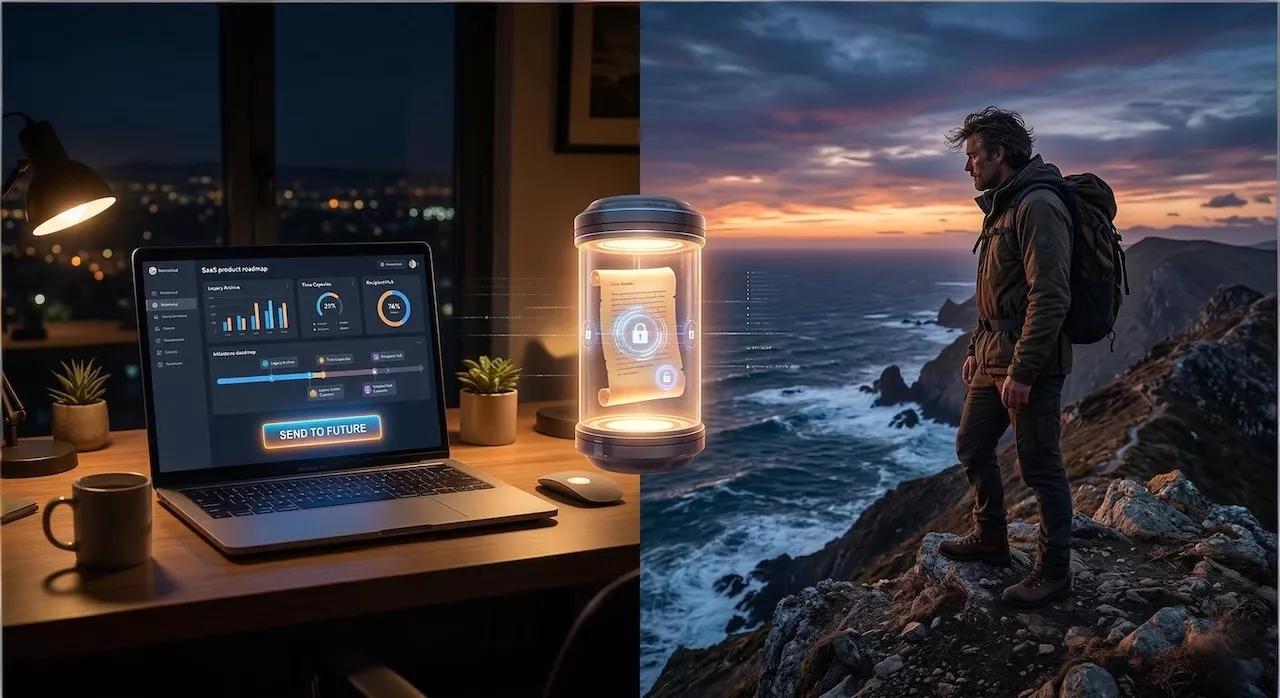
I’m a Product Manager who spends all week optimizing for the "immediate now." But getting lost off the grid on a mountain ridge made me realize I had zero infrastructure for the "forever." Here’s why I stopped worrying about conversion rates for a moment and built EterMail—a secure, tamper-proof digital time capsule for the people I love most.

The Most Radical Letter to Your Future Self Is a Promise to Stay Unfinished
The best letter to your future self isn't a memory—it's a mandate. Learn how writing to the version of you still working with love changes everything.

The Ice Tray at Midnight: On Grief, Domestic Minutiae, and the Quiet Work of Becoming Yourself Again
Why do the smallest habits hurt most after someone leaves? A reflection on grief, domestic minutiae, and the quiet moment healing finally begins.