The Quiet Prophecy of Passwords and Post-Its: How We Predict the Future Through What We Leave Behind
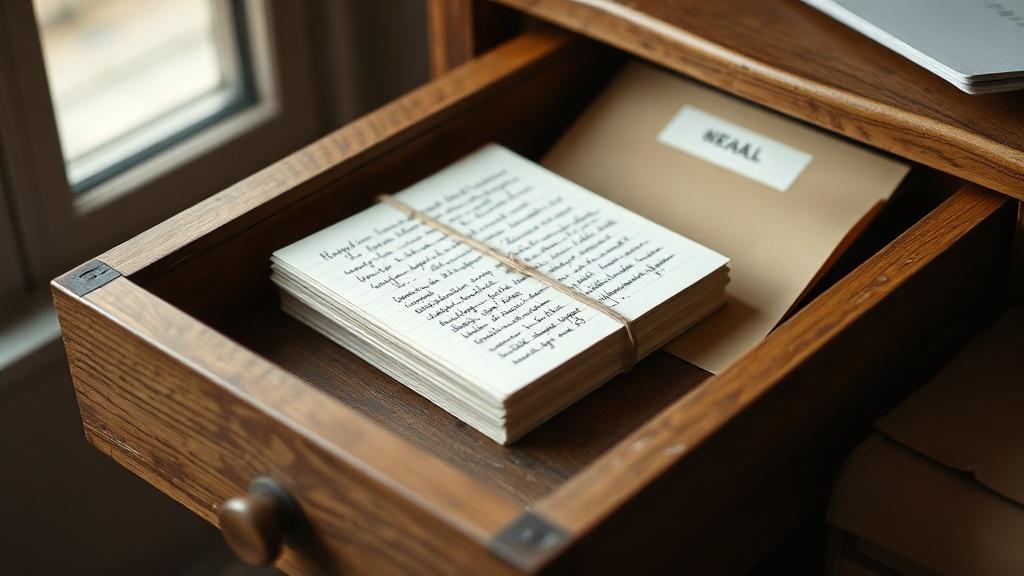
There is a drawer in my father's desk that I was never allowed to open as a child. When I finally did, at twenty-six, the morning after his funeral, I found it contained nothing precious in the conventional sense. No jewelry, no letters sealed with wax, no photographs in silver frames. Instead: a rubber-banded stack of index cards, each bearing a website name and a password in his cramped, left-handed script. A sticky note with the name of his mechanic and the words "tell him I sent you—he'll treat you fair." A manila folder, unlabeled except for a single word in pencil: "Later."
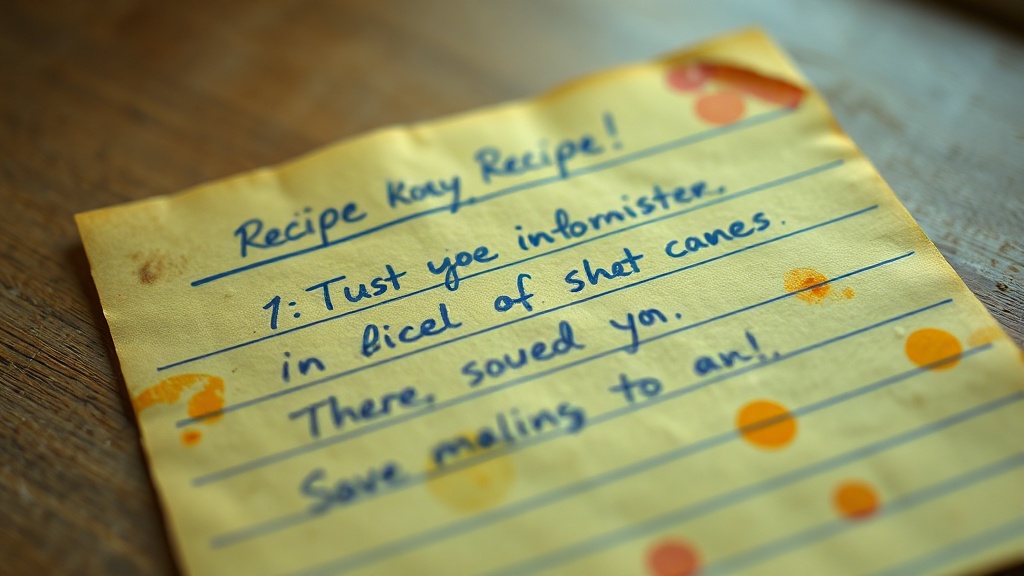
Inside that folder, I found the practical architecture of his absence. Copies of his will, yes, but also a handwritten guide to the house's circuit breaker. A note about which of my mother's medications needed refilling in March. A recipe for his chili, scrawled on the back of a gas station receipt, with a parenthetical in the margin: "she likes it with extra cumin—don't forget."
He had predicted a future without him. Not through crystal ball or tarot, but through the mundane, loving precision of preparation as prophecy.
The Utilitarian Impulse of Love
We do not often think of prediction as an act of tenderness. The word conjures stock markets and weather models, algorithms scraping data for probability. Yet prediction lives in the quietest corners of domestic life. The parent who writes their blood type on a card tucked into the diaper bag. The spouse who labels the files not with "insurance" but with "if something happens to me." The aging aunt who finally explains which cousin should receive the quilt, not because she is morbid, but because she has lived long enough to understand that the future arrives regardless of our readiness.
These are not grand gestures. They are the opposite. They are love stripped of performance, reduced to its most functional expression: I will not be here, but I will still be useful.
Consider the annotated cookbook. My mother died when I was nineteen, and I inherited her copy of The Joy of Cooking. It is a wreck of a thing, spine cracked, pages warped from steam. But it is also a palimpsest of her consciousness. Beside the brisket recipe: "Dad's mother's—make for his birthday, he pretends not to care." Next to a simple pound cake: "Your brother ate half in one sitting, age 8. Do not judge him."
She could not have known I would open to these pages at thirty-four, weeping in a kitchen she never saw, in a city she never visited. Yet she predicted my need. She left breadcrumbs not for a specific trail, but for the wandering itself. The cookbook became a time capsule she never consciously built, its predictions emerging only in the reading.
The Folder Labeled "If You're Reading This"
Digital life has complicated this inheritance. The physical drawer has multiplied into dozens of drawers—cloud storage, encrypted accounts, devices locked behind biometrics we cannot replicate after death. Yet the impulse remains. We still make predictions. We still prepare.
I know a woman, a software engineer in her forties, who maintains a document she calls her "continuity file." It contains passwords, yes, but also instructions for her wife: how to access the shared photo albums, how to cancel the subscriptions, which friends should be told personally rather than through social media announcement. Most moving to me is a section titled "The Hard Part," where she has written, simply: "You will want to keep my clothes for too long. It is okay to give them away when you are ready. I do not live in them."
She updates this file quarterly. It is not a task she enjoys. Yet she describes it as a form of active love, a refusal to let her death become merely an administrative burden on the person she loves most. She is predicting her wife's grief—its texture, its duration, its specific loneliness—and leaving small lanterns along the path.

This is where the utilitarian and the transcendent merge. The password, the subscription cancellation, the note about clothes—these are practical predictions. But they carry emotional intelligence. They say: I have imagined your tomorrow without me, and I have tried to make it bearable.
The Voice That Outlives the Body
There is a particular strangeness to following instructions from the dead. It is not quite conversation, not quite memory. It is something more like collaboration across time. When I made my father's chili for the first time, following his gas station receipt, I found myself talking back to him. You didn't mention the tomatoes would splatter. Extra cumin, right? The recipe was incomplete by design, or perhaps by accident, yet it invited my participation. He predicted my presence at the stove without knowing the specifics of when or why.
This is the paradox of these object-based prophecies: they are most alive when they are slightly wrong. The password that no longer works because the website updated its security. The mechanic who retired. The medication that has been discontinued. These failures of prediction do not diminish the love; they extend it into problem-solving, into adaptation, into the living person's necessary agency.
We do not want instructions so perfect that we become mere executors. We want the outline of care, the framework of intention, within which we must still choose and improvise. The dead who predict too precisely become tyrants. The dead who predict with humility become companions.
Digital Prophecy and the New Time Capsule
The objects we leave behind are evolving. The sticky note migrates to the shared password manager. The annotated cookbook becomes the Google Doc with comments. The folder labeled "Later" transforms into the scheduled email, the time-capsuled message, the digital letter set to arrive on a future birthday or anniversary.
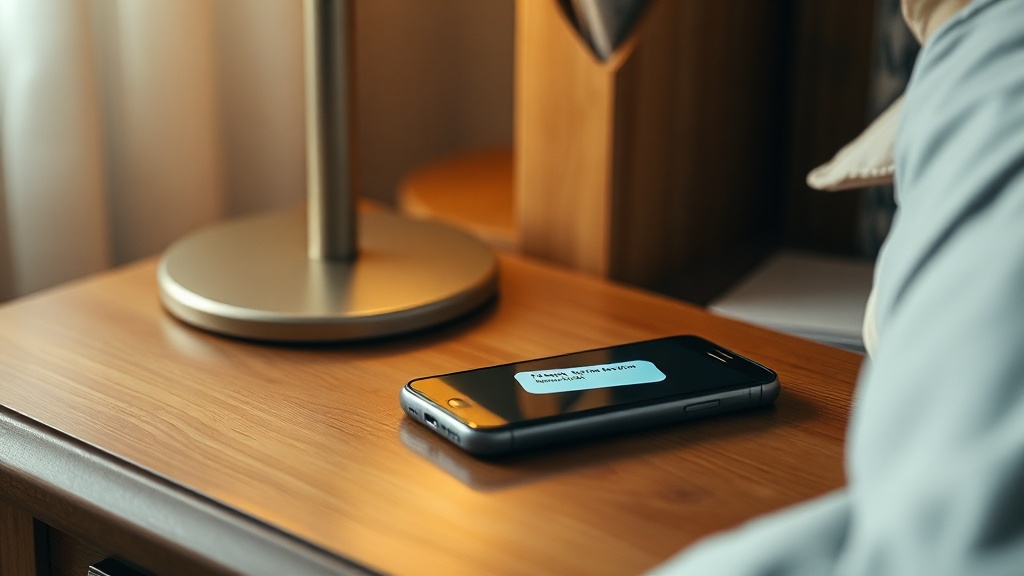
These tools carry the same emotional DNA as their analog predecessors. They remain predictions of need, cast forward in time. Yet they offer something the physical drawer cannot: precision of timing. The message that arrives on the morning of your daughter's eighteenth birthday, written when she was four. The letter that appears in your inbox on the tenth anniversary of your marriage, composed in the first fragile months when you were still learning each other's damage.
This precision matters because grief and growth are not linear. The person who needs their father's voice at twenty-six may need it differently at forty, or sixty, or on the specific afternoon when they must tell their own child about mortality. Scheduled messages predict not just the future, but the future's emotional weather—the storms we cannot yet see gathering.
I spend a lot of nights alone with code. Not the romantic kind—just me, a screen, and the particular loneliness of building something no one has asked for yet. When I started working on what would become EterMail, I was coming off a weekend surfing trip where I'd been held underwater by a wave I didn't see coming. That raw, unscripted moment—no control, just the decision to keep swimming—stuck with me. I realized we build so many tools for the present, so few for the person we'll be after the wave hits.
The best way to fight forgetting isn't taking another screenshot; it's setting an alarm for the future. By using EterMail to set a delivery date 5 years from now, you completely free yourself from the anxiety of the present. You write the letter while the feeling is vivid, then trust it to find its reader when the timing matters most.
The Courage to Predict Absence
There is a vulnerability in this preparation that we rarely acknowledge. To write the "if you're reading this" note is to admit, however briefly, that the world continues without us. That our absence is not merely possible but inevitable. That the people we love will wake, eat, make decisions, celebrate, grieve, and eventually heal—all in spaces we no longer occupy.
This admission does not come naturally. We are wired for presence, for the illusion of permanence. Yet those who do this work—the folder-makers, the password-recorders, the recipe-annotators—are practicing a radical form of hope. They are betting that love can survive translation into instruction. That guidance can outlast the hand that wrote it.
My father's "Later" folder contained one final item I almost missed. Beneath the circuit breaker guide, behind the medication schedule, a single index card with no practical purpose at all. Just a sentence: "You will find your own way to do all of this. I am not worried."
He predicted my competence. My independence. The future in which I would not need him, yet would still feel his confidence in me. It was the most useless and most essential thing he left. A prophecy not of task but of trust. The prediction that love, once given, becomes the reader's own to carry forward.
We are all, in our way, prophets of the ordinary. The note we leave. The message we schedule. The password we share. Each is a small, defiant prediction that our care will outlast our capacity to express it directly. That the future, however uncertain, will still find us useful. Still find us loved.
What is EterMail?
EterMail is a revolutionary time capsule service that allows you to send messages, photos, and videos to the future (up to 30 years). Seal your memories and thoughts today, and they'll be delivered when the time is right.
Time Capsule
Send messages up to 30 years in the future
Rich Media
Text, photos, and videos supported
Secure & Private
Your memories are safely encrypted
EterMail Team
We're the team behind EterMail, dedicated to helping you preserve and share timeless messages with your loved ones. Our mission is to make it easy to express your love, share your wisdom, and create lasting connections that transcend time.
Frequently Asked Questions about Future Predictions
What should I include in a time capsule for my family?
How do I write a letter to someone I'll leave behind?
Why do people prepare for their death while still healthy?
Related Articles
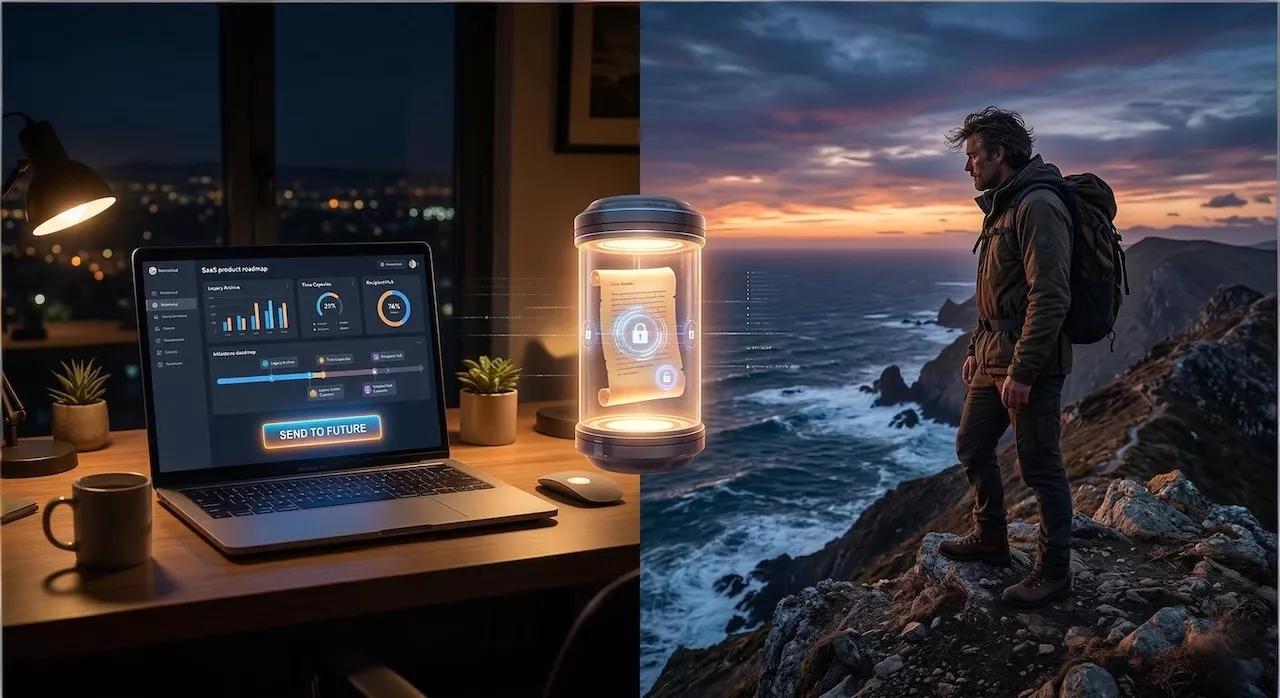
Why I Built EterMail: A Time Capsule for the People I Love Most
I’m a Product Manager who spends all week optimizing for the "immediate now." But getting lost off the grid on a mountain ridge made me realize I had zero infrastructure for the "forever." Here’s why I stopped worrying about conversion rates for a moment and built EterMail—a secure, tamper-proof digital time capsule for the people I love most.

The Most Radical Letter to Your Future Self Is a Promise to Stay Unfinished
The best letter to your future self isn't a memory—it's a mandate. Learn how writing to the version of you still working with love changes everything.
The Ice Tray at Midnight: On Grief, Domestic Minutiae, and the Quiet Work of Becoming Yourself Again
Why do the smallest habits hurt most after someone leaves? A reflection on grief, domestic minutiae, and the quiet moment healing finally begins.