
The Weight of a Question You Cannot Answer
The letter arrived on a Tuesday. Sarah Chen opened it slowly, recognizing her own handwriting from fifteen years earlier—looped letters slightly more confident than she remembered, the paper still bearing the watermark of a coffee shop that had long since closed. She had written it at twenty-three, freshly graduated, convinced she would have figured everything out by thirty-eight. Instead, she found herself divorced, professionally pivoting, and strangely relieved that her younger self had been wrong about almost everything.
Yet one prediction held true: I hope you're still curious. I hope you haven't stopped asking questions just because the answers take longer than you have.
This is the peculiar cruelty and gift of predictions that stretch beyond our own timelines. They require us to imagine ourselves as strangers, to trust in the continuity of consciousness across years we cannot rehearse. They ask us to care about outcomes we may never witness—to plant orchards for grandchildren, to design spacecraft that launch decades after our retirement, to write letters that arrive when we have become different people entirely.
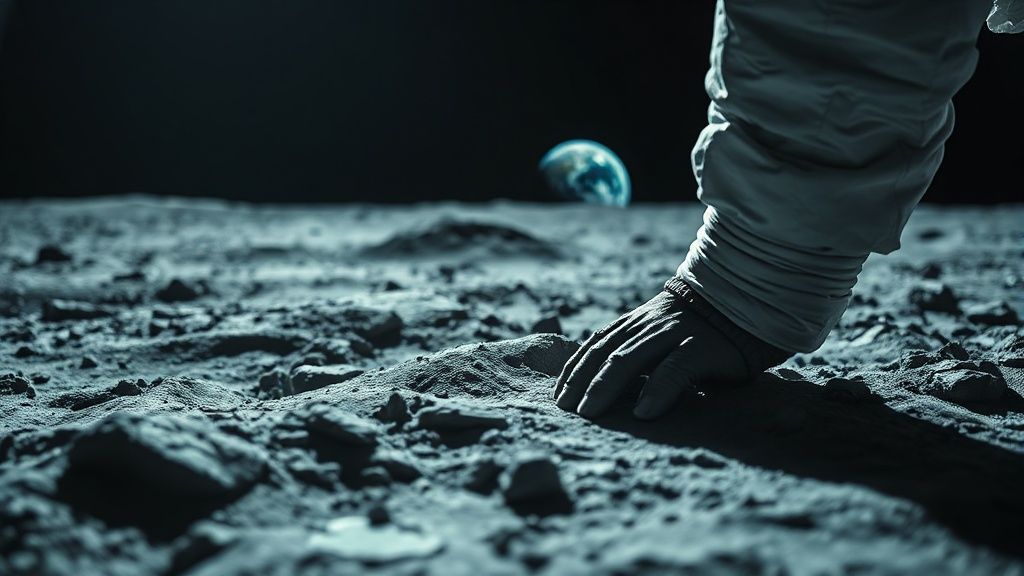
The Artemis Precedent: Reading Messages Written in Stone
NASA's Artemis program carries instruments designed to decode predictions four billion years old. The moon, it turns out, is a time capsule of extraordinary fidelity. Without atmosphere to erode, without plate tectonics to recycle, its surface preserves impacts and volcanic flows in geological handwriting we are only now learning to read.
Scientists speak of this with a particular reverence—not for what they will discover, but for when they will discover it. Some questions require generations of technological maturation. The lunar samples returned by Apollo astronauts contained mysteries that only fifty years of instrumentation development could unlock. We built machines to ask questions the questions themselves could not yet articulate.
This is prediction as architecture: constructing frameworks for understanding that outlast their architects. The physicist who proposed a lunar water-detection method in 1998 knew she might never see it deployed. The engineer who designed Artemis's ice-prospecting instruments accepts that his grandchildren may be the ones to finally interpret what lies frozen in permanently shadowed craters.
The moon teaches us that some truths require patience measured in lifetimes.
The Psychology of Distant Commitment
What changes in a person who commits to futures they will not inhabit? Research into long-term goal pursuit suggests something counterintuitive: the farther our predictions stretch, the more they reshape our present selves.
Psychologist Daniel Gilbert's work on affective forecasting reveals our consistent failure to predict our own emotional futures. We misjudge what will make us happy, how long pain will persist, who we will become. Yet the act of attempting these predictions—of writing to our future selves, of articulating hopes for children unborn, of describing the world we want to exist in fifty years—appears to strengthen what researchers call "temporal self-continuity."
This is the felt sense that our future selves are still us, deserving of the same care we extend to our present needs. People with stronger temporal self-continuity make better health decisions, save more for retirement, and report greater life satisfaction. They have, in essence, befriended their own becoming.

The Generational Handoff
Consider the oak tree. A mature specimen may live six hundred years, meaning the planter and the ultimate beneficiary stand in relation more distant than great-great-grandparent and descendant. Yet we plant them still—thousands annually in urban parks, in restored woodlands, in suburban yards where children who will inherit their shade have not yet been born.
This is prediction as gift economy. We participate in futures we cannot cash in, trusting in the continuity of human need for shade, for beauty, for the particular sound of wind in leaves. The prediction requires no confirmation to have been worth making.
Digital time capsules extend this logic into territory our ancestors could not have imagined. Where a buried box of photographs might decay, where oral histories distort with each retelling, encrypted digital letters can preserve voice, video, and intention across decades with perfect fidelity. The medium changes; the human impulse persists.
Writing to Strangers We Will Become
The most difficult predictions are not about external events—technological change, political upheaval, environmental transformation—but about internal ones. Who will I love? What will I regret? What will I have forgotten that once seemed unforgettable?
These questions resist empirical answer. Yet the attempt to address them, to write from present certainty toward future uncertainty, performs a kind of psychological preparation. It acknowledges that change is not betrayal but continuation. That the self is less noun than verb, less destination than ongoing process.
When we write to our future selves, we practice what philosopher Samuel Scheffler calls "temporal neutrality"—the recognition that our future interests deserve equal weight with our present ones. This is not self-denial but self-expansion. The letter becomes a bridge across time, a way of saying: I see you coming. I am holding something for you.
The Architecture of Long-Term Memory
Our digital lives generate unprecedented documentation—photos, messages, location histories—yet most of it lacks curation. We accumulate data without narrative, archives without intention. The prediction that matters is not what we will want to remember but how we will want to remember it.
Consider the difference between a cloud storage folder of ten thousand unlabeled photographs and a time-capsuled letter with specific instructions: Open when you turn forty. Open when she graduates. Open when you need to remember why you started.
The first offers raw material. The second offers meaning architecture—a structure for interpreting experience across time. It acknowledges that memory is not retrieval but reconstruction, and that the frame we build around past experience shapes what that experience becomes.
The Courage of Uncertain Commitment
Perhaps the deepest question predictions pose is this: Can we care about outcomes we will not see? The climate activist planting coastal mangroves she will not live to see mature. The scientist designing experiments whose results will arrive after her retirement. The parent writing to a child who will read the letter only when that parent is gone.
Each represents a particular form of courage—the willingness to invest in futures that may not include us, to trust in the continuity of values we cannot enforce, to find satisfaction in contribution rather than completion.
I spend my nights wrestling with this exact problem. Not with mangroves or lunar instruments, but with something more intimate: how to build a vessel that carries human intention across time without corruption or loss. When I'm not debugging distributed systems or stress-testing encryption protocols at 2 AM, I'm usually somewhere with poor cell reception—hiking ridgelines where the only signal is wind, or paddling into waves that remind me how little control we actually have. That contrast keeps me honest. The digital world I build must survive the entropy that everything physical eventually surrenders to.
This is exactly why I obsessed over end-to-end encryption and extreme server redundancy when building EterMail. Because I know that a letter written to the future needs to be guarded even more fiercely than a bank password. The trust people place in a message scheduled for a daughter's eighteenth birthday, or a note to a spouse on a fiftieth anniversary they may not attend—that trust deserves infrastructure built with the same reverence NASA brings to lunar ice cores.
The Prediction That Matters Most
We return to Sarah Chen, reading her younger self's questions. What have you learned? What are you still learning? Who has surprised you by staying?
She found she could not answer directly. The woman who wrote those questions had operated from assumptions—about success, about love, about the shape of a life—that no longer obtained. Yet the questions themselves remained vital. They had structured fifteen years of attention, of noticing, of remaining open to surprise.
This is the prediction's final gift: not foresight but framework. Not knowing the future but remaining in relationship with it. The questions we send forward matter more than the answers we imagine, because the questions shape what we become capable of perceiving.
The Artemis missions will read lunar predictions billions of years old. We write our own in letters, in commitments, in the quiet work of building what we will not complete. Both represent the same fundamental human wager: that meaning persists across time, that care can be encoded and received, that the future deserves our best questions even—especially—when we will not hear their answers.
Some predictions require generations to mature. The patience to make them anyway may be the most human thing we do.
What is EterMail?
EterMail is a revolutionary time capsule service that allows you to send messages, photos, and videos to the future (up to 30 years). Seal your memories and thoughts today, and they'll be delivered when the time is right.
Time Capsule
Send messages up to 30 years in the future
Rich Media
Text, photos, and videos supported
Secure & Private
Your memories are safely encrypted
EterMail Team
We're the team behind EterMail, dedicated to helping you preserve and share timeless messages with your loved ones. Our mission is to make it easy to express your love, share your wisdom, and create lasting connections that transcend time.
Frequently Asked Questions about Future Predictions
Why do people write letters to their future selves?
How accurate are predictions about our own future lives?
What makes some predictions require multiple generations to answer?
Related Articles
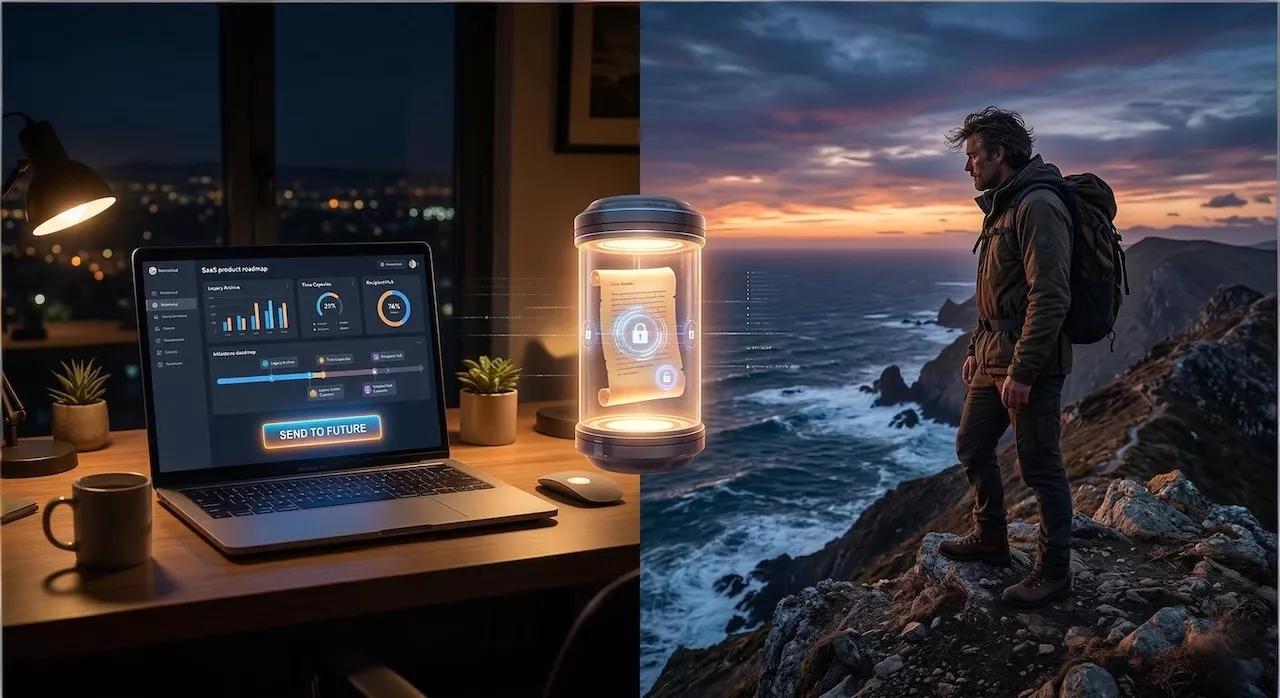
Why I Built EterMail: A Time Capsule for the People I Love Most
I’m a Product Manager who spends all week optimizing for the "immediate now." But getting lost off the grid on a mountain ridge made me realize I had zero infrastructure for the "forever." Here’s why I stopped worrying about conversion rates for a moment and built EterMail—a secure, tamper-proof digital time capsule for the people I love most.

The Most Radical Letter to Your Future Self Is a Promise to Stay Unfinished
The best letter to your future self isn't a memory—it's a mandate. Learn how writing to the version of you still working with love changes everything.

The Ice Tray at Midnight: On Grief, Domestic Minutiae, and the Quiet Work of Becoming Yourself Again
Why do the smallest habits hurt most after someone leaves? A reflection on grief, domestic minutiae, and the quiet moment healing finally begins.