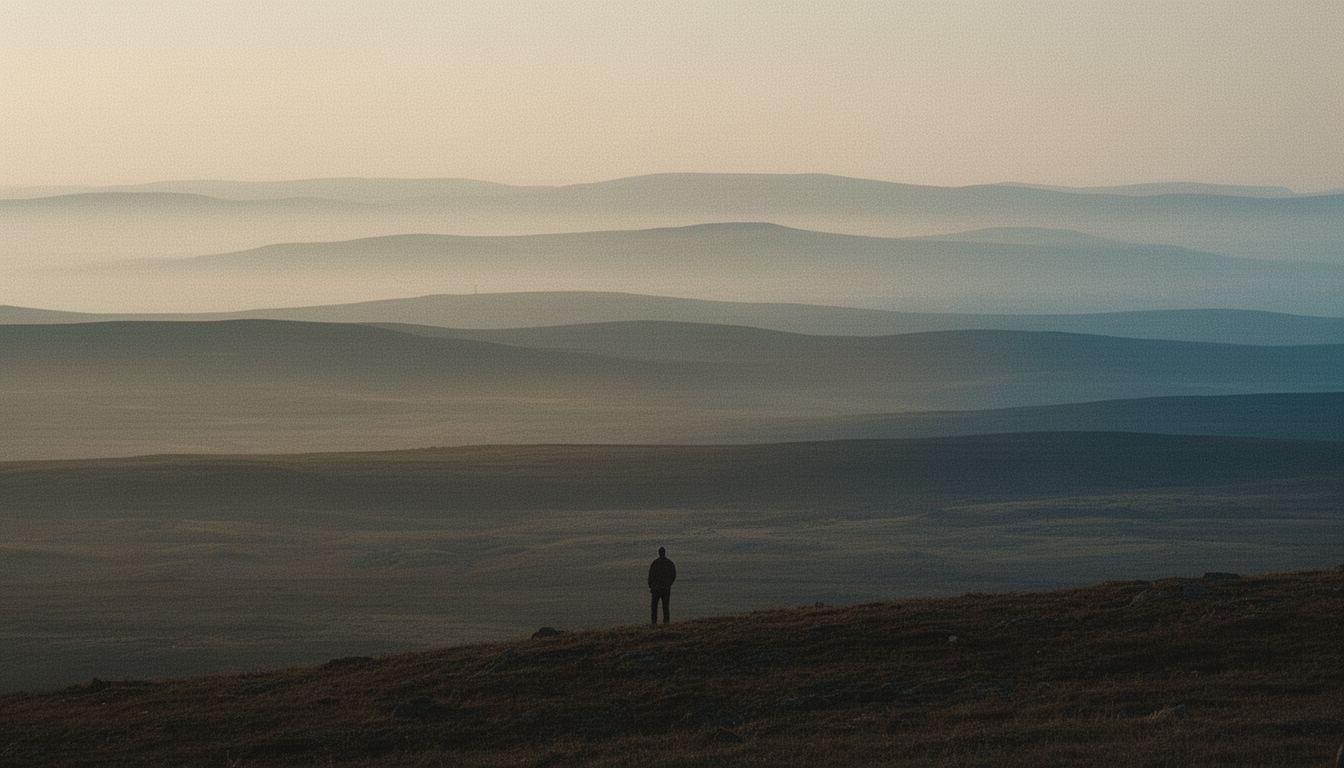
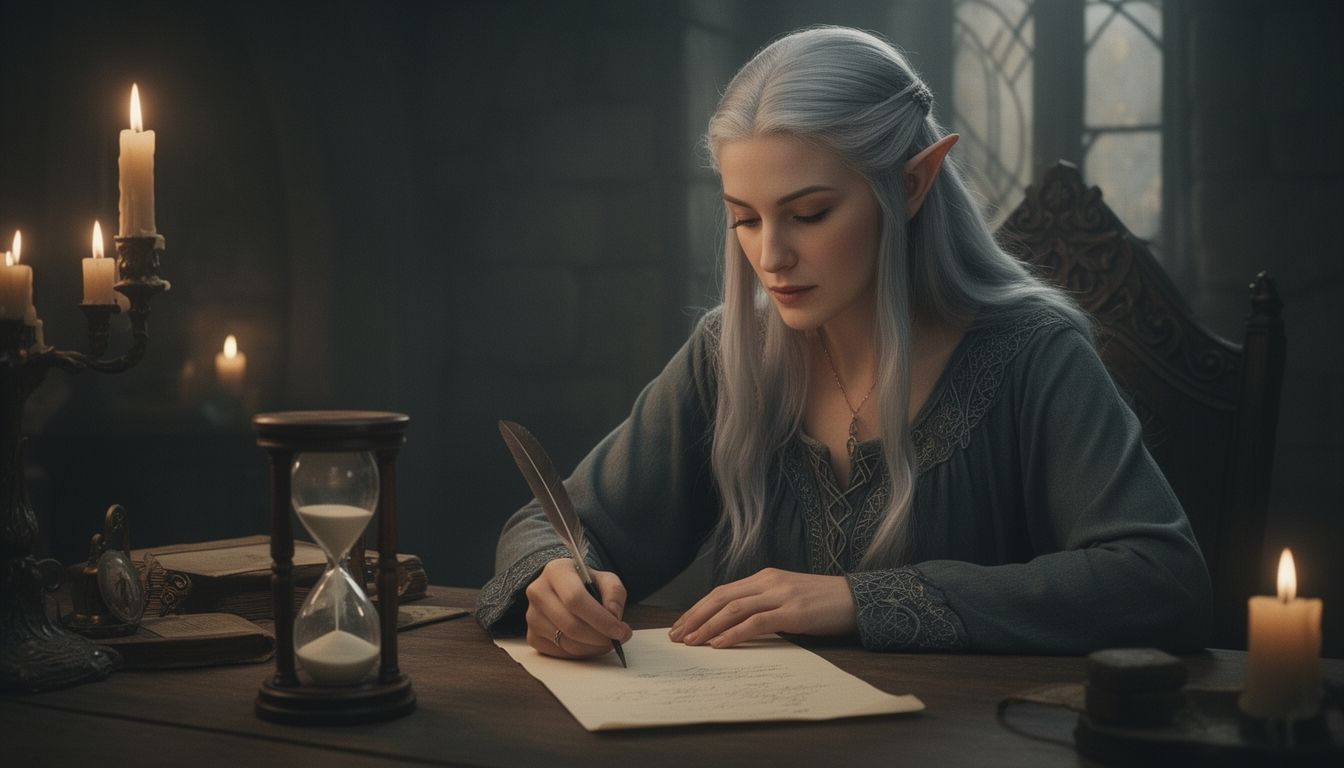
There is a moment in Frieren: Beyond Journey's End that hollows you out. The elf mage, having defeated the Demon King alongside her human companions, stands at their graves decades later. She remembers them vividly—their laughter, their fears, the way the hero Himmel would adjust his hair before every battle. But she also remembers how little she understood them while they lived. Time moved differently for her. A ten-year journey felt like a season. Their entire lives, a single chapter in her endless book.
This is the quiet horror of outliving: not the grief itself, but the duration of it. The way memory becomes a burden you carry longer than the relationship ever lasted.
We are not elves. Our lives burn brief and bright. Yet we have created something Frieren never had—the ability to preserve ourselves artificially, to extend our voices beyond our years through digital means. And this gift carries its own strange weight. What does it mean to write for a future you won't recognize? To speak to people who may never meet you, or to a version of yourself who has become unrecognizable?
The Asymmetry of Time
Frieren operates on a simple, devastating premise: an elf experiences time at roughly one-tenth the speed of humans. Where a human might mourn for years, Frieren mourns for centuries. Where a human builds a life in decades, she watches civilizations rise and fall between breakfast and dinner.
This asymmetry creates a particular kind of loneliness—not the absence of connection, but the mismatch of it. Frieren genuinely loved her companions. But she could not fully grasp, in the moment, how precious their limited time together was. She could not feel the urgency that drove Himmel to propose to her knowing he would age while she remained unchanged. She understood it intellectually. She failed to understand it in her bones until it was too late.
We experience our own version of this mismatch. The parent who realizes too late how fast childhood disappeared. The friend who meant to reconnect but kept postponing. The self we were at twenty, convinced we would always feel this way, always want these things, always recognize this face in the mirror.
The tragedy is not that we change. It is that we cannot feel our changing until we have already changed.
Digital Immortality and the Self We Leave Behind
Frieren had no photographs, no recordings, no saved messages from Himmel. She carried him in memory alone—which meant, over centuries, she carried an increasingly distilled version of him. The highlights. The emotional peaks. The stories she retold until they became more archetype than person.
We have solved this problem, or believe we have. Our phones contain thousands of images. Our cloud storage preserves every email, every draft, every abandoned project. We are the most documented generation in human history, and we are only beginning to grapple with what this means.
Because preservation is not the same as meaning. A hard drive full of photographs is not a life understood. A social media timeline is not a self revealed. We are creating vast archives of our existence without a clear theory of who these archives are for.
Consider the letter Frieren never received—the one Himmel might have written if he had known how long she would survive him, how desperately she would need to understand what she had missed. Consider what you might write to someone who will outlive you, or to yourself when you have become someone else entirely.
This is the fundamental question of digital legacy: not how to store more, but how to transmit meaning across the gap of time.
The Future Self as Stranger
Research in psychology suggests we consistently underestimate how much we will change. The "end of history illusion" leads us to believe that while we have transformed dramatically in the past, we have now arrived at our final, stable self. We are wrong. The data is clear: personality, values, and preferences continue shifting throughout life.
This creates a peculiar problem for future-oriented communication. The letter you write today, sealed for delivery in ten years, will reach someone who shares your memories but not your context. Who remembers why you felt this way but cannot quite access the feeling. Who may read your words with recognition, confusion, or even embarrassment.
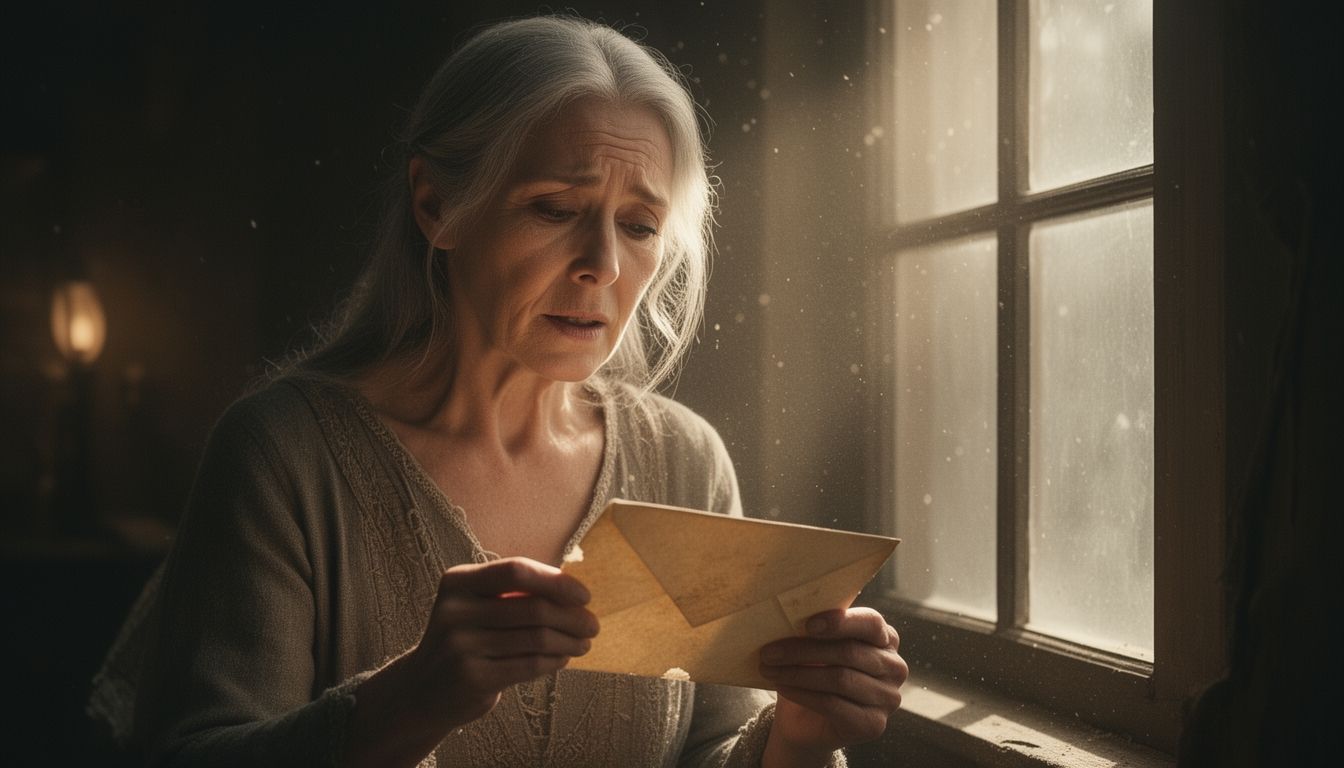
Frieren, reading her companions' final messages, experiences something like this. The words are preserved exactly as written. But the self who wrote them is gone, and the self who receives them has been transformed by centuries of subsequent experience. The message bridges time, but it cannot fully bridge the change that time creates.
Perhaps this is the most honest thing we can do: acknowledge the gap. Write not as if we will be understood, but as if understanding itself is the work we are asking our future selves to perform.
Who Will Be There to Read?
There is another loneliness in Frieren, less discussed but equally profound. The elf outlives not just individuals but entire contexts. The places she traveled with her party no longer exist, or exist transformed beyond recognition. The customs she learned have been forgotten. The very language has shifted.
When she finally delivers a message from Himmel to someone he loved, that person has aged into someone who barely remembers the boy he was. The message arrives, but the world that would have understood it is gone.
We are building digital time capsules with similar fragility. File formats become obsolete. Platforms disappear. The cloud services we trust reorganize, rebrand, or fail. More fundamentally, the social networks that give our communications meaning—friends, family, communities—reconstitute themselves across generations. The photograph preserved perfectly means nothing if no one remains who knows who is in it.
This is why intention matters more than technology. A letter written with explicit context—this is who I was, this is what I feared, this is what I hoped you would remember—carries more survivable meaning than a thousand unlabeled images. The work of preservation includes the work of interpretation, of building bridges to futures we cannot predict.
The Courage to Write Anyway
Frieren's journey is, ultimately, about learning to love within the constraint of time. She cannot become human. She cannot shorten her lifespan to match those she cares for. What she can do is choose to engage more fully, to accept the pain of loss as the price of connection, to build new relationships knowing they too will end.
There is something almost rebellious in this. The refusal to withdraw into safety. The decision to keep planting gardens you will not see bloom.
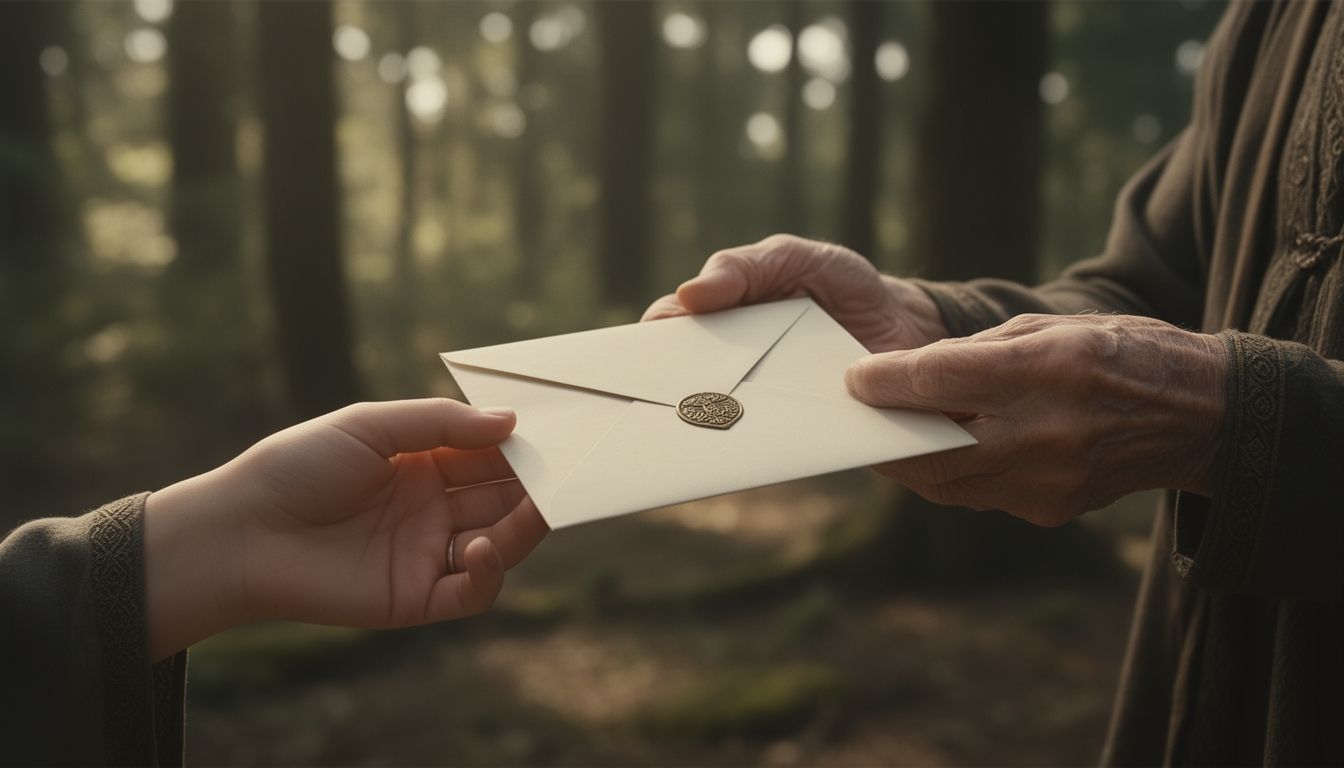
Writing to your future self requires similar courage. You are acknowledging that you will become someone you cannot currently imagine. You are choosing to care about that stranger's wellbeing. You are attempting to build continuity across discontinuity, to be a good ancestor to your own future existence.
I know this tension intimately. There are nights when I'm still debugging at 2 AM, running another test on some LLM's reasoning chain, and I'll catch myself wondering who will read this code, these commits, these scattered notes I've left across repositories. The same part of me that dreams of uploading consciousness—of finally bridging meat and machine—also knows the humbler truth: we are already leaving fragments of ourselves everywhere, and most of it will be noise. But the deliberate act, the chosen word, the message sent forward with intention? That survives differently. That matters.
The same courage applies to writing for others who will outlive you. The message to a child not yet born. The letter to a spouse for an anniversary you may not reach. The words you leave for friends who will grieve longer than they knew you. These are acts of love that accept their own incompleteness, that trust meaning to emerge across the gap of time rather than demanding to control it.
The best way to fight forgetting isn't taking another screenshot; it's setting an alarm for the future. By using EterMail to set a delivery date 5 years from now, you completely free yourself from the anxiety of the present. You write what matters now, seal it, and let time do its work. No more hoping you'll remember to revisit that note. No more folders of abandoned drafts. Just the words, preserved exactly as you meant them, arriving when they will mean the most.
What We Owe the Future
Frieren suggests that the weight of long memory is not solely a burden. It is also a responsibility. The elf who has watched civilizations fall carries knowledge that shorter-lived beings cannot accumulate. She has seen patterns, consequences, the long arc of choices played out across centuries.
We have no such natural advantage. But we are developing tools that extend our reach across time in unprecedented ways. The question is not whether to use them, but how to use them well.
This means writing with awareness of our future readers' strangeness to us. It means preserving not just data but context, not just images but stories, not just voices but intentions. It means accepting that our messages will be partially misunderstood, partially transformed, partially lost—and choosing to send them anyway.
The elf who outlives everyone she loves eventually learns that memory is not a static archive but a living practice. She keeps her companions alive not through perfect preservation but through continued engagement with what they meant, through allowing their influence to evolve as she evolves.
Our digital legacies will function similarly. Not as frozen moments, but as seeds we plant in time, trusting future selves and future generations to cultivate meanings we cannot foresee. The courage is in the planting. The meaning emerges in the growing.
What is EterMail?
EterMail is a revolutionary time capsule service that allows you to send messages, photos, and videos to the future (up to 30 years). Seal your memories and thoughts today, and they'll be delivered when the time is right.
Time Capsule
Send messages up to 30 years in the future
Rich Media
Text, photos, and videos supported
Secure & Private
Your memories are safely encrypted
EterMail Team
We're the team behind EterMail, dedicated to helping you preserve and share timeless messages with your loved ones. Our mission is to make it easy to express your love, share your wisdom, and create lasting connections that transcend time.
Frequently Asked Questions about Future Predictions
How do I write a meaningful letter to my future self without knowing who I'll become?
What makes digital time capsules different from traditional memory preservation?
How can I preserve emotional meaning for family members I may never meet?
Related Articles
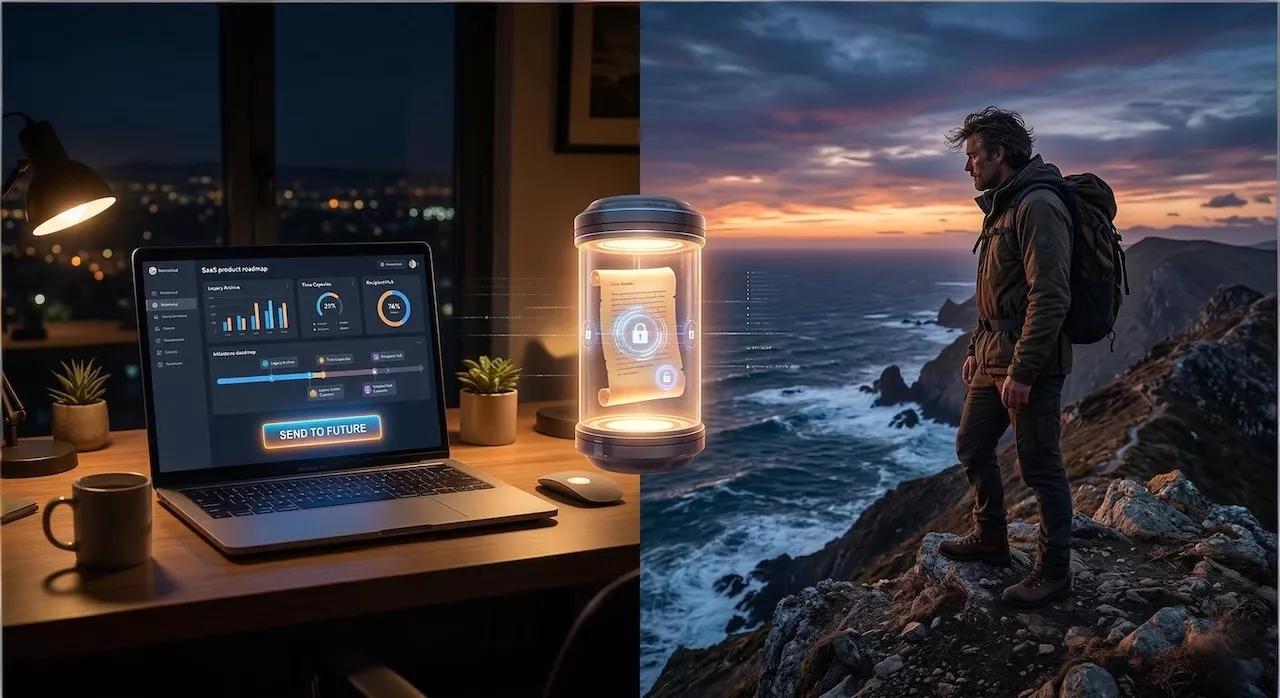
Why I Built EterMail: A Time Capsule for the People I Love Most
I’m a Product Manager who spends all week optimizing for the "immediate now." But getting lost off the grid on a mountain ridge made me realize I had zero infrastructure for the "forever." Here’s why I stopped worrying about conversion rates for a moment and built EterMail—a secure, tamper-proof digital time capsule for the people I love most.

The Most Radical Letter to Your Future Self Is a Promise to Stay Unfinished
The best letter to your future self isn't a memory—it's a mandate. Learn how writing to the version of you still working with love changes everything.

The Ice Tray at Midnight: On Grief, Domestic Minutiae, and the Quiet Work of Becoming Yourself Again
Why do the smallest habits hurt most after someone leaves? A reflection on grief, domestic minutiae, and the quiet moment healing finally begins.