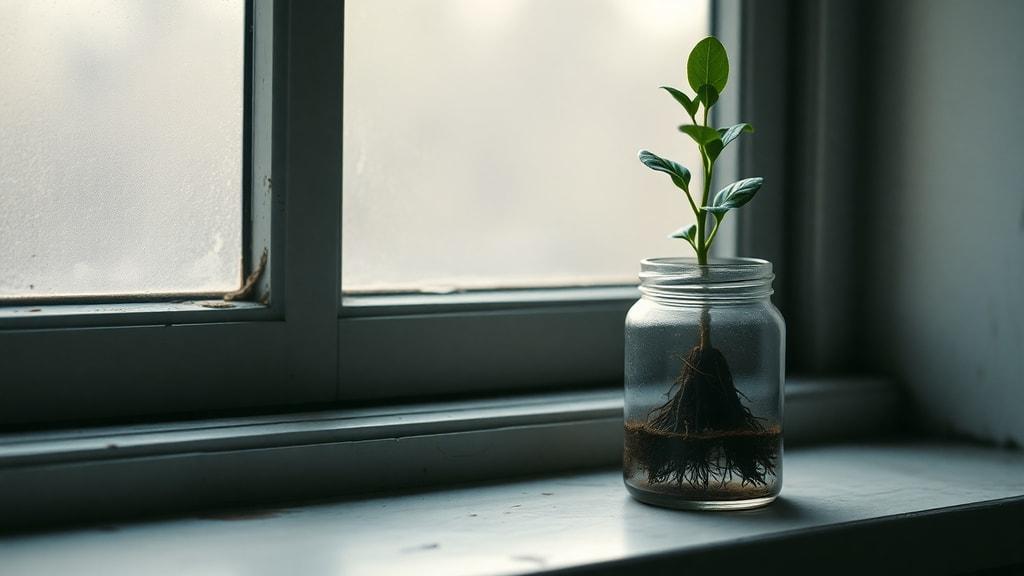
There is a jar on my kitchen sill that has held nothing but water and a single pothos cutting for eleven months. The roots are dense now, a pale neural network tangled in glass, and I still have not found the apartment with the southern exposure I imagined when I snipped it from my neighbor's plant during a conversation about leaving the city. The cutting does not know it was meant for another life. It simply grows, making its quiet prediction in reverse: I will be here when you are ready.
We do not often think of propagation as a form of future-telling. Yet the practice carries an almost embarrassing optimism—the belief that we will still want this thing, still have the space for it, still be the person who thought a kitchen with morning light was worth waiting for. Every cutting suspended in water, every seed saved in an envelope, every avocado pit balanced in toothpicks is a living prediction, a wager against our own capacity for change.
The Botany of Deferred Dreams
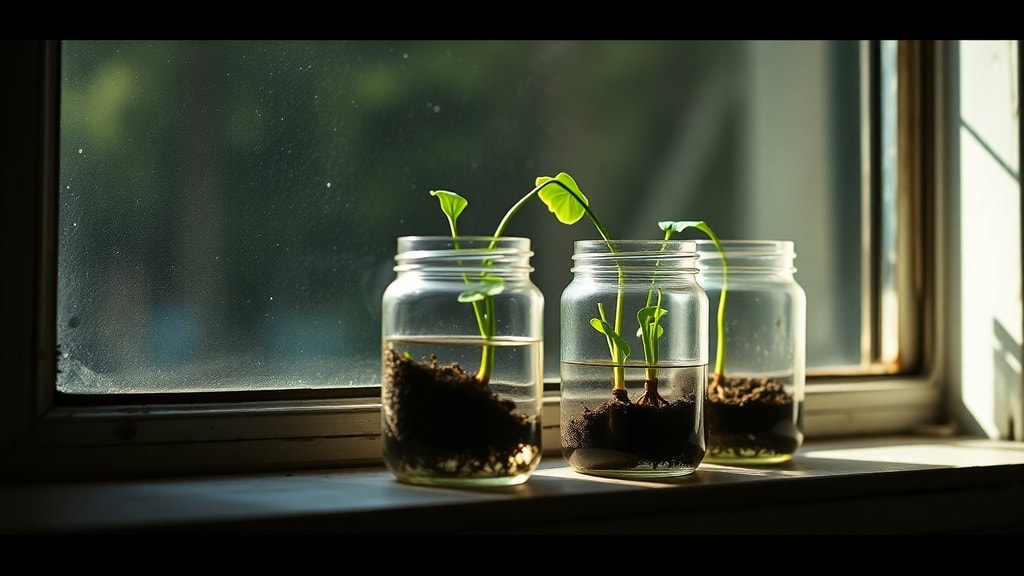
My mother kept seeds in the freezer for years. Packets of heirloom tomatoes, morning glories, a perennial basil she brought back from a trip to Vermont. Each was labeled with a year, a planned garden that kept receding. The freezer became a mausoleum of agricultural ambition, and when she finally moved to a smaller place, she gave them to me with the resigned humor of someone who has made peace with their own failed prophecies. I planted some. Most did not germinate. The ones that did grew into plants that seemed slightly confused, as if they too understood they were arriving late to a party that had already ended.
This is the particular sadness of living predictions: they do not expire cleanly. A letter unwritten remains invisible. A goal abandoned can be mentally erased. But a cutting that has rooted in water, that has survived your neglect and your changing circumstances, becomes a witness. It asks its questions without words. You said you wanted me. You said you had a plan. You said next spring.
The accumulation of these prophecies on our windowsills and in our refrigerators forms a kind of material unconscious—the physical evidence of futures we once felt certain enough to prepare for. The damp paper towel with apple seeds. The envelope of zinnias labeled "for the border." The fig cutting from your uncle's tree, still not planted, still not dead.
Root Systems and the Self We Expected to Be
Psychologists who study goal-setting have noted that the most painful abandoned ambitions are not the grand ones—the novels unwritten, the marathons untrained for—but the small, domestic prophecies that implied a whole architecture of belief. The language class you started because you planned to move to Madrid. The bread starter you maintained for six months of a relationship that ended. The plants you propagated for a home you never found, or found and lost, or found and no longer wanted in the way you imagined.
These objects carry what we might call compressed identity. They contain not just the future action (planting, harvesting, sharing fruit) but the future self who would perform it. The person who would remember to water. Who would have the stability to think in seasons. Who would be partnered, or rooted, or patient enough to wait for a tree to mature.
I think of the avocado pits I have started over the years, each one a small monument to a version of myself that believed in long timelines. The first was in graduate school, suspended in a dorm room window, meant for a future kitchen where I would make guacamole from fruit I had grown. It never reached soil. I left it with a roommate when I moved abruptly, and she later told me it had molded in the jar, the roots turning to something soft and wrong. I felt a shame I could not explain. It was not the waste of a pit. It was the exposure of a prediction I had made too loudly, too visibly, about a self I failed to become.
When the Conditions Arrive Without You
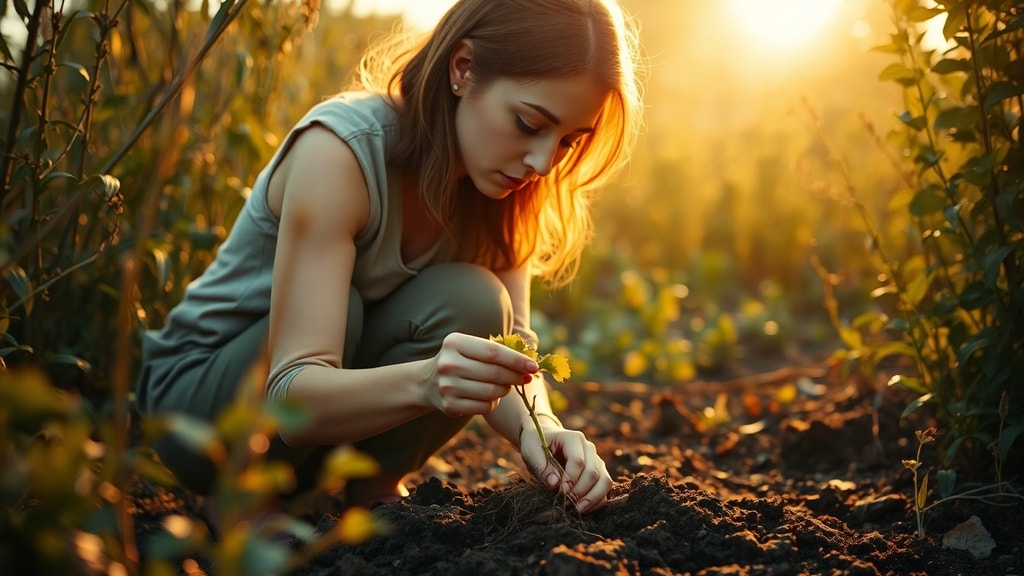
There is a particular moment that arrives without warning: the conditions you predicted finally exist, but you no longer believe they will hold you.
The southern exposure apartment becomes available, and you have the down payment, and the relationship has survived, and the cutting has rooted so thoroughly it has become a plant that needs a decision. All the prophecies have aligned. And you stand in the empty room with its perfect light and feel something like grief, or dread, or the vertigo of a future that kept its promise while you were busy becoming someone who no longer wants what was promised.
This is not cynicism. It is the recognition that living predictions age differently than we do. A seed packet does not experience doubt. A rooted cutting does not negotiate with its own desires. They simply persist, making their quiet claim on a future that was agreed upon in a different emotional weather.
I finally planted that pothos last month. Not in the kitchen I had imagined, but in a small pot on a desk in a room I rent month to month. The roots had grown so dense they had to be teased apart, some torn in the process. It was not the future I had predicted. The light is northern, not southern. The kitchen is shared, not mine. But the plant has adapted, as plants do, to conditions that were not in the original prophecy. It grows more slowly. It reaches toward a different window.
The Ethics of Keeping Living Promises
There is a question that propagation asks of us, and it is not about horticulture. It is about the ethics of keeping promises to selves we no longer are. When do we honor the prediction by fulfilling it differently? When do we release it, compost the cutting, let the seed expire? And when do we simply let it continue its patient existence in water, neither planted nor discarded, a kind of permanent floating present?
I have come to believe that the most honest response is to make the prediction visible again—to name it, to acknowledge the self who made it, to decide actively rather than let the jar grow cloudy with neglect. This is where the practice of future-writing becomes something more than nostalgia. It becomes a conversation across time that does not require the past self to have been correct, only to have been heard.
Writing to the Gardener You Were

I know something about conversations across time. For years I've been that person hunched over a screen at 2 AM, "pair programming" with LLMs, mapping architectures while the world sleeps. That extreme digital solitude taught me how loneliness and hope can coexist in the same sentence—how the most human thing we do is sometimes reach forward to a self we haven't met yet, hoping they'll understand what we were trying to become.
The best way to fight forgetting isn't taking another screenshot; it's setting an alarm for the future. By using EterMail to schedule a letter to yourself—six months from now, five years, a spring when you hope to finally plant—you completely free yourself from the anxiety of the present. The prediction becomes visible without becoming heavy. It lives in the world, tended by something outside your own changing mind, waiting with the same patience as roots in water.
A letter to your future self about the garden you planned, the cutting you started, the self you expected to become by now—this is not a contract. It is a form of witness. It says: I saw you coming. I prepared something. I was not sure you would arrive, or that I would want you to, but I did not want you to arrive unacknowledged.
The difference between a frozen seed packet and a scheduled letter is the difference between abandonment and release. One is a failure you discover accidentally, years later, with guilt. The other is a choice you make visible, a prediction you revisit and revise, a living promise you tend with the same attention you once gave to roots in water.
I have started writing to the woman who put that pothos in the jar. Not to apologize for the delay, but to tell her what happened instead. The city I did not leave. The love that lasted differently than planned. The southern exposure that finally arrived and felt wrong. The northern window where the plant now lives, smaller, slower, but not unloved. The prediction was not wrong. It was only early, and I was only different, and both of us deserve to be acknowledged in the same sentence.
The Propagation of Honest Hope
There is a final lesson in the cuttings that survive our changing minds: persistence is not the same as prediction fulfilled. The plant that roots in water for eleven months, that adapts to a desk instead of a kitchen, that grows toward northern light—this is not a failure of the original vision. It is evidence that living things can be more flexible than the futures we plan for them.
We propagate, I think, not because we are certain of the conditions to come, but because the act of preparation itself is a form of hope we do not yet have language for. The jar on the sill. The seed in the freezer. The letter scheduled for a future spring. They are all ways of saying: I do not know if I will still want this, but I am not ready to decide that I won't.
And when the wanting changes, as it does, as it must—the honest work is not to force the old prediction onto new conditions, but to meet the living thing where it has arrived, to repot it in the light that actually exists, to write the letter that acknowledges the distance traveled between the self who predicted and the self who remains, still growing, still reaching toward whatever window is available.
The pothos on my desk has started a new root, thin and white, exploring the edge of its pot. I do not know what I will do with it. I do not know if I will still be in this room when it needs more soil. But I am learning to let the prediction remain open, to let it live in the present tense rather than the future perfect, to trust that the cutting and I are both doing our best with the conditions we were given, and that this is enough, and that it has always been enough.
<
What is EterMail?
EterMail is a revolutionary time capsule service that allows you to send messages, photos, and videos to the future (up to 30 years). Seal your memories and thoughts today, and they'll be delivered when the time is right.
Time Capsule
Send messages up to 30 years in the future
Rich Media
Text, photos, and videos supported
Secure & Private
Your memories are safely encrypted
EterMail Team
We're the team behind EterMail, dedicated to helping you preserve and share timeless messages with your loved ones. Our mission is to make it easy to express your love, share your wisdom, and create lasting connections that transcend time.
Frequently Asked Questions about Future Predictions
What should I include in a letter to my future self about dreams I've deferred?
How do I process guilt about abandoned goals or plans I never fulfilled?
Why do small domestic prophecies feel more painful to abandon than major life goals?
Related Articles
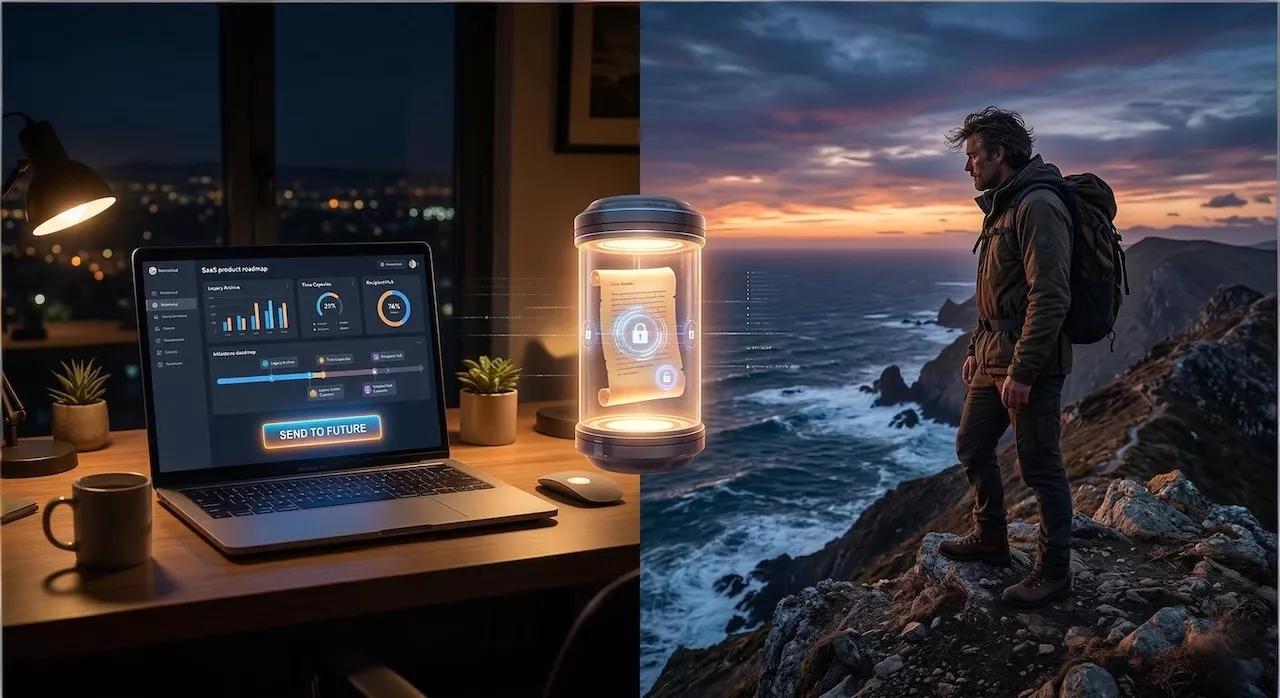
Why I Built EterMail: A Time Capsule for the People I Love Most
I’m a Product Manager who spends all week optimizing for the "immediate now." But getting lost off the grid on a mountain ridge made me realize I had zero infrastructure for the "forever." Here’s why I stopped worrying about conversion rates for a moment and built EterMail—a secure, tamper-proof digital time capsule for the people I love most.

The Most Radical Letter to Your Future Self Is a Promise to Stay Unfinished
The best letter to your future self isn't a memory—it's a mandate. Learn how writing to the version of you still working with love changes everything.
The Ice Tray at Midnight: On Grief, Domestic Minutiae, and the Quiet Work of Becoming Yourself Again
Why do the smallest habits hurt most after someone leaves? A reflection on grief, domestic minutiae, and the quiet moment healing finally begins.