The Weight of a Stranger's Hope
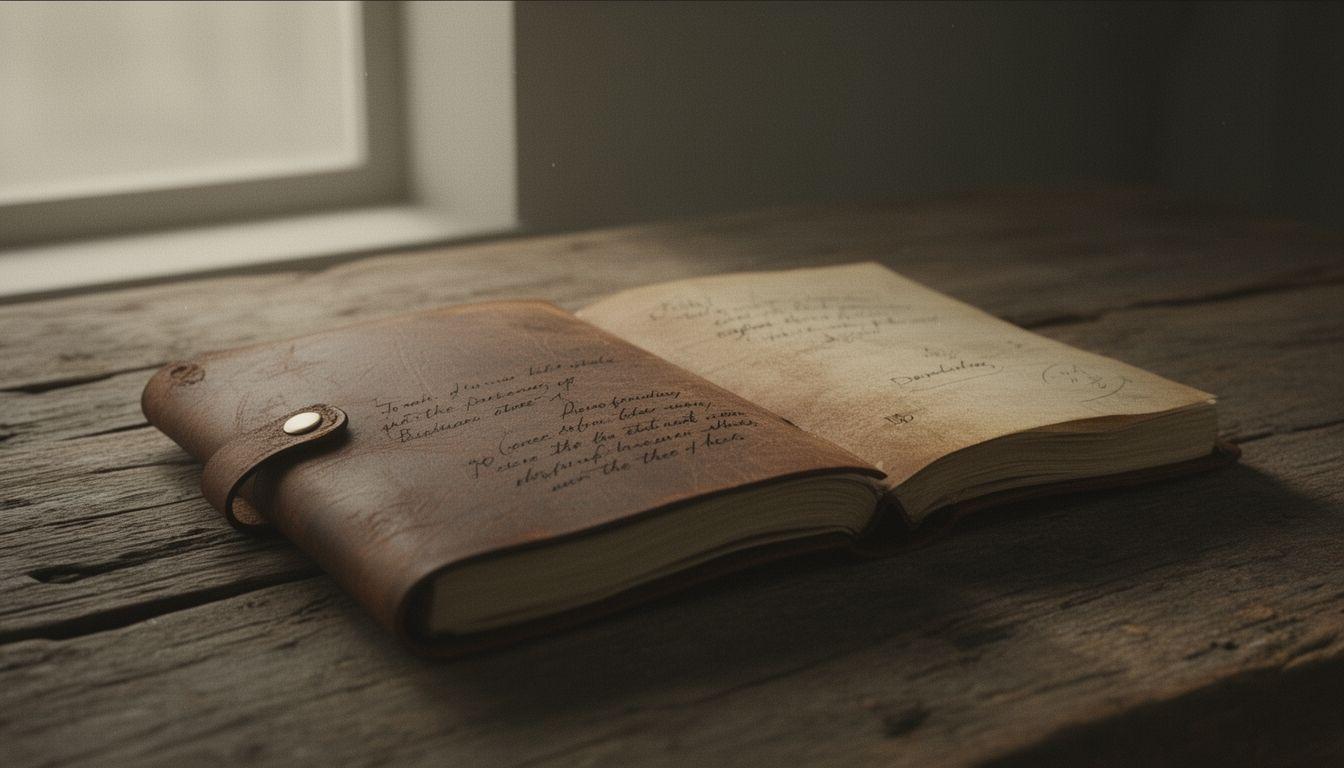
I found it in a box marked "Kitchen Misc." after my aunt's funeral—a 1998 day planner, its leather cover cracked like dried riverbed. Inside, not recipes or grocery lists, but meticulous predictions: "Lily graduates nursing school—May 2003." "Trip to Portugal with Harold—Spring 2005." "Grandchildren? Ask Lily at Christmas."
Lily, my cousin, had dropped out sophomore year. Harold died in 2001. The Christmas question was never asked. Yet here these predictions sat, ink preserved in permanent hope, waiting for someone to discover what the predictor never lived to verify.
We treat predictions as private acts—intimate conversations between present self and future possibility. But predictions have a secret life. They survive their makers. They become orphaned prophecies, documents of ambition that outlast the ambition itself, asking unexpected inheritors to bear witness to futures that never arrived.
The Archaeology of Unfinished Futures
Every prediction is a small act of faith. We forecast not because we control tomorrow, but because imagining tomorrow proves we still believe in one. This psychological function makes predictions strangely durable objects—more durable, sometimes, than the relationships or bodies that produced them.
Consider what we leave behind:
- The spreadsheet where a colleague projected Q3 revenue, created two weeks before their cardiac event
- The calendar with "us + dog + cabin by 2025" penciled in heart-shaped letters
- The baby book where a mother-to-be wrote letters to a child she miscarried at fourteen weeks
- The retirement folder with printed Zillow listings for coastal towns, discovered by children who never knew their father wanted to live anywhere but the suburbs
These objects carry dual timestamps: when they were written, and when they were found. Between these dates lies a gap the predictor never crossed. We, the living, stand in that gap, holding evidence of someone else's forward-looking imagination while knowing exactly how their story ended.
The emotional complexity is unique. We grieve the person. But we also grieve—strangely, guiltily—their unlived expectations. My aunt's Portugal trip feels like a loss I should have prevented, though I was sixteen and knew nothing of Harold's heart. The cabin by 2025 becomes a promise I failed to keep, though I never made it.
Why Predictions Outlast Their Makers
Unlike photographs, which freeze moments that actually occurred, predictions document intention rather than event. This makes them peculiarly resistant to obsolescence. A photo of a party becomes dated; a prediction of a party becomes poignant precisely because the party never happened.
Predictions also resist our usual methods of digital hygiene. We delete old emails, archive unused accounts, clear browser histories. But predictions—especially handwritten ones—demand physical destruction. Someone must choose to throw them away. Often, no one does. They migrate from drawer to box to attic, surviving multiple purges through sheer inertia of meaning.
The digital age complicates this inheritance. A Facebook memory surfaces: your deceased friend's check-in at "Future Home—Closing 2019!" The closing never happened; the friend died in 2018. The algorithm doesn't know this. It serves the memory with its usual chirpy prompt: "See what you were doing five years ago!"
Living Inside Someone Else's Hope
The philosopher Kierkegaard wrote that life can only be understood backwards, but it must be lived forwards. Predictions reverse this: they are forward-written documents that we, the inheritors, can only understand backwards. We know the ending. They didn't. This knowledge asymmetry creates a strange ethical position.
When I read my aunt's planner, I became custodian of her disappointment. Not to fix it—impossible—but to acknowledge it. To say: I see what you wanted. I see that you didn't get it. Your hope mattered, even unfulfilled.
This is the peculiar labor of inheriting predictions. We complete them not by making them true, but by witnessing their failure with compassion. We become the audience the predictor never had, the verification they never received.
Some predictions, of course, do come true—just differently than imagined. Lily did eventually become a nurse, in 2011, after two marriages and a career in retail. My aunt would have recalibrated her prediction, adjusted the timeline, maintained the underlying faith. The prediction's spirit survived even when its letter failed.
The Responsibility of Making Predictions Now
If our predictions may outlast us—and they may—what do we owe to their future discoverers?
First, honesty about uncertainty. The most burdensome inherited predictions are those written with false confidence. "We will definitely..." "I am certain that..." These formulations leave no room for the unpredictability that defines actual living. Better: "I hope..." "I wonder if..." "I'm trying to..."
Second, context for interpretation. My aunt's planner contained no explanation of who Harold was, why Portugal mattered, what nursing school represented to her. I pieced this together through family archaeology. Predictions with even minimal context—dates, relationships, emotional stakes—become more legible to strangers.
Third, permission to release. The most generous predictions acknowledge their own possible irrelevance. "If you're reading this and none of this happened—if I died, if plans changed, if life intervened—please know that the predicting itself was the point. The hope was real even when the outcome wasn't."

Digital Tools for Intentional Prophecy
The platforms we use shape the predictions we make. Social media encourages performance—predictions as identity claims, declarations to an audience. Private journals encourage confession—predictions as self-therapy, never meant for eyes but our own.
Time-capsule services occupy a middle space: predictions directed at specific future recipients, with built-in delays that acknowledge uncertainty. A letter to your child at eighteen, written when they're three. A message to your spouse on your tenth anniversary, composed during your first year of marriage. These predictions accept their own possible obsolescence. They're designed to be found, read, and potentially released from obligation.
I've spent enough late nights staring at glowing screens—pair programming with LLMs until 2 AM, mapping architectures that bridge physical and digital worlds—to know that technology alone solves nothing. But I've also hiked enough mountain trails and surfed enough cold Pacific waves to understand that the best tools strip away illusion and preserve what actually matters: unrepeatable, present moments made durable through intention.
The technology matters less than the intentionality. Whether handwritten or encrypted, predictions gain dignity when we make them consciously, knowing they may survive us. They become not debris of daily life but deliberate communications across time.
This is exactly why I obsessed over end-to-end encryption and extreme server redundancy when building EterMail. Because I know that a letter written to the future needs to be guarded even more fiercely than a bank password. The predictions we send across years—confessions of hope, admissions of uncertainty, love letters to people we haven't become yet—deserve to arrive intact, private, and exactly when we promised.
The Strange Comfort of Unfulfilled Dreams
There's a counterintuitive solace in inheriting failed predictions. They remind us that disappointment is survivable, that most people who came before us wanted things they didn't get and continued anyway. My aunt's unvisited Portugal, my colleague's unmet revenue targets, the cabin that stayed imaginary—these are not tragedies. They're evidence of ordinary human persistence, the continuous act of looking forward despite everything.
When we make our own predictions now, we participate in this tradition. We add our voices to the chorus of humans who have always tried to imagine tomorrow, knowing imagination outperforms accuracy. The prediction that fails is not wasted. It joins the archive of attempted futures, the collective testimony that we kept hoping even when hope was hard.
The box marked "Kitchen Misc." sits in my closet now. I haven't thrown it away. Sometimes I open it, read my aunt's handwriting, remember that she was a person who planned, who looked forward, who believed that 2005 would bring something worth waiting for. She was wrong about the specifics. She was right about the impulse.
That's what orphaned prophecies ultimately teach. Not that we can see the future. But that the attempt to see it—to write it down, to prepare for it, to hope toward it—is one of our most human acts. And that this act deserves witnesses, even strangers, even late, even when the future we predicted never came to pass.
What is EterMail?
EterMail is a revolutionary time capsule service that allows you to send messages, photos, and videos to the future (up to 30 years). Seal your memories and thoughts today, and they'll be delivered when the time is right.
Time Capsule
Send messages up to 30 years in the future
Rich Media
Text, photos, and videos supported
Secure & Private
Your memories are safely encrypted
EterMail Team
We're the team behind EterMail, dedicated to helping you preserve and share timeless messages with your loved ones. Our mission is to make it easy to express your love, share your wisdom, and create lasting connections that transcend time.
Frequently Asked Questions about Future Predictions
What should I include in a time capsule prediction letter?
How do predictions change our relationship with time?
What happens to our digital predictions after we die?
Related Articles
Why I Built EterMail: A Time Capsule for the People I Love Most
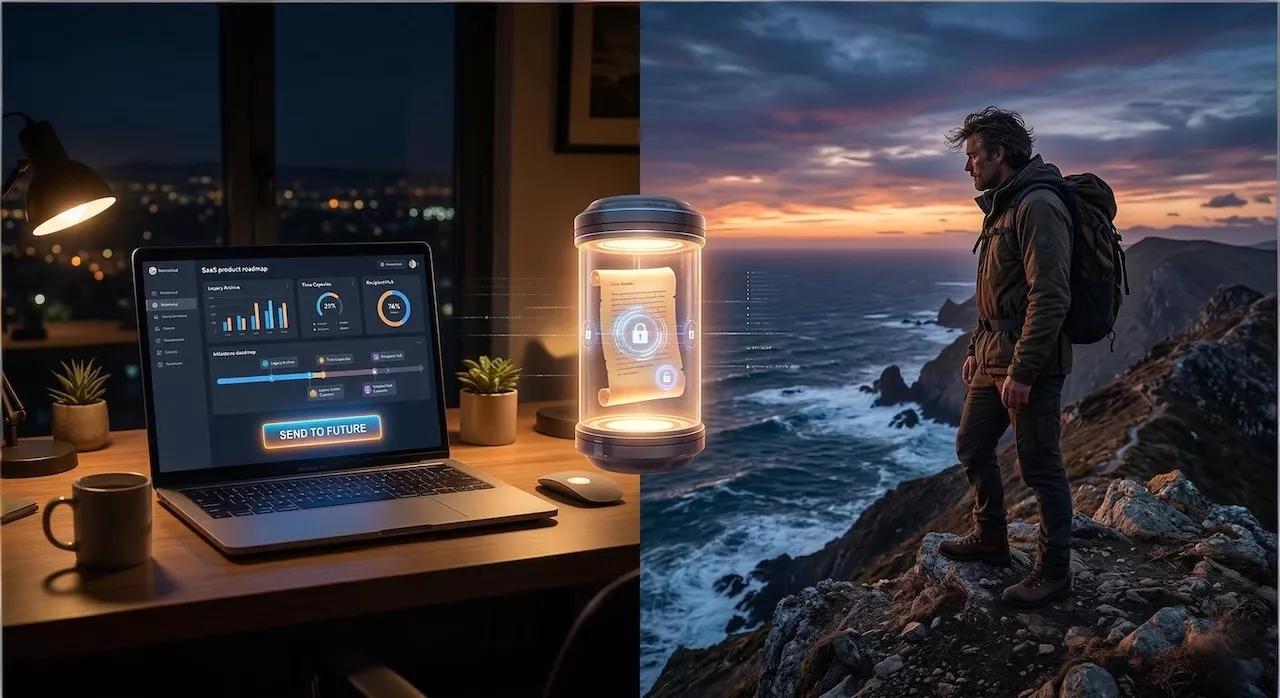
I’m a Product Manager who spends all week optimizing for the "immediate now." But getting lost off the grid on a mountain ridge made me realize I had zero infrastructure for the "forever." Here’s why I stopped worrying about conversion rates for a moment and built EterMail—a secure, tamper-proof digital time capsule for the people I love most.

The Most Radical Letter to Your Future Self Is a Promise to Stay Unfinished
The best letter to your future self isn't a memory—it's a mandate. Learn how writing to the version of you still working with love changes everything.
The Ice Tray at Midnight: On Grief, Domestic Minutiae, and the Quiet Work of Becoming Yourself Again
Why do the smallest habits hurt most after someone leaves? A reflection on grief, domestic minutiae, and the quiet moment healing finally begins.