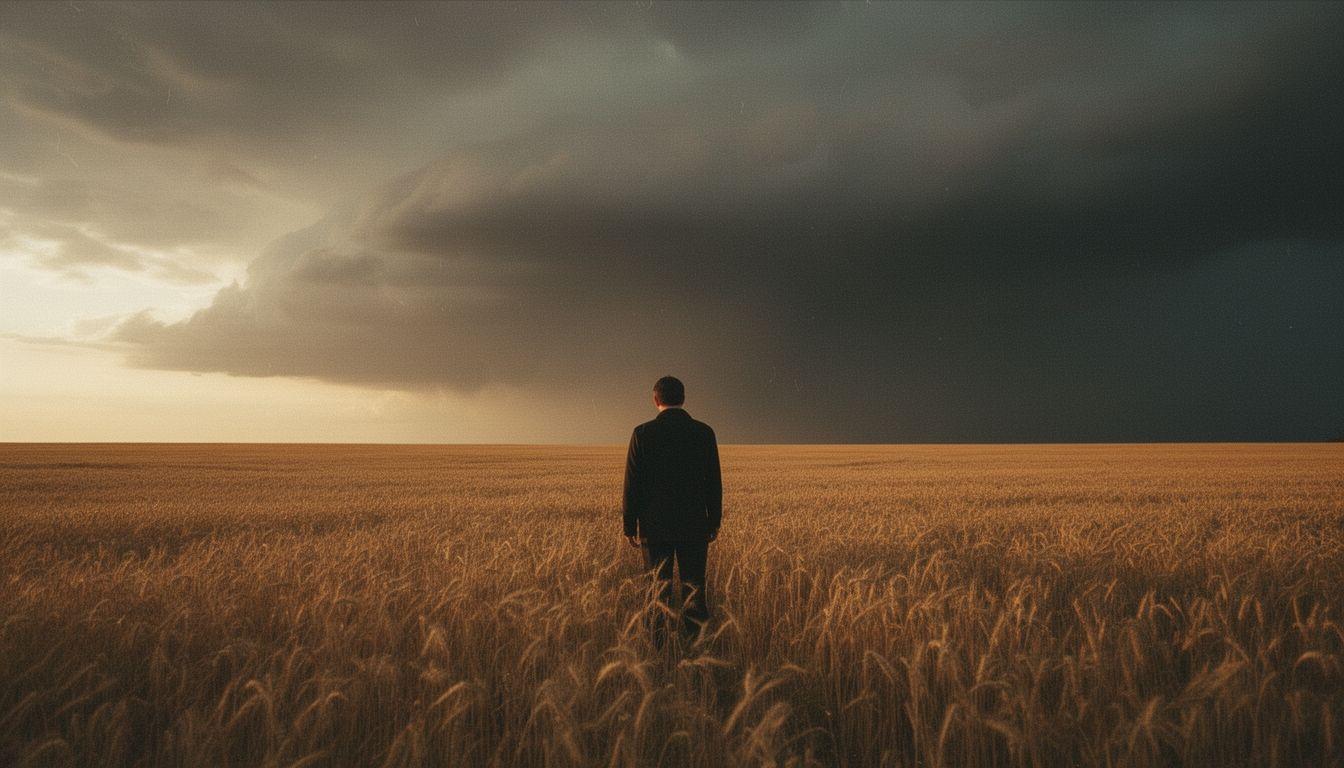
The meteorologist on the morning news looks exhausted. Behind her, a satellite map bleeds red and orange across continents, pressure systems colliding like tectonic plates of warm air. She says the words we've learned to expect: unprecedented, record-breaking, rapidly intensifying. Somewhere between her warning about atmospheric rivers and the commercial break, you remember that you signed a thirty-year mortgage last spring. You planted tomatoes in March. You told your daughter she'd have a backyard to run through when she's ten.
We are living through what philosophers call "epistemic breakdown"—the collapse of our trusted methods for knowing what comes next. The models that predicted rainfall, crop yields, political stability, economic growth: they're still running, still outputting numbers, but we sense the hollowness underneath. And yet. We still open businesses. We still conceive children. We still write letters dated for decades from now, sealing them with the audacity of people who believe time will deliver them.
This is not denial. It is something stranger, more human, and worth understanding.
The Architecture of Ordinary Hope
Consider the last time you made a plan extending past next month. Perhaps you booked flights for a wedding in October. Perhaps you enrolled in a degree program. Perhaps you simply told a friend, "Let's do this again next year." Each of these acts contains a miniature prophecy, a small wager that the world will remain sufficiently stable for your intention to matter.
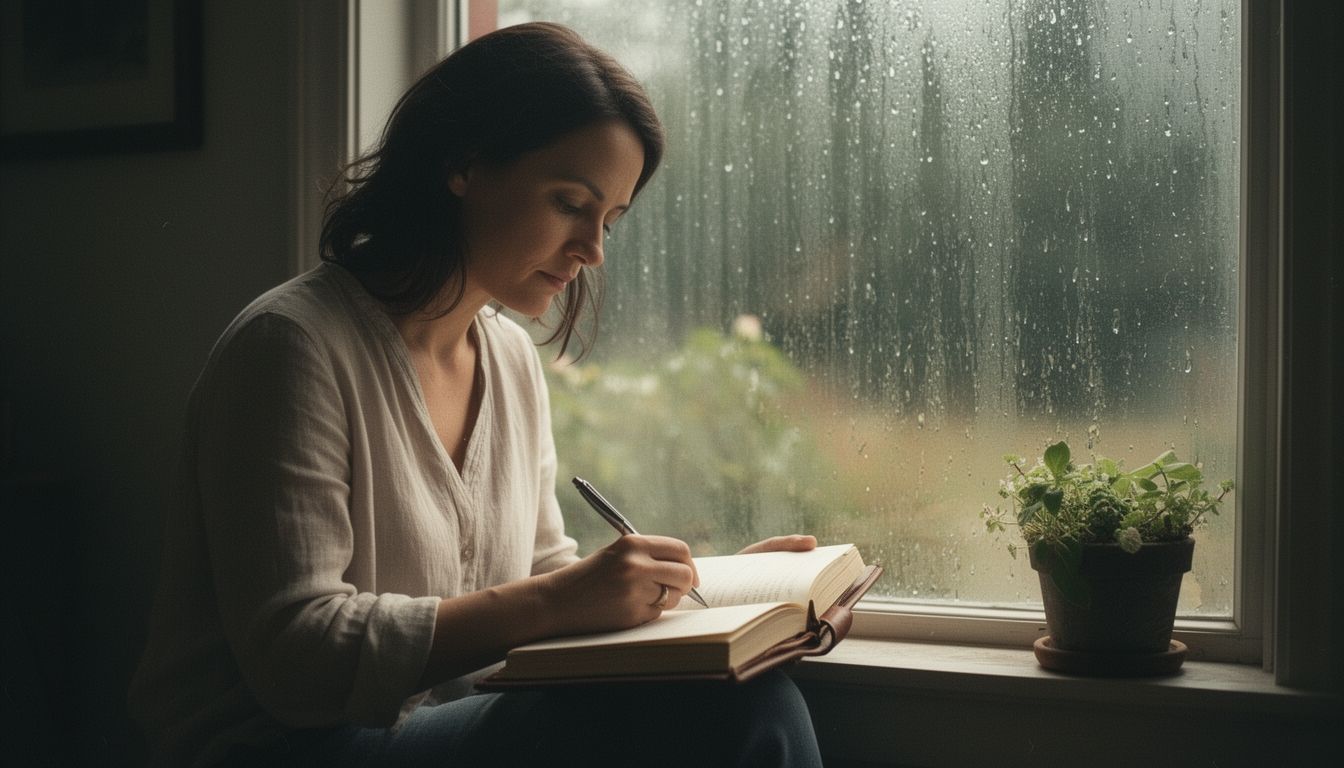
Psychologists who study prospection—the human capacity to imagine the future—have found something remarkable. Our brains don't simply forecast based on probability. We construct futures we can act toward, even when the data suggests caution. This isn't a bug in our cognition. It's the feature that built civilization. The farmer who plants seeds in drought conditions isn't ignoring the risk. She's participating in a contract with time itself: I will do my part, and trust that circumstances might meet me halfway.
When we predict our own lives five, ten, twenty years forward, we're doing something equally ancient. We're creating what narrative theorists call "possible selves"—versions of ourselves that require our present commitment to exist. The parent who writes a letter to a child not yet born isn't describing an inevitable future. They're summoning one, using language as the technology of becoming.
The Climate of Our Private Forecasts
The external uncertainty we face now—climate disruption, political volatility, technological displacement—has colonized our internal weather too. A 2023 study in Nature Human Behaviour found that young adults in developed economies now report shorter subjective time horizons than any generation measured since the 1950s. They struggle to imagine themselves at forty. The future feels not unavailable, but somehow unauthorized, as if the permission to plan has been revoked by forces beyond their control.
This is where the act of prediction becomes radical. Not the prediction of markets or elections, but the intimate forecasting we perform when we address our future selves directly. Dear me in 2034. The letter form itself insists on continuity. It presumes a reader who will exist, who will remember being the writer, who will care about the transformation between those two points.
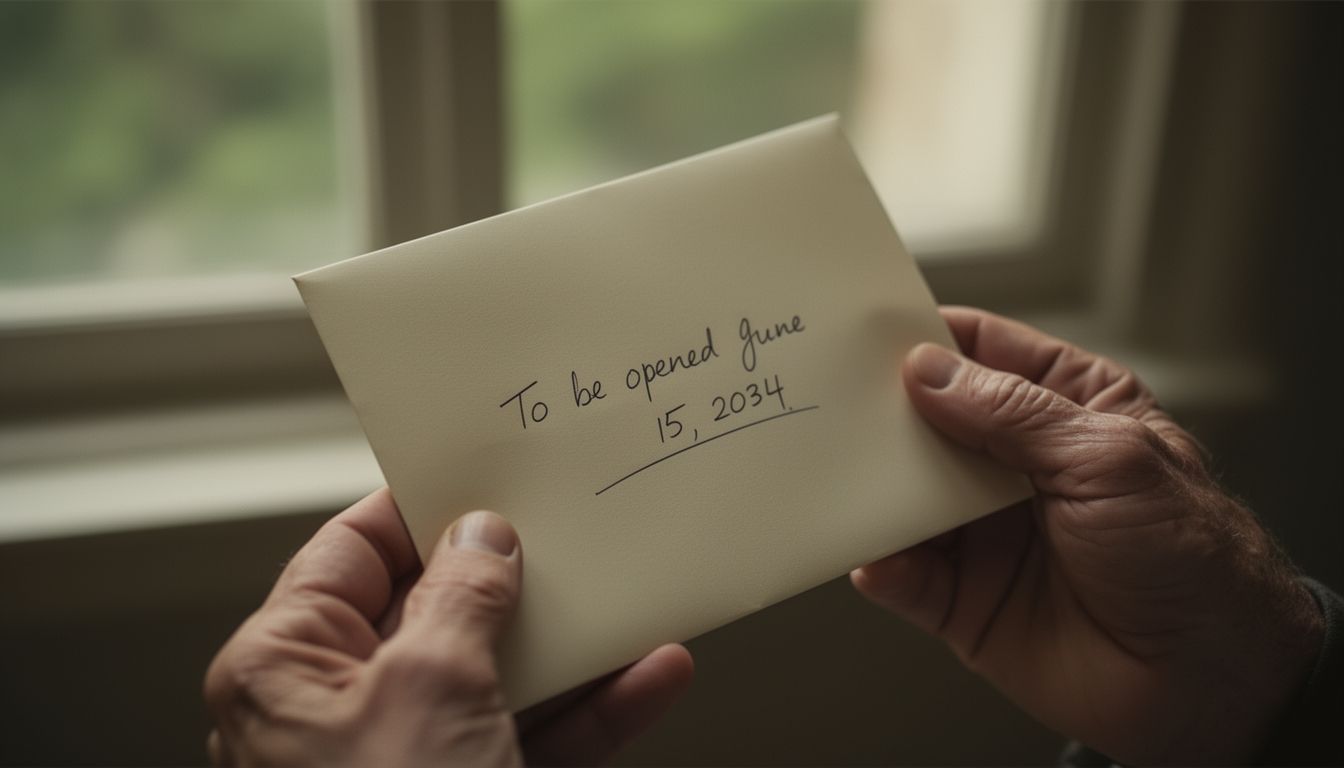
There's a particular quality to predictions made in this mode. They're simultaneously humble and audacious. You cannot know what technologies will exist, what losses you'll have endured, what unexpected joys will have rearranged your priorities. So you write from the only position available: this is who I am now, and I am willing to be surprised by who I become.
The Mathematics of Meaningful Uncertainty
Climate scientists have developed a concept called "deep uncertainty"—situations where we cannot assign reliable probabilities to outcomes because the underlying systems are changing faster than our models can adapt. The interesting thing about deep uncertainty is that it doesn't paralyze all action. It shifts the focus from optimizing (finding the single best path) to robustness (finding paths that remain viable across many possible futures).
Our personal predictions work similarly. When you write to your future self, you're not trying to guess correctly. You're building psychological infrastructure—the habits of reflection, the capacity for self-compassion, the archive of who you were that makes who you are comprehensible.
Consider what we actually preserve when we create these time capsules of intention. Not the predictions themselves, which will almost certainly be wrong. But the evidence of caring, the proof that someone once took the trouble to reach across time with something to say. This is why reading old journals feels different from reading old news. The journalist was trying to inform. The diarist was trying to continue.
The Courage of Specificity
There's a temptation, in uncertain times, to make our predictions vague. I hope I'll be happy. I hope the world will be better. This protective abstraction is understandable, but it costs us something. The specific prediction—I will be living in that city, doing this work, in relationship with these people—requires more vulnerability. It risks more obvious disappointment. But it also creates more meaningful connection between present and future selves.
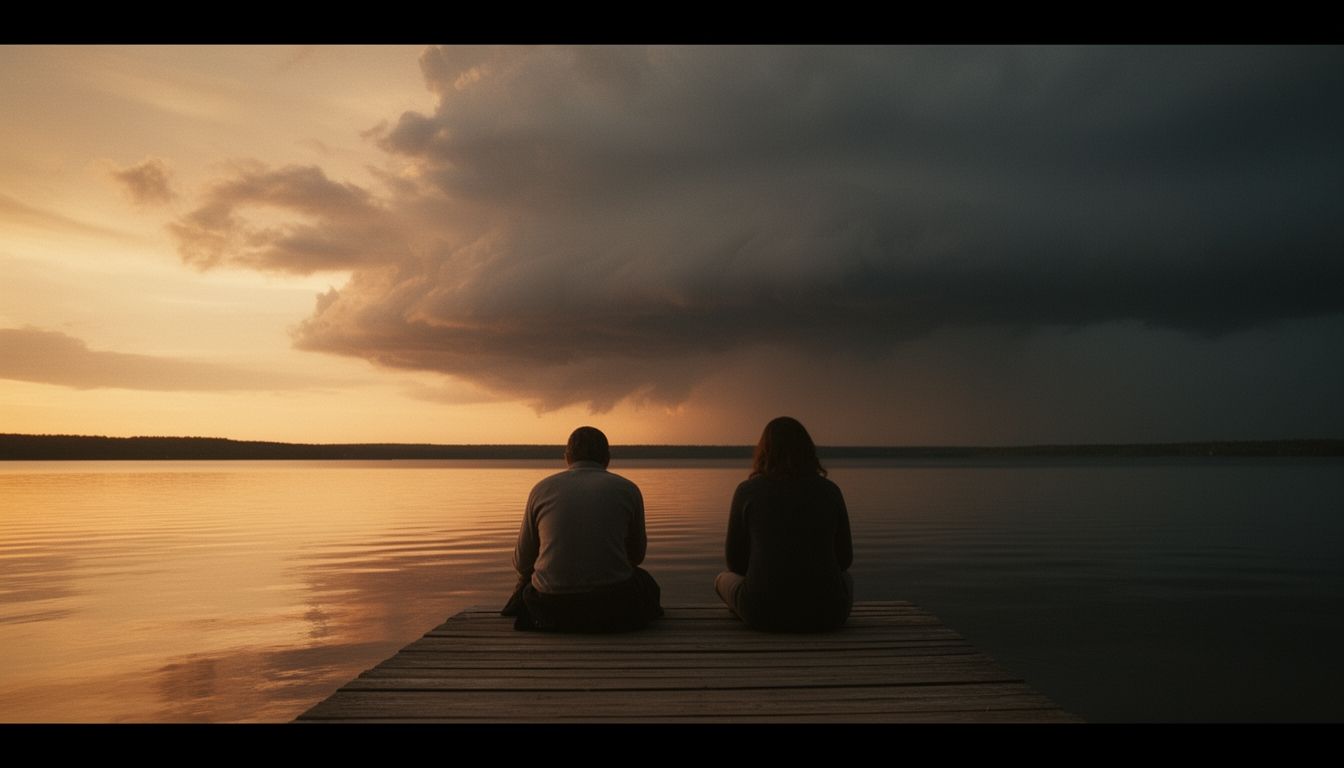
The philosopher Byung-Chul Han writes about "the scent of time," the way certain moments carry an awareness of their own passing. Predictions made with specificity have this scent. They acknowledge: I know this moment is temporary. I know I will change. I am choosing to mark this particular configuration of self before it dissolves.
This is where digital time capsules offer something previous generations couldn't access. Not because paper letters were inferior, but because the infrastructure of delivery was unreliable. A letter hidden in an attic might be found, might be destroyed, might be forgotten. A message scheduled through encrypted, time-locked systems arrives with the intention intact—the words you chose, preserved without the erosion of memory or the intervention of others.
Writing Against the Evidence
The most honest predictions contain their own doubt. I don't know if you'll read this. I don't know if the world I'm imagining will exist. This isn't pessimism. It's a form of epistemic humility that actually strengthens the act of reaching forward. When we acknowledge the uncertainty, our predictions become gifts rather than contracts. We're not demanding that the future fulfill our terms. We're offering our present self as company for whoever arrives there.
There's research suggesting that people who engage in regular future-self writing report greater life satisfaction and more consistent progress toward goals, even when their specific predictions prove inaccurate. The mechanism seems to be identity-based: by vividly imagining a future self, we strengthen the psychological continuity that makes long-term decision-making feel meaningful rather than abstract.
In an age of climate anxiety and institutional distrust, this personal practice of prediction becomes a small but genuine form of resistance. The systems around us may be optimized for short-term extraction—of attention, of resources, of political will. But the act of composing a message for your own future, or for someone you love who doesn't yet know they need it, operates on an entirely different temporality. It assumes that duration matters, that the person you will become deserves the same ethical consideration as the person you are now.
I know this because I've lived it from both sides. There are nights when I'm deep in conversation with an LLM at 2 AM, mapping out architectures for systems that don't exist yet, and I feel that strange loneliness of building something no one can see yet. Then I force myself outside—hiking steep trails where the wind strips away every digital illusion, or surfing where the wave's indifference teaches you what raw reality actually feels like. Those moments of losing control remind me why any of this matters. The code I write isn't just code. It's a bridge. I've always been obsessed with that boundary between physical and digital, that wild fantasy of uploading consciousness like Neo in The Matrix. EterMail is my attempt to build a ship that actually crosses that dimension—not of space, but of time.
The best way to fight forgetting isn't taking another screenshot; it's setting an alarm for the future. By using EterMail to set a delivery date 5 years from now, you completely free yourself from the anxiety of the present. You write the letter, you seal it with time itself, and you let go. The future you will receive it exactly when you need it most—when the person who wrote it has become a stranger, and those words become the bridge back to who you were.
The Forecast We Make Together
Weather forecasting has improved dramatically in our lifetimes. We can predict hurricanes with precision that would have seemed supernatural to previous generations. Yet the meaning of these forecasts has become more complicated. Knowing that a storm will arrive doesn't tell us how to feel about the infrastructure that will fail, the communities that will be displaced, the political responses that will follow.
Similarly, our personal predictions have grown more sophisticated in their uncertainty. We know too much now to write with the innocent confidence of earlier eras. But this sophistication can be a resource rather than a limitation. The predictions we make today—about our careers, our relationships, our values, our children—can incorporate this awareness. They can say: I knew the world was changing. I made this commitment anyway, not because I was certain, but because the alternative—living without forward motion—felt like a different kind of loss.
The meteorologist returns for the evening broadcast. The map still bleeds red. But she ends with something she didn't used to say: We'll keep watching. We'll update you as conditions change. This is the new grammar of forecasting—provisional, iterative, committed to continued attention rather than definitive pronouncement.
Our private predictions can adopt this grammar too. Not as failure, but as accuracy. The letter to your future self doesn't need to pretend to knowledge it doesn't have. It needs only to establish: I was here. I was trying. I believed you were worth reaching.
That belief, maintained against the evidence of chaos, is itself a kind of weather. It creates the conditions for something else to grow.
What is EterMail?
EterMail is a revolutionary time capsule service that allows you to send messages, photos, and videos to the future (up to 30 years). Seal your memories and thoughts today, and they'll be delivered when the time is right.
Time Capsule
Send messages up to 30 years in the future
Rich Media
Text, photos, and videos supported
Secure & Private
Your memories are safely encrypted
EterMail Team
We're the team behind EterMail, dedicated to helping you preserve and share timeless messages with your loved ones. Our mission is to make it easy to express your love, share your wisdom, and create lasting connections that transcend time.
Frequently Asked Questions about Future Predictions
How do I write a meaningful letter to my future self when everything feels uncertain?
What psychological benefits come from predicting your future life?
How can time capsules help with climate anxiety and fear of the future?
Related Articles
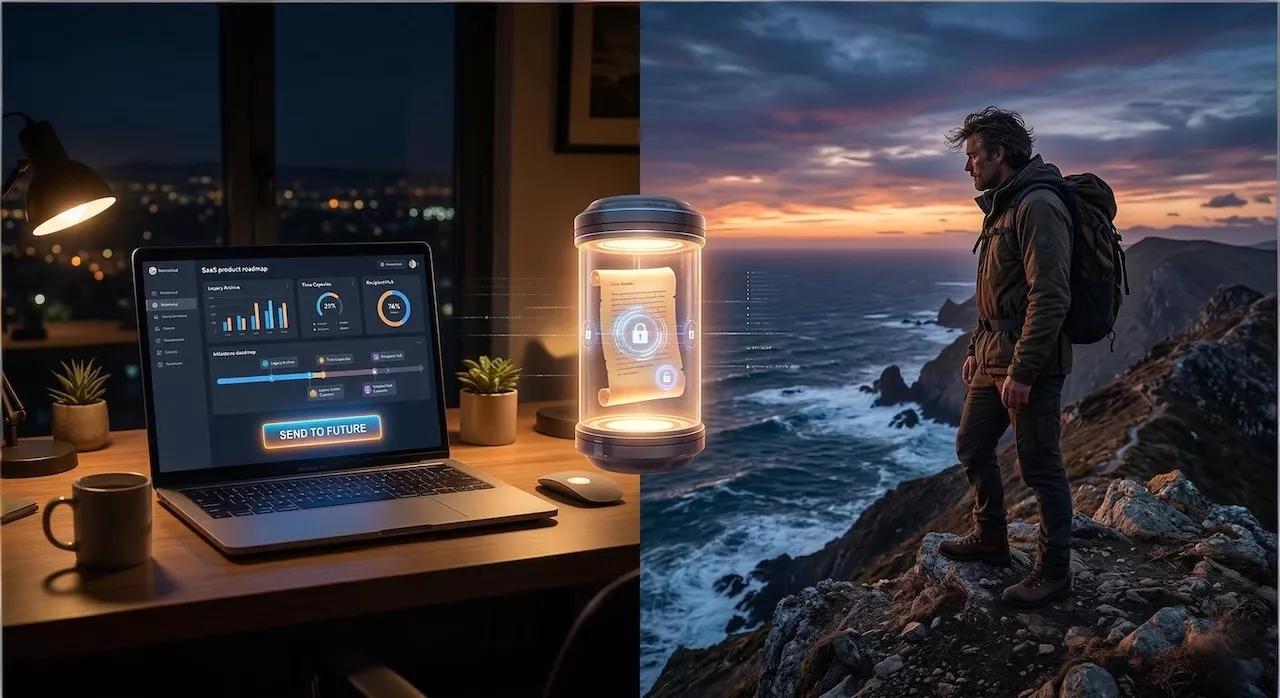
Why I Built EterMail: A Time Capsule for the People I Love Most
I’m a Product Manager who spends all week optimizing for the "immediate now." But getting lost off the grid on a mountain ridge made me realize I had zero infrastructure for the "forever." Here’s why I stopped worrying about conversion rates for a moment and built EterMail—a secure, tamper-proof digital time capsule for the people I love most.

The Most Radical Letter to Your Future Self Is a Promise to Stay Unfinished
The best letter to your future self isn't a memory—it's a mandate. Learn how writing to the version of you still working with love changes everything.
The Ice Tray at Midnight: On Grief, Domestic Minutiae, and the Quiet Work of Becoming Yourself Again
Why do the smallest habits hurt most after someone leaves? A reflection on grief, domestic minutiae, and the quiet moment healing finally begins.