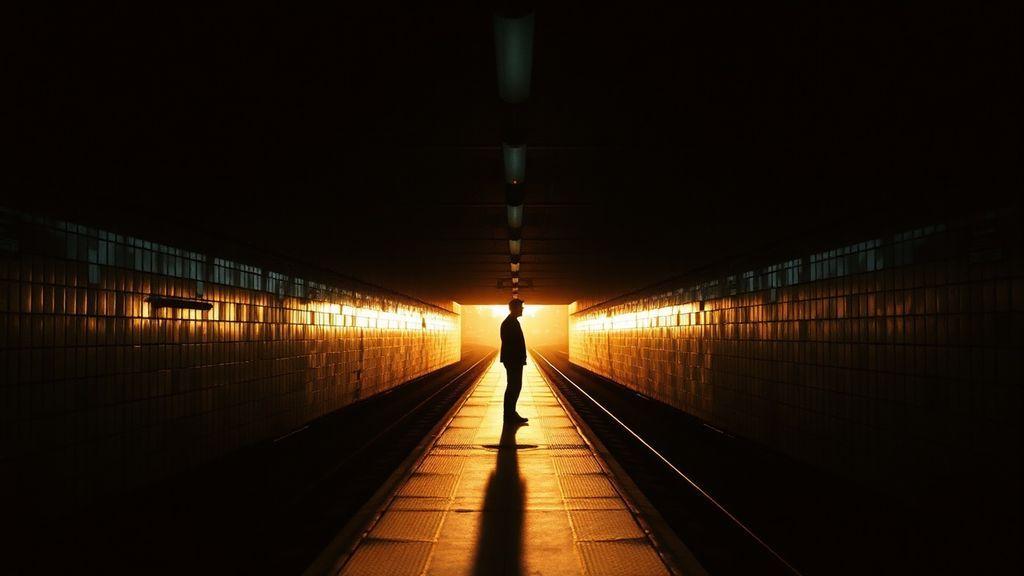
The Man Who Always Checked His Watch at 7:42
He stood at the same corner of the platform every morning, rain or shine. Dark wool coat in winter, sleeves rolled to the elbow come June. You never spoke. But you knew the precise angle of his shoulders when the train was running late, the way his thumb worried the watch face at 7:42 exactly—some private countdown to a meeting, a daycare pickup, a life you could only infer from the edges.
Then one Tuesday in March, he wasn't there. The corner stood empty. The 7:42 came and went without his ritual. You caught yourself looking the next day, and the next, until the absence itself became a presence, a small haunting you couldn't mention to anyone without sounding unhinged.
This is the quiet prophecy we practice: the art of noticing people who never asked to be seen.
We are all amateur forecasters of stranger lives, building predictive models from the thinnest data—coffee orders, walking speeds, the particular squeak of a mailbox hinge. These micro-forecasts become invisible architecture. They hold us in place. And when they break without ceremony, we experience a grief so specific it has no name.

The Barista's Belly: A Calendar We Never Meant to Keep
She made your oat milk latte with the flick of her wrist, the particular way she called out "medium hot" like a secret code. Then: the gradual distance growing between her torso and the counter. The strategic placement of the espresso machine. The day she switched to exclusively black shirts.
You counted, didn't you? Not consciously, not with malice. But some part of you marked the progression, projected forward to a due date you'd never be told, imagined the announcement she'd make to regulars, the temporary replacement you'd have to train all over again on your preferences.
We become invested in narratives we have no right to. The barista's pregnancy, the neighbor's new boyfriend visible only through parking patterns, the elderly dog-walker whose slowing pace you tracked with something like dread. These are not stalkings. They are the opposite of indifference—the human compulsion to weave story from repetition, to treat proximity as relationship, to care by accident.
The writer Zadie Smith once wrote about the "joy of the namer"—the pleasure of identifying strangers with private nicknames, the whole taxonomy of lives that brush ours without consent. But she missed the corollary sorrow: the grief of the pattern-breaker, the sudden dissolution of a forecast we never announced.
The Architecture of Unrequested Care
Consider what you've built without blueprints.
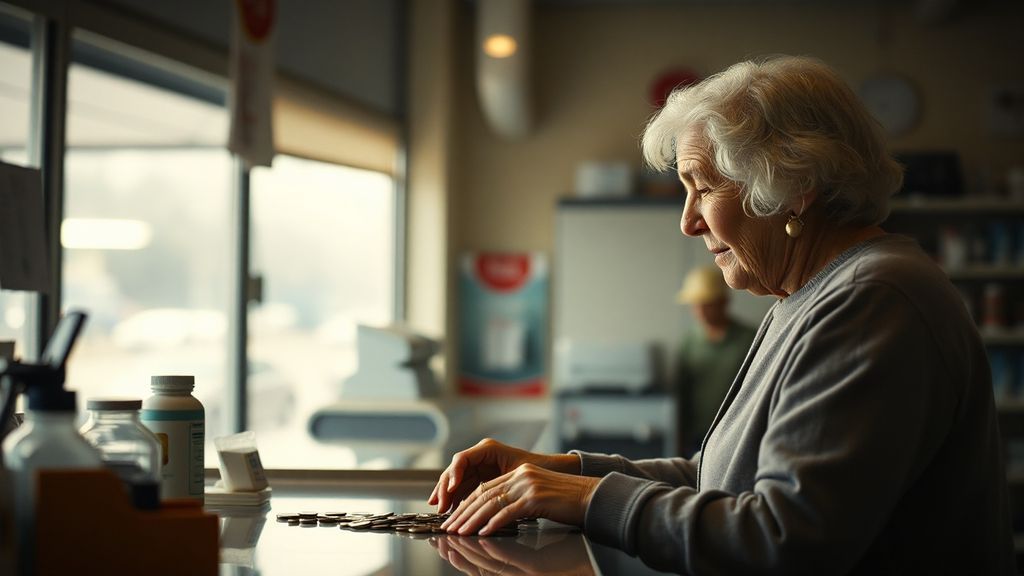
The neighbor three doors down whose lights extinguish at 10:47, whose routine you know better than your partner's sleep schedule. The runner with the prosthetic leg who passes your window at 6:15, whose improving pace you celebrated internally like a coach. The elderly woman at the pharmacy, always Thursday, always three items, always counting exact change with trembling fingers.
These observations are not passive. They are active constructions—tiny temples of attention erected in the shared spaces of modern life. We forecast their continuance because their repetition soothes something in us. The world is coherent. We are not alone in our routines. Others too are pinned to patterns, and in this mutual pinning, we find the ghost of community.
Urban theorists call this "familiar stranger" phenomenon—the people we recognize but never interact with, a category of relationship unique to dense human settlement. But the forecasting adds another layer. We don't merely recognize. We predict. We extend their stories forward, filling gaps with generous invention, and in doing so, we practice a form of love that asks nothing, risks nothing, costs nothing.
Until it does.
The Collapse: When Forecasts Fail Without Warning
What breaks in us when the pattern shatters?
The man at the platform never returns. The barista's belly suddenly flat, no baby visible, no explanation offered. The neighbor's lights burn all night, then go dark for a week. The runner's window passes empty, day after day.
We are left with narrative wreckage. The story we were telling ourselves—of health, of birth, of stability, of simple continuation—proves to have been speculative fiction. We grieve both the person and our own predictive confidence, the small god-complex of believing we understood something about a life from its surface.
This grief is complicated by its illegitimacy. We have no standing to ask after these people. No shared language, no social contract that permits inquiry. The barista owes us no reproductive bulletin. The neighbor owes no explanation of changed habits. We are investors with no equity, shareholders of stories we don't own.
Yet the feeling persists. Something has ended. A small world we inhabited has gone dark, and we are left in the unfamiliar space of not-knowing, which is also the space of adulthood, of mortality, of all the larger forecasts we make about our own lives that will similarly fail without warning.
The Mirror in the Method
Perhaps we predict strangers to practice predicting ourselves.
The commuter whose countdown we tracked—was he not also a version of our own future self, the one we imagine arriving punctually at commitments we haven't yet made? The barista's anticipated maternity, the neighbor's aging, the runner's dedication—these are rehearsals for our own narrative arcs, projected outward so we can observe them with the detachment we cannot apply to our own becoming.
In forecasting strangers, we are also future-proofing ourselves against the shock of change. If we can anticipate the barista's leave-taking, perhaps we can anticipate our own losses. If we can track the runner's improvement, perhaps we can believe in our own capacity for transformation. The micro-forecast is a training ground for the macro-predictions we must make about our own lives—career, love, health, death—and the certain failure of all such predictions to fully prepare us.
The Ethics of Unrequested Witness
There is something here to interrogate.
Our predictive attention is not always benign. The same pattern-recognition that notices a barista's pregnancy can track a woman's safety routes, can clock a vulnerable routine, can build the architecture of threat as easily as care. Forecasting is power, and power is not neutral.
But the ordinary version—the watch-checker, the light-timer, the pace-tracker—this seems closer to tenderness than to threat. It is the residue of village consciousness in urban anonymity, the evolutionary inheritance of knowing one's tribe, adapted to conditions where tribe is impossible. We cannot know everyone. So we know the everyone we can, in the limited ways available: their timing, their trajectories, their visible changes.
The question becomes what we do with this knowing. Whether we let it deepen our humanity or merely harden our categories. Whether we can hold the forecast loosely enough to release it when proven wrong, to revise when surprised, to remain open to the fundamental unknowability of every life that brushes ours.
What We Might Preserve
There is a particular loneliness to modern life that these micro-forecasts both soothe and intensify. We are surrounded by people and known by none. Our predictive architectures are compensatory structures, holding the place of genuine relationship without its risks or reciprocities.
I know this loneliness intimately. There are nights I'm still hunched over a screen at 2 AM, pair programming with an LLM, mapping out some architecture while the world sleeps—so deep in digital solitude that the barista's "medium hot" becomes almost a lifeline, proof that I exist in a physical world where other bodies move through routines. Then I force myself out: steep trails, ocean waves, the kind of raw reality where control dissolves and you must simply be present because the mountain does not care about your forecasts. These two modes—extreme digital isolation and extreme physical exposure—taught me that the moments worth preserving are the ones that resist prediction entirely. The unrepeatable ones. The ones you didn't see coming.
But they are not nothing. The noticing itself is a form of moral attention, a refusal of the indifference that urban density might otherwise breed. The forecast, even when failed, marks the fact of our being present to others, our willingness to be affected by their patterns, our availability to care without guarantee of return.
This is where the practice of future-facing communication finds its resonance. I've spent years building systems that outlast their creators—e-commerce platforms, game worlds, now tools for human connection—and I've come to believe that the most durable architecture we can build is not server infrastructure but the intentional preservation of voice across time. The best way to fight forgetting isn't taking another screenshot; it's setting an alarm for the future. By using EterMail to set a delivery date 5 years from now, you completely free yourself from the anxiety of the present. You write to the self who will stand at a different platform, who will have lost some forecasts and gained others, who will need to hear from the person you were when you still believed in the patterns you were building.
The platform empty at 7:42. The counter staffed by unfamiliar hands. The window passing without its runner. These losses accumulate, small and unnameable, the price of our being creatures who notice, who predict, who care without contract.
And perhaps the proper response is not to stop—to thicken our indifference, to train ourselves out of the vulnerability of observation—but rather to formalize what we can, to make explicit the implicit architectures, to write down what we have witnessed before the pattern breaks and the witness is all that remains.
We were here. We noticed. The forecast failed, but the caring did not.
What is EterMail?
EterMail is a revolutionary time capsule service that allows you to send messages, photos, and videos to the future (up to 30 years). Seal your memories and thoughts today, and they'll be delivered when the time is right.
Time Capsule
Send messages up to 30 years in the future
Rich Media
Text, photos, and videos supported
Secure & Private
Your memories are safely encrypted
EterMail Team
We're the team behind EterMail, dedicated to helping you preserve and share timeless messages with your loved ones. Our mission is to make it easy to express your love, share your wisdom, and create lasting connections that transcend time.
Frequently Asked Questions about Future Predictions
Why do we feel sad when strangers disappear from our daily routines?
Is it normal to track details about people I never speak to?
How can I preserve observations about my life that currently exist only in my head?
Related Articles
Why I Built EterMail: A Time Capsule for the People I Love Most
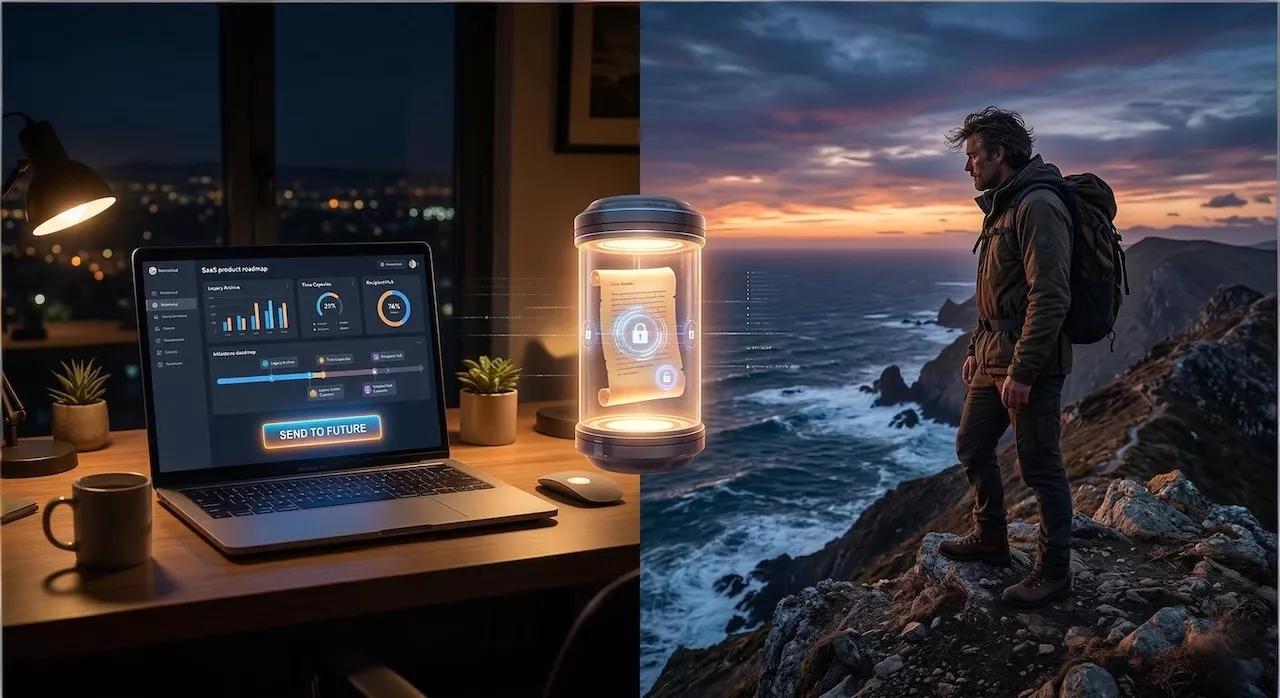
I’m a Product Manager who spends all week optimizing for the "immediate now." But getting lost off the grid on a mountain ridge made me realize I had zero infrastructure for the "forever." Here’s why I stopped worrying about conversion rates for a moment and built EterMail—a secure, tamper-proof digital time capsule for the people I love most.

The Most Radical Letter to Your Future Self Is a Promise to Stay Unfinished
The best letter to your future self isn't a memory—it's a mandate. Learn how writing to the version of you still working with love changes everything.

The Ice Tray at Midnight: On Grief, Domestic Minutiae, and the Quiet Work of Becoming Yourself Again
Why do the smallest habits hurt most after someone leaves? A reflection on grief, domestic minutiae, and the quiet moment healing finally begins.