
There is a particular shame in the unread book. Not the one you haven't gotten to yet, the one still in the queue of your genuine intentions. No—the book you bought because you were certain you would need it. The pregnancy manual purchased at six weeks, before the ultrasound that changed everything. The Italian grammar text for the sabbatical that kept getting deferred until "next year" became a decade. The productivity bible acquired in the fever of a January resolution, its promises of a transformed self now gathering the particular dust of repeated failure.
These books do not sit idle. They work upon us daily. Their spines face outward like small accusations, their uncracked pages a museum of futures we once believed required only the right instruction manual to arrive.
The Architecture of Anticipatory Selves
We have all built these private monuments. The nightstand becomes a staging ground for who we are preparing to become. The shelf above the desk accumulates the curriculum of a self not yet born. Each purchase is a small act of prophecy—a wager that the person we are now is merely provisional, that the person we will be has already been mapped and only needs the proper guide to navigate into existence.

The economist would call this aspirational spending. The psychologist might diagnose a gap between our actual and ideal selves. But neither captures the particular tenderness of these objects, the way they function as love letters to futures we were brave enough to imagine. The woman who bought What to Expect When You're Expecting was not foolish. She was hopeful in the most vulnerable way possible—hopeful enough to prepare for a self she could not yet inhabit, trusting that the transition would be as orderly as the trimester-by-trimester structure promised between those covers.
When Prophecy Fails Quietly
Not all unread books represent abandoned futures. Some are simply postponed. But others mark the precise coordinates of a life that did not happen. The language textbook for the move to Lisbon. The cookbook for the domestic self you were going to become after the wedding. The meditation guide for the calmer person who would emerge from your burnout, if only you followed the eight-week program with sufficient discipline.
These failures rarely announce themselves. There is no ceremony for the future that does not arrive. Instead, the book simply migrates—from nightstand to shelf, from shelf to closet, from closet to the box labeled, with unintentional poetry, "Misc." The self it was meant to summon does not die so much as slowly lose oxygen, becoming a story you no longer tell at dinner parties, then a story you no longer tell yourself.
The pregnancy manual is perhaps the most devastating of these objects. It exists in a temporal paradox: purchased in the future perfect tense (I will have needed this), it becomes, after loss, a document of a timeline that collapsed. To discard it feels like a second death. To keep it is to maintain a shrine to a self who was going to be a mother, who had already begun the psychic work of that transformation, who walked through bookstores differently, who noticed strollers with the acquisitive eye of impending membership.
The Shelf as Autobiography
We do not often think of our bookshelves as emotional archives. We curate them for guests, for Instagram, for the self we wish to project. But the unread books—the ones tucked behind the displayed volumes, the ones stacked horizontally where vertical space ran out— these constitute a secret autobiography.

Here is the person who believed she could think her way out of grief. Here is the person who was going to leave his marriage. Here is the person who was going to stay in his marriage. Here is the person who was going to become a runner, a painter, a minimalist, a polyglot, a meditator, an early riser, a digital nomad, a parent, a different kind of parent, a finally-together person whose togetherness would be proven by the finished books on the shelf, their pages annotated, their spines broken with the evidence of use.
The unread book is not evidence of laziness. It is evidence of earnestness—of having wanted something enough to prepare for it materially, to invest in the architecture of a possible self.
The Courage of Reclassification
There comes a point, if we are growing, when we must shelve books in the section for who we are no longer trying to be. This is not failure. This is revision—the same faculty that allows us to edit a manuscript, to correct a course, to release a future that has become, with time and experience, obviously not ours.
The difficulty is that these books do not announce their obsolescence. They do not come with expiration dates. The Italian textbook could, theoretically, still be used. The meditation guide still contains the same instructions. The possibility they represent remains logically open even when it has become existentially closed. We keep them, often, because discarding them requires a kind of mourning. It requires admitting that a particular branch of our possible lives has been pruned, that the self who would have needed this book is not delayed but deceased.
This is where the practice of future writing offers something that the unread book cannot. A letter to your future self is not a manual for becoming. It is a conversation across time that acknowledges uncertainty. It does not pretend that the path is known, only that the traveler is worth addressing. When you write to who you will be in five years, or ten, or twenty, you are not prescribing. You are witnessing—recording the particular texture of your hoping, your fearing, your not-yet-knowing.

What We Owe to Our Abandoned Selves
The books we bought and did not read deserve something from us. Not guilt, which is the reflexive response, but recognition. They were companions to our wanting, artifacts of a courage that preceded knowledge. The person who bought the pregnancy manual after a positive test was doing something ancient and human: preparing for transformation through ritual, through the gathering of knowledge, through the physical act of making space for a new self.
That the transformation did not arrive as planned does not make the preparation foolish. It makes it human—part of the continuous experiment of living forward without knowing how any chapter ends.
There is wisdom, finally, in learning to release these objects. Not with contempt, but with something like gratitude. Thank you for keeping me company while I believed. The shelf space reclaimed is not empty. It is available—for who I am becoming now, for the prophecies I am still brave enough to make, for the books I will buy and perhaps this time read, or perhaps not, because the future, thank God, remains unwritten.
I know something about this tension between building for futures that may never arrive and cherishing what endures. For years I've split my life between two extremes: hunched over a keyboard at 2 AM, "pair programming" with LLMs and mapping architectures for products that might fail, and then throwing myself into the raw physicality of surfing or hiking steep trails where the wind strips away every illusion of control. The digital solitude of those late nights taught me how fragile our intentions are—how easily a codebase, like a bookshelf, accumulates the debris of abandoned plans. But the ocean taught me something harder: that the present moment is unrepeatable, and that our best-built systems are worthless if they don't serve something genuinely human.
The Practice of Letting Future Selves Breathe
What would it mean to approach our futures with the same honesty we eventually bring to our shelves? To write not what I will become but what I am wondering? To send forward not instructions but questions, not certainties but the particular quality of our present attention?
The unread book presumes a knowable path. The letter to your future self admits the path is made by walking. One gathers dust. The other, properly preserved and delivered, becomes a moment of unexpected connection across the years—a reminder that you have been here before, in some form, and that you survived your own not-knowing long enough to receive your own witness.
The best way to fight forgetting isn't taking another screenshot; it's setting an alarm for the future. By using EterMail to set a delivery date 5 years from now, you completely free yourself from the anxiety of the present. You stop hoarding manuals for selves you might become, and instead send a message to whoever you actually turn out to be—a message that doesn't pretend to know your path, only that you were worth addressing. I've built a lot of hardcore tech in my years as a founder, but this is the bridge I'm proudest of: a simple, quiet system that lets your present self speak to your future self without demanding you predict the conversation.
That is the prophecy worth keeping.
What is EterMail?
EterMail is a revolutionary time capsule service that allows you to send messages, photos, and videos to the future (up to 30 years). Seal your memories and thoughts today, and they'll be delivered when the time is right.
Time Capsule
Send messages up to 30 years in the future
Rich Media
Text, photos, and videos supported
Secure & Private
Your memories are safely encrypted
EterMail Team
We're the team behind EterMail, dedicated to helping you preserve and share timeless messages with your loved ones. Our mission is to make it easy to express your love, share your wisdom, and create lasting connections that transcend time.
Frequently Asked Questions about Future Predictions
Why do people buy books they never read?
How do I let go of books representing abandoned dreams?
What is the psychological impact of keeping unread self-help books?
Related Articles
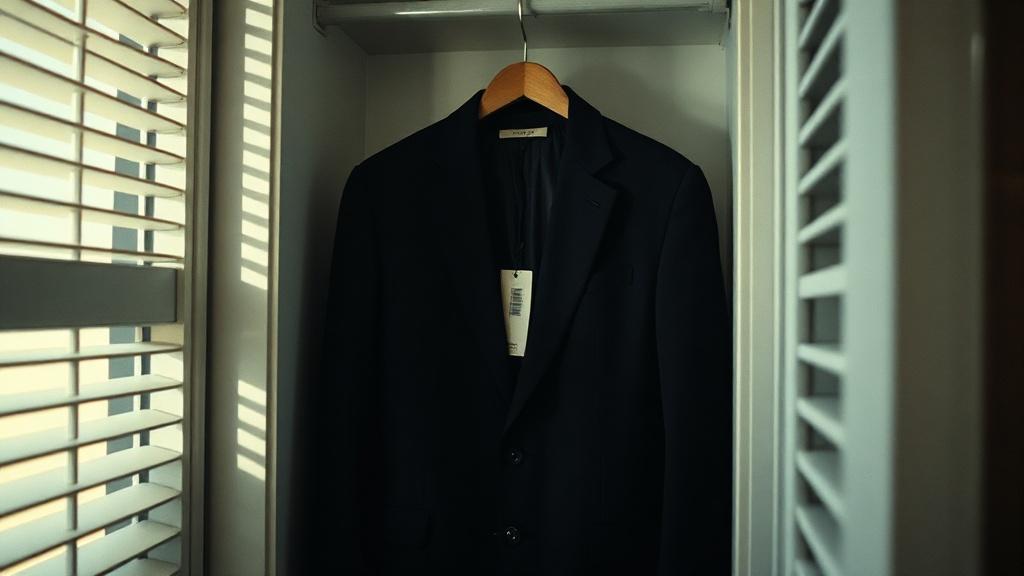
The Clothes We Keep: How Our Wardrobes Hold Letters to Futures We No Longer Believe In
The dress for the wedding that never came. The suit for the job interview that vanished. What do our unworn clothes predict about the futures we once believed?
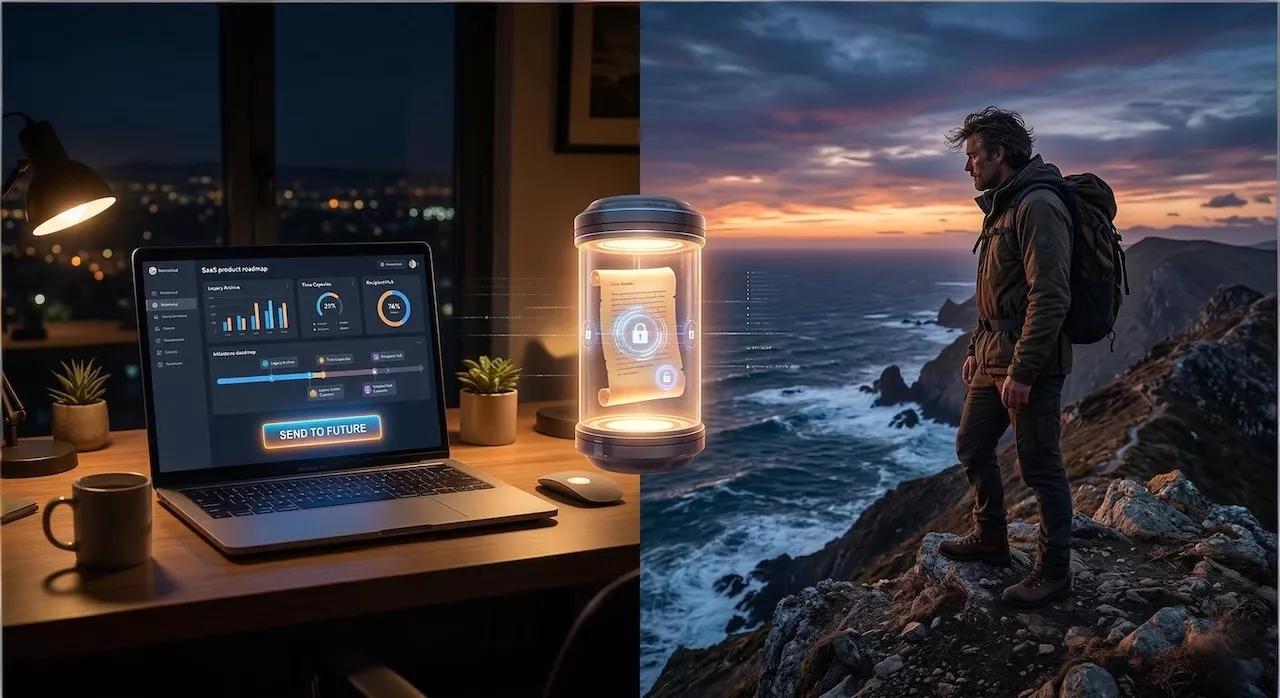
Why I Built EterMail: A Time Capsule for the People I Love Most
I’m a Product Manager who spends all week optimizing for the "immediate now." But getting lost off the grid on a mountain ridge made me realize I had zero infrastructure for the "forever." Here’s why I stopped worrying about conversion rates for a moment and built EterMail—a secure, tamper-proof digital time capsule for the people I love most.

The Most Radical Letter to Your Future Self Is a Promise to Stay Unfinished
The best letter to your future self isn't a memory—it's a mandate. Learn how writing to the version of you still working with love changes everything.