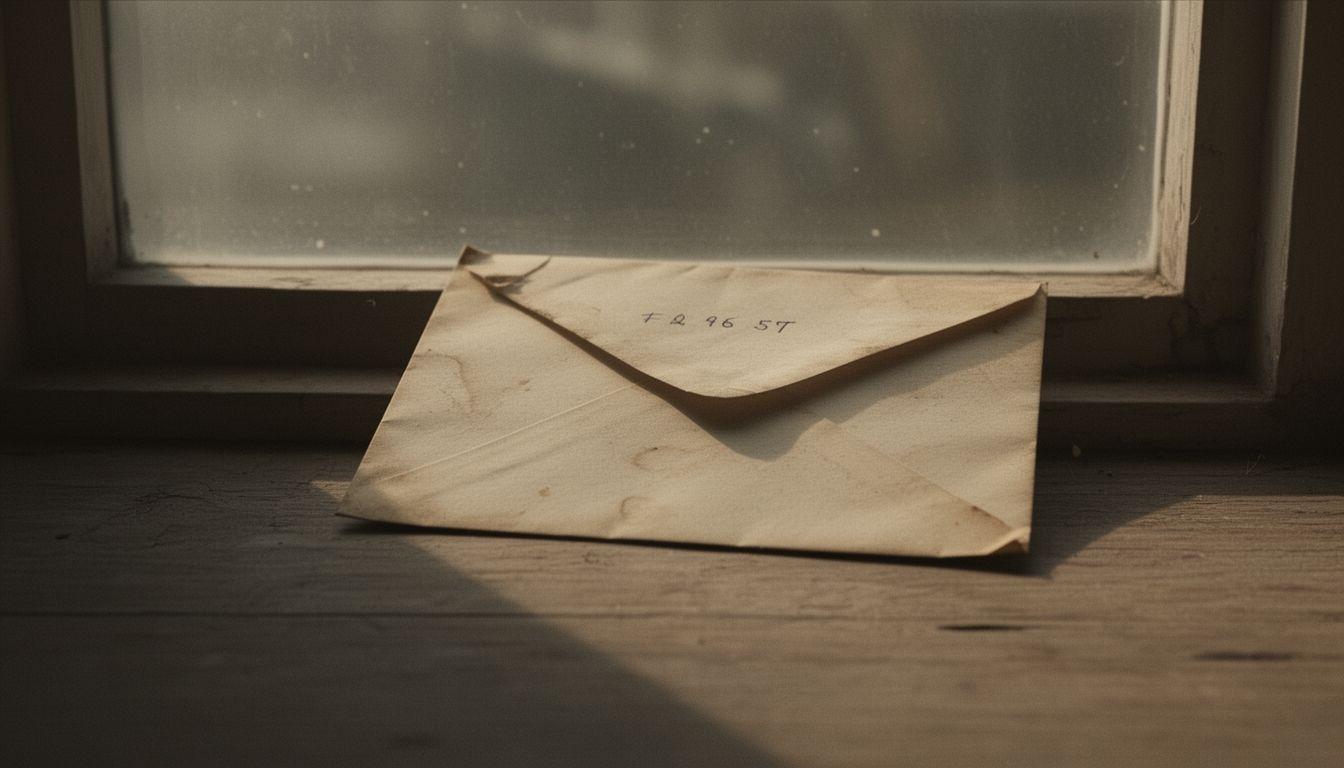
There is a particular silence that falls when you recognize your own handwriting but not the person who formed it. The envelope, yellowed at its creases, bears a date you chose with certainty—perhaps your thirtieth birthday, or the turn of a decade you imagined would arrive with fanfare. You open it expecting nostalgia, a warm conversation with your younger self. Instead, you meet a stranger. Someone who believed you would be married by now. Someone who predicted a career that never materialized, a city you never moved to, a version of happiness that now reads like fiction.
This is the unspoken grief of the time capsule: not that we failed to become who we hoped, but that we must break the news to someone who never stopped hoping.
The Certainty of Sealed Envelopes
We write predictions when we are most certain, or most desperate for certainty. The act itself is a small superstition—a hedge against chaos, a private ritual of control. We date the envelope because we trust time to unfold linearly, to honor our forecasts with fulfillment. The twenty-two-year-old sealing a letter for age thirty assumes she will recognize the recipient. She cannot conceive of a self who would find her predictions naive, her ambitions misaligned, her fears misplaced.
This certainty is not foolishness. It is a necessary fiction, the architecture of hope. We build futures from the materials at hand: our current desires, our limited information, our hunger for narrative coherence. The prediction letter is a blueprint drafted by someone standing in one room, guessing at the floor plan of a house she has never seen.
The Archaeology of Disappointment
When the appointed date arrives, we become archaeologists of our own abandoned futures. The predictions we got wrong accumulate like sediment. You will have published your novel. You will have stopped caring what they think. You will have learned to be happy alone. Each sentence is a small tombstone for a self who did not survive.
Yet something curious happens in this excavation. The grief of unmet expectations softens into something more complex: recognition without reunion. We cannot claim this hopeful stranger as our present self, but we cannot disown her either. She used our name. She knew our secrets. She cared enough to ask questions we have since stopped asking.
The failed prophecy is not merely error. It is evidence of motion. The fact that her predictions no longer fit means we have outgrown the container she built. This is loss, yes—but it is also the only proof we have that we are still becoming.
The Letters We Write to Strangers
Consider what we actually preserve in these sealed documents. Not wisdom, rarely. Not accurate foresight, almost never. Instead, we preserve attention—the quality of having been watched, by ourselves, with interest. The prediction letter is a mirror held up by someone who assumed we would still be looking.
This attention has a strange persistence. Years later, reading predictions that never materialized, we feel something like tenderness for the person who made them. We want to tell her: you were wrong about almost everything, but you were right to wonder. Right to imagine I would need guidance. Right to believe that future me deserved a message, even a misguided one.
The stranger in the envelope becomes, retroactively, a friend. Not because she knew us, but because she tried to. The attempt outlasts the accuracy.
The Quiet Ritual of Scheduled Arrival
There is a particular power in choosing when a message will surface. The sealed prediction operates outside the chaos of daily forgetting. It persists through moves, breakups, career collapses, the slow erosion of who we thought we were. The scheduled arrival is a promise kept across time, even when the content of the promise proves impossible.
This is where digital tools have quietly transformed an ancient practice. The physical time capsule—buried in backyard dirt, tucked into attic boxes—relies on memory to be unearthed. We forget where we buried it, or we remember but cannot face what we might find. The digital letter, encrypted and time-locked, arrives without our intervention. It finds us whether we are ready or not.
The technology does not solve the essential problem: that we will not recognize ourselves in what we wrote. But it removes the barrier of our own avoidance. We cannot lose the letter. We cannot postpone the reckoning. The stranger arrives at our door with the punctuality of a debt collector, carrying news from a country we no longer govern.
Failed Prophecies as Love Letters
What if we understood these mispredictions differently—not as failures of foresight, but as acts of care that transcended their own inaccuracy? The letter that predicts a marriage that never happened, a success that never arrived, a peace that never lasted: these are not lies. They are love letters written in the conditional tense, addressed to a recipient who might never exist.
The writer loved future you enough to imagine her thoroughly. She sketched a life in detail—what you would wear, where you would live, how you would feel waking on ordinary Tuesdays. That she sketched wrong does not diminish the love. It only changes its destination. The care intended for a specific future self lands instead on whoever you became, unplanned and uninvited but present, reading, receiving.
This is the accidental generosity of the time capsule. It was never really about prediction. It was about persistence. About believing that someone, someday, would need to be reminded that she was once worth writing to.
The Courage to Keep Predicting
The temptation, after opening a failed prophecy, is to stop making them. Why continue broadcasting into a future that refuses our scripts? Why preserve evidence of our misjudgment for later archaeological grief?
But this is precisely when the practice matters most. To write a new prediction, knowing the old ones failed, is an act of radical hope—not in the accuracy of our vision, but in the continuity of our caring. We write not because we trust our foresight, but because we trust that future selves, however unrecognizable, will still need to be witnessed.
I know this tension intimately. There are nights when I'm still at my desk at 2 AM, "pair programming" with an AI, mapping out architectures for systems that won't ship for months. That digital solitude—just me and the glow of a screen, building something I hope will matter—has taught me that the most meaningful work happens in the gap between intention and outcome. I start projects convinced I know where they'll lead. I finish them, months later, having arrived somewhere I never plotted on the map. The code I write at midnight rarely survives contact with morning. But I keep writing. The stranger I'm building for—future me, future users—deserves the attempt, even if the blueprint proves wrong.
The stranger who opens your letter in five years, or ten, or twenty, will not be who you imagine. She will have survived things you cannot yet conceive. She will have abandoned dreams you currently consider essential. She may read your predictions with the same complicated tenderness you now feel for your own past attempts.
This is enough. This is the point. The letter travels forward not as instruction, but as company. Proof that someone once sat in the dark of her own uncertainty, and wrote anyway.
The Persistence of Being Witnessed
We live in an era of infinite documentation and evaporating memory. Every moment is photographed, every thought posted, every location tracked. Yet the curated self we present rarely outlasts the platform that hosts it. The time capsule prediction operates on different terms. It is private, asynchronous, indifferent to audience. It is the one message guaranteed to reach a self who no longer exists in the terms we sent it.
This is not a bug but a feature. The misalignment between prediction and outcome creates the space for self-recognition across time. We do not need to become who we planned. We need only to become someone who can receive the plan with grace—who can thank the stranger for her attention, even as we gently correct her assumptions.
The best way to fight forgetting isn't taking another screenshot; it's setting an alarm for the future. By using EterMail to set a delivery date 5 years from now, you completely free yourself from the anxiety of the present. No need to find the right box, the right hiding place, the right amount of wax to seal your certainty. Just write what matters now, set the date, and trust that your future self—whoever she turns out to be—will be waiting.
The sealed letter, arriving on schedule, reminds us that we were once people who believed in futures. This belief, however misplaced, is worth preserving. It is the raw material from which all actual futures are eventually built—not the specific predictions, but the capacity to make them, to care about what comes next, to address ourselves across the distance with something like love.
The stranger in the envelope is not a failed version of you. She is a witness. She saw something worth saving. She was right about that much.
What is EterMail?
EterMail is a revolutionary time capsule service that allows you to send messages, photos, and videos to the future (up to 30 years). Seal your memories and thoughts today, and they'll be delivered when the time is right.
Time Capsule
Send messages up to 30 years in the future
Rich Media
Text, photos, and videos supported
Secure & Private
Your memories are safely encrypted
EterMail Team
We're the team behind EterMail, dedicated to helping you preserve and share timeless messages with your loved ones. Our mission is to make it easy to express your love, share your wisdom, and create lasting connections that transcend time.
Frequently Asked Questions about Future Predictions
What should I write in a letter to my future self?
Why does reading old predictions to myself feel so strange?
How do time capsules change our perspective on time?
Related Articles
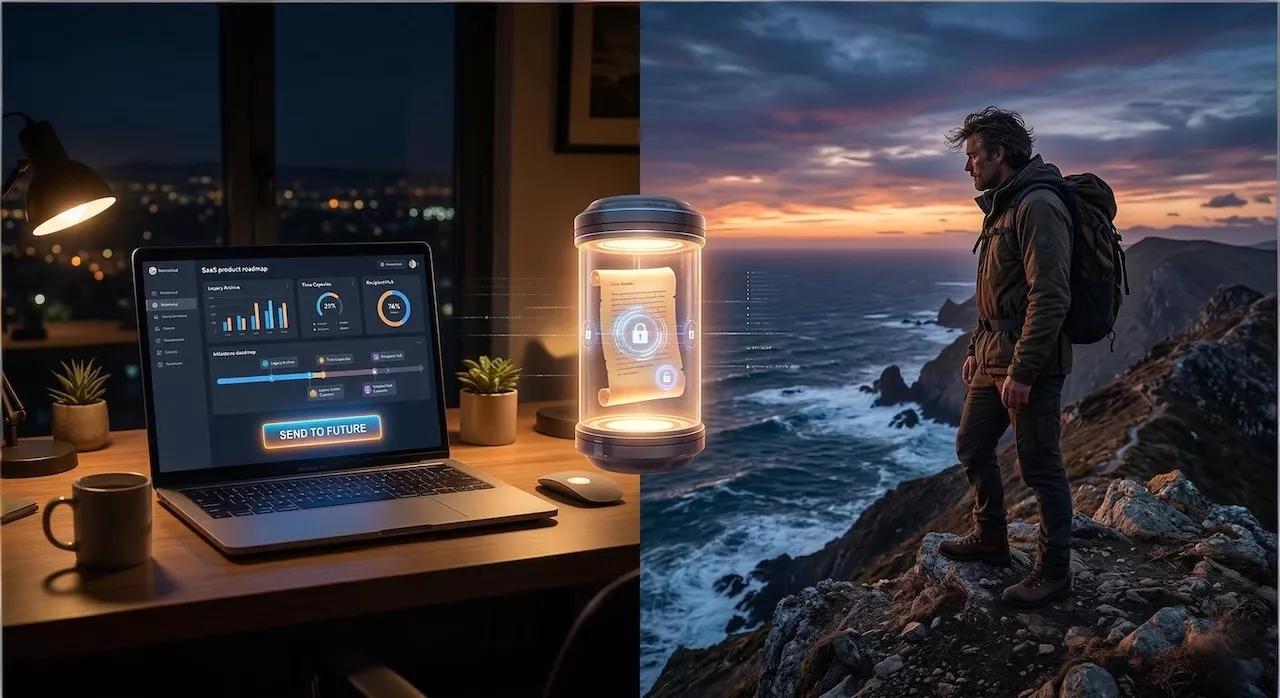
Why I Built EterMail: A Time Capsule for the People I Love Most
I’m a Product Manager who spends all week optimizing for the "immediate now." But getting lost off the grid on a mountain ridge made me realize I had zero infrastructure for the "forever." Here’s why I stopped worrying about conversion rates for a moment and built EterMail—a secure, tamper-proof digital time capsule for the people I love most.

The Most Radical Letter to Your Future Self Is a Promise to Stay Unfinished
The best letter to your future self isn't a memory—it's a mandate. Learn how writing to the version of you still working with love changes everything.

The Ice Tray at Midnight: On Grief, Domestic Minutiae, and the Quiet Work of Becoming Yourself Again
Why do the smallest habits hurt most after someone leaves? A reflection on grief, domestic minutiae, and the quiet moment healing finally begins.