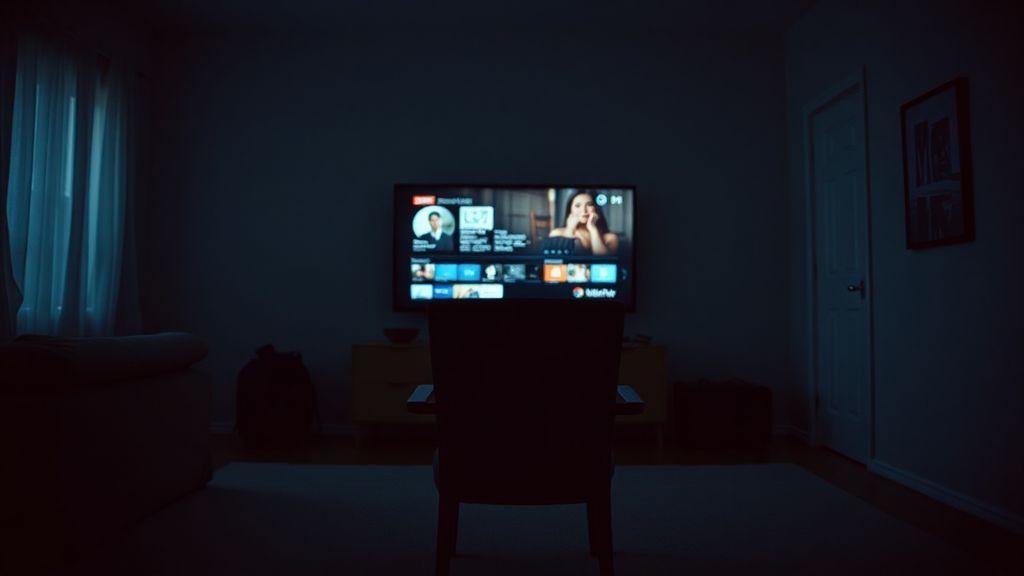
The afternoon you finally delete their Netflix profile—not the main account, just their row of half-watched British crime dramas and nature documentaries you never shared—and the algorithm immediately fills the space with recommendations for you alone, as if they were never there at all.
You sit with the remote in your hand. The screen offers you true crime podcasts, cooking competitions, reality dating shows. It has already forgotten. The machine moves on with mechanical efficiency, and you are left holding the silence.
This is the bureaucracy of grief: the invisible, administrative labor of loss that no one warns you about. Not the funeral arrangements, not the sympathy cards—those at least carry the dignity of ritual. This is something else entirely. The password you change. The subscription you cancel. The shared cloud storage that quietly stops syncing their photos to your phone. The Spotify playlist you can no longer bear to open, yet cannot bring yourself to delete.
The Ghost in the Machine
We have built our intimacy through shared digital infrastructure. Couples don't just merge lives; they merge accounts, preferences, algorithms trained on collective behavior. Your Netflix knew you as a unit. Your Amazon remembered their birthday, suggested gifts you might buy together. Your Google Photos created albums titled "Last Summer" without asking, collating moments you now cannot scroll through without stopping your own breath.
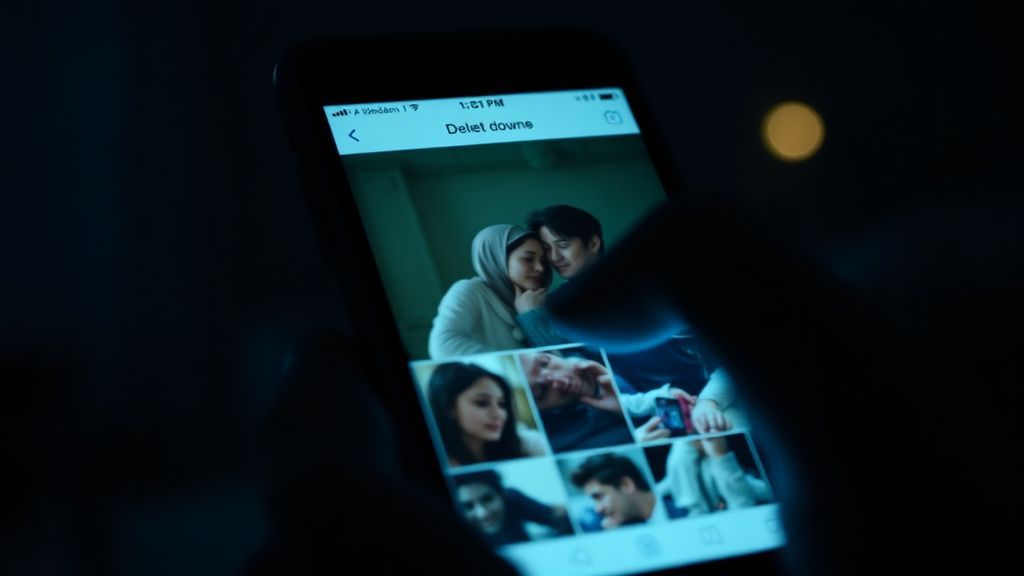
When someone dies, we expect the physical world to bear their traces. The sweater that still smells like them. The handwriting in the margins of books. These objects demand attention, refuse to be ignored. But digital traces are different. They are simultaneously permanent and ephemeral, stored forever on servers you cannot visit, yet vanishing the moment you stop paying the subscription or change the password.
The cruelty lies in the asymmetry of memory. You remember everything. The platform remembers nothing, or worse—remembers wrong. Facebook's "On This Day" feature surfaces a photo from five years ago with cheerful algorithmic enthusiasm. LinkedIn suggests you congratulate them on their work anniversary. The calendar app still sends reminders for their dentist appointment, their mother's birthday, the reservation you made for your anniversary that you forgot to cancel.
The Labor of Digital Housekeeping
There is no etiquette for this work. No guidebook titled What to Do With Your Dead Husband's Duolingo Streak. The tasks accumulate in the margins of your days, small and sharp as paper cuts.
You discover you cannot close their email without proving they are dead to a corporation that treats death as an edge case in their terms of service. You spend forty minutes on hold, explaining to a customer service representative in another time zone that yes, you have the death certificate, no, you don't know their security question about their first pet because they never had pets, they were allergic.
You cancel the meal kit subscription that arrives every Tuesday, the portions calculated for two. You change the WiFi password they chose, some inside joke you no longer find funny. You realize their Kindle library—hundreds of books, their intellectual autobiography—cannot be transferred, only deleted. Digital assets, it turns out, are not assets at all. They are licenses. Revocable, non-transferable, gone when the account closes.

Each action feels like a betrayal and a necessity simultaneously. You are erasing them, you tell yourself. You are also surviving. The alternative—maintaining their digital presence indefinitely—requires its own exhausting performance. The Facebook memorial page that friends still tag in birthday wishes. The Instagram account frozen in time, their last story expired, the profile picture growing increasingly anachronistic. You become the curator of a museum no one visits, responsible for artifacts that bring only pain.
When the Internet Forgets Faster Than You Do
The platforms are designed for engagement, not mourning. Their business model depends on the present tense, on your attention directed toward the next scroll, the next notification, the next piece of content optimized for your demographic profile. Grief is bad for metrics. It slows the feed. It introduces friction into the seamless user experience.
So they forget. Not maliciously, but indifferently, which is somehow worse. The recommendation algorithms recalibrate. The collaborative playlists stop updating. The "People You May Know" suggestions gradually replace mutual connections with strangers who share your zip code and age range. The digital ecosystem that once held your relationship like water cupped in two hands simply opens its fingers and lets it drain away.
You are left curating a ghost that no longer leaves traces in the machine. Your phone no longer suggests their name when you type the first letter. Autocomplete has moved on. The search history, once a shared document of curiosity and desire, now belongs to you alone.
This is the loneliness of digital grief: not the absence of the person, but the absence of the system that held them. You built your love inside these platforms, trusted them to remember what you might forget. Now you understand that trust was misplaced. They were never archives. They were mirrors, reflecting only what was currently useful to reflect.
The Choice to Remember Deliberately
What would it mean to resist this erasure without becoming trapped by it? To remember actively, intentionally, rather than outsourcing the labor to algorithms that will eventually betray you?
The answer requires a different relationship with time and technology. Not the passive accumulation of digital debris, but the deliberate construction of memory. This is where the ancient practice of letter-writing—slow, singular, resistant to algorithmic interpretation—offers something that platforms cannot.

A letter to your future self, scheduled to arrive in five years, ten years, twenty. A message to a child not yet born, to be delivered on their eighteenth birthday. A time capsule of voice and text and image, encrypted, preserved, released on your terms rather than the platform's. This is not nostalgia. It is intentional legacy: the choice to speak across time without depending on the continued existence of any particular corporation or service.
The bureaucratic grief of digital housekeeping teaches us what we actually value. Not the streaming preferences or the cloud storage quotas, but the specificity of voice, the irreplaceable texture of a person thinking aloud in your direction. The Netflix algorithm never knew your partner. It knew their viewing history, which is not the same thing at all.
Rebuilding the Archive of the Self
Healing, in this context, means becoming your own archivist. Not in the frantic, hoarding sense of downloading every photo before the account expires, but in the curatorial sense of choosing what deserves to survive. What stories matter enough to tell deliberately? What wisdom merits transcription into a form no terms of service can revoke?
I spent years building products in Silicon Valley—e-commerce platforms, game engines, now infrastructure for human connection—and I've learned that the hardest technical problems are never the code. They're the moments when technology fails to honor what it means to be human. I still remember sitting at my desk at 2 AM, debugging a server crash while my mind wandered to a friend who'd died the year before, his Facebook profile still active, still suggesting I wish him happy birthday. The absurdity of it. The loneliness of machines that pretend to care.
This is why I became obsessed with building something different. The platforms will not help you with this work of deliberate memory. They have already moved on, optimizing for engagement metrics that have no category for love, for grief, for the stubborn human refusal to forget. But you don't have to accept their timeline. The best way to fight forgetting isn't taking another screenshot; it's setting an alarm for the future. By using EterMail to set a delivery date 5 years from now, you completely free yourself from the anxiety of the present. You write the letter. You choose the moment. You preserve what actually matters in a form that outlives any corporate terms of service.
Your memory is the only technology that matters. Everything else is temporary infrastructure, borrowed and conditional.
The afternoon you delete their Netflix profile, you feel the algorithm's indifference like a door closing. But you also feel something else: the weight of your own attention, suddenly undivided, available for the harder work of remembering without prompts, of loving without feedback loops, of building a legacy that belongs to no platform but yourself.
This is the grief they don't prepare you for. And this is where, perhaps, something like healing begins: not in the preservation of digital traces, but in the courage to create new ones—deliberate, durable, your own.
What is EterMail?
EterMail is a revolutionary time capsule service that allows you to send messages, photos, and videos to the future (up to 30 years). Seal your memories and thoughts today, and they'll be delivered when the time is right.
Time Capsule
Send messages up to 30 years in the future
Rich Media
Text, photos, and videos supported
Secure & Private
Your memories are safely encrypted
EterMail Team
We're the team behind EterMail, dedicated to helping you preserve and share timeless messages with your loved ones. Our mission is to make it easy to express your love, share your wisdom, and create lasting connections that transcend time.
Frequently Asked Questions about Healing & Remembrance
How do you cope with deleting a deceased loved one's digital accounts?
What digital assets should be preserved when someone dies?
Why does algorithmic forgetting feel like a second loss?
Related Articles
The Digital Archaeology of Love: What We Leave Unfinished in Our Notes Apps and Hearts
When grief meets technology, we inherit more than passwords. Discover how unsent digital drafts become the most intimate legacy of love.
The Cart She Left Behind: On Digital Ghosts and the Intimacy of Abandoned Errands
When a loved one dies, their digital remains linger in grocery carts, drafts, and calendars. What do we owe these frozen moments of ordinary love?
The Playlist He Left Behind: On Listening to the Dead and the New Intimacy of Digital Afterlives
When my brother died, I found his final Spotify playlist. What does it mean to inherit someone's digital soul—and do we have the right to press play?