The Weight of 400,000 Miles
The photographs almost didn't make it.
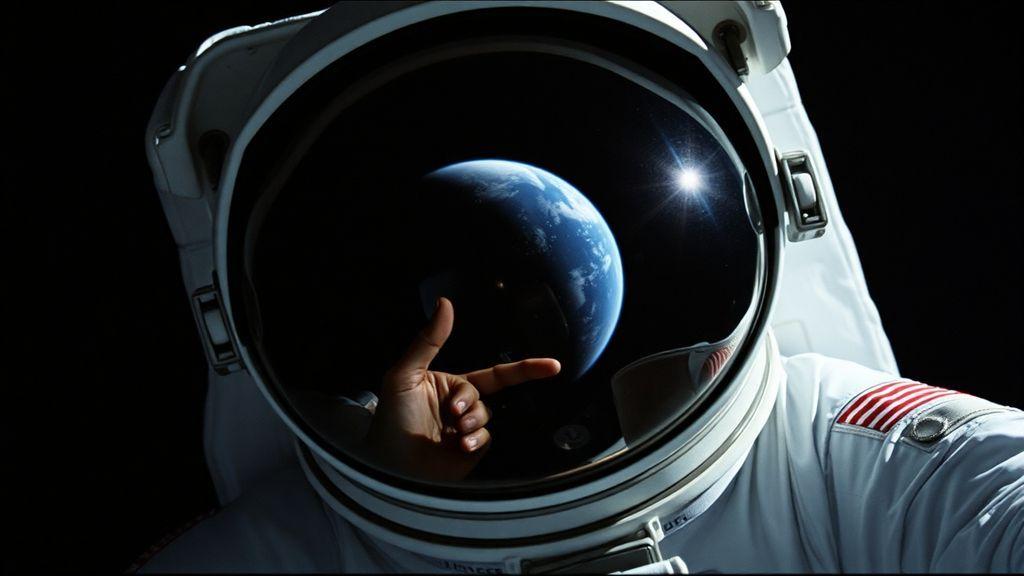
Not because of technical failure or radiation damage—though both threatened the Artemis II mission. They almost didn't exist because Commander Reid Wiseman, circling the Moon in December 2024, spent forty-seven minutes debating whether to document the moment his crew became the first humans to see Earth rise from lunar orbit since 1972. The lighting was wrong. The composition felt forced. He had taken eleven similar shots already, each one technically superior, each one failing to capture what his chest actually felt when that blue marble cracked the horizon.
He took the twelfth. It was blurry, overexposed, and remains the most requested image from NASA's entire digital archive.
This is the paradox of digital legacy: we believe we are curating permanence when we are actually gambling on accident. The Artemis II astronauts returned with 847 gigabytes of structured data—biometrics, voice logs, instrument readings—yet the artifact that will outlast their grandchildren is a photograph Wiseman nearly deleted in real-time, 400,000 miles from anyone who could have stopped him.
What We Mean When We Say "Digital Legacy"
The phrase has grown clinical. Estate attorneys use it to describe Facebook memorialization settings. Cloud storage companies use it to sell backup subscriptions. We have reduced the infinite complexity of human memory to a checklist: passwords here, photos there, delete the embarrassing tweets before the probate court sees them.
But legacy is not inventory. Legacy is the silence between words, the metadata of intention, the emotional residue that clings to files we cannot explain why we kept.
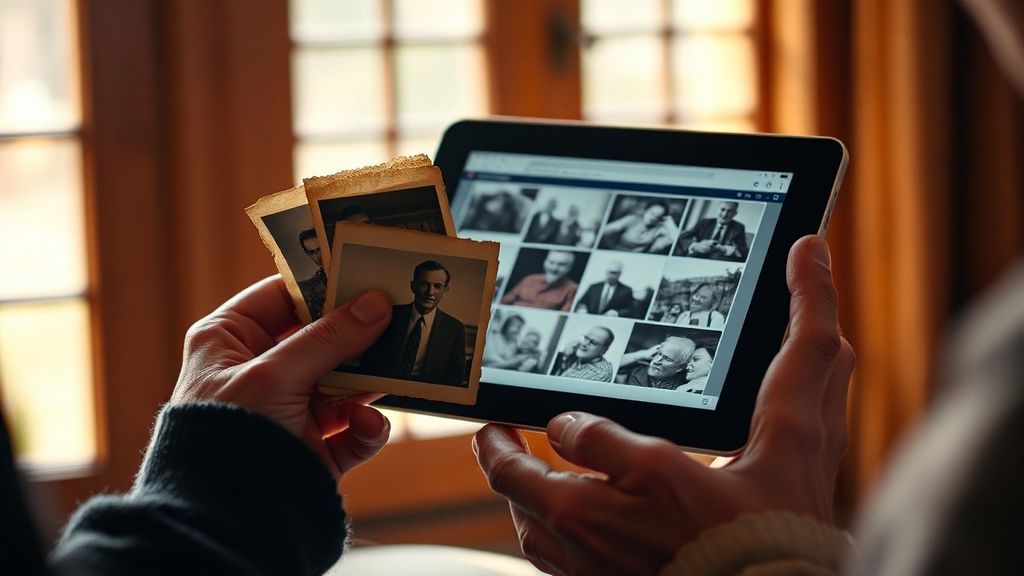
Consider the research. A 2023 study from the University of California, Irvine found that bereaved family members spend an average of 340 hours reviewing a deceased loved one's digital artifacts—and that 73% of what they valued most were items the deceased had never explicitly designated as important. The blurry video of a grandmother laughing at a failed recipe. The screenshot of a text argument, preserved not for the words but for the timestamp proving someone was awake at 3:47 AM, thinking of them. The draft email never sent, auto-saved by software the writer never knew was watching.
Our digital lives have become archaeological sites where we are simultaneously the civilization and the excavator, and we are terrible at predicting what future strangers (who will be our own children) will find meaningful about us.
The Artemis Problem: Curating at the Edge of Forever
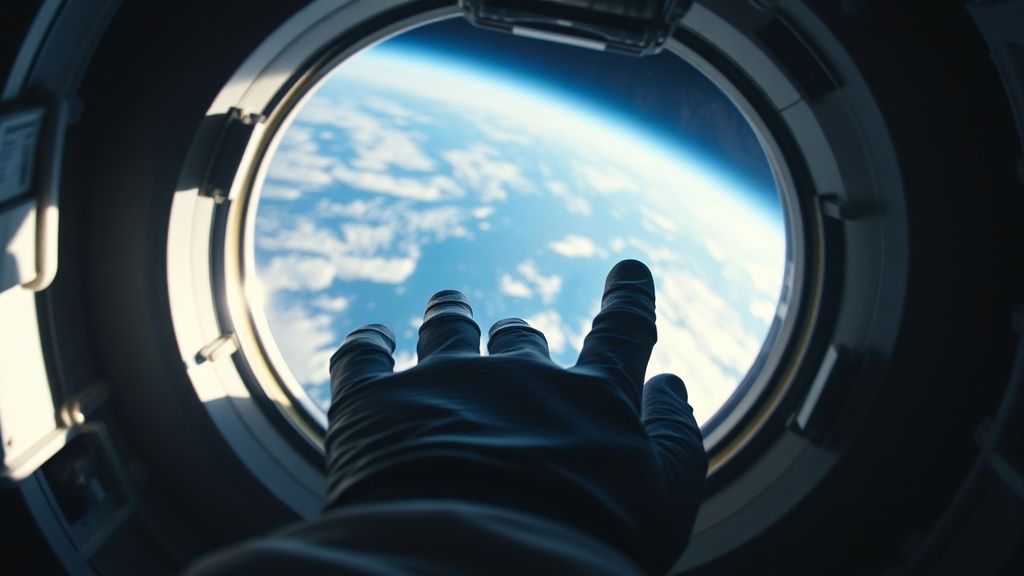
The astronauts faced a version of this problem in extreme miniature. Every byte of storage had physical weight. Every transmission window had finite bandwidth. They were instructed to document systematically—Earth observations, spacecraft performance, crew health—yet the moments that transcended their mission parameters kept intruding. Wiseman's voice log from lunar orbit contains seventeen seconds of silence after he describes the Earthrise. The transcript marks it as [AUDIO LOSS]. Engineers later confirmed the recording equipment functioned perfectly.
He simply stopped speaking. The microphone captured his breathing, the hum of life support, the impossible distance compressed into analog warmth.
This is what we fail to account for in our legacy planning: the moments that resist documentation, that exist in the negative space of what we choose to preserve. When we select photos for a time capsule or draft letters to future selves, we operate from narrative coherence. We want our legacy to make sense. But coherence is a lie we tell the living. The dead—and the data they become—are governed by stranger physics.
The Silence Between Words
Dr. Elaine Kasket, psychologist and author of All the Ghosts in the Machine, has spent fifteen years studying how digital artifacts transform grief. Her most disturbing finding: families who inherit perfectly organized digital estates report higher rates of complicated grief than those who discover chaotic, incomplete archives. The organized legacy provides closure too quickly. The messy archive forces continued relationship. We keep searching the disorder because some part of us believes the dead are still speaking through it, if only we could find the right file.
This suggests something uncomfortable about our instinct toward digital hygiene. The deletion of duplicates, the curation of flattering photographs, the careful construction of narrative coherence—we are not preserving ourselves for the future. We are performing our own obsolescence.
The Artemis II mission carried a secondary payload that received little press coverage: a solid-state drive containing 30,000 messages from ordinary citizens, selected by lottery. The selection criteria emphasized diversity of voice—different languages, ages, geographic origins. Yet analysis of the actual content reveals striking convergence. Despite explicit instructions to "share your hopes for humanity's future," 68% of messages addressed specific individuals. Not "dear future generations" but "dear Sarah, if you find this" and "to whoever opens my grandfather's file." The vastness of space collapsed into the intimacy of address. The eternal became personal.
The Photos We Almost Deleted
I have been thinking about my own digital archaeology. In my cloud storage, buried beneath tax documents and expired contracts, exists a video I recorded on January 14, 2019. I was alone in a hospital waiting room. My phone was at 4% battery. I spoke for eleven seconds, mostly nonsense, describing the color of the chairs (mauve, I said, though they were clearly beige) and the quality of the coffee machine's hum. I have no memory of recording it. I have no memory of that day at all, though medical records confirm I was there, waiting for results that would ultimately prove benign.
I have deleted this video approximately forty times. Each deletion has been followed by recovery from the "recently deleted" folder within hours. I cannot explain what it contains that I need. The chairs are not interesting. My voice sounds strained, unfamiliar. Yet it has survived every digital purge, every rational assessment of value, every attempt to construct a coherent narrative of who I was then and what I should preserve for who I might become.
This is the true shape of legacy: not what we choose to save but what we cannot bear to lose, despite having no language for its importance.
The Artemis II astronauts understood this, perhaps, in ways the rest of us are still learning. Their official mission logs are available in full. Their private correspondence remains encrypted, scheduled for release to designated recipients at intervals spanning decades. But the unscheduled artifacts—the blurry photograph, the seventeen seconds of breathing, the unguarded moments between official transmissions—these are what NASA archivists describe, in technical documentation, as "emergent heritage." Not planned. Not curated. Simply survived.
Future-Proofing the Unpredictable
We are not astronauts. Our digital artifacts will not be preserved in climate-controlled vaults with institutional commitment to their survival. The platforms we trust will fail, merge, or pivot to incompatible formats. The files we carefully organize will become unreadable while the corrupted fragments we dismissed will be recovered by future technologies we cannot imagine.
This is not cause for despair. It is invitation to strategic surrender.
The most profound legacy we can leave is not the polished narrative but the raw material of our contradictions. The letter written in anger and never sent. The photograph that captures our worst angle but truest expression. The voice memo recorded in tears, incomprehensible, preserved because deletion felt like dying twice.
The Coordinates of Smallness
There is a final photograph from Artemis II that NASA has never officially released. It exists in the mission archives, flagged for "technical review." It shows no celestial body, no spacecraft component, no human figure. It is a frame captured accidentally—Wiseman's camera triggered by vibration during a course correction—showing only the interior of the command module, a floating pencil, a smudge on the lens that resembles, if you tilt your screen, a human fingerprint.
The coordinates embedded in the metadata place this image 238,900 miles from Earth, traveling at 3,600 miles per hour toward the far side of the Moon.
I think about this image often. I think about how it contains nothing of documentary value, nothing that advances scientific understanding or historical record. I think about how it will outlast every press release, every official portrait, every carefully composed statement of human achievement from that mission. It is a photograph of being small in a large place, and of the large place being indifferent to our documentation of it.
This is what we are doing when we write to our future selves, when we seal messages for children not yet born, when we create time capsules of digital memory with release dates we may not live to see. We are not ensuring our persistence. We are acknowledging our impermanence with grace. We are saying: I was here, in this specific configuration of matter and attention, and I found it sufficient to record even when I could not explain why.
The Artemis II data will be studied for centuries. The blurry Earthrise will hang in museums. But the fingerprint on the lens, the accidental frame, the seventeen seconds of breathing—these are what will teach future humans something true about who we were: desperate to be remembered, terrible at predicting how, succeeding despite ourselves.
What Remains When the Platforms Fall
I build software for a living. Most nights you'll find me at my desk until 2 or 3 AM, running code with an AI assistant glowing on my second monitor, trying to bridge the gap between what machines can store and what humans actually mean. I've spent years in that particular loneliness—just me, the cursor, and the strange intimacy of speaking into a system that answers back. It gives me a particular sympathy for anyone who's ever tried to send something forward through time, unsure if the recipient will understand what they meant to say.
Your digital legacy is not your LinkedIn profile. It is not your Instagram grid or your carefully maintained Google Drive folder titled "Important." It is the residue of attention you cannot account for, the files you saved for reasons you have forgotten, the messages you wrote and never sent because sending would have required admitting what you actually felt.
The platforms will fall. The formats will become obsolete. The passwords will be lost and recovered and lost again. What persists will be what persisted before digital technology: the human need to address someone not present, to believe that time is traversable if only we find the right container for our voice.
This is exactly why I obsessed over end-to-end encryption and extreme server redundancy when building EterMail. Because I know that a letter written to the future needs to be guarded even more fiercely than a bank password. The messages we send across decades deserve the same care we give to moonshot data—architected to survive platform failures, corporate pivots, and the slow entropy of digital formats. I built this not because I trust technology to last, but because I trust human intention to matter, if we can only preserve it faithfully enough for someone else to find.
The Artemis II astronauts proved we can send data to the Moon and back. The harder problem—the eternal problem—is sending something of ourselves forward through time, trusting that future strangers will know what to make of our fingerprints on the lens.

What is EterMail?
EterMail is a revolutionary time capsule service that allows you to send messages, photos, and videos to the future (up to 30 years). Seal your memories and thoughts today, and they'll be delivered when the time is right.
Time Capsule
Send messages up to 30 years in the future
Rich Media
Text, photos, and videos supported
Secure & Private
Your memories are safely encrypted
EterMail Team
We're the team behind EterMail, dedicated to helping you preserve and share timeless messages with your loved ones. Our mission is to make it easy to express your love, share your wisdom, and create lasting connections that transcend time.
Frequently Asked Questions about Digital Legacy
What should I include in a digital legacy for my family?
How do I preserve digital memories that won't become obsolete?
Why do we struggle to predict what our loved ones will value after we're gone?
Related Articles
The Burden of Total Recall: Why a Complete Digital Legacy May Be the Cruelest Inheritance
What if your cloud remembers what your mind would have softened? Explore why the most loving legacy might be a curated absence, not total digital preservation.
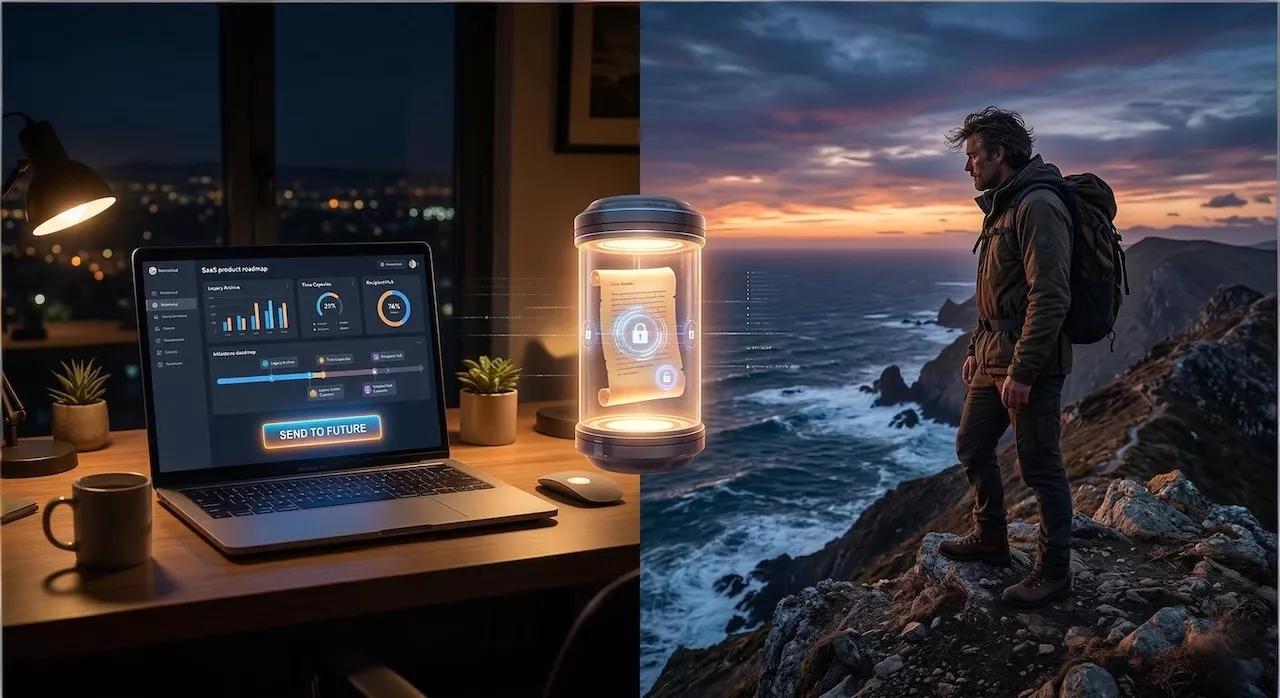
Why I Built EterMail: A Time Capsule for the People I Love Most
I’m a Product Manager who spends all week optimizing for the "immediate now." But getting lost off the grid on a mountain ridge made me realize I had zero infrastructure for the "forever." Here’s why I stopped worrying about conversion rates for a moment and built EterMail—a secure, tamper-proof digital time capsule for the people I love most.

The Most Radical Letter to Your Future Self Is a Promise to Stay Unfinished
The best letter to your future self isn't a memory—it's a mandate. Learn how writing to the version of you still working with love changes everything.