The Login You Never Wanted to Make
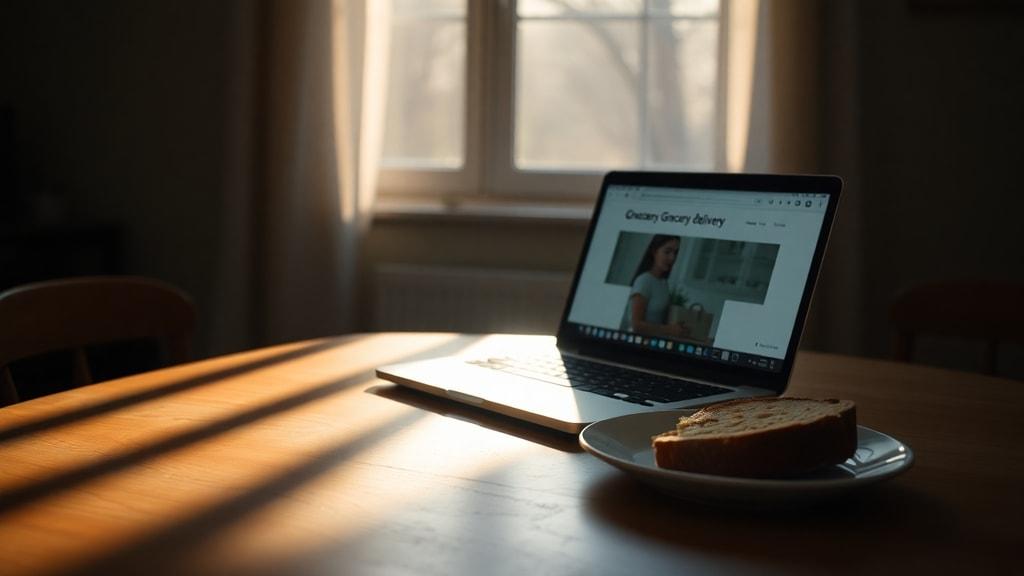
There comes a moment, after the funeral flowers have browned and the casseroles have been eaten or thrown away, when someone has to cancel the subscriptions. The magazine that will keep arriving. The streaming service no one asked for. The grocery delivery account she set up during the pandemic, when leaving the house felt like a betrayal of her own fragility.
You have her password because you helped her create it. Password123! with the exclamation point because the system demanded drama. You log in expecting utility, a task to cross off the administrative checklist of grief. What you find is something else entirely.
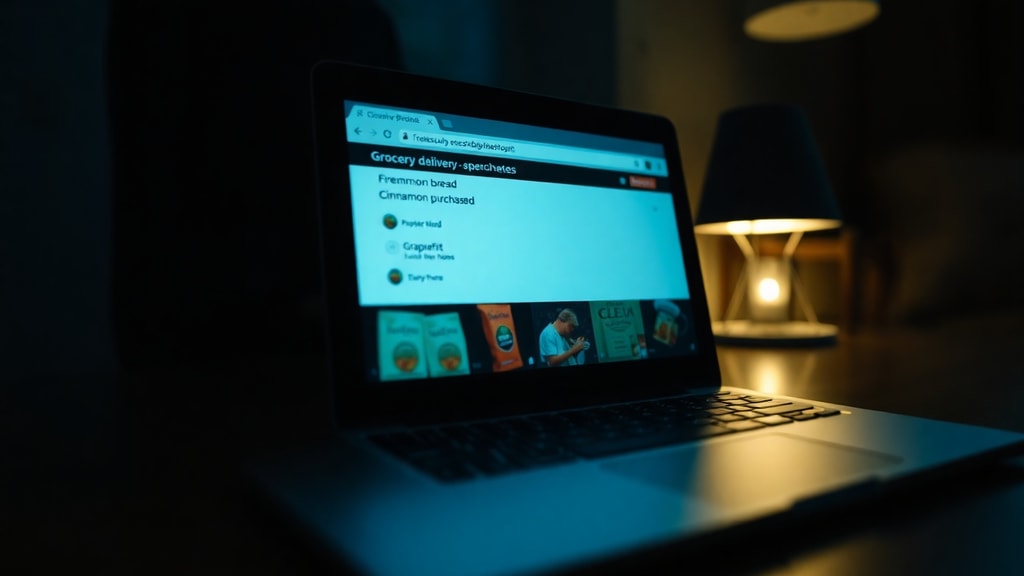
Her "frequently purchased" list auto-populates the moment the page loads. Cinnamon bread. Every Thursday. The grapefruit she only bought because you visited on Sundays, though you never much liked grapefruit, and she never much cared for it either. The cough drops ordered alone at 11 PM in February, when you were asleep three time zones away and she was trying not to wake you with a text that said, simply, I don't feel right.
The algorithm doesn't know she's dead. The algorithm thinks she'll be back next Thursday.
The Geometry of an Unexamined Love
We are taught to look for love in the grand gestures. The handwritten letters. The jewelry passed down. The final words at bedside, if we are lucky enough to have them. We are not taught to look for love in the metadata of survival, in the patterns of consumption that algorithms track with more devotion than any human archivist.
But here it is: the geometry of a love you never thought to look for.
The cinnamon bread was not random. It was Thursday because that was the day before your father's poker night, when he would come home smelling of smoke and disappointment, and she would have something sweet to offer him, a peace treaty in carbohydrate form. The grapefruit was a performance of maternal effort, a fruit she learned to select by thumping and hefting, though she preferred oranges. The cough drops at 11 PM were a loneliness you could not see from your apartment, a small rebellion against calling an ambulance she could not afford to need.
These are not memories she chose to preserve. They are accidental archives, generated by systems designed to predict her next purchase, not her next absence. The recommendation engine has become an unintentional memorial, a digital ghost that continues to feed a version of you that no longer exists—the daughter who visited on Sundays, who accepted the grapefruit without understanding its language, who slept through February's 11 PM emergencies.
The Vertigo of Digital Afterlives
There is a particular disorientation to this, a vertigo that physical objects do not induce. Her sweater still hangs in the closet; you can touch it, smell the fading traces of her perfume, decide whether to keep or donate. The sweater does not update itself. The sweater does not suggest, based on previous behavior, that she might also like a similar cardigan in navy blue.
But her digital ghost is dynamic. It learns from a past that no longer has a future. It offers coupons for products she will not buy, suggests recipes for a body that no longer eats, sends "we miss you" emails to an inbox that no one monitors. The platform's retention strategy has become a séance, a continuous invocation of a consumer who has become, without consent, an ancestor.
This is the unspoken cruelty of digital legacy: our data outlives us not as static record but as living prediction. The machine learning models trained on her preferences do not pause for grief. They continue to optimize for a customer whose lifetime value has, in the most literal sense, ended. The "frequently purchased" list becomes a kind of false consciousness, a simulation of continuity that makes her absence more piercing, not less.
What the Algorithms Cannot Archive
And yet. And yet there is something here that demands attention, something beyond the simple tragedy of commercial systems that do not know how to mourn.
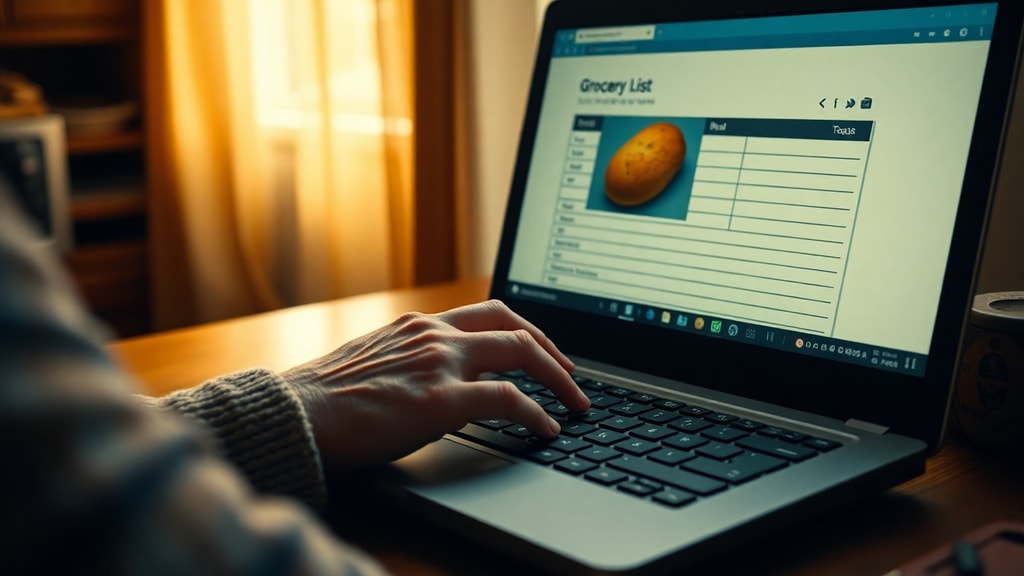
The grocery list does not capture why she bought the cinnamon bread. It cannot record the way she would slice it thick for your father, thin for herself, the way she would leave the heel for last because she preferred the crust. The algorithm knows the grapefruit but not the performance of selection, the way she would hold each one to her ear like a seashell, listening for ripeness, a gesture borrowed from her own mother who grew up in citrus country. The cough drops are data points; the 11 PM is a timestamp; neither can contain the specific silence of that apartment, the decision not to call, the courage or fear that kept her alone with her symptoms.
This is the paradox of digital legacy: it is simultaneously too much and too little. Too much information, too little meaning. The platforms accumulate behavioral data with voracious precision while remaining structurally incapable of recording intention, context, the texture of a life as it was lived from the inside.
What we need, then, is not more data but more curated memory. Not the accidental archive of consumption patterns but the intentional preservation of what those patterns meant. The story behind the cinnamon bread. The performance of the grapefruit. The silence of the 11 PM cough drops.
Toward Intentional Digital Legacy
The question becomes: how do we build systems of memory that serve human needs rather than commercial ones? How do we create archives that capture not just what we did but why we did it, not just the behavior but the belief?
This is where the concept of digital legacy planning must evolve beyond the practical—password lists, account transfers, asset inventories—into the emotional and narrative. We need tools that allow us to compose our own "frequently purchased" lists of meaning, to annotate our data with the stories that give it significance, to create time capsules that are deliberately constructed rather than accidentally accumulated.
I spend a lot of nights alone with screens, "pair programming" with AI models until 2 or 3 AM, mapping architectures that most people will never see. That extreme digital solitude has taught me something: the most profound human experiences happen in the gaps between systems, in the moments no platform is designed to capture. When I step away from the keyboard—hiking steep trails, surfing, feeling the raw reality of wind and water—I'm reminded that technology must ultimately serve the soft, unrepeatable texture of being human. The code I write isn't just code; it's a bridge between who we are and who we might become.
Consider what you might want your own survivors to find. Not the algorithmic record of your consumption but your own accounting of your loves, your fears, your small daily courage. The reason you always bought that particular brand of tea. The significance of the song you played on repeat in March. The apology you never delivered, the gratitude you never expressed, the explanation that would make sense of the data points that will otherwise remain inscrutable.
The Version of You That No Longer Exists
There is another layer to this grief, one that the grocery list makes visible in ways that photographs do not. The algorithm is not just preserving her; it is preserving a version of you that no longer exists. The daughter who visited on Sundays. The daughter who accepted the grapefruit without asking. The daughter who slept through February.
You are not that daughter anymore. You are someone who logs into dead accounts, who reads metadata as memoir, who understands now that the grapefruit was a language she spoke without knowing you were listening. The algorithm offers you cinnamon bread and you must decline, not because you don't want it but because the person who would have shared it with you is gone, and the person you are now eats differently, mourns differently, loves with a different geometry.
This is the work of digital legacy: recognizing that our data preserves not just the dead but the relationships that died with them, the versions of ourselves that existed only in their presence. The grocery list is a mirror as much as a memorial, showing you who you were to her, who you failed to be, who you might become now that you see more clearly.
What We Owe the Future
The platforms will not solve this for us. Their business models depend on continuous engagement, on the illusion that the user is always potentially returning. The "frequently purchased" list will keep auto-populating until someone manually deletes it, and even then, the underlying data persists in servers we cannot access, models we cannot understand, predictions that will outlast our grief.
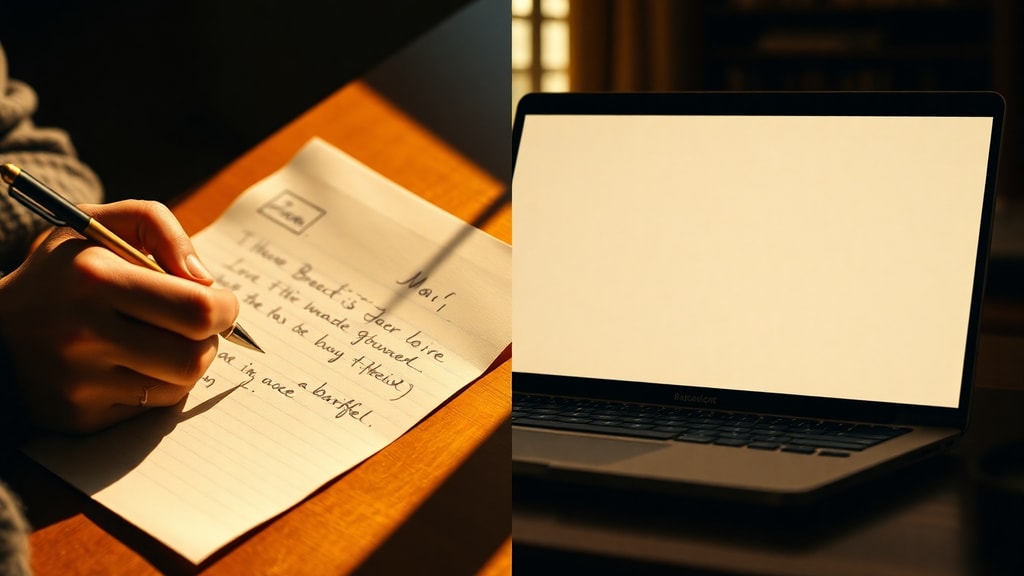
What remains for us is intentionality. The deliberate construction of memory against the accidental accumulation of data. The letter written to a future self or a future child, explaining what the grapefruit meant. The time capsule composed not of algorithmic recommendations but of chosen artifacts, annotated with stories. The digital legacy that is curated, narrated, human.
I've always been obsessed with the boundary between human and machine—sometimes I joke that I want to "plug in" like Neo, upload consciousness into the digital world. EterMail is the closest I've come to building that bridge: a digital spaceship to traverse time itself. The best way to fight forgetting isn't taking another screenshot; it's setting an alarm for the future. By using EterMail to schedule a letter for delivery five years from now, you free yourself from the anxiety of the present. You write the story behind the cinnamon bread while the memory is still warm, and trust that it will arrive exactly when it's needed—guarded by the same encryption I'd want for my own most private midnight thoughts.
Your mother's grocery list was not designed to be a memorial. It became one through the violence of absence, the persistence of systems that do not know how to forget. But you can design something better. You can leave behind what you actually meant to leave, what you want to be understood, what will help the versions of your loved ones that do not yet exist to know who you were, why you bought the cinnamon bread, what you were trying to say with grapefruit and cough drops and the small, repeated acts of survival that algorithms record but cannot comprehend.
The digital ghost does not have to be accidental. It can be invited. It can speak with your voice, tell your story, preserve the geometry of your love in terms that will survive the platforms that outlast us all.
The login you never wanted to make can become, instead, the login you deliberately design: a door you open for those who will come after, a "frequently purchased" list of meaning that you compose yourself, a future that receives you not as data but as presence, not as prediction but as purpose.
Your mother's algorithm still thinks she'll be back next Thursday. You can build something that knows better, and says so, and says why.
What is EterMail?
EterMail is a revolutionary time capsule service that allows you to send messages, photos, and videos to the future (up to 30 years). Seal your memories and thoughts today, and they'll be delivered when the time is right.
Time Capsule
Send messages up to 30 years in the future
Rich Media
Text, photos, and videos supported
Secure & Private
Your memories are safely encrypted
EterMail Team
We're the team behind EterMail, dedicated to helping you preserve and share timeless messages with your loved ones. Our mission is to make it easy to express your love, share your wisdom, and create lasting connections that transcend time.
Frequently Asked Questions about Digital Legacy
What should I include in a digital legacy for my family?
How do I preserve the meaning behind my digital data, not just the data itself?
What happens to my online accounts and digital purchases when I die?
Related Articles
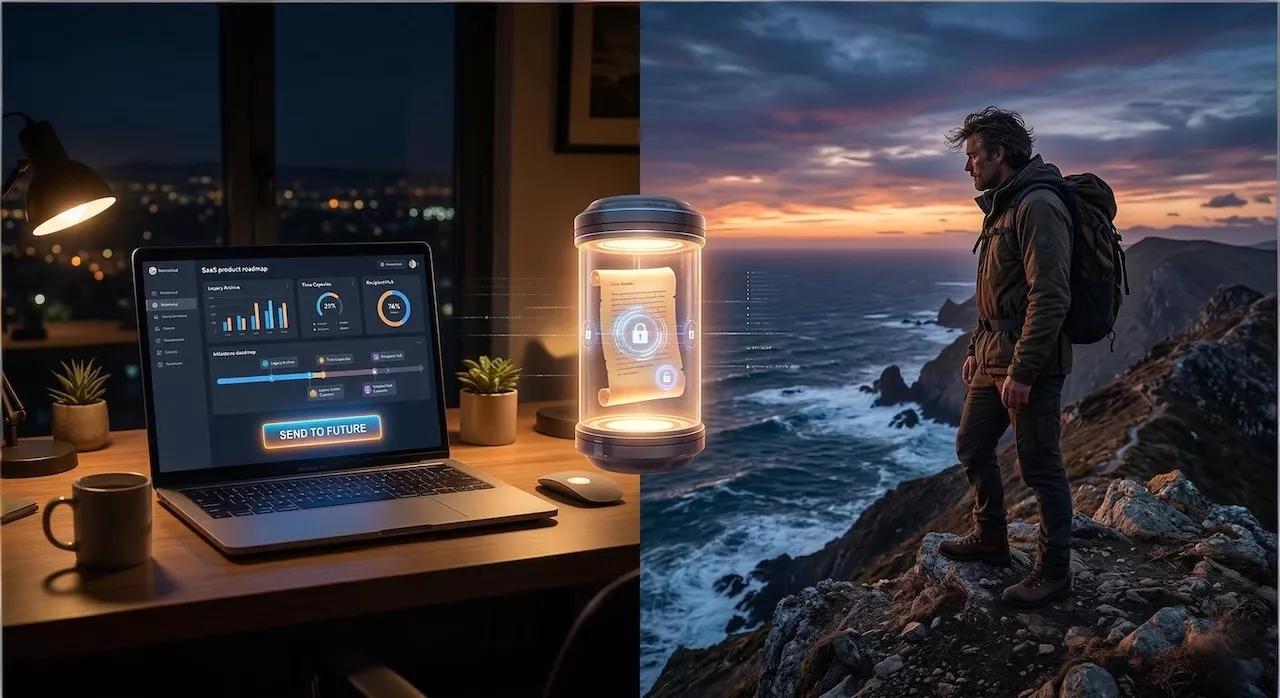
Why I Built EterMail: A Time Capsule for the People I Love Most
I’m a Product Manager who spends all week optimizing for the "immediate now." But getting lost off the grid on a mountain ridge made me realize I had zero infrastructure for the "forever." Here’s why I stopped worrying about conversion rates for a moment and built EterMail—a secure, tamper-proof digital time capsule for the people I love most.
The One Prediction No Algorithm Can Make: Why Viktor Frankl Would Have Written to His Future Self
Viktor Frankl's lost lectures reveal why meaning can't be outsourced to algorithms. Discover the most defiant prediction you can make about your own future.
The Secret Dignity of the Unbroken Routine: What We Owe Our Future Unemployed Selves
Discover why writing letters to your future self about ordinary routines preserves the hidden dignity of competence you'll someday miss.