The Password Reset
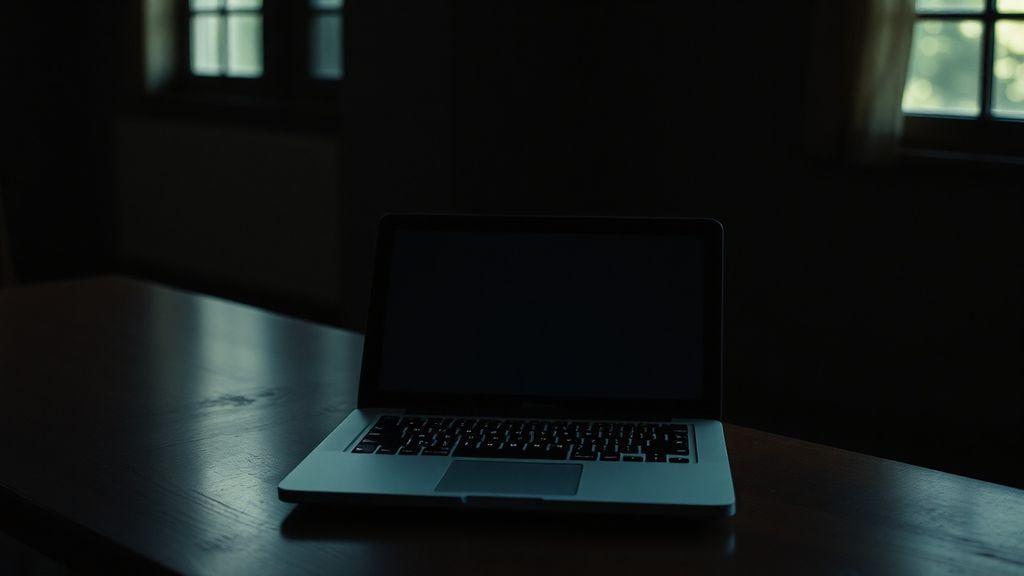
The IT help desk at the high school apologized three times for the delay. Three years, actually. The laptop had sat in evidence storage, then a storage closet, then someone's office, until finally a secretary found the right form and the right signature to release it to next of kin. You signed where the arrow pointed. You drove home with a backpack you didn't remember owning, containing a charger and a MacBook Air with a dented corner. You made coffee you didn't drink. You sat on the couch where you'd sat when she texted you that screenshot of her college acceptance letter, and you began the password reset process.
Apple sent the link. You clicked. You chose something you hoped she'd forgive—her dog's name and the year she was born. The screen unlocked.
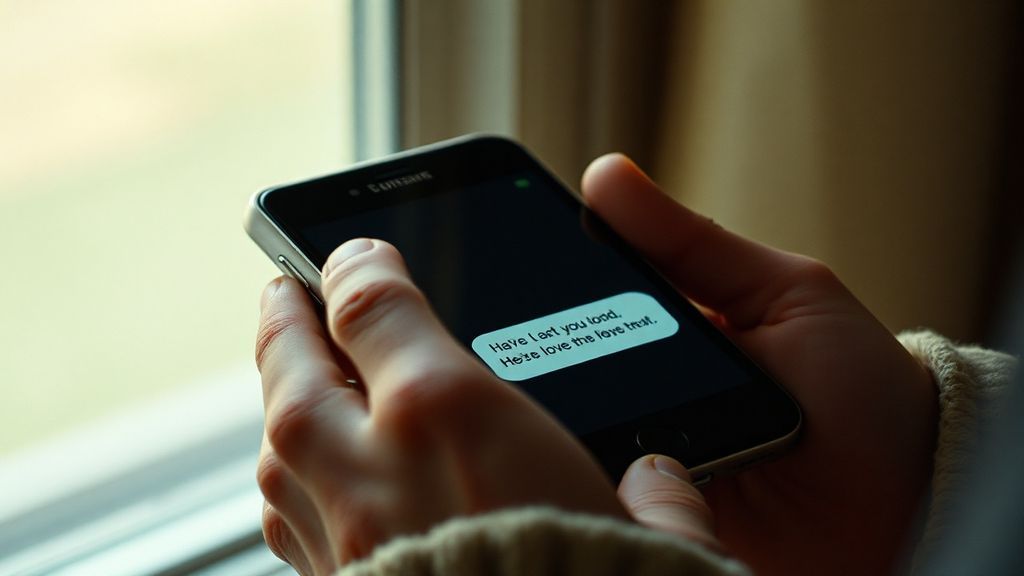
And there it was. Not a photo album. Not a journal. Not a video. A desktop wallpaper. A screenshot of a text message. From you. Sent three years before she died. Three words: proud of you, kiddo. The file properties showed she had set it as her background at 2:17 AM on the night she passed away.
You had not written those words as a keepsake. You had written them because she'd mentioned a difficult exam, and you were walking into a meeting, and the three-word reply was what your thumbs could manage before the elevator doors closed. You had no idea they would become architecture. A monument. The last view of the world she chose for herself.
The Accidental Archive
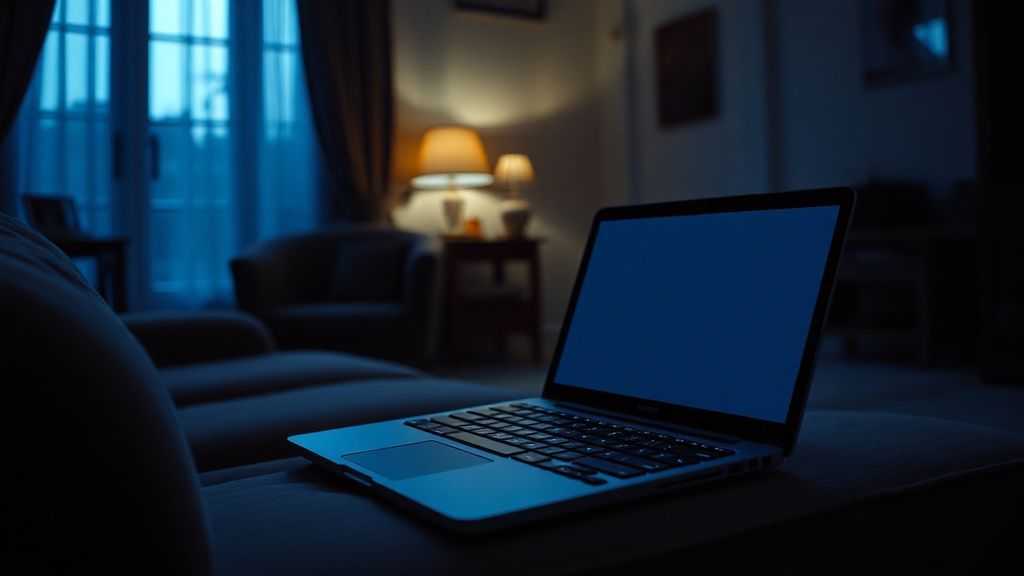
We do not plan our digital legacy. This is the strange, vertiginous truth of life now. We plan our wills, our life insurance, our funeral playlists if we're the type. But we do not plan the text messages that will outlive us, the voicemails that will be saved against all odds, the photos we never printed because we assumed there would always be time. The digital artifacts that become sacred are almost always accidental.
A friend of mine keeps her mother's last voicemail not because it says anything profound, but because it's the only recording where she says "I'll call you back, love." The phrase is ordinary. The voice is ordinary. But the ordinary is what we lose first, and what we grieve longest. The digital space has become a warehouse of these ordinary things, and we are only beginning to understand how to live inside that warehouse without drowning.
There is a particular cruelty to digital grief. The files don't fade. They don't yellow at the edges or develop the soft blur of memory. They remain sharp, searchable, timestamped. You can see exactly when she set your text as her wallpaper. You can calculate the hours between that act and her death. You can know, with forensic precision, that at 2:17 AM she wanted to look at your words. The sharpness cuts both ways. It confirms connection. It also confirms finality.
The Weight of Unintentional Immortality
We are the first generation to leave behind not just objects but environments—clouds full of photographs, inboxes full of conversations, hard drives full of documents whose significance we never annotated. Our digital legacy is not a curated museum. It is an archaeological site, and the archaeologists are the people who loved us. They will find things we forgot we made. They will interpret our Spotify playlists as emotional landscapes. They will wonder why we screenshoted certain conversations and deleted others. They will construct a self we never intended to present.
This is not necessarily bad. But it is heavy. The father who found his daughter's wallpaper did not choose to receive that knowledge at 2:17 AM. The knowledge chose him, because the file properties were indifferent to his readiness. Digital legacy does not wait for the right moment. It simply persists, available to anyone with the password.
And passwords are their own grief. Resetting a dead person's password is a small administrative trauma, repeated across millions of households. You prove your relationship with death certificates and patience. You become an executor of data, a manager of dormant accounts, a detective of your own child's digital footprints. The platforms were not built for mortality. They were built for engagement, for growth, for the fiction of infinite tomorrows.
What We Owe the Future
If we accept that our digital artifacts will outlast us—and that many of them will be interpreted as love, or absence, or mystery—then we might ask what it means to create digital legacy with even a small amount of intention. Not control. We cannot control what will matter to those we leave behind. But intention. A gesture toward the people who will someday sit on a couch and unlock our screens.
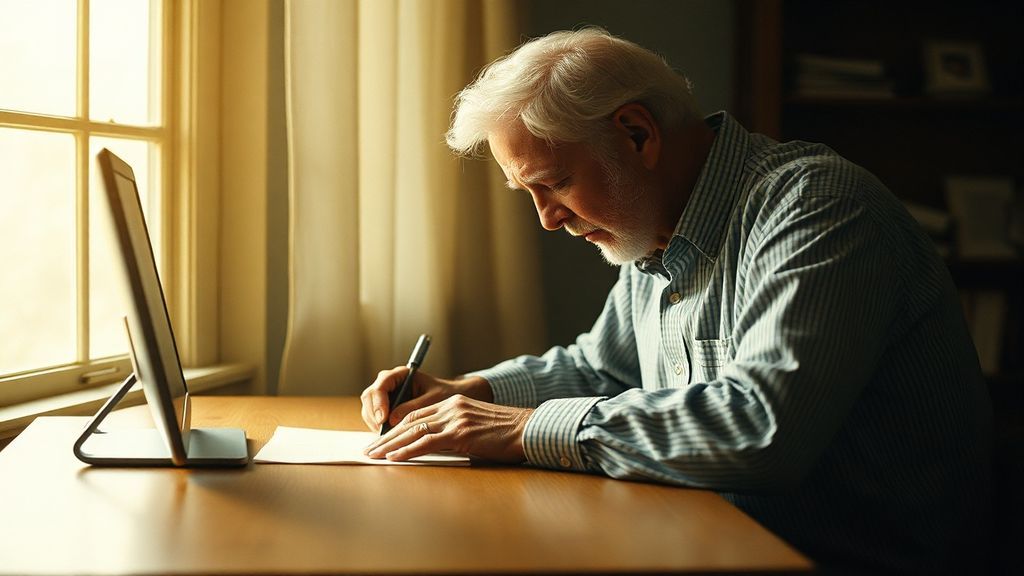
This is where the idea of a digital time capsule becomes something more than a novelty. It becomes an act of care. Writing a letter to your future child, your future spouse, your future self—scheduling it to arrive years from now—is a way of introducing intention into the accidental archive. It says: I knew you would look for me. I wanted to leave something you didn't have to excavate.
I spend a lot of my nights alone with a screen, building things. As someone who has started companies in e-commerce, games, and now SaaS, I'm used to wrestling with massive codebases and cold server deployments. But EterMail came from a different place. It came from the belief that the people we love deserve more than forensic surprises. The platform lets you compose letters, record messages, assemble memories, and schedule their delivery to specific people at specific moments in the future. A graduation. A wedding. A birthday when you know you might not be there. The technology is simple. The human need is ancient.
We have always left messages for the future. Cave paintings. Time capsules buried in elementary school playgrounds. Letters read posthumously at funerals. What changes is the medium, not the impulse. The impulse is to reach across time and say: I was here. I loved you. I wanted you to know.
Learning to Live With the Archive
The father with the laptop told me he still hasn't changed the wallpaper. He uses the computer occasionally, for taxes, for email, and each time he closes an application, there are his three words again. Proud of you, kiddo. He said he used to flinch. Now he breathes. "It's the closest thing I have to her choosing me," he said. "At 2:17 AM, with everything she must have been feeling, she chose to look at something I gave her."
This is the other side of digital legacy's sharpness. The timestamp that wounds can also heal. The accidental archive contains not just loss but evidence of love, preserved with a clarity that analog memory cannot match. We know she set the wallpaper at 2:17 AM. We know he sent the text three years earlier, on a Tuesday, during his lunch break. The mundane details become sacred because they are true, because they happened, because they can be verified by file metadata in a world where so much else feels uncertain.
But not everyone finds comfort in excavation. For some, the digital archive is too much, too fast, too sharp. There is no right way to grieve a hard drive. There is only your way, and the need for tools that let you approach your legacy—your own, and the ones you inherit—at a human pace.
A Different Kind of Inheritance
We often think of inheritance as property, as assets, as things with appraised value. But the inheritance that shapes us most is usually invisible: the stories we were told, the silences we learned to read, the ordinary words that became our wallpaper. Digital legacy is becoming our newest form of inheritance, and we are still learning how to receive it.
A scheduled letter, a recorded message, a time capsule opened on a future anniversary—these are ways of giving your people something better than accident. Not perfect. Nothing about love or loss is perfect. But intentional. Considered. A gift given across time rather than a mystery excavated from it.
The daughter could not have known that her father would one day see her desktop. The father could not have known that his hurried text would become her final view. They were both operating in the ordinary flow of life, where none of us know which words will last. But we can choose, now and then, to write as if they might. To send the message. To record the voice memo. To leave something for the future that says, simply and truly: I was proud of you. I am still here. I knew you would need to hear this.
The Persistence of Ordinary Love
Digital legacy is not about the grand gesture. It is about the persistence of ordinary love in a medium that preserves everything, including our most casual kindnesses. The text sent without thought becomes wallpaper. The voicemail saying "I'll call you back" becomes the last recording of a voice. The photo never printed because we assumed there would be more trips, more birthdays, more time.
We cannot predict what will matter. But we can choose to leave more traces of love than absence. We can write the letter. We can save the message. We can build small monuments of intention in the vast accidental archive of our digital lives. And we can hope—no, we can trust—that somewhere in the future, someone will unlock a screen and find exactly what they needed to see.
Not because the technology is perfect. Because love is persistent, and it finds a way to survive in whatever medium we give it.
What is EterMail?
EterMail is a revolutionary time capsule service that allows you to send messages, photos, and videos to the future (up to 30 years). Seal your memories and thoughts today, and they'll be delivered when the time is right.
Time Capsule
Send messages up to 30 years in the future
Rich Media
Text, photos, and videos supported
Secure & Private
Your memories are safely encrypted
EterMail Team
We're the team behind EterMail, dedicated to helping you preserve and share timeless messages with your loved ones. Our mission is to make it easy to express your love, share your wisdom, and create lasting connections that transcend time.
Frequently Asked Questions about Digital Legacy
What counts as a digital legacy?
How can I protect my digital memories for my family?
Why do accidental digital artifacts often feel more meaningful than planned keepsakes?
Related Articles
The Marginalia of the Dead: How My Aunt's Kindle Highlights Became Her Secret Autobiography
What do our digital traces reveal after we're gone? One woman discovered her aunt's private becoming through 1,847 Kindle highlights and a single word: yes.
The 847 Searches She Left Behind: How Digital Footprints Reveal Love's Invisible Labor
What if your digital footprint revealed the love you never spoke? Discover how browser history, late-night searches, and forgotten files become our most intimate legacy.
The 4,327 Games of Solitaire: How Our Most Mindless Digital Rituals Become Our Most Intimate Legacies
When you inherit a loved one's tablet and discover their unbroken solitaire streak, you realize digital legacy isn't about photos—it's about presence.